Redevelop this

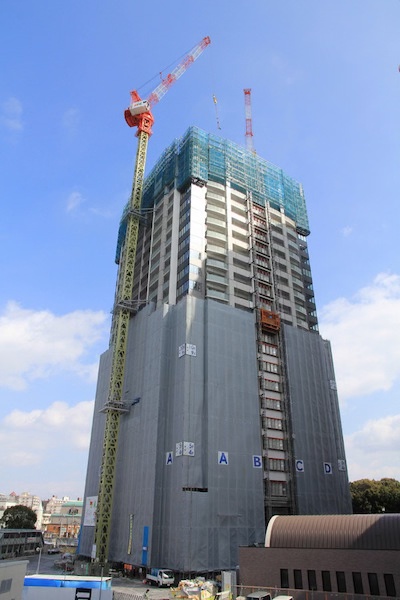
More high-rise condominium shenanigans. On Nov. 17, Tokyo Shimbun reported on 118 redevelopment projects being carried out with the help of local governments that don’t necessarily benefit people who live in the localities but nevertheless are contributing to the projects through local taxes. The article is based on a Kyodo News survey of local governments that found 90 percent of these entities paid or will pay a total of ¥1.0543 trillion in subsidies to developers and/or construction companies that are working on these projects. 

Regional cities rely more on public funds than do large regional capitals, and four of the projects surveyed apparently received more than half their total funding from tax revenues. What makes the situation concerning is that 66 of these projects comprising 19 prefectures are centered on tower condominiums, which by definition are sold to upper income people, mainly as investments. Moreover, Kyodo found through the inspection of publicly available documents that there has been “no real long-term planning” attached to these urban redevelopment projects, meaning they are simply enterprises carried out by developers who want to sell condos in the short term. Local residents will receive no ascertainable benefits from these projects, though they are helping to pay for them. Kyodo calculated that as of the end of fiscal 2023, the 118 projects were costing a total of ¥8.52 trillion to build, with 12.4 percent of the cost of 104 of the projects coming from local governments, which would come to ¥1.0543 in subsidies. 

Some projects received more public subsidies than others. A tower condo construction project at the North Exit 1 of Fuji Station in Fuji, Shizuoka Prefecture received 57.7 percent of its funds from public moneys; the Machikata-cho 1 project in Numazu, Shizuoka Prefecture received 56.9 percent of its funding from the local government; and the Yokote Station East Exit 2 project in Yokote, Akita Prefecture received 53.3 percent of its funding from tax revenues.

Tomorrow never knows

There’s a certain information lag that comes with media reporting on larger social phenomena. The whole akiya/vacant housing issue has become big news in Japan over the last decade, but it was a fact of Japanese life well before that. This blog, in fact, which began in 2009, was initially conceived as a means of explaining our belief that Japan would eventually have to face a surplus of housing due to its policy of building and selling new homes without any regard for existing and future housing stock. Akiya had been on the increase well before the media started paying attention, and just now the press is beginning to report on other effects of oversupply, but in the context of the demographic crisis, meaning depopulation. 

A recent story in Gendai Business covered a bestseller by Masashi Kawai called Mirai no Nenpyo (Chronology of the Future), which puts into perspective how depopulation will affect the economy with respect to four fields: housing, medical care, local government, and public safety. In terms of housing, Kawai says the main immediate effect will be that houses will become difficult to sell, a situation that is already quite apparent in certain rural suburban areas of Japan. However, Kawai is not just talking about existing or used housing, which has been difficult to sell for a while now, but also new housing. That’s because the prime demographic for new house sales, people in their 30s with families, is shrinking in size so significantly. Statistics can be misleading. Overall, land value has increased in Japan, as well as the demand for new housing, but these two circumstances have been spurred by seniors with money to burn. They buy expensive condominiums in city centers as a means of reducing the inheritance tax burden for their heirs; or these high-end properties are being bought as investments because the buyers believe that real estate is the most stable place to park their money. Consequently, the market as a whole seems primed for growth, but it’s lopsided. 

Tomorrow will bring what could be termed the 30-30-30 problem: In 30 years the number of people in their 30s—the prime demographic for new house sales—will have shrunk 30 percent compared to right now. This cohort is already marrying later in life than their parents did, which means if they do buy a home it might not be until they are in their 40s or even later. Right now, the common time frame for housing loans is 30 years, but as the home-buying layer of the population ages, the terms for most mortgages may shorten to 20-25 years, which means the people seeking these loans will likely be faced with higher interest rates and thus be looking for less expensive housing.

Read More