Too close for comfort
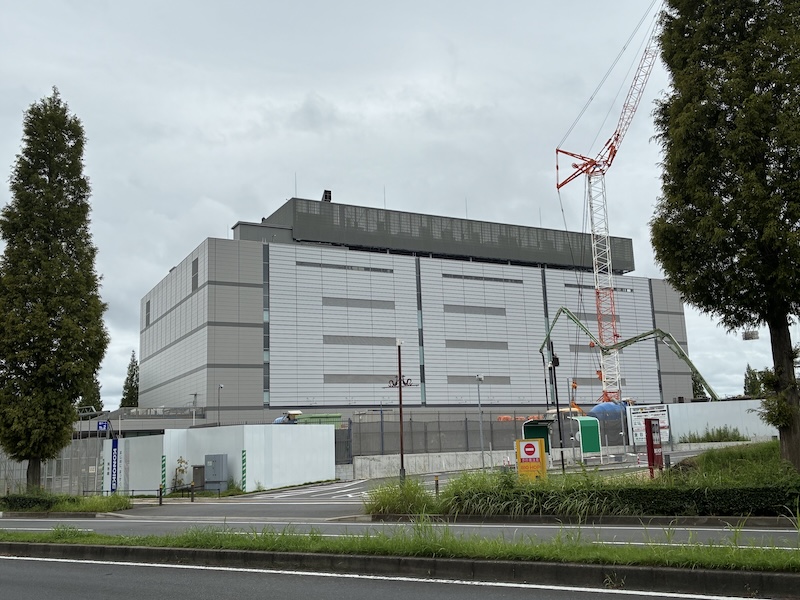
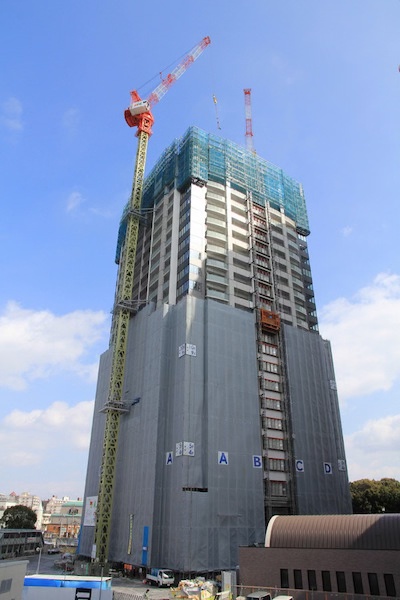
Data center under construction in Inzai

The Japan Times ran a very good article last June that we found particularly interesting because it focused on the construction of data centers in the Chiba Prefecture city of Inzai, where we happen to live. According to the article, Inzai is called “the Ginza of data centers,” and we have seen firsthand how the city has become a magnet for not only data centers but large-scale logistics facilities. Though the article does a good job of explaining how all these data centers came to be built in Inzai without any input or much attention from residents, it doesn’t really get into what makes Inzai such a popular location for data centers. 

We first heard the term “data center” almost 15 years ago when we started looking for a home in Inzai. More than one real estate agent told us that property values would always be stable in the city because so many companies were building data centers here. They were talking about data centers for specific companies, mainly banks and financial institutions (Japan Post has its own data center in Inzai), and when we asked why Inzai was such a good location for such facilities, we were invariably told that the area is, relatively speaking, geologically stable, meaning that earthquakes aren’t expected to be as severe as they might be in other areas of the Kanto Plain. Since then we’ve come to accept this bit of seemingly conventional wisdom with more than a grain of salt, but have also heard other reasons for the spread of data centers in Inzai, one being that the city is close to where the trans-Pacific optical cable from the U.S. enters Japan, an explanation that also may buckle under close scrutiny. 

We have our own theory, which is that the real estate situation in Inzai is perfect for such development. As many people now know, the problem with data centers is that they use an inordinate amount of electricity and water, which is why it is difficult to build them in densely populated urban areas. Tokyo, being not only the Japanese capital but the center of all business activity in the country, will require a huge amount of data processing capability as AI tightens its grip on information technology in general, but providing that level of capacity close to the city is going to be difficult because of the paucity of available land. Like nuclear power stations, data centers work more efficiently the closer they are to the places that use them. In the case of nuclear power, the longer the power lines that connect the station to the user base, the more electricity is lost. Nevertheless, the Tokyo Electric Power Co. (TEPCO), had to build reactors in far-flung places like Niigata and Fukushima to provide the enormous amount of electricity necessary for the Tokyo metropolitan area because of the density of residential development in the area. According to a recent article in Tokyo Shimbun, if data centers are also located far from users, “communication delays” can affect the “precision of information processing,” so the closer the better. 

Inzai is ideal in this regard because it is close to Tokyo. And the reason—we think—that so many data centers have been built here is because of the existence of Chiba New Town, the ambitious urban development project launched by the central government and Chiba Prefecture back in the 60s. As with all New Towns in Japan, the aim was to create self-contained regions of commercial and industrial activity linked to nearby residences, but for various reasons, Chiba’s never achieved the ambitions its boosters envisioned. Consequently, the enormous amount of land set aside for Chiba New Town by the government, land that was inherited by the semi-public corporation UR after the government housing authority was mostly privatized in the 90s, remained undeveloped for decades, losing value in the process and becoming a financial burden on deep-in-debt UR and, in turn, the government, which insisted that UR unload the land somehow. 

Consequently, zoning in Chiba New Town has been in constant flux in order to allow more residential development on land that was previously reserved for commercial or industrial use (losing money in the process). Most of this land is near train stations on the Hokuso Railway. Data center developers jumped in and took advantage of this cheap sell-off by buying up private land presumably still zoned for commercial and industrial use and then building data centers on it, often within spitting distance of residences. People bought apartments next to vacant lots that would eventually contain data centers that would block their view, a point of contention that is at the heart of the Japan Times article. The backlash against data centers in Japan is not as acute as it is in the U.S., where data center construction is being met increasingly by resident opposition. In Japan, such development is naively accepted as being a boost to property values, as our experience with real estate agents more than ten years ago demonstrated, but from what we’ve heard prices of such apartments are already dropping once it’s learned that a data center is being built nearby. The Japan Times report showed that Japanese residents, or at least some in Inzai, are finally realizing that close proximity to such facilities may erode their quality of life. 

Read More

Make mine maglev (6)

Section of tunnel that goes through Shizuoka Prefecture

After years of delays, the Shizuoka section of the ambitious Chuo Shinkansen project, better known in Japanese as the “linear motorcar” and in English as the maglev, which will be able to shuttle passengers from Tokyo to Nagoya in as little as 40 minutes, has finally been given the formal go-ahead by the prefecture, thus prompting JR Tokai, the company in charge of it, to declare that now the real work starts. Given that the project was initiated around the turn of the century and the excavation of the 256 kilometers of tunnels needed to complete the route from Shinagawa in Tokyo to Nagoya has been ongoing for more than ten years, JR Tokai’s declaration requires clarification; but, indeed, in the larger scheme of things the Shizuoka section of the tunnel, though a mere 8.9 km in length, is perhaps more central to the project than any other in that it is probably the most difficult to carry out technically.

According to a series on the maglev in the Asahi Shimbun that commenced July 23, experts have said that building the Shizuoka tunnel section may be the most difficult construction project in the history of Japanese civil engineering. Twenty-five kilometers of the tunnel needed for the maglev—almost 90 percent of the Shinagawa-Nagoya route is underground—runs below the Southern Alps, some of which towers 3,000 meters above sea level. The Shizuoka section is smack dab in the middle of this portion and will be located between 500 and 1,400 meters below the surface. The deepest tunnel in Japan ever excavated is the Oshimizu Tunnel on the Joetsu Shinkansen line, which opened in 1982 and is 1,300 meters deep. But while there is some experience to fall back on, the Shizuoka section still poses some formidable challenges.

Two tunnels have to be built: the primary tunnel that contains the tube for the train, and the “advance” tunnel that delivers the equipment and personnel to the underground site where the tunnel is being excavated. The dimensions of the primary tunnel are 13 meters in width and 8 meters in height. Eventually, the advance tunnels will be refitted later as evacuation and maintenance tunnels. 

According to one expert interviewed by Asahi, the area of bedrock that the tunnel will pass through is located at a nexus between two tectonic plates, and the friction between these two plates means that one of them rises 3-4mm a year, a substantial shift in geological terms. The pressure on the tunnel tube will constantly be affected. As the tunnel is excavated, some of this pressure is alleviated, thus causing possible deformation of the tunnel over time. 

JR Tokai says it will use controlled explosions to cut through the bedrock at sections of between 1 and 2.5 meters. These blasted sections are then connected and reinforced with concrete to form an arch using steel supports with thick bolts driven deep into the surrounding bedrock so as to distribute the pressure more evenly. The expert, however, points out that since the tunnel is being built through two faults and different consistencies of bedrock, challenges the construction of the Oshimizu Tunnel did not have to address, they don’t know how things will work out until they actually do it. 

Read More

Straight outta Tokyo

Harumi Flag

As we’ve written here numerous times, the cost of a new condominium in Tokyo has risen beyond the reach of most middle class households and even quite a few upper middle class ones. According to a recent article in the weekly magazine Aera, the average price of a new condo in the 23 wards now stands at ¥136.13 million, meaning that the average price has lingered above ¥100 million for three years in a row. 

Still, middle class families are trying and usually require a break to get a deal they can afford. Aera interviewed a man in his late 40s named Kazuya (not real) who moved into a condo in the Harumi Flag complex on the waterfront last September after purchasing the unit in 2023. If you’ve read this blog for the past five years you’ll know that Harumi Flag was the athletes village for the most recent Tokyo Olympics, and that units were initially sold at prices considered below market value. Consequently, the demand was high and a strict lottery was used, with some of the more popular units attracting as many as 150 applications. However, because of the one-year delay of the Olympics due to the pandemic and other factors, the people who managed to get selected to purchase units had to wait a few years before moving in. Kazuya, his wife, and two children previously lived in a 67-square meter “maisonette-style” condo in Ebisu. The Harumi Flag unit is 82 square meters and reportedly has a spectacular view. The purchase price was ¥94.9 million, for which they took out a 35-year variable interest loan and pay ¥250,000 a month, not including management and repair fees. Since the family’s total income varies between ¥10 million and ¥15 million a year, they can afford it…for now. 

However, according to Aera’s research, a comparable unit in Harumi Flag is now going for ¥190 million, an increase in value of ¥100 million since the Kazuyas purchased theirs. As Kazuya told Aera, the increase in value “has no meaning for us, since we plan to live here permanently,” though the statement sounds somewhat disingenuous. When you live in a property that has doubled in value in less than three years, it has to have some meaning. 

The last time the average price of a new condo in Tokyo’s 23 wards was less than ¥100 million was 2022, when it was ¥82 million. By the following year it had risen to ¥114 million, a 39 percent increase. In the 3 years since 2022 the rise has been 65 percent. 

Read More

Real cat foreheads

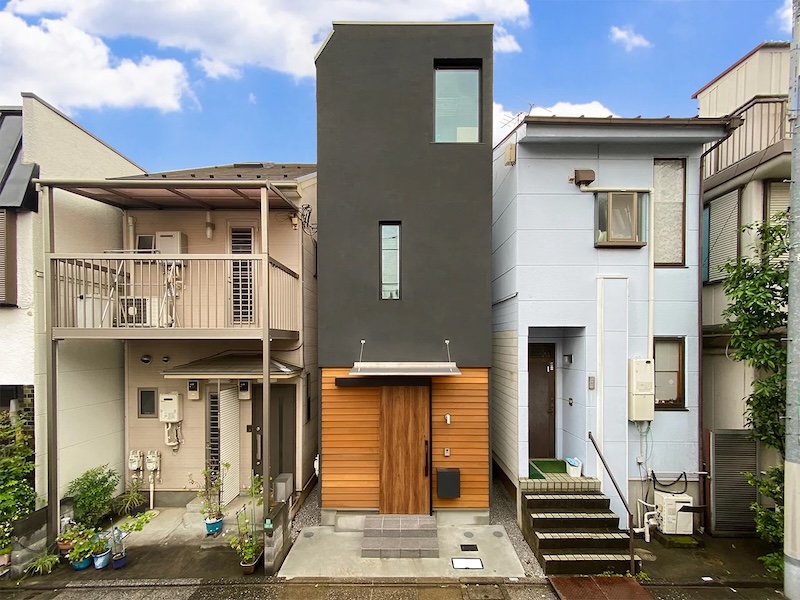
A kyosho jutaku in its typical urban setting

The title of this blog refers to two old cliches about Japanese housing that address size. The first refers to a common rejoinder to casual inquiries about somebody buying a piece of land, wherein the buyer would answer that the purchased plot “is only as big as a cat’s forehead,” meaning it’s tiny, when, of course, it’s never that small. However, recent news reports about sales of properties in Tokyo may cause new landowners to revive the saying with some justification.

As we’ve reported here numerous times in the past few years, condominium prices in Tokyo have soared beyond the reach of most average families, and yet Tokyo continues to be the only prefecture in Japan whose population is growing. An article last week in the Asahi Shimbun featured a woman in her 40s who said she recently bought a new house in Nerima Ward right after she got married. Before buying the house, she and her new husband had searched for a new condo within Tokyo’s 23 wards for about six months, but almost all the ones they liked were being offered through auction sales that started above ¥100 million. Obviously, she thought, they should have started looking more tha 5 years ago. In addition to the high price and the mortgage interest they would have to pay hefty monthly management and repair fees, so she gave up on the condo and instead bought a new house through a lottery system, beating out three other contenders for a building that was 20 percent cheaper than what her budget had been for a condo. 

The total floor area for the house is 85 square meters, which is quite small and one would assume, given the land use rates in Tokyo, the size of the land is probably not much more than 60 square meters. The location is 18 minutes by foot to the nearest train station, which the woman, who works in central Tokyo, says is tolerable. More significantly, she says the mortgage terms are “not difficult” and fit her financial situation.

Asahi is covering the woman because new houses have become much more popular in Tokyo in the past several years owing to the scarcity of affordable new condominiums. The Real Estate Information Network (REINS) for East Japan reports that the sale of new and used houses in the Tokyo metropolitan area has increased for three years in a row, probably because while prices of new houses have also increased during that period, they have increased at a slower rate than that for condos. The average price of a new house in the metro area in 2025 increased by 4.6 percent compared to 2024, while the price of new condos increased by a whopping 20.3 percent, boosted mainly by investors. 

The appeal of houses over condos is probably obvious to most people, but size isn’t necessarily one of those appeals. The Real Estate Business Research Laboratory says that the average size of new condos in the Tokyo metro area has remained less than 70 square meters for the last decade, and continues to shrink. Developers have taken note. Sumitomo Real Estate’s City Garden brand allows buyers to design their own 100-square meter house in the Tokyo area, or about 30 square meters more than the average condo, and while prices are not much different than those for condos (¥80 to ¥150 million), sales have been good. Another builder/developer, Tokyo Tatemono, stopped building single-family homes some time ago but recently got back into the game and has a plan to build about 100 houses in the 23 wards in coming months.

The majority of these new houses are classified as kyosho jutaku, or “very small houses.” A number of architectural firms specialize in kyosho jutaku, which is defined as being designed for lots that are less than 60 square meters. The sales of such houses in Tokyo have increased over the past 5 years by 3.2 times. Because of special design needs, often these houses are more expensive per square meter than larger houses, but buyers know this and are splurging because often the only vacant lots they can find anywhere near the center of Tokyo are very small. The average price per tsubo (3.3 square meters) of land in Nerima Ward, for instance, is ¥1.76 million. 

Read More

Twice bitten

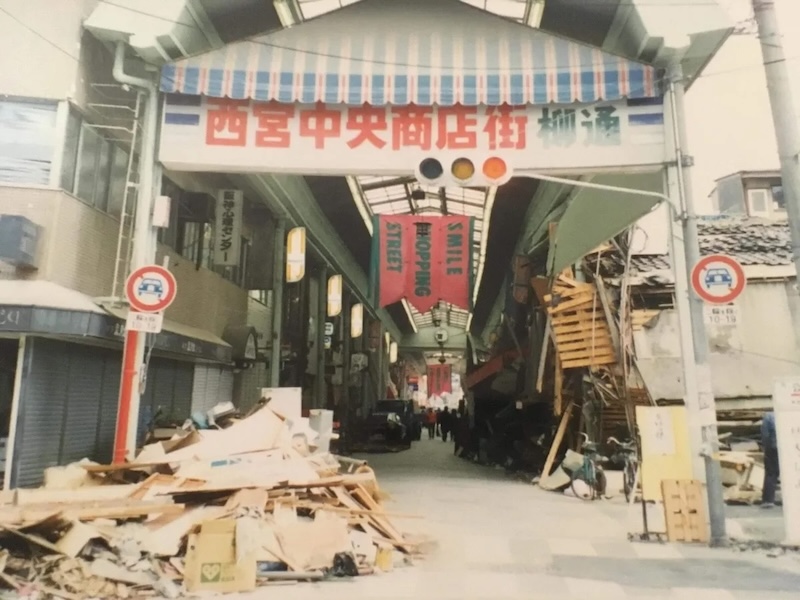
January 17 marked the 31st anniversary of the Hanshin Awaji Earthquake that killed more than 6,000 people and destroyed about 250,000 homes. Every year around this date, various media run stories about the quake and its survivors. Asahi Shimbun on Jan. 16 decided to cover a woman in her 60s from Nishinomiya who survived the quake with her family. However, her house didn’t make it. She and her husband hauled away the wreckage and then built another house on the land where it stood and which they own. Consequently, they were responsible for two mortgages, one for the house that was destroyed and hadn’t been paid off, and one for the new house. Thirty years later they are still paying off both. 

Their story isn’t unusual, and isn’t limited to people who lived in the area affected by the Hanshin Awaji Earthquake. Many who lost homes in the Great East Japan Earthquake and Tsunami of March 11, 2011, are also paying off two mortgages. It’s very likely that victims of the quake that hit the Noto Peninsula two years ago are going through something similar; or that they will go through something similar. Several hundred people are still living in temporary housing.

Asahi says the Nishinomiya woman and her husband bought their first home in 1985. Previously they were renting an apartment in the city, but when the woman became pregnant with her second child they decided they needed a bigger place and bought a used house for ¥18 million, taking out a 20-year mortgage to pay for it. Sometime later, the woman gave birth to a third child, their first daughter. 

Following the quake in 1995, the authorities classified the house as being uninhabitable, and so the family had to move back into rental housing outside of Nishinomiya. At the time there was no public support system for people who had lost their homes in a disaster to rebuild. Instead, they relied on private charities that collected money from donors all over Japan. Each household affected by the Hanshin quake received about ¥400,000 from the fund. In 1995 only 3 percent of homeowners in Hyogo Prefecture had earthquake insurance. The woman in question did not, so ¥400,000 was all the money they could receive toward a new home.

Eventually, she and her husband built a new house on their land for ¥25 million, for which they took out a new 35-year loan. With ¥10 million still owed for their previous home, their debt was now ¥35 million. 

The woman worked in a beauty salon, making an average of ¥80,000 a month, while her husband’s salary was about ¥200,000 a month. Each month’s loan payment was ¥100,000, so they were constantly struggling to make ends meet. To complicate matters further, the woman gave birth to her fourth child, a boy, in 2000. 

All four children have now left home, but the loan is still there. The balance is more than ¥5 million, which means the couple still has at least 5 more years of payments. Making their situation even more precarious, the woman is now taking care of her elderly parents full-time, which means her husband will have to put off retirement until he’s 73 at the earliest, they calculate. 

Read More

Backed up

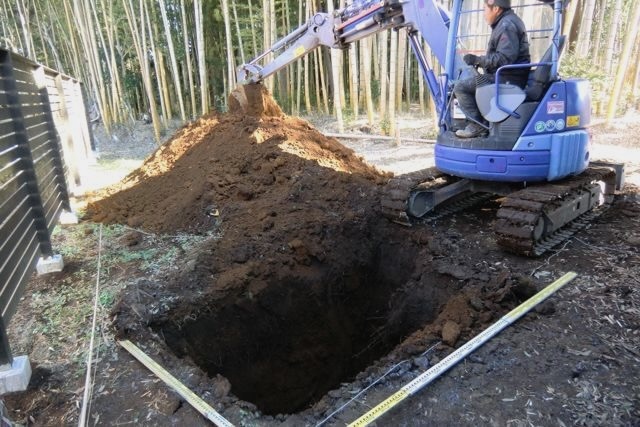
Where it’s buried

Japan has one of the most extensive and sophisticated sewerage systems in the world. As of 2021, slightly more than 80 percent of the population was served by sewerage systems, an impressive statistic considering that less than 10 percent of the population had access to sewerage in 1960. This increase in coverage is just another indication of how quickly and completely Japan rebuilt and improved its infrastructure after World War II. 

A recent article in Asahi Shimbun, however, reported that this trend may be reversing. According to surveys conducted by the Ministry of Land, Infrastructure, Transport and Tourism, one-third of local governments in Japan have cancelled their plans to extend their sewerage systems to new and existing residential development. Instead, household waste will be processed by on-site septic tanks. 

The reason is obvious: Japan’s population is dropping, and the cost of building and maintaining sewerage systems depends greatly on population density. With fewer people living in a given area, the construction of the new sewerage comprising pipes and treatment facilities cannot be paid off in the long run. 

It’s necessary to note that one-third of local governments does not mean one-third of the population. The local governments of large cities represent much larger populations than local governments of smaller cities and rural areas, and it’s mostly in the suburbs and the countryside where these governments are reviewing and cancelling their sewerage construction plans. But what’s perhaps most significant about the Asahi report is its assertion that some local governments will actually backslide on sewerage, meaning that they will replace existing sewerage systems with individual jokaso (septic tanks). 

Urban-style sewerage systems collect household waste water and night soil in one central location and then treat it before releasing the filtered water back into the environment. Septic tanks, including so-called multipurpose tanks that process waste from toilets and sinks/baths separately, use on-site filters and bacteria before releasing the filtered water as runoff into the ground or rivers. Sewerage is obviously more cost-intensive because it requires long stretches of pipepines and the purchase of land where those pipes are buried. Septic tanks, including those shared by communities, are on-site, meaning they are completely contained within the property of the user. 

The Asahi says that in the 1990s many local governments drew up plans for constructing new sewerage systems based on the assumption that the population would continue to increase. Reality quickly put a damper on those plans. The land ministry found that as of 2014 throughout Japan, local governments had fallen short of their stated plans to extend sewerage systems to their communities by 625,000 hectares, meaning that 625,000 hectares of land that were slated to receive sewerage infrastructure by 2014 had not undergone any construction, or about 34 percent. In fact, as of 2019, 158,000 hectares of land that were initially supposed to receive new sewerage systems instead had those systems replaced with septic tanks. And between 2019 and 2025, at least 80,000 hectares of land slated for sewerage were changed to septic tanks. For the record, the prefectures who altered their plans the most were Chiba (29,646 hectares), Ibaraki (26,726), and Fukushima (15,869).

Moreover, some local governments actually stopped using existing sewerage systems due to their inability to keep up with maintenance and improvement costs. There just weren’t enough customers any more. The article uses the example of Sanmu in eastern Chiba Prefecture, which had devised plans for new sewerage in 1995 when it was still designated as a town before consolidating with neighboring municipalities to become a city. In 1995, the population was still on the rise, but by 2015 it was decreasing, so the city revised its plans when it realized that even if it carried out the construction according to plan, it would only cover 7 percent of the city’s total population. Projections said that the city would have to spend ¥1.3 billion over the next 40 years on maintenance of this new construction. There was no way that fees from such a small number of households could pay for it, so the plan was cancelled. Around the same time, 9 other local governments in Chiba cancelled their sewerage construction plans. At present, there are 18 municipalities in the prefecture that still do not have any sewerage systems and obviously never will, regardless of whether they once made plans to construct them. 

It should be noted that the central government subsidizes sewerage construction, and the land ministry itself, having taken note of the population decrease, has encouraged local governments to abandon their sewerage construction plans in favor of septic tanks. This past summer alone, 97 local governments told the ministry that they would change their plans in accordance with the ministry’s request. A representative of the general affairs ministry in charge of public waterworks told the Asahi that this change in policy of the government was mainly implemented in the face of looming infrastructure repairs, which will cost a lot of money in coming years. It would be better if local governments with older sewerage systems that are no longer financially feasible replace them with septic tanks.

One of the reasons we are reporting this news is that we use a multi-purpose septic tank, even though neighborhoods less than half a kilometer from our home are all hooked up to the city sewerage system. When we had our house built in 2013, we learned that the city had no plans to extend sewerage to our area, though we haven’t been able to find out if there were any plans in the past to extend sewerage to our area. 

Still, we wanted to compare the cost per household between sewerage and septic by comparing bills we received when we were renting an apartment in the more urban portion of our city in the past and the bills we receive for maintaining our septic tank now. When we were in the city we (two people) paid a little more than ¥3,000 every two months for both water and sewerage, or about ¥18,000 a year. That was in 2013. Now we pay about ¥15,000 a year for a worker to inspect our septic tank as required by local law every three months. Since we also do not have access to municipal waterworks, we use well water, for which we pay nothing, so in a sense the septic tank is more expensive than sewerage, but that doesn’t take into account initial costs. We had to, of course, sink a septic tank and dig a well, but our local government, at the time, subsidized the cost of the septic tank since infrastructure wasn’t available in our (literal) neck of the woods; and while we had to pay several hundred thousand yen to dig a well, if we had access to the local waterworks we would have had to pay an initial cost of about ¥300,000 just to have it turned on, so to speak. In the end, the difference wasn’t that much, and in the long run, we’re probably paying less, though, we have to admit, well water around here isn’t that great. 

Noto earthquake as harbinger

(Mainichi Shimbun)

Just before Christmas, the Asahi Shimbun ran a story in preparation for the first anniversary of the Noto Peninsula earthquake, whose effects still weigh heavily on residents of the area. Demolition work on structures damaged in the quake continues because many of the houses in the areas most affected were already abandoned and thus local authorities couldn’t contact owners easily. The article first focuses on the city of Suzu in Ichikawa Prefecture. The coastal residential zone was badly damaged, and since houses were densely packed and the streets only wide enough for one car to pass through at a time, cleaning up the area has been very difficult. 

According to Asahi’s investigation, many of the houses in this area were not only already vacant when the quake hit, some were in such bad condition that they were uninhabitable, mainly because the houses had no value whatsoever. A survey conducted in 2022 found that 1,365 houses in Suzu were abandoned, of which 60 had insurmountable structural problems. The quake caused more than 3,000 houses to collapse, but this number only covers houses that were occupied, and the city has yet to carry out a more extensive survey to comprehend the full story with regard to vacant houses that collapsed or were fully damaged. 

The problem for the city is that tearing down a house requires consent from the owner, and if local authorities cannot contact the owner they usually do nothing; but even if they do find the owner, it doesn’t mean that person can be compelled to either renovate the house or demolish it, both of which cost a lot of money.

The situation is even worse in nearby Wajima, where 30 percent of the houses in the “urban” part of the municipality are vacant. Local leaders told Asahi that some of the owners of these houses do occasionally stop by to visit their properties when they come to pay their respect at family graves in the vicinity, which makes these leaders reluctant to tell these owners they have to do something with their properties. “It might be difficult for them to part with the house,” said one official. 

Asahi extrapolated these issues to talk about fears regarding the long predicted Nankai Trough or Tokyo earthquakes, which would affect a huge area from the capital all the way to the western edge of the Kansai region. If a quake with the intensity of at least minus 6 on the Japanese scale struck this area, it could be a bigger mess than anticipated, since about 1.45 million houses in the region are vacant wooden structures, a number that increases every year. Asahi’s own research found that about 750,000 of these houses are abandoned, meaning the owners of more than half do not even visit or keep up the property. Even in Tokyo’s 23 wards, where real estate values are the most expensive in Japan, there are 55,000 abandoned wooden houses, the most being in Setagaya Ward (7,500). One Setagaya official said the problem will only get worse because the boomer cohort will soon die out, leaving their children with properties those children likely don’t want to take over.

Read More

Redevelop this

More high-rise condominium shenanigans. On Nov. 17, Tokyo Shimbun reported on 118 redevelopment projects being carried out with the help of local governments that don’t necessarily benefit people who live in the localities but nevertheless are contributing to the projects through local taxes. The article is based on a Kyodo News survey of local governments that found 90 percent of these entities paid or will pay a total of ¥1.0543 trillion in subsidies to developers and/or construction companies that are working on these projects. 

Regional cities rely more on public funds than do large regional capitals, and four of the projects surveyed apparently received more than half their total funding from tax revenues. What makes the situation concerning is that 66 of these projects comprising 19 prefectures are centered on tower condominiums, which by definition are sold to upper income people, mainly as investments. Moreover, Kyodo found through the inspection of publicly available documents that there has been “no real long-term planning” attached to these urban redevelopment projects, meaning they are simply enterprises carried out by developers who want to sell condos in the short term. Local residents will receive no ascertainable benefits from these projects, though they are helping to pay for them. Kyodo calculated that as of the end of fiscal 2023, the 118 projects were costing a total of ¥8.52 trillion to build, with 12.4 percent of the cost of 104 of the projects coming from local governments, which would come to ¥1.0543 in subsidies. 

Some projects received more public subsidies than others. A tower condo construction project at the North Exit 1 of Fuji Station in Fuji, Shizuoka Prefecture received 57.7 percent of its funds from public moneys; the Machikata-cho 1 project in Numazu, Shizuoka Prefecture received 56.9 percent of its funding from the local government; and the Yokote Station East Exit 2 project in Yokote, Akita Prefecture received 53.3 percent of its funding from tax revenues.

Harumi Flag unfurls

As we’ve pointed out in previous posts, the prices of new condos in Tokyo have risen considerably in the past few years owing to the high cost of construction, lowering supply, and an increase in sales to investors, whether Japanese or foreign. A June 20 article in the Asahi Shimbun about the cheap yen includes remarks from realtors who say that new condos in central Tokyo will remain expensive for the near future, with some, in fact, explaining that now they only deal with high-earning double income couples and rich investors. 

In light of this situation, the news surrounding one large Tokyo condo complex has been instructive. Harumi Flag, which was originally built to be the athletes village for the 2020 Tokyo Olympics, finally started receiving residents in January after renovations to turn the living quarters into condominiums was delayed almost two years by the pandemic. However, according to a June 7 report by NHK, as of the end of May a good portion of the units in the 17 buildings that have been sold so far are empty, which NHK finds strange since the demand for the Harumi Flag condos was quite intense owing mainly to the fact that prices were reasonable compared to other real estate in the area. NHK’s investigation found that many of the units were bought by investors, which shouldn’t sound strange given the current real estate climate in Tokyo, but the Harumi Flag project was initiated by the Tokyo prefectural government for the secondary purpose of eventually selling the residences to people who would live in them, in particular families. That’s supposedly why the initial prices were set lower.

NHK checked the title registrations of 1,089 units of the 2,690 that have been sold so far in the Sun Village part of the complex. Mitsui Fudosan Residential, the company that headed the consortium of 11 developers involved in the project, has been selling the condos in phases, and in the most recent phase there were an average of 71 applications for each unit. There were no limits to how many applications a potential buyer could submit or units they could purchase if their luck was good. Under such circumstances, institutional investors applied for as many units as they could, since they could buy as many units as possible by borrowing money more easily. In fact, NHK discovered that 292 units out of the 1,089 they checked were owned by companies, or one out of four. Sales began in 2019, and four sales phases were carried out in 2021 and 2022, with the largest number of companies registered as owners with the justice ministry following the last of these. However, when NHK checked with the Chuo Ward office it found that there were no resident registrations (juminhyo) listed for 30 percent of the condos, meaning that, technically, no one is living in these condos. In fact, more than half the units sold during the last phase were bought by companies, with many purchasing more than one unit. The investors who own the 292 units in question comprise 147 companies, most of them dealing in real estate and investment. On further investigation, NHK found that only five of these units were being used by their corporate owners as offices. NHK makes a special note in the report that all these corporate owners are Japanese, which they think is surprising considering all the media attention being paid to foreign buyers of Tokyo real estate. 

One investment company from Fukuoka, in fact, owns 38 units, and while they wouldn’t talk to NHK, their home page mentions their involvement in Harumi Flag “at an early stage” to “ensure stable returns on investments.” Two other companies did talk to NHK on condition of anonymity. One had 3 units in the complex and owned properties in Tokyo and Yokohama, as well as in the U.S. Their total real estate investments amount to ¥3 billion. A different company owns “more than 4 units” in Harumi Flag, and says they applied for and bought condos during each sales phase. In the beginning, they weren’t sure if the investment was wise, but now they are very happy because they are sure they can sell them for a hefty profit, and that seems to be the case. NHK says that so far hundreds of units have already been resold or are on the market for prices that are from 50 to 100 percent higher than their initial sales price. According to one real estate portal site, a 4LDK, 100-square meter unit in Sun Village that originally sold for ¥106 million is now on sale for ¥238 million. 

But the market is still hot, so many of the investor-buyers are not planning on selling for a while and instead are renting out their units. Unfortunately, there are too many units for rent in the complex so few have found tenants, though there are other reasons for the low occupancy rate. Harumi Flag is 20 minutes from the nearest station and all the leases have a limit of two to five years, because the owners may want to sell the units if the price peaks. NHK doesn’t mention the cost of rent, but when we checked portal sites we found one 86-square meter unit asking for ¥420,000 a month and a 65-square meter unit going for ¥280,000 a month.

NHK talked to one couple in their 60s who made 7 attempts to buy a unit in Harumi Flag and failed. Their budget was ¥80 million, which was more than sufficient for a good-sized condo during the initial sales phases but not enough to buy one that is being resold, so they’ve given up, even though several buildings in the complex are still under construction.

Read More

Make mine maglev (5)

Heita Kawakatsu

At the end of March, JR Tokai admitted something that we have been writing about for a number of years, which is that the inaugural Shinagawa-Nagoya leg of the Chuo Shinkansen, more popularly known as the linear motorcar in Japanese and the maglev in English, will not open in 2027 as originally planned. JR Tokai, the railway company in charge of the project (often referred to as JR Central in English), had already submitted a notification to the transport ministry in December saying that the maglev wouldn’t open until “after 2027,” but didn’t announce the revision publicly until March 28. Some reporters and at least one major media outlet, the Nihon Keizai Shimbun (Nikkei), have been suggesting for years that, given the unprecedented scale of the project, there was no way JR Tokai was going to open the line, which will zip passengers between Tokyo and Nagoya in 40 minutes, by 2027.

The company was going to have to deliver the bad news eventually and needed a convenient scapegoat. They already had one in the form of Shizuoka Prefecture Governor Heita Kawakatsu, who had been a thorn in the side of the project for more than a decade (though the prefecture’s beef with JR Tokai extends back to before his administration). JR Tokai is now blaming Kawakatsu almost exclusively for the delay. As we’ve explained in the past, the governor, who professes to be in favor of the maglev, had refused to grant the company permission to carry out tunnel construction in his prefecture until it could guarantee that the Oi River, which is in the vicinity of the construction work, would not lose any water as a result. Tens of thousands of residents rely on the river as a water source, and JR Tokai’s own impact study projected that tunnel construction would result in a significant loss. The problem has been a matter of debate between the prefecture and the railway since 2014.

According to Nikkei, the transport ministry called a meeting at the end of March where the water problem was discussed within a framework of environmental conservation related to the maglev construction, and at the start of the meeting JR Tokai President Shunsuke Niwa said that, due to Shizuoka’s intransigence, he could no longer project when the Shinagawa-Nagoya leg would open. Another JR Tokai official explained that the original construction period of 17 years “could not be shortened,” and since it would have taken ten years to complete the line after construction of the Shizuoka section started, even if they did so this year they wouldn’t be able to finish the 8.9 kilometers of tunnel that passes through the prefecture until 2034. This is a big problem for JR Tokai since local governments and businesses located along the maglev line have been carrying out infrastructure construction and redevelopment in anticipation of a 2027 opening, and the delay could cost them money and, more significantly, public trust.

Then, on April 2, Kawakatsu announced he would resign in June, one year before his fourth term is up, for something that had nothing to do with the maglev or JR Tokai. During a speech to welcome new prefectural employees, the governor made a stupid remark belittling vegetable sellers and other occupations. All the media reports on the resignation mentioned that JR Tokai had blamed Kawakatsu for the fact that the maglev wouldn’t open in 2027, and while the ostensible reason for Kawakatsu’s standing down is the remark, he told reporters, perhaps passive-aggressively, that he wanted to remove himself as an obstacle to the tunnel construction.

Read More