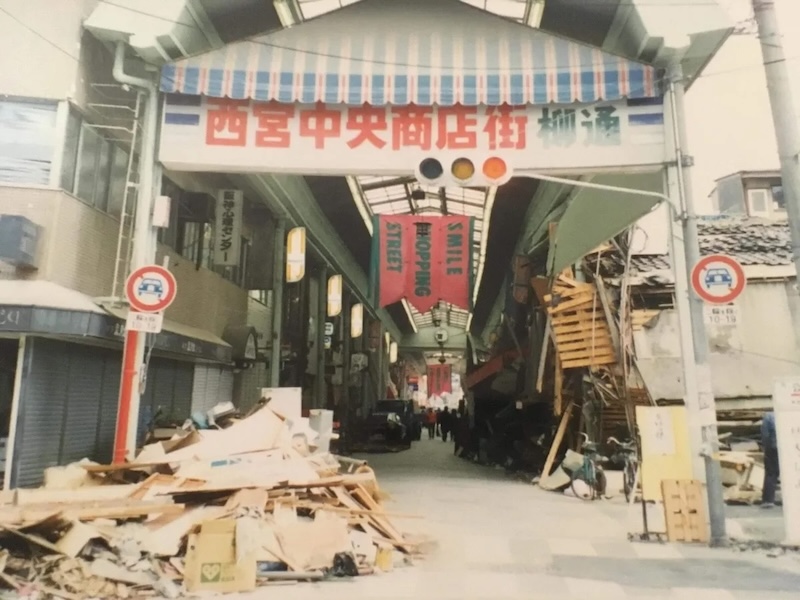
January 17 marked the 31st anniversary of the Hanshin Awaji Earthquake that killed more than 6,000 people and destroyed about 250,000 homes. Every year around this date, various media run stories about the quake and its survivors. Asahi Shimbun on Jan. 16 decided to cover a woman in her 60s from Nishinomiya who survived the quake with her family. However, her house didn’t make it. She and her husband hauled away the wreckage and then built another house on the land where it stood and which they own. Consequently, they were responsible for two mortgages, one for the house that was destroyed and hadn’t been paid off, and one for the new house. Thirty years later they are still paying off both.
Their story isn’t unusual, and isn’t limited to people who lived in the area affected by the Hanshin Awaji Earthquake. Many who lost homes in the Great East Japan Earthquake and Tsunami of March 11, 2011, are also paying off two mortgages. It’s very likely that victims of the quake that hit the Noto Peninsula two years ago are going through something similar; or that they will go through something similar. Several hundred people are still living in temporary housing.
Asahi says the Nishinomiya woman and her husband bought their first home in 1985. Previously they were renting an apartment in the city, but when the woman became pregnant with her second child they decided they needed a bigger place and bought a used house for ¥18 million, taking out a 20-year mortgage to pay for it. Sometime later, the woman gave birth to a third child, their first daughter.
Following the quake in 1995, the authorities classified the house as being uninhabitable, and so the family had to move back into rental housing outside of Nishinomiya. At the time there was no public support system for people who had lost their homes in a disaster to rebuild. Instead, they relied on private charities that collected money from donors all over Japan. Each household affected by the Hanshin quake received about ¥400,000 from the fund. In 1995 only 3 percent of homeowners in Hyogo Prefecture had earthquake insurance. The woman in question did not, so ¥400,000 was all the money they could receive toward a new home.
Eventually, she and her husband built a new house on their land for ¥25 million, for which they took out a new 35-year loan. With ¥10 million still owed for their previous home, their debt was now ¥35 million.
The woman worked in a beauty salon, making an average of ¥80,000 a month, while her husband’s salary was about ¥200,000 a month. Each month’s loan payment was ¥100,000, so they were constantly struggling to make ends meet. To complicate matters further, the woman gave birth to her fourth child, a boy, in 2000.
All four children have now left home, but the loan is still there. The balance is more than ¥5 million, which means the couple still has at least 5 more years of payments. Making their situation even more precarious, the woman is now taking care of her elderly parents full-time, which means her husband will have to put off retirement until he’s 73 at the earliest, they calculate.
Japan has one of the most extensive and sophisticated sewerage systems in the world. As of 2021, slightly more than 80 percent of the population was served by sewerage systems, an impressive statistic considering that less than 10 percent of the population had access to sewerage in 1960. This increase in coverage is just another indication of how quickly and completely Japan rebuilt and improved its infrastructure after World War II.
A recent article in Asahi Shimbun, however, reported that this trend may be reversing. According to surveys conducted by the Ministry of Land, Infrastructure, Transport and Tourism, one-third of local governments in Japan have cancelled their plans to extend their sewerage systems to new and existing residential development. Instead, household waste will be processed by on-site septic tanks.
The reason is obvious: Japan’s population is dropping, and the cost of building and maintaining sewerage systems depends greatly on population density. With fewer people living in a given area, the construction of the new sewerage comprising pipes and treatment facilities cannot be paid off in the long run.
It’s necessary to note that one-third of local governments does not mean one-third of the population. The local governments of large cities represent much larger populations than local governments of smaller cities and rural areas, and it’s mostly in the suburbs and the countryside where these governments are reviewing and cancelling their sewerage construction plans. But what’s perhaps most significant about the Asahi report is its assertion that some local governments will actually backslide on sewerage, meaning that they will replace existing sewerage systems with individual jokaso (septic tanks).
Urban-style sewerage systems collect household waste water and night soil in one central location and then treat it before releasing the filtered water back into the environment. Septic tanks, including so-called multipurpose tanks that process waste from toilets and sinks/baths separately, use on-site filters and bacteria before releasing the filtered water as runoff into the ground or rivers. Sewerage is obviously more cost-intensive because it requires long stretches of pipepines and the purchase of land where those pipes are buried. Septic tanks, including those shared by communities, are on-site, meaning they are completely contained within the property of the user.
The Asahi says that in the 1990s many local governments drew up plans for constructing new sewerage systems based on the assumption that the population would continue to increase. Reality quickly put a damper on those plans. The land ministry found that as of 2014 throughout Japan, local governments had fallen short of their stated plans to extend sewerage systems to their communities by 625,000 hectares, meaning that 625,000 hectares of land that were slated to receive sewerage infrastructure by 2014 had not undergone any construction, or about 34 percent. In fact, as of 2019, 158,000 hectares of land that were initially supposed to receive new sewerage systems instead had those systems replaced with septic tanks. And between 2019 and 2025, at least 80,000 hectares of land slated for sewerage were changed to septic tanks. For the record, the prefectures who altered their plans the most were Chiba (29,646 hectares), Ibaraki (26,726), and Fukushima (15,869).
Moreover, some local governments actually stopped using existing sewerage systems due to their inability to keep up with maintenance and improvement costs. There just weren’t enough customers any more. The article uses the example of Sanmu in eastern Chiba Prefecture, which had devised plans for new sewerage in 1995 when it was still designated as a town before consolidating with neighboring municipalities to become a city. In 1995, the population was still on the rise, but by 2015 it was decreasing, so the city revised its plans when it realized that even if it carried out the construction according to plan, it would only cover 7 percent of the city’s total population. Projections said that the city would have to spend ¥1.3 billion over the next 40 years on maintenance of this new construction. There was no way that fees from such a small number of households could pay for it, so the plan was cancelled. Around the same time, 9 other local governments in Chiba cancelled their sewerage construction plans. At present, there are 18 municipalities in the prefecture that still do not have any sewerage systems and obviously never will, regardless of whether they once made plans to construct them.
It should be noted that the central government subsidizes sewerage construction, and the land ministry itself, having taken note of the population decrease, has encouraged local governments to abandon their sewerage construction plans in favor of septic tanks. This past summer alone, 97 local governments told the ministry that they would change their plans in accordance with the ministry’s request. A representative of the general affairs ministry in charge of public waterworks told the Asahi that this change in policy of the government was mainly implemented in the face of looming infrastructure repairs, which will cost a lot of money in coming years. It would be better if local governments with older sewerage systems that are no longer financially feasible replace them with septic tanks.
One of the reasons we are reporting this news is that we use a multi-purpose septic tank, even though neighborhoods less than half a kilometer from our home are all hooked up to the city sewerage system. When we had our house built in 2013, we learned that the city had no plans to extend sewerage to our area, though we haven’t been able to find out if there were any plans in the past to extend sewerage to our area.
Still, we wanted to compare the cost per household between sewerage and septic by comparing bills we received when we were renting an apartment in the more urban portion of our city in the past and the bills we receive for maintaining our septic tank now. When we were in the city we (two people) paid a little more than ¥3,000 every two months for both water and sewerage, or about ¥18,000 a year. That was in 2013. Now we pay about ¥15,000 a year for a worker to inspect our septic tank as required by local law every three months. Since we also do not have access to municipal waterworks, we use well water, for which we pay nothing, so in a sense the septic tank is more expensive than sewerage, but that doesn’t take into account initial costs. We had to, of course, sink a septic tank and dig a well, but our local government, at the time, subsidized the cost of the septic tank since infrastructure wasn’t available in our (literal) neck of the woods; and while we had to pay several hundred thousand yen to dig a well, if we had access to the local waterworks we would have had to pay an initial cost of about ¥300,000 just to have it turned on, so to speak. In the end, the difference wasn’t that much, and in the long run, we’re probably paying less, though, we have to admit, well water around here isn’t that great.
Recent media reports say that housing starts are dropping in Japan, which is understandable but also worrying to those who gauge Japan’s economic health. Japan has long promoted new housing as a prime economic stimulus to the point of downplaying sales of used homes. It’s one of the reasons for the so-called akiya (vacant home) problem, and with the population also dropping, the government can no longer count on high volume sales of new home to fuel the economy, regardless of how attractive they make them.
It’s also why the central government has done mostly nothing about the akiya problem. As long as new home sales grew, there was no problem, as far as they were concerned. But local governments have always had to contend with empty houses, which are dangerous eyesores that threaten property values. There’s also the problem of absent owners who disappear and stop paying property taxes. Consequently, it’s been local governments that have come up with measures to address the problem.
But now it seems, the central government is getting involved, albeit cautiously. On Oct. 2, Yomiuri Shimbun reported on a new national plan that would have the government subsidizing renovations of houses that may become vacant in order to make them appealing to young families. Next year, the land ministry will launch a model project that will target “homes in cities and surrounding areas” that can be renovated into homes for couples who are raising children.
The specific type of homeowner for the project will be people who are thinking about moving out of their homes in the future and moving into care facilities. Such actions often lead to vacant properties because the owner does not have an heir or otherwise cannot sell the property. The ministry will interview such owners and, depending on the circumstances, offer the owner subsidies to have the property renovated into a home that would be more suitable for young families or facilities like daycare centers. The subsidy would likely not cover the complete cost of renovation, which the owners would have to carry out themselves.
Obviously, there is a limited benefit to the plan. The target is only properties in cities and their close suburbs, though the most serious akiya problems are in rural areas and more distant suburbs. Moreover, the subsidy system addresses homes that are not yet vacant but could be, meaning that there is still a possibility that the owner, especially if they live in a major city, can sell their property easily if they try. Presumably, the ministry is thinking of homes that would sell more easily if renovated properly, but, in our own experience, we’ve found that buyers of older properties tend to want to renovate according to their own tastes. When owners or realtors renovate for an assumed general taste it doesn’t necessarily make the property easier to sell.
The Yomiuri article also leaves out a lot of details that are needed to judge the viability of the project: At what age would the ministry contact homeowners, and what criteria is used to assess their eligibility? How would the ministry persuade the owners to carry out renovations themselves? If the purpose of the project is to check the number of vacant homes in cities and provide properties that will be easier for young families to buy as urban real estate prices go up, it would probably be more effective for the government to just buy real estate itself and rebuild to desired specifications, but that would contradict the tenets of laissez faire capitalism.
According to a ministry survey, the number of homes in Tokyo and the three surrounding prefectures where the owner is 85 or older is about 340,000. The number is projected to increase to 940,000 by 2033. The increase is similar in the Kinki region: from 210,000 now to 580,000 by 2033. A good portion of these homes were built between the mid-1950s and 1980, meaning they predate quake-proofing technology that is now required. They are beyond renovation. They need to be torn down.
As do many houses that were built after 1981, when quake-proofing standards were first implemented for residential housing. The cost of renovating some structures built even before 2000 may be prohibitive for many of their owners, especially if they are living on fixed incomes. The proposed subsidies, though not finalized yet, will not cover the total cost.
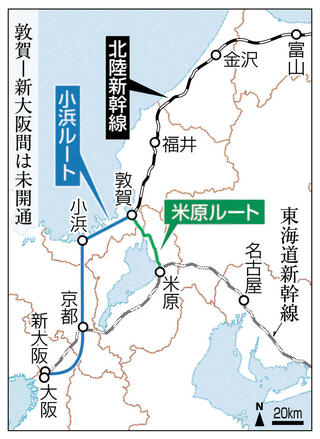
Last spring we wrote about the newly opened extension of the Hokuriku Shinkansen connecting Kanazawa and Tsuruga for Number 1 Shimbun. Eventually, the line will go to Shin-Osaka, but at the time the exact route had yet to be determined. Three possibilities were being discussed, with two of them going through the city of Kyoto.
In December, three priests representing the Kyoto Buddhist Association, which oversees thousands of temples, visited the Kyoto prefectural offices in their ceremonial robes to deliver a petition to Governor Takatoshi Nishiwaki stating the association’s opposition to the ruling coalition’s preference that the Hokuriku route go through Obama in Fukui Prefecture and then on to Kyoto Station via an underground tunnel. According to a feature in the Asahi Shimbun, the Liberal Democratic Party and its coalition partner, Komeito, decided in 2016 that this would be the route and have been trying to finalize the plan ever since. Last August, the land ministry studied the three proposed plans. The priests’ gripe has to do with ground water, which is important to Kyoto’s traditional food and beverage makers, especially the many sake brewers who rely on the prefecture’s famously pure mineral water. The tunnel for the Hokuriku Shinkansen would destroy much of the prefecture’s water source.
Asahi says that when the priests arrived with the petition, Nishiwaki was “about to leave the office,” thus suggesting he was trying to avoid them. The priests told him that they “would not be around when construction of the proposed line is finished,” and so they feel they are responsible to those who will come after them.
But it isn’t just the ground water that is causing locals to question the proposed route. Last August, local officials also calculated a new estimate for the cost of constructing the route from Tsuruga to Osaka, and found that it could be as much as ¥3.9 trillion, which is much more than the last estimate projected in 2017. And if present consumer price index trends continue as they are, the price could increase to ¥5.3 trillion. Both the municipal government and the prefectural government said they don’t know how they could possibly afford that.
In an article we wrote for the Number 1 Shimbun last year we talked about a new government scheme called Sozoku Tochi Kokko Kizoku Seido, a “system for returning inherited land to the state,” which makes it possible someone who has inherited land they don’t want to transfer title to the central government. We expressed doubt as to whether the scheme would at all be effective in resolving the huge unmanaged land issue in Japan because the conditions for the government accepting the land in question seemed onerous. In order for the land to pass approval for acquisition, the nominal owners would be subject to a screening process that most would not be able to pass.
It’s been more than a year since the plan went into effect, and according to a YouTube interview with the real estate lawyer Tatsuya Arai, who specializes in abandoned properties, the system seems to be working better than expected, even if the number of cases accepted by the government is still pretty small. Arai says that the prognosis for the government scheme “is unexpectedly good,” according to lawyers and notaries he talked to.
The Ministry of Justice (MOJ) released statistics related to the 1,905 applications it had received for the ssystem as of April of 2024. Land registered for agricultural use accounted for the largest number of applications, 721. After that, 698 applications were for residential land, 280 for “forested” land in mountainous areas, and 206 for “others.” The reason residential land and forested land were not represented more, Arai believes, is because the conditions for application made it difficult. Applications must be accompanied by photographs of the property in question showing border markers (kui), which in the case of forested land in remote mountainous areas is difficult—most owners of such land don’t even live close to it and, in some cases, may not even know exactly where it is. In the case of residential land, the property must be completely cleared, meaning any structures that were built on it must be torn down and the land “cleared.” Moreover, many residential lots developed just after the war were not surveyed properly and/or the lots were built in cities where laws were later passed designating road widths and other infrastructure regulations, so the border markers may not be legal. But farmland is relatively easy because it usually contains no structures and the borders are usually easy to discern because owners needed to distinguish their land from their neighbors’.
Of the 1,905 applications received, 248 (107 residential, 57 farm, 6 mountain, 78 others) were approved, which may not sound like a lot, but one has to take into consideration that it requires at least 8 months to screen the applications, according to the MOJ. Then, after the screening, there is another process that must be carried out before the government decides to acquire the land. For Arai, the important aspect is not how many applications have so far been approved, but how many have not been approved, and that number is only 18. That means the approval rate for the applications initially submitted is 93 percent, which is much higher than Arai and his colleagues in the legal professsion thought it would be.
Of course, the main obstacle is, as already mentioned, the set of conditions for the application, and Arai is positive that there are many more than 1,905 people—he estimates the number is in the millions—who want to get rid of the land they have inherited or will inherit. In that regard, he thinks more people should make the effort to apply. In addition, the ministry has not promoted the new scheme very much, so many people who could take advantage of it may not even know about it. But that aspect could also be hiding a less convenient truth, which is that the central government is not really enthusiastic about acquiring land it cannot use easily. He has the feeling that once the number of approvals reaches a certain level, the ministry may tack on new conditions that will make it more difficult for approval. Also, it costs money: ¥14,000 for the application itself and then, once the application is approved and the government decides to acquire the land, a much larger fee to actually execute the transfer of title. He mentions that 212 applications were actually withdrawn during the screening process, which could indicate several things: the applicant found a buyer for the land, or the applicant realized how much it would cost them if the application was approved. But even factoring in these withdrawals, the approval rate is still quite good.
Arai recommends that anyone who wishes to take advantage of the system call the Ministry of Justice and explain their situation. The MOJ will tell them outright if their application even has a chance because they don’t want to waste time either. He says that the ministry received more than 10,000 inquiry calls as of April 2024, so since only 1,905 applications were made, it indicates many of the callers had already been discouraged from applying. That said, if the MOJ thinks you have a case for an application, the chances are good it will be successful. He also adds that the MOJ is “the strictest of all the government ministries,” so make sure the applications are properly filled out. Even an incorrectly written kanji might mean a rejection.
Just before Christmas, the Asahi Shimbun ran a story in preparation for the first anniversary of the Noto Peninsula earthquake, whose effects still weigh heavily on residents of the area. Demolition work on structures damaged in the quake continues because many of the houses in the areas most affected were already abandoned and thus local authorities couldn’t contact owners easily. The article first focuses on the city of Suzu in Ichikawa Prefecture. The coastal residential zone was badly damaged, and since houses were densely packed and the streets only wide enough for one car to pass through at a time, cleaning up the area has been very difficult.
According to Asahi’s investigation, many of the houses in this area were not only already vacant when the quake hit, some were in such bad condition that they were uninhabitable, mainly because the houses had no value whatsoever. A survey conducted in 2022 found that 1,365 houses in Suzu were abandoned, of which 60 had insurmountable structural problems. The quake caused more than 3,000 houses to collapse, but this number only covers houses that were occupied, and the city has yet to carry out a more extensive survey to comprehend the full story with regard to vacant houses that collapsed or were fully damaged.
The problem for the city is that tearing down a house requires consent from the owner, and if local authorities cannot contact the owner they usually do nothing; but even if they do find the owner, it doesn’t mean that person can be compelled to either renovate the house or demolish it, both of which cost a lot of money.
The situation is even worse in nearby Wajima, where 30 percent of the houses in the “urban” part of the municipality are vacant. Local leaders told Asahi that some of the owners of these houses do occasionally stop by to visit their properties when they come to pay their respect at family graves in the vicinity, which makes these leaders reluctant to tell these owners they have to do something with their properties. “It might be difficult for them to part with the house,” said one official.
Asahi extrapolated these issues to talk about fears regarding the long predicted Nankai Trough or Tokyo earthquakes, which would affect a huge area from the capital all the way to the western edge of the Kansai region. If a quake with the intensity of at least minus 6 on the Japanese scale struck this area, it could be a bigger mess than anticipated, since about 1.45 million houses in the region are vacant wooden structures, a number that increases every year. Asahi’s own research found that about 750,000 of these houses are abandoned, meaning the owners of more than half do not even visit or keep up the property. Even in Tokyo’s 23 wards, where real estate values are the most expensive in Japan, there are 55,000 abandoned wooden houses, the most being in Setagaya Ward (7,500). One Setagaya official said the problem will only get worse because the boomer cohort will soon die out, leaving their children with properties those children likely don’t want to take over.
We’ve written about Yusuke Yoshikawa, a YouTuber who covers what he calls “genkai new towns,” which are difficult to describe, but anyone who has followed our blog for any extended amount of time should be familiar with the concept. Essentially, Yoshikawa seeks out derelict housing developments, mainly in Chiba Prefecture where he lives (and where we live, too). He makes videos of these subdivisions, which contain not only abandoned houses, but plots of land that have never had anything built on them and thus are usually overgrown with vegetation because the people who own them have given up on whatever plans they had for the land. According to Yoshikawa, most of these plots were bought for investment purposes during or shortly after the bubble period of the late 80s and early 90s. His well researched and very funny videos have garnered him enough followers to allow him to make a living off this pastime, and he has recently been in demand as a paid speaker and published a book that is selling well. He’s a self-made success, but not in material terms. As he has pointed out, he himself lives in one of these genkai new towns, somewhere past Narita, because he could no longer afford to live in Tokyo, where he was a cab driver. In a sense, he’s stuck where he is but says he nevertheless can blog from a unique perspective about the state of Japanese real estate. He’s the most honest, clear-headed critic in the field, and he’s totally a layman.
On Dec. 6, Asahi Shimbun ran an interview with Yoshikawa conducted at his home. The interviewer sounds a bit naive about Japan’s property situation, but maybe he’s just taking the role of the average reader. In any case, if we were doing the interviewing (and we hope to someday) we’d have more pointed questions, but this will do for now and, we hope, steer more people to Yoshikawa’s blog.
As the reporter points out in the introduction, Yoshikawa lives on the edge of the Tokyo metropolitan are, meaning a place where you can sense the population dropping off and nature taking over places where people were supposed to be living. He notes “land that was prepared for residences” but which contain “no buildings.” Infrastructure is either non-existent or “in very bad condition.” He hopes these descriptions help the reader gain a better understanding of Yoshikawa’s term, genkai new town, which has entered the vocabulary thanks to the internet. When he meets Yoshikawa at his home in one of these developments, he remarks how lonely it is. The paved streets and retaining walls make it clear that this area was prepared for residences, but there are no people.
Yoshikawa explains that the area was developed “several decades ago” but for the most part very few people built houses on the land they bought. The interviewer mentions very old signs with the names of real estate companies that, presumably, are trying to sell particular plots, and Yoshikawa responds that in most of these cases the seller has given up and doesn’t even come to keep the plot tidy. These developments are what he calls “small scale new towns,” new towns being, in the public’s mind, large residential projects carried out with the help of public entities to develop tracts of land. Most of the more well-known new towns were built in the 60s and 70s, but these small scale new towns were built by developers as subdivisions of land that was no longer being used for agriculture, mainly during the bubble period, when real estate values skyrocketed and commercial entities were convinced that people who couldn’t afford homes in the major cities would flock to the outskirts of suburbia to live. These companies were overzealous and so were the small-time investors who bought plots in the belief that they could sell them later for more money. At some point, however, there were just too many small scale developments being built and the whole endeavor just collapsed.
He goes on to explain how he was living in Tokyo’s Koto Ward in 2017 and having a tough time making ends meet because the cost of living kept rising. Both he and his wife worked, but they had no savings or assets and assumed if they remained in Tokyo they would just be living hand-to-mouth in small rental properties for the rest of their lives. So they looked for a place to buy that they could afford and this derelict property was the closest thing they could find. Though the development has 64 lots, only 7 contain houses.
More high-rise condominium shenanigans. On Nov. 17, Tokyo Shimbun reported on 118 redevelopment projects being carried out with the help of local governments that don’t necessarily benefit people who live in the localities but nevertheless are contributing to the projects through local taxes. The article is based on a Kyodo News survey of local governments that found 90 percent of these entities paid or will pay a total of ¥1.0543 trillion in subsidies to developers and/or construction companies that are working on these projects.
Regional cities rely more on public funds than do large regional capitals, and four of the projects surveyed apparently received more than half their total funding from tax revenues. What makes the situation concerning is that 66 of these projects comprising 19 prefectures are centered on tower condominiums, which by definition are sold to upper income people, mainly as investments. Moreover, Kyodo found through the inspection of publicly available documents that there has been “no real long-term planning” attached to these urban redevelopment projects, meaning they are simply enterprises carried out by developers who want to sell condos in the short term. Local residents will receive no ascertainable benefits from these projects, though they are helping to pay for them. Kyodo calculated that as of the end of fiscal 2023, the 118 projects were costing a total of ¥8.52 trillion to build, with 12.4 percent of the cost of 104 of the projects coming from local governments, which would come to ¥1.0543 in subsidies.
Some projects received more public subsidies than others. A tower condo construction project at the North Exit 1 of Fuji Station in Fuji, Shizuoka Prefecture received 57.7 percent of its funds from public moneys; the Machikata-cho 1 project in Numazu, Shizuoka Prefecture received 56.9 percent of its funding from the local government; and the Yokote Station East Exit 2 project in Yokote, Akita Prefecture received 53.3 percent of its funding from tax revenues.
There’s a certain information lag that comes with media reporting on larger social phenomena. The whole akiya/vacant housing issue has become big news in Japan over the last decade, but it was a fact of Japanese life well before that. This blog, in fact, which began in 2009, was initially conceived as a means of explaining our belief that Japan would eventually have to face a surplus of housing due to its policy of building and selling new homes without any regard for existing and future housing stock. Akiya had been on the increase well before the media started paying attention, and just now the press is beginning to report on other effects of oversupply, but in the context of the demographic crisis, meaning depopulation.
A recent story in Gendai Business covered a bestseller by Masashi Kawai called Mirai no Nenpyo (Chronology of the Future), which puts into perspective how depopulation will affect the economy with respect to four fields: housing, medical care, local government, and public safety. In terms of housing, Kawai says the main immediate effect will be that houses will become difficult to sell, a situation that is already quite apparent in certain rural suburban areas of Japan. However, Kawai is not just talking about existing or used housing, which has been difficult to sell for a while now, but also new housing. That’s because the prime demographic for new house sales, people in their 30s with families, is shrinking in size so significantly. Statistics can be misleading. Overall, land value has increased in Japan, as well as the demand for new housing, but these two circumstances have been spurred by seniors with money to burn. They buy expensive condominiums in city centers as a means of reducing the inheritance tax burden for their heirs; or these high-end properties are being bought as investments because the buyers believe that real estate is the most stable place to park their money. Consequently, the market as a whole seems primed for growth, but it’s lopsided.
Tomorrow will bring what could be termed the 30-30-30 problem: In 30 years the number of people in their 30s—the prime demographic for new house sales—will have shrunk 30 percent compared to right now. This cohort is already marrying later in life than their parents did, which means if they do buy a home it might not be until they are in their 40s or even later. Right now, the common time frame for housing loans is 30 years, but as the home-buying layer of the population ages, the terms for most mortgages may shorten to 20-25 years, which means the people seeking these loans will likely be faced with higher interest rates and thus be looking for less expensive housing.
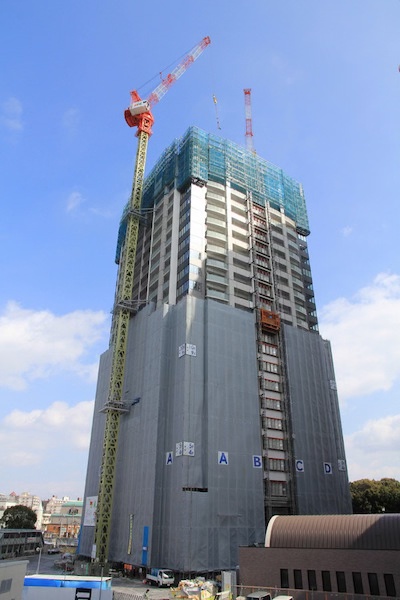
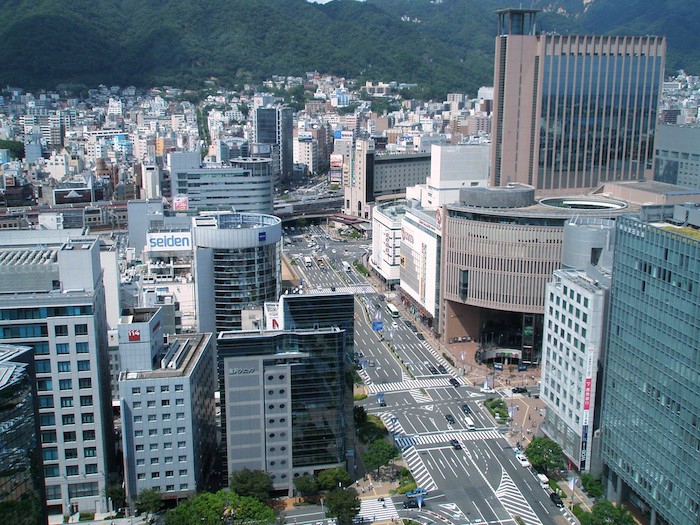
The major residential developer Sumitomo Fudosan will soon complete construction of two high-rise condominiums in the Sannomiya district of Kobe. The pair of 27-story buildings comprise 690 units, with apartments on the upper floors fetching as much as ¥200 million for their panoramic view of Kobe port.
Sales have been very good, and according to a recent article in the Asahi Shimbun it’s not just because of the great view and the vanguard amenities. Word has already gotten out that these two towers will be the last high-rise condos built in Kobe, thus increasing their scarcity value, which means that over time their resale value could go up.
But likely that would only be in the short term. The reason there will not be any more “tower mansions” erected in Kobe is that the city has decided to prohibit new housing construction south of JR Sannomiya Station, which is a commercial district. In addition, the city has restricted the capacity rate of any new residential construction around Sannomiya Station to 400 percent, which means no new tall apartment buildings. Essentially, the municipal government is limiting the amount of new housing that can be built in the city center.
Their reason for this restriction is worth scrutinizing. According to Asahi, many cities in Japan are competing with one another to attract new residents with high-rise condominiums in their respective city centers, the idea being that people want to live near their places of work. Osaka, for example, which is next door to Kobe, is redeveloping the Umeda district north of Osaka Station, a commercial area, and one of the prime features of this redevelopment is high-rise condominiums that the city leaders hope will attract well-to-do working people. The mayor of Kobe has said that this kind of policy doesn’t make any sense when a city’s population is decreasing, as Kobe’s is. When you build new housing while the population is going down, you’re basically creating waste for the future.




 Cat Foreheads & Rabbit Hutches