Price is right, for the moment

The news that land prices throughout Japan have risen 0.3 percent over last year’s prices was covered extensively by the media last month. Though 0.3 might sound negligible, it’s the first time in 30 years that the change was in the positive direction. Of course, land values in the three major metropolises have always gone up in a net fashion to a certain extent, but prices in what are called “regional areas,” meaning the countryside and smaller urban metropolises far from Tokyo, have either gone down or remained stagnant. The big news is that this increase has happened two years in a row, thus proving it isn’t just a fluke. According to the Asahi Shimbun, four regional capitals led the surge—Sapporo, Sendai, Hiroshima, and Fukuoka. During the pandemic these cities saw land price increases of between 4 and 6 percent, but last year the change was plus 8.1 percent. As it happens, rural land continued to lose value during the pandemic, but on average last year it leveled off: prices in 27 of 38 prefectures surveyed went down as a whole, but the prices in the capitals of 20 of these prefectures either increased or remained the same, further proof that land value may finally be turning the corner, so to speak. 

What this means, according to Asahi, is that people are moving into these regional cities in substantial numbers, thus boosting hiring and education, which in turn spurs redevelopment. So far the most publicized examples of this trend have been the introduction of semiconductor factories into areas where there was previoulsy little industrial development, namely Chitose in Hokkaido and Kikuyo in Kumamoto. In the former, the company Rapidus is building a factory that will open in 2027, employing about 1,000 people. Local realtors told Asahi that individuals and businesses are snatching up property near Chitose Station, the main train hub in the area, which is about 40 minutes from Sapporo. Some realtors claim that there is no more vacant land to be had around Chitose Station, and what is available slightly farther from the station is “very expensive.” By the same token, TSMC, the Taiwan semiconductor maker, plans a factory in Kikuyo, and the news has caused land prices in the area to skyrocket. One reason for the unusual increase is that a lot of people who own land in the area are not selling at the moment, but waiting for land values to increase even more before they put their properties on the market. 

Another reason for regional increases is that retired people are selling their homes and moving into apartments and condominiums in regional cities, thus boosting property values in those cities. One developer told Asahi that in Yamagata City a new 70-unit condominium still under construction is almost sold out and cites the availability of services in the area as the main appeal: a ten-minute walk to Yamagata Station, and within a 5-minute walk 3 hospitals, a full range of public schools and a retail district. Even with prices going up, a unit in the new condo is very affordable, 3LDK for only ¥35 million, including tax. One 88-year-old woman told Asahi that she moved to an apartment in the area after selling her house and since then her life “has become easier because I don’t have to shovel snow.” Asahi notes that land prices in Yamagata Prefecture are still dropping, but prices in Yamagata City have increased for 9 years in a row. 

Read More

Not cool

According to news reports, the extreme heat we’ve had to put up with this summer is going to be a normal thing from now on. For a while it seemed as if Japan was going to be spared the worst of it, but that isn’t the case any more and forecasters are saying we’ll be sizzling until early October. The authorities warn people, especially the elderly, to use their air conditioners whenever necessary because heat stroke can creep up on you, even when you’re indoors and out of the sun. According to the land ministry, 89 percent of Japanese homes have air conditioners, but that portion drops along with income. Of households that earn less than ¥3 million a year, 84 percent have AC. 

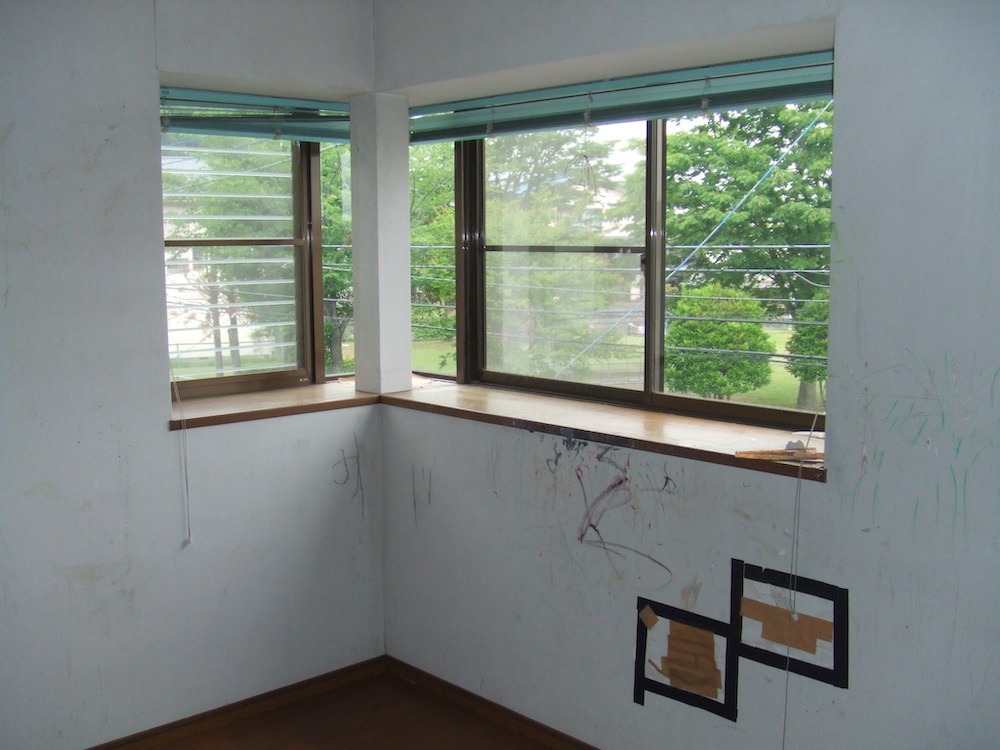
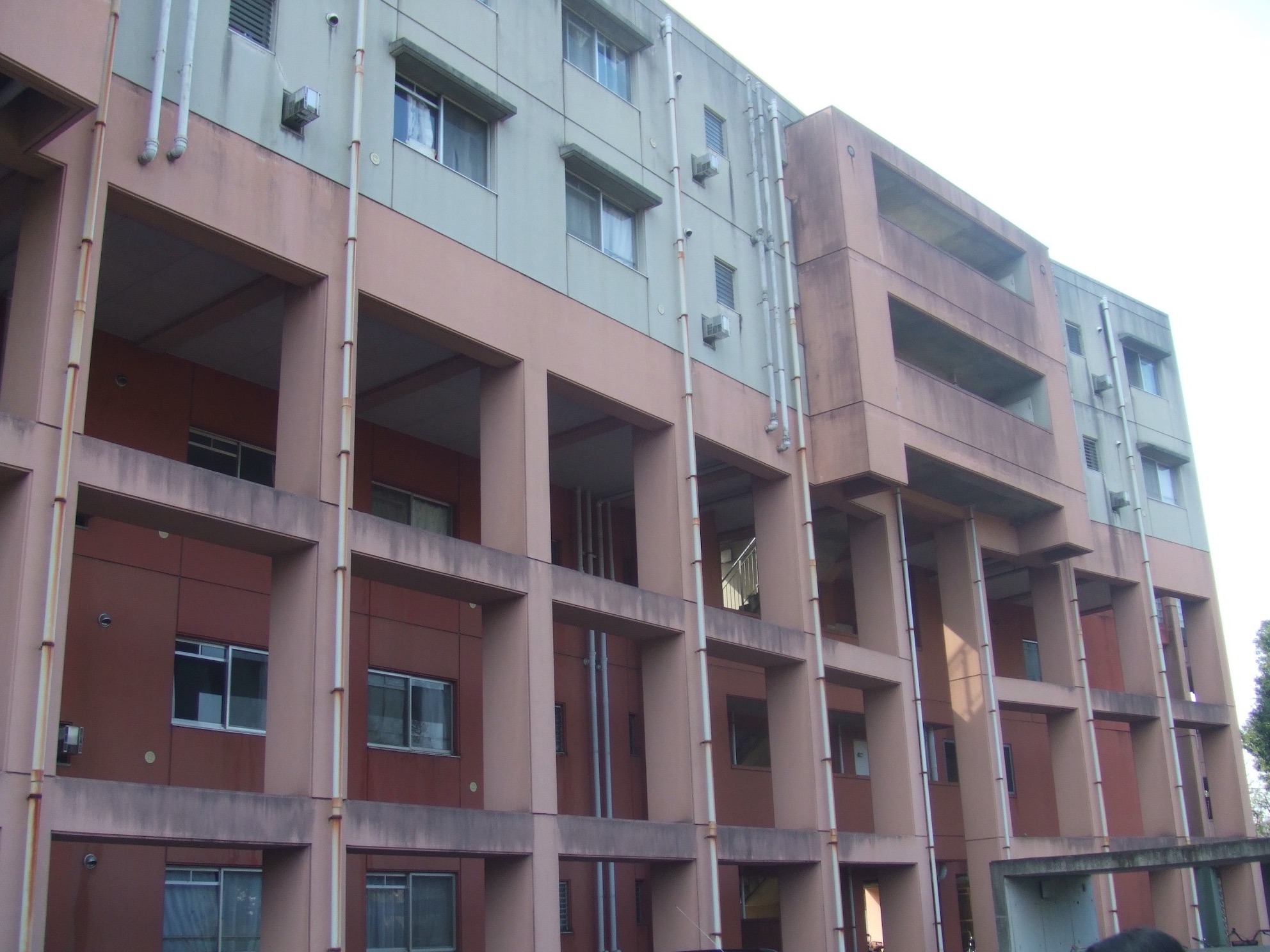
There’s one demographic, however, that lacks AC almost altogether, and mainly for systematic reasons: people who live in public housing. An August 1 report in the Asahi Shimbun told of a 43-year-old woman who lives with her three children in a 3DK apartment run by the Tokyo Metropolitan Government for low income families. The rent and management fees for the apartment come to about ¥30,000 a month, which is half what the woman paid for a private rental apartment before she moved into the prefectural building 3 years ago. At the time, the apartment did not have an air conditioner, so she bought one for ¥70,000, including installation, at a discount appliance shop. Her apartment is situated on the corner of the 6th floor and gets a lot of sun, so nights can still be intolerable due to poor air circulation. The woman and her 13-year-old daughter share a six-mat room, leaving her two sons, one 19 years old, the other 17 years old, with a room each to themselves, but in the summer they all sleep in the same room because that’s the only one with AC, which isn’t strong enough to cool the whole apartment. Consequently, the sleeping arrangements in the summer are close and uncomfortable. During the day, they place electric fans strategically throughout the hallways to distribute the cool air, but it doesn’t work very well. The woman would like to buy a second AC, but there’s no place to put it. Her room is next to the veranda, so the fan unit can be placed there, but there are no other places in the apartment where a second AC could be installed. The building, which is 40 years old, was not designed with AC in mind. The electrical current in each apartment is set at 20 amperes, though it can be increased to 30, which still would not be enough. If the AC is on, she has to  be careful not to use too many other appliances, otherwise the circuit breaker will trip. And, of course, her electric bills are high. Public housing is notorious for having bad insulation, and her salary as a caregiver is only ¥220,000 a month. Besides, if and when she leaves the apartment, she is required to leave it as she found it, which means she will have to remove the AC and take it with her. 

There are 2.16 million public housing units in Japan, all run by local governments. The central government requires that all have kitchens, flush toilets, wash rooms, and bath rooms. AC is not required. The land ministry says that 60 percent of public housing units are more than 30 years old and 60 percent contain a head-of-household over 60. The Tokyo Metro government only provides 260,000 units (individual wards may run their own low-income public housing), 79,000 of which were built before 1970. None of the public housing in Tokyo comes with AC, though newer buildings have features that make it possible to install AC units. When Asahi contacted the relevant prefectural authorities, they said that older buildings are regularly renovated but not in terms of improving insulation or making it possible to install AC units. One staff member said, “We formulate design policies in terms of cost effectiveness.” 

A professor of environmental engineering told Asahi that all public housing in Japan is concrete-based and poorly insulated compared to wooden buildings. That means that temperatures don’t drop appreciably at night. Even if a unit in such a building has AC, it’s possible that the interiors will remain above 30 degrees. This is particularly worrisome for elderly tenants, who are more susceptible to heat stroke. Top floors are particularly dangerous since rooms sit right under the roof. According to medical statistics, about half the people who suffer from heat stroke and live on the first floor of a collective housing facility end up hospitalized while 90 percent of heat stroke patients from top floors are hospitalized. 

Another professor who studies low income households says that even when they have AC installed, elderly people in public housing often don’t use it because of the electricity costs. He cited statistics showing that most of the people hospitalized in Tokyo for heat stroke were old people who simply did not turn on their AC, especially this summer after electrical utilities nationwide raised prices considerably. He has demanded for years that local governments not only improve insulation in public housing, but that they install air conditioners in all apartments, because the problem of heat stroke among lower income people is only going to get worse from now on.

Resort resources

One of the resort condos in Yuzawa offering short-term stays

Last month, Gendai Business published an interesting article about the glut of empty resort condominiums throughout Japan and what some local communities and businesses are doing about them. This blog has addressed the “resort mansion” problem, which stemmed from a post-bubble construction boom of vacation properties. Many of these condos were built near popular ski resorts, since there was also a ski boom in the 80s and 90s that eventually went bust. Consequently, the owners of these condos stopped coming to ski and didn’t keep up their properties. Market values plummeted, sometimes, as Gendai points out, to as little as ¥100,000 for a standard 50-square meter unit. The reason for the cheap price was more than just low demand. Resort condos have higher monthly management and repair fees owing to extra facilities, like large, collective bathing facilities and ski lockers. Absentee owners were not paying these fees and anyone who bought the units were expected to pay them retroactively. There were also property taxes that local governments were keen to recoup.

Gendai’s take on the matter is optimistic, starting with the idea that, as inbound tourist traffic goes back to pre-COVID levels and the yen remains low vis-a-vis the dollar and other currencies, foreigners have become interested in these properties. The novel inference in the article is that most of the interested parties are rich Southeast Asians for whom snow is a fascinating draw. The reporter states that while “there are high mountains” in other Asian countries, “the snow doesn’t normally accummulate,” meaning that a sport like skiing isn’t feasible in these countries. Even China had to manufacture snow when it hosted the Winter Olympics. So if Asians do partake of skiing and they have money, Japan is a much more convenient destination, because ski resorts are eash to access from Tokyo or any other city with an international airport. 

The reporter may be stressing this point beyond its natural flexibility, but what he wants to show is why one ski resort town, Yuzawa in Niigata prefecture, is seeing a Renaissance in its property market. Yuzawa is an hour and 20 minutes by Shinkansen from Tokyo; 3 hours if you take a highway bus. And while some ski resorts in Japan have seen less snow in recent years, Yuzawa still has enough of the stuff to maintain its ski and snowboard cred. It may not be Niseko in Hokkaido, which is treasured by world ski freaks for its natural powder, but Niseko is also expensive and more remote and, besides, it seems to be overrun with Australians during the high ski season. So Yuzawa is accessible and affordable to a wider cross section of tourists. Moreover, it has hot springs, which are just the frosting on the cake for Asian travelers. And, in fact, as Gendai points out, this aspect at first made Yuzawa a problem for Asian tourists, since most Japanese tend to think of Yuzawa first as a hot spring destination rather than a ski resort, which didn’t really show up until the late 80s, so there are still some inns in the region that don’t welcome non-Japanese speaking guests. 

But Yuzawa has plenty of resort condos, and local real estate companies, not to mention the local government, are keen to introduce them to foreign buyers. Last February, another business publication, Toyo Keizai, ran an article focusing on the condo market in Yuzawa. Since the end of COVID, prices have almost doubled, which may not necessarily say much since, as Gendai pointed out, some units were going for as little as ¥100,000. But Toyo Keizai claims that the average price for a resort condo in Yuzawa now is more than ¥2 million. 

Read More

Dead reckonings

Typical wooden apartment building

An article in the July 1 Asahi Shimbun reported on a police investigation of a staff member of Tokyo’s Edogawa Ward’s public welfare department who was suspected of “abandoning a dead body.” Usually, when police make such an accusation, it’s a preliminary stop toward a charge of murder, but this case is very different. 

According to the article, a 65-year-old man died in his Edogawa home in January. A caregiver who regularly visited the man discovered the body on January 10 and called a physician at the clinic that dispatched the caregiver. The doctor went to the residence and confimed that the man was dead and, following official procedures, reported the death to the relevant case worker in the ward’s welfare department, since the deceased had been receiving public assistance. 

But while the case worker later acknowledged that he had received the doctor’s report, apparently he did nothing. On March 27, an agent of a rental supply organization visited the deceased’s home to pick up some equipment that had been lent to the man through the welfare program and found that the body was still there two-and-a-half months after being reported. In trying to explain this lapse in procedure, the case worker said they had been overwhelmed with work and had simply kept putting off the matter of the dead body. It should be noted, however, that this worker wasn’t the only person aware that the man had died. After receiving the doctor’s report, the case worker immediately informed their superior about the death so that the ward would stop its public assistance to the man. Following an investigation, the police said they sent their file to prosecutors, but apparently the case worker wasn’t charged. When contacted by the Asahi, the head of the ward’s welfare department said they purposely did not publicize the incident and would have nothing to say until a news conference scheduled for July 3, which is today. 

According to subsequent media reports the deceased had been renting, which makes the story even more bizarre: When they didn’t receive a monthly payment, why didn’t the landlord check on the tenant?

In any case, the story will likely only reinforce an unfortunate trend that has been on the rise for several decades and which was described in a June 16 post on the Daily Spa!. Landlords have become increasingly averse to renting to people “over 60” because they are afraid that elderly tenants will die on the premises, thus causing them considerable expense in preparing the residence to be reoccupied.

The main thrust of the article is that more and more seniors are having difficulties finding rental properties that will accept them. Many real estate agents for rental properties don’t even allow elderly people through the front door because it’s too much trouble. Spa! says that the general image in Japan is that the elderly are all homeowners, but, in fact, according to a government white paper, one-in-three people living in single-person households who are over 65 do not own the homes they live in. And this portion is increasing. As one agent who specializes in helping senior renters find dwellings told the magazine, most conventional realtors won’t even talk to elderly renters “no matter how much money they have.” The agent said that according to his company’s in-house survey one out of four elderly people say they’ve been rejected for rental housing as least once, and of these 13 percent said they’ve been rejected more than 5 times. 

Read More

Reform or Die

Here’s another chapter from our unpublished book about housing in Japan based on our own experience of buying/building a home. This one is about keeping up properties.

One of the most popular sub-genres of reality TV is the home improvement show. In 2002, Japan’s Fuji TV launched one called “Before/After,” where superannuated, usually cramped properties were magically transformed into marvels of modern design. The producers hit on a fool-proof hook for the show that they exploited successfully week after week, year after year, without seeming redundant. 

People with properties they wanted to fix up would contact the producers, who sift through the candidates, looking for the most broken-down or unusual cases. The best sequences highlight houses that would seem impervious to improvement due to their state of disrepair or local environment. A surefire hit is always the hovel located in one of Tokyo’s warren-like residential areas, usually dating from just after the war, when neighborhoods were constructed on the fly, and which require not just ingenious design skills to improve, but superhuman feats of logistics, since there usually isn’t any room to get heavy machinery to the property owing to narrow alleyways. The architects are lone wolves who waive their design fees and charge only for materials and labor. The recipients of their largesse come up with a ceiling amount they will pay, thus adding another layer of challenge to the architect’s task. The family is then sequestered off-site while the work is done and documented in detail by a film crew. The residents are not allowed to view the property until the “reform” is complete. The climax is dramatic, with the family entering the sparkling new house with tears streaming down their faces and the anodyne voice of the female narrator showing us the stark differences achieved by the architect. 

“Before/After” sparked a boom in home improvement TV shows but not in home improvement–or, at least, not to the extent that it made a difference in the marketability of older homes. One of the main problems with remodeling in Japan is lack of regulation and oversight. The vast majority of homeowners can’t afford the kind of architects featured on “Before/After,” but anyone can start a home improvement company. In the past, the biggest complaint with regard to remodeling was fraud, characterized by operations that over-billed elderly people for poor work. Eventually, the complaints became more general owing to greater demand by homeowners who decided it was cheaper to renovate their present houses than it was to buy new ones, even if that wasn’t necessarily the case. In 2011, the Center for Housing Renovation and Dispute Settlement Support addressed more than 4,500 claims, mainly in Tokyo. In most cases there were no contracts, design plans, or even written estimates. If a particular job costs less than ¥5 million, according to the law, the company that carries it out doesn’t have to be registered as a construction firm, though remodeling companies are supposed to be insured for shoddy work. Also, the work doesn’t need to be inspected by the relevant authorities unless “it affects the integrity of the structure.” Some years ago a Nagoya woman whose condo became virtually unlivable after a reform company replaced her floors and windows couldn’t sue because there was no contract. The National Consumer Affairs Center of Japan handled more than 13,000 reform-related complaints in 2011, or twice as many as in 2010. Since there were no regulations, the center urged homeowners who were going ahead with remodeling to record all conversations. The Japan Bar Association in April 2011 urged the construction ministry to pass new laws to cover the industry, no matter how small the company.

When it comes to home improvement, experts recommend hiring designers who understand the engineering aspects of a remodeling project and can subcontract the various jobs to tradespeople. Such projects, however, can run into the tens of millions of yen, which is why comprehensive discount remodeling companies have sprung up, offering total renovations for much less. Many are associated with major retail home improvement centers, and are thus deemed to be reliable. They cut costs by buying materials in bulk, which usually means limited choices for the consumer. As with anything, you get what you pay for. 

But most homeowners in Japan don’t renovate in any substantial way, because they’re not conditioned to think of their properties as an investment. And until very recently, there were no government incentives to improve properties. The idea that one’s house, as opposed to the land it sits on, accrues or even retains value over time isn’t widespread in Japan, so as long as people can put up with the wear and tear, they let their houses slide. So the question becomes: Do the houses not retain value because people don’t keep them up? Or do they not keep them up because they believe their houses don’t retain their value? In any case, the majority of used houses, especially those built before, say, 1990, are virtually junk. 

Read More

Condos can be akiya, too

Reviewing our posts on this blog for the past year or so, we noticed that much of our writing is related to akiya, or vacant housing, which has become an increasingly visible problem that the media is finally addressing. However, when we look at the statistics, we notice that akiya are not limited to single-family houses, which is usually how the problem is framed in the press, but, in fact, is mostly comprised of apartments and condominiums. 

The reasons for this lack of coverage may have to do with the fact that the image of apartments is that they are rented out, while the image of akiya is that of abandoned properties, so it’s difficult to imagine an apartment that temporarily does not have a tenant to be permanently vacant. However, condominiums are a different story since they are bought and sold, and for the most part when the press talks about the condo market they only talk about Tokyo, where apartments and condos are still in demand, even used ones.

But we found an article that appeared last spring in the business magazine President that covered vacant condominiums in depth, and, apparently, the situation is as dire as it is for single-family houses, even if the problem isn’t as visible. 

The article quotes a number of experts, including an economics professor, Hiroaki Miyamoto, who says that in ten years one out of every four housing units in Japan will be vacant, and that the majority will be collective housing units, meaning condos or apartments. The main reason will be the lack of funds available to carry out long-term repairs and renovations on older buildings, which, as a result, will fall into disrepair and become not only difficult to sell, but in many cases uninhabitable. 

To the international finance community, Japan is already considered a “pioneer” in the onset of permanently vacant properties, especially after the IMF conducted a study of the phenomenon in 2020. The outcome of the study was that vacant properties bring down property values in the communities where they are, and thus adversely affect regional economies. 

As we’ve noted a number of times, the Japanese government carries out a large-scale survey of the housing and land situation every five years, and according to these surveys the gross number of housing units in Japan continues to increase even as the population has leveled off and started to decrease due to the birth rate. In 2018, the last time a report was released, the number of housing units stood at 62.4 million, while the number of households was 54 million, meaning that there is a 16 percent excess of housing units. 

Until 1963, the number of households in Japan exceeded the number of units, but this ratio reversed in 1968 and ever since the number of units has continually increased in relation to the number of households. 

Moreover, 85.9 percent of households in Japan, or 53. 6 million, contain full-time residents, meaning that 8.79 million units, or 14.1 percent of the total, contain no residents, and almost all of these are defined as “vacant” by the government—8.49 million, or 13.6 percent of all housing units. A property’s “vacant” status depends on how much or often it is used. In that regard, the portion of vacant properties has been increasing since 1988, when the vacancy rate was 9.4 percent. 

President cites the methodology of the National Social Welfare Population Issues Laboratory, which has determined that the number of households in Japan will peak at 54.19 million in 2023, which also happens to be the year when the government releases the results of its latest housing survey. From now on the number of households will drop, and by 2040, the laboratory predicts the number of households will be 50.76 million, or 3.24 million less than it was in 2018. Extrapolating this trend further, the number of akiya will invariably continue to increase at an accelerating rate; that is, unless more properties are demolished.

As it stands, the number of demolished properties is also accelerating. Between 2008 and 2012, the number of homes demolished was 30 percent of the number of new homes that were built. Between 2013 and 2017, this portion increased to 62 percent. Nomura Research used this statistic to predict the vacancy rate for the future. If the 2008-2012 rate of 30 percent is used, the vacancy rate will be 25 percent by 2033 and 31 percent by 2038, but if the tendency shown in the change in the rate through 2017 is used, the vacancy rate will be 18 percent by 2033 and 20.9 percent by 2038. 

So while the vacancy rate will continue to increase, it could slow down if the rate of destruction of superannuated properties increases as well, but that isn’t a given, since new home construction isn’t slowing down appreciably. 

Read More

Mind the gap

Yours in exchange for your first-born male child

Tokyo real estate has become even more expensive, though it should be noted that it’s still reasonable when compared to other large cities in the world. An article that appeared Dec. 7 in the Tokyo Shimbun cited a survey about luxury condominiums where the price of a representative example in trendy Moto Azabu was pegged as the standard. If the Moto Azabu condo price is set at 100, then the price of a comparative condo in London is 181 and one in Hong Kong 218. (Masako: “And even with a luxury condo in Japan, you still get only one toilet.”)

Tokyo isn’t as expensive as most foreign media think it is, but even disregarding the usual markups for properties designed for so-called expats, condominiums in the capital are still out of reach for the average worker, and have become more so since the advent of the pandemic. According to the same Tokyo Shimbun article, the average price of a new condominium in the 23 wards in October exceeded ¥90 million. For sure, after COVID hit, more people decided that if they could telework, they’d rather live outside of Tokyo, but that didn’t really put any downward pressure on prices in the city center, which are not only popular, but extremely popular among rich people, the only socioeconomic layer that has seen an appreciable rise in income in recent years. In 2021, the average price of a new condo in the 23 wards went over ¥80 million for the first time since the bubble era, and in October the average was ¥93.65 million.

The main reason has less to do with COVID than with the Bank of Japan, whose president, Haruhiko Kuroda, implemented his infamous money easing policy when he assumed his position ten years ago. Since then, most of the cash that the BOJ has pumped into the money supply has ended up in the accounts of the very well-off, and they’ve used it to buy expensive property, thus pushing up prices across the board, but mainly in the high-end market. Add to this pressure the construction crunch that accompanied the Olympics, when labor and materials shortages made it more expensive to build anything, and prices of new apartments have outpaced the spending capabilities of the average Japanese family. Tokyo Shimbun quotes a 27-year-old “homemaker” who lives in Shinjuku with her husband and three children and frets that she wants to buy a new condominium in the area rather than “keep paying rent,” but that prices are way too high. “I want to move when the kids get settled in school,” she says, “but I want to live in central Tokyo and there’s nothing we can afford.” Dream on!

It may seem shortsighted to talk only about new condos in Tokyo, but the mainstream media has never been very interested in covering available stock anywhere but in the Tokyo metropolitan area. Still, for argument’s sake let’s leave the rest of Japan alone. If the woman cited above was herself employed and half of a “power couple” (at least ¥15 million combined yearly income), then she would not only be able to qualify theoretically for the down payment and loan conditions for a new condo in Shinjuku, but she’d be part of the demographic that was pushing up prices. Another demographic doing that is seniors with a lot in the way of assets. A real estate representative says that market growth is being spurred by people who already live in central Tokyo and want to “replace their present homes.” Redevelopment is progressing apace and the portion of the population that has this kind of money on hand remains stable. If these are mostly retired people, they are not the kind of retired people who sell their apartments and then move to the suburbs. They stay in the city center, and get a nicer place. They can afford it. 

A real estate agent who mostly represents foreign buyers and whose network extends to 70 countries told Tokyo Shimbun that through May of this year, the number of inquiries they’ve gotten from real estate companies in the U.S. for Tokyo properties has nearly tripled since the beginning of the year, owing mainly to the drop in the value of the yen against the dollar. To Americans, Tokyo real estate is like one big fire sale right now, and buyers are snatching up deals in the most famous neighborhoods in the city—meaning, the ones whose names they’ve heard before—Shinjuku, Shibuya, Ginza, Roppongi. The truly wealthy are buying condos in the ¥500 million-¥1 billion price range, which, as mentioned already, is still cheap compared to other world class cities. 

Read More

Harumi Pre-flag

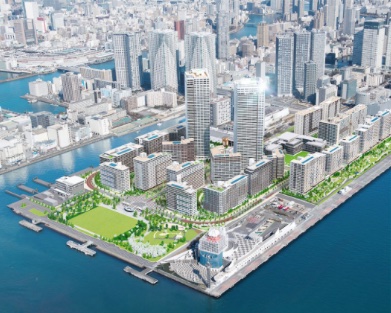
While searching for any news about the current state of the Harumi Flag condo complex in Tokyo’s Chuo Ward, we came across an older related article with detailed information we weren’t aware of. As we’ve written here before, Harumi Flag was originally the athletes village for the 2020 Olympics, after which the apartments were renovated into condo units, many of which had already been sold. Because of the one-year delay for the Games, people who had put down deposits and made plans to move in had to put off those plans for at least an extra year, thus causing a lot of grumbling among the buyers. 

According to a special report that appeared in July 2019 on the Min-IREN website, a consumer advocacy and social justice concern, people who already lived in the Harumi area of Chuo Ward on the waterfront had filed a lawsuit against the Tokyo prefectural government. The reporter was Nobuyuki Kitaoka, who often writes for the muckraking weekly Kinyobi, and he makes the point that the lawsuit had/has similarities to the 2017 scandal surrounding Moritomo Gakuen, the educational company that bought land in Osaka from the central government for a fraction of its assessed value, thus setting off speculation that this special deal was due to the fact that the wife of then prime minister Shinzo Abe was an honorary principal of the elementary school that Moritomo planned to build on the property. Apparently, the developers who would build the athletes village for the Olympics and then redevelop the complex into luxury condominiums also got the land at a fraction of its worth, and existing residents wanted to know why. According to Kitaoka, Moritomo paid only 20 percent of what the land it bought from the central government was worth, while the developers of Harumi Flag paid only 10 percent of the value to the Tokyo prefectural government, which owned it. Located only 3 kilometers from Ginza, the market value of the Harumi land was ¥959,000 per square meter, but Tokyo sold it to a consortium of 11 developers, including Mitsui Fudosan Residential, for only ¥97,000 per square meter. This consortium ended up paying a total of ¥12.96 billion for 133,900 square meters. 

Read More

Til death traps

One of the main themes, if not the central theme, of this blog is that Japanese homes don’t hold their value over time the way they usually do in other developed countries, and while this situation does have a silver lining in that homes are affordable to a larger cross section of people, including young families, in the long run it makes it difficult for retired people to expect much in the way of a return on the investment they made in their home, which is usually the most expensive thing they own by a huge margin. But this feature of Japanese economic life has even broader effects on the quality of life for seniors, as revealed in a June 5 article in the Nihon Keizai Shimbun.

Certainly the main advantage of owning one’s home anywhere is that once the mortgage is paid off no one can kick you out. Regardless of income, a person who owns their home will always have a roof over their head. In Japan, this notion is usually conveyed by referring to the house or condominium as the person’s “final home” in that the person can live there until they die. The theme of the Nikkei article is that even this concept is no longer guaranteed or, at least, not assured in the way that most seniors thought it would be. The main reason is that the cost of renovations for homes has increased by 20 percent over the past ten years on average. This increase, combined with the fact that Japanese people are living longer, makes the possession of homes in Japan more difficult for people on fixed incomes. 

According to a survey conducted by the justice ministry, the home ownership rate of households with two or more members and whose head of household is over 60 is above 90 percent, which is quite an impressive portion and speaks to the success of Japanese housing policy in how it has promoted home ownership over the years. In practical terms, it means the people who live in these households have a “final home” that should remove any economic anxiety from their twilight years, but Nikkei says that isn’t the case. For one thing, standalone houses in Japan tend to need extensive renovation work done on exteriors and roofs every 15 to 30 years, depending on when the house was built—the older the house, the more frequent such renovations are needed, and each time they are carried out they require at least ¥9 million. In the past year alone, costs for renovation have gone up substantially owing to inflation and the world distribution crisis. These costs are not expected to go down.

Read More

High anxiety

Last week, the media was filled with reports on Tokyo’s latest projections regarding what residents could expect if a major earthquake struck the capital. The parameters used for the simulation were a 7.3M quake that occurred directly beneath the prefecture’s 23 wards, with a shindo reading of 6+ for the city center, and shindo 7 for riverbank and coastal areas. It would occur in the wintertime with wind speeds of 8m/second. For the most part, the news was relatively good in that the number of deaths (6,200) and amount of damage (194,000 structures) estimated were less than in past projections—30 percent less, as a matter of fact. 

In detail, 50 percent of the deaths would be caused by collapsed houses, and 40 percent the result of fires. In both cases, the houses involved would be older wooden structures that are densely concentrated, so the prefectural government has said—not for the first time—that it will work harder on providing subsidies for the rebuilding of such houses to make them less vulnerable to earthquakes. 

An important factor in the lower casualty and damage numbers estimated by the report is improved quake-proofing since the last report was compiled. The portion of houses that have been quake-proofed since 2010 increased by 10.8 percent, which means 92 percent of all homes in Tokyo have some form of quake-proofing. In addition, the total area of densely packed wooden houses has decreased by 46 percent since 2012. The government now estimates that 4.53 million workers who live outside the capital would not be able to return home on the day of a major earthquake, and of the city’s residents 2.99 million would have to evacuate their homes. But while these numbers sound high, they are down by 12 percent from the last report. 

However, there is one sector where matters have not improved: high-rise residential apartment buildings. As we’ve written in this blog numerous times in the past, so-called “tower mansions” have unique problems when it comes to earthquakes that have nothing really to do with their ability to withstand the tremor itself. All multi-story buildings in Japan, whether for commercial or residential use, are constructed to the world’s strictest quake-proofing standards, and are expected to maintain their integrity even during a catastrophic temblor. The problems occur after the shaking, and none have been solved in the past decade while at the same time there has been a 30 percent increase in the number of high-rise residential apartment buildings and condos during that time. At present, there are some 600 “tower mansions” in Tokyo, which are defined as multi-residence buildings that are at least 45 meters tall. 

Read More