Fixed values

What’s it worth to you?

As anyone who regularly reads this blog knows, we have issues with the Japanese media’s coverage of real estate prices, since they almost exclusively cover Tokyo. For sure, Tokyo properties mean a lot in the scheme of things, but Tokyo real estate is exceptional in the sense that the city still charts growth while the rest of Japan doesn’t; or, at least, not at the exceptional rate that Tokyo does. Consequently, the huge increases in property values that Tokyo is now seeing don’t really represent Japan, something the media neglects to point out. What you get in the mainstream press when it comes to coverage of real estate is skyrocketing condo prices in Tokyo and akiya—vacant properties—everywhere else, and nothing much in between. So we were intrigued by a recent series in the Asahi Shimbun about how the government assesses property values, since they do it all over Japan. Though the articles don’t explain anything about national trends in property values, they imply that one of the reasons for the lopsided coverage mentioned above is that it’s difficult to trust any related statistics released by the government. 

The series was prefaced by an article about an announcement from the municipal government of Chofu, Tokyo, that its assessments for property taxes and so-called city planning taxes were incorrect in 166 cases; specifically, for 88 properties the assessments overestimated their value while for 78 the assessments underestimated their value. The amount of refunds due for the overestimates comes to ¥80.95 million, while the additional imposition of taxes for the underestimated assessments add up to ¥52.61 million.

The mistakes mostly had to do with how land was categorized. For instance, property taxes for land categorized as residential can be reduced by five-sixths if it contains a structure of some kind. Other variables include additional structure, additions to the main structure, and demolition work, all of which would require that the land be reassessed. Apparently, Chofu has yet to determine exactly how they got it wrong, but in any case, according to the law if an assessment is found to be too low, the municipality can demand compensation no more than five years after the original assessment. But if an assessment is too big, then there is no time limit for compensating the property owner.

Obviously, land value assessment is a tricky business that’s open to a lot of subjective factors, so in its Keizai Plus section, Asahi followed up the Chofu item by looking into the broader “mystery” surrounding the land ministry’s public real estate assessments, which are carried out every year for 26,000 locations throughout the country. Two appraisers are assigned to each location, with each one making their own separate assessment, and if there are discrepancies, the ministry mediates. The “correct” valuations are then published on the ministry’s home page. 

It sounds simple enough, but when Asahi checked the original valuations of the paired assessors using AI, they found that in 69 percent of the locations assessed, the two appraisals matched exactly, and in the remaining cases the difference was “within 1 percent.” The location with the highest assessment for residential land is Akasaka in Tokyo, and the assessors’ valuations have matched exactly for the last five years. The prefecture with the highest matching rate was Tokushima at 97 percent. Asahi’s initial reaction was that if the valuations are so predictable, then why do they cost so much? The ministry spends ¥4 billion a year on assessments.

Read More

Northern exposure

One of the topics being discussed by candidates for the Liberal Democratic Party presidency is foreigners in Japan, and an aspect of that discussion is foreigners buying property. Some years ago the issue came up with regard to security risks, such as land that was near Self-Defense Forces facilities, but now the net is being thrown wider because foreigners with money are buying up land and condominiums for investment purposes and driving up prices, especially in Tokyo where Japanese families are finding themselves priced out of the housing market.

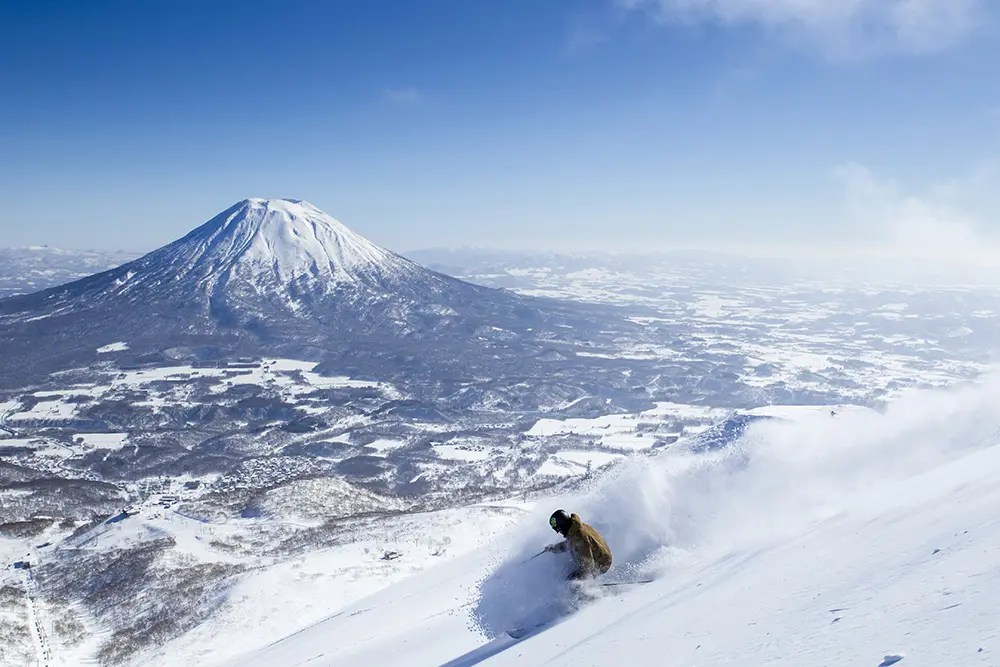
One area that has been popular among foreigners is Niseko in Hokkaido, which is famous for its ski slopes and excellent powder conditions. According to an article that appeared last June in the Asahi Shimbun, if you go to Niseko, you will see a lot of for-sale signs and billboards in English hawking land. The Asahi reporter who went there in May says he saw many construction workers and dump trucks in the area, where there are subdivisions for vacation homes. However, many of the lots in these subdivisions remain vacant, and appear to have been vacant for some time. He found four that were recently put up for public auction due to foreclosure, but not because the owners failed to keep up their loan payments, but rather because they have not kept up with their property tax payments. 

According to public records, the four plots were originally sold by a Tokyo realtor in 1988, meaning during the bubble period when everyone thought land prices in Japan would continue increasing forever. The realtor has since gone out of business. Two of the plots are in a vacation home subdivision 2 km south of the main ski area. Land registration records indicate that the subdivision was carved out of a tract of forested land in the 1980s. There is obviously still some demand for second houses, because the reporter saw construction taking place on some plots, but the two in question remain empty. One of the plots is 205 square meters and the market price is ¥3.444 million. 

Two other vacant plots originally sold by the Tokyo realtor are located in a mostly forested subdivision 3 km north of the ski area. Though the plots are on prepared ground, they are still empty, and are cheaper than the plots in the south subdivision, ¥492,000 for 385 square meters. 

Originally, the plots were bought by someone who lived in Sapporo between 1979 and 1983 as investments, but after the bubble ended there were few buyers, which is why development stalled and many plots remained vacant. However, starting about 20 years ago, the ski area became popular among foreigners, in particular Australians. But the reporter also found several plots that were registered to addresses in China, and still more registered to addresses in local towns but with names that were in katakana, thus indicating the owners weren’t Japanese. 

A bulletin board in front of the town hall lists notifications of properties with unpaid property tax bills that includes the addresses of the delinquent owners, most of which live overseas. In almost all the cases, the reporter learned, notices of delinquent payments were sent to the addresses overseas and later returned because the notice was undeliverable for some reason. The number of unreachable owners exceeds 100. 

A representative of the town’s tax division told the reporter that after a certain period of time, the town can foreclose on the land and put it up for sale. Last year, they did that for 11 plots. And it isn’t just individual plots earmarked for vacation homes. In 2022, the town foreclosed on a construction company that owned a hotel near the ski area due to unpaid property tax bills. The company is based in Tokyo, but the president’s name is, again, in katakana and the company is registered in the Cayman Islands, a famous tax haven. 

Read More

It takes two

According to an article in the Sept. 3 edition of Asahi Shimbun, 40 percent of all recent housing loans are so-called pair loans, meaning they are taken out by married couples, with both spouses’ individual salaries taken into consideration. In the past, banks did not offer loans to married couples but rather to one or the other spouse. This policy necessarily changed when women with careers married and earned salaries comparable to their husbands’, but mainly it had to do with affordability. The cost of buying a house outstripped the ability of a single breadwinner to pay it in a comfortable manner, so banks adjusted. 

But now, says Asahi, even pair loan seem insufficient to buy a new condo in Tokyo, whose prices have been increasing nonstop. The article uses as an example a couple in their mid-30s living in Meguro who want to buy a bigger place in a neighborhood that is more amenable to raising children. They have two strict criteria that made their search more difficult: they want to live within Tokyo’s 23 wards, and they want a property that will retain its value over time, which is why they insist on buying a new condominium. They had already abandoned one initial criterion—the condo should be within reasonable walking distance to a convenient train station, because all the realtors they talked to said that there are “waiting lists” for new condos with ready access to transportation. 

But the couple lucked out. Last spring they entered a lottery for the chance to buy a new condo in Minato Ward and beat out five other prospective buyers. The unit in question is an 80-square-meter 4 LDK that is only 6 minutes from the nearest station. However, the price is pretty steep: ¥160 million. So in order to make the deal happen the couple sold the condominium where they were living (Asahi does not say how much they got, which would be helpful is assessing how much a used condo in pricey Meguro is going for in real terms) and took out a 40-year variable interest mortgage of ¥150 million as a couple whose combined income is ¥20 million a year. 

The whole idea of a pair loan is to make it easier for a married couple to borrow money by taking into consideration their income as a household, and as indicated above, this borrowing method is slowly becoming the norm for buying a home. A survey by the company Recruit found that in 2024 pair loans accounted for 37 percent of all new mortgages in the Tokyo metropolitan area. In 2018, the rate was 27.7 percent. The use of pair loans has roughly followed the increase in prices of new properties. One real estate research lab found that, nationwide, the average price of a new condo increased by 27 percent between 2018 and 2024, while in Tokyo the increase was 56 percent over the same time period. As has been widely reported, the average price of a new condo in the 23 wards as of July was ¥135 million.

More signicantly, the Ministry of Justice says that in 2022, the average debt balance for a family of four for the first time exceeded the average family annual income, meaning that while housing prices have gone up, income has not, or, at least, not as much. 

Read More

Point of entry

A minpaku “mansion” in Ota Ward, Tokyo

The perhaps not-so-surprising media dominance of the right-wing Sanseito in the recent general election is predicated on the party’s perceived prioritizing of Japanese citizens over foreigners. As others have already pointed out, this analysis is an over-simplification of certain Sanseito characteristics, the most obvious one being its motto, “Japanese people first,” which has given rise to a contrasting hashtag, #gaikokujinfirst, meaning “foreigners first,” or the idea that foreigners in Japan have privileges that Japanese don’t. This belief is based on a few loopholes that Sanseito has fixated on, in particular a means for some tourists to be able to exchange their home country drivers licenses for Japanese ones. The present administration, spooked by the popularity of Sanseito, has pledged to study whether foreigners are getting special breaks and tighten up rules accordingly. 

So it will be interesting to see if the government does something with another loophole related to the private lodging (minpaku) law, which regulates short-term private accommodation transactions, like those handled by AirBnB. The law is fairly strict about how many days a year an owner can rent out their property, as well as where and how they can operate. But the government did allow for “special districts” throughout Japan where such regulations are more relaxed, and one of these places is Osaka. 

According to a recent article in the weekly magazine Aera, Osaka was given this special status during the runup to the current Expo 2025, since it was believed that Osaka did not have enough hotel rooms and other short-term accommodations to handle the expected demand. Consequently, Osaka has become a veritable bastion of private lodgings, causing problems on various fronts. Prof. Yoshihisa Matsumura of Hannan University is doing field work on the subject in Japan, and told Aera that he sometimes walks around Osaka neighborhoods with an open map looking for private lodgings and is often approached by local residents who think he is looking for one of these lodgings as a customer. Or they think he is a “Chinese realtor,” because many private lodgings in Osaka are owned by Chinese, be they residents of Japan or China. The local residents are afraid that Matsumura is scouting out possible new properties to acquire for Chinese clients. 

Obviously, these residents don’t like it that Chinese are buying up properties for short-term rentals, the ostensible reason being that guests who use these lodgings are loud and don’t follow local ordnances. But in truth the “trouble,” as it were, goes deeper. Most of the properties that Chinese are buying are rental apartments, which means the new owner will evict any present tenants. The Aera article cites several examples of tenants who refused to leave but were then forced out because the new owner increased their rent. After the tenant leaves, the new owner renovates the property in order to make it more appealing to travelers. 

There are also more ambitious buyers, usually developers or real estate companies, who buy up entire buildings and either kick out all the tenants or tear the building down and make a new one that is completely made up of short-term private lodgings that are sold piecemeal to potential lodging landlords. In some cases, these developers and real estate companies have Chinese connections and they work directly with Chinese buyers in China who see the purchases as good investments. 

Read More

A pox on your tax

The current income tax deduction on housing loans will expire at the end of this year, but, as in the past, it will probably be renewed in some form. The tax deduction was first implemented in 1972 and has been revised repeatedly ever since. The current deduction, revised in 2022, cut the rate from 1.0 to 0.7 percent of the balance of the loan in a given year for up to 13 years. Originally, the deduction was 1 percent of the entire price of the house for up to 3 years, and has fluctuated rather liberally over time, depending on how desperately the government wanted to use home sales as an economic stimulus measure. 

That’s why the reason the deduction will likely be renewed again isn’t just that it’s become an expected feature of home ownership. On April 21, the welfare ministry announced the results of a survey of people who bought homes between 2022 and 2025. Twenty-one percent of the 8,400 respondents said that if there had been no tax deduction on housing loans they wouldn’t have purchased a home. Kyodo says that this survey will be used to decide on whether to extend the deduction after this year, with the implication that it will be. Among respondents, only 20 percent said that the housing loan tax deduction had “no influence” over their decision to buy a home. 

Higher income buyers have lost something over time. Currently, anyone making more than ¥20 million a year is ineligible for the deduction, though the ceiling used to be ¥30 million. The carryover has also been decreased. If the amount of the tax deduction turns out to be more than the income tax owed the government, the excess can be applied to local taxes, but only up to ¥97,500. The maximum used to be ¥136,500. 

The housing loan tax deduction has always been controversial, and not just in Japan, because it’s basically discriminatory. Why should people who can afford to buy a home get a special break on their taxes? The ostensible reason is to promote home ownership, which is generally assumed to be a good thing for society, but it ignores the situation of renters. Landlords in Japan do not get a deduction when they buy property because it only applies to people who purchase a home they will live in, but landlords undoubtedly pass the cost of all the taxes they pay on to their tenants, so landlords always have a means of handling tax issues. They don’t need a deduction. The only purpose of the deduction for homeowners is to encourage sales, which helps the real estate and construction industries, not to mention the banks that provide the housing loans. 

Read More

Do you qualify?

Tax season is our least favorite time of the year, and probably yours, too, so we weren’t necessarily inclined to read an article about housing loan income tax deductions that appeared in the Jan. 26 Asahi Shimbun, and not just because we don’t want to be reminded of all the calculations we will have to make and the forms we still have to fill out, but also because we paid off our meager mortgage just a few years ago and so the article has nothing to say to us. But it may have something to say to others.

The article focuses on one particular qualification for a housing loan tax cut, which sounds fairly obvious. You qualify if you bought a residential property to live in and took out a loan to pay for it. The article mentions a realtor who received a phone call from someone who bought a house from them, complaining that they had been refused a tax deduction for their housing loan. As it turned out, the client, who is a salaried employee, had been transferred to another location by his company, and so he decided to rent out the house he bought through the realtor during the indefinite transfer period. The client’s whole family moved with him to his new location. After he submitted the proper form for the housing loan deduction with his tax return, he received a call from the tax office saying that he no longer qualified because he didn’t live in the house for which he took out the loan.

In principle, the deduction covers 0.7 percent of the housing loan balance for a given tax year up to 13 years, a maximum loan amount of ¥50 million, and a maximum tax deduction of ¥4.55 million. The deduction applies to both income tax and local tax, and if the income tax deduction is more than the tax that is actually paid, then the difference is applied to the local tax. 

But as the tax office pointed out to the property owner in question, if the person who took out the housing loan is not living in or on the property for which they took out the loan then the deduction does not apply. A tax accountant told the Asahi that the tax office is very strict about this rule since the central government essentially forfeits ¥1 trillion a year in potential tax revenues because of the housing loan tax deduction. 

In the case mentioned above, the borrower/owner should have reported rental income after deducting expenses, but apparently many people in the same situation neglect to do that. The client in this case was angry that the realtor did not inform him of this rule when he bought the property, but the realtor didn’t know that the client would be transferred so there was no reason to talk about such things. Nevertheless, there are a number of circumstances under which the housing loan tax deduction does not apply, and realtors should be clear about them. In many cases, homeowners who file for housing loan tax deductions who do not live in the homes themselves are breaking the law. The tax accountant says that in all likelihood, if the tax office finds out that someone is renting out a property that they own without reporting the rental income, the tax office will not only cite the owner for claiming a tax deduction they didn’t qualify for, but will charge a penalty on top of the taxes owed for the unclaimed rental income and the loss of the deduction. 

Read More

Crimes of commission

Last spring, the National Association of Realtors in the U.S. announced that it was eliminating its rule on realtor commissions in the wake of settling a suit brought against it by homeseller groups. The main result of the new rules put in place is that commission rates charged to sellers, which formerly hovered around 6 percent, would be done away with. Under that system, the seller often had to pay a commission not only to their own realtor, but to that of the buyer.

Realtor fees are still a normal part of the property transaction in Japan, and also tend to be 6 percent, though in Japan’s case that fee is divided between the buyer and the seller, meaning each side pays their own realtor 3 percent, which is the limit as prescribed by the government. However, on top of this commission realtors charge a flat ¥60,000 per transaction from each party, a fee we’ve never fully understood until we read an article in the Dec. 25 edition of the Asahi Shimbun.

The article covered a new rule that goes into effect this month with regards to information about properties for sale. As background, the article points out that when a property is put on sale, the seller will in all likelihood hire a realtor to manage the sale. The realtor typically sends the information pertaining to the property to the Real Estate Information Network System (REINS), a database that shares such information with member realtors, who can use it to find buyers for the listed properties. However, some realtors do not want to share such information with other realtors, preferring to find potential buyers themselves. In such cases, the REINS listing may say that the sale has been “temporarily suspended.” The reason is obvious. Since it is common for both sides of the transaction in Japan to pay realtor fees, the listing company is hoping to grab the full 6 percent commission allowed by law by being the agent for both the seller and the buyer.

This practice is called ryote torihiki, meaning “charging both parties,” and while it is not illegal, it is clearly a conflict of interest. If the realtor in question represents both sides of the transaction then its incentive will be to keep the price of the property as high as possible in order to maximize its commission. Normally, buyers of properties insist their realtor negotiate the price as low as they can, but in this case the realtor will not do so because it is also representing the seller, who wants to get the highest price possible.

The new regulations require all realtors to register all properties they are representing with REINS, after which they receive a certificate that is passed on to the seller, who can use the QR code on the certificate to check their agent’s REINS page, thus confirming the progress of the sale. As one agent told the Asahi, this move is important because in the past realtors might post false information on the REINS listing in order to discourage other realtors from looking for potential buyers. They would do this by posting an altered floor plan that might show less floor area or otherwise post information that indicated the property was flawed. Meanwhile, the posting realtor would look for buyers on its own with the real information about the property. According to the new rules, any realtor who posts false information would be penalized. The agent who talked to Asahi went on to say that this “exclusionary” practice is one of the reasons why the secondary house market in Japan “doesn’t grow,” since it makes the cost of buying and selling such properties artificially high. 

The article was very informative, but while it mentions the ¥60,000 surcharge (+ consumption tax) that realtors regularly attach to the transaction, it doesn’t explain it in detail, so we dug a bit further and came across a real estate blog called Rakumachi that did. What we found was interesting, and a bit surprising.

Apparently, the 3 percent ceiling on commissions is qualified. The 3 percent limit is for properties whose price is above ¥4 million. A realtor can charge up to 5 percent for properties priced at less than ¥2 million, and up to 4 percent for properties priced at less than ¥4 million. Since very few properties in Japan—or, at least, very few properties that a real estate agent will agree to handle—are priced at less than ¥4 million, the higher commission fees would, it seem, never come into play, but the actual procedure is tricky.

Realtors essentially “interpret” these regulations to mean that the first ¥2 million of a sale price extracts a commission of 5 percent, the portion between ¥2 million and ¥4 million extracts 4 percent, and the rest of the price extracts 3 percent. So, in practice, if a property is being sold for ¥20 million, the commission would be ¥100,000 (¥2 million x .05) plus ¥80,000 (¥2 million x .04) plus ¥480,000 (¥16 million x .03), for a total of ¥660,000. If the commission for the entire sale price was set at 3 percent, than the total fee would be ¥600,000. So what realtors do, in order to appear as if they’re applying only the 3 percent commission fee, is charge that fee and then add the surcharge of ¥60,000 to make up the difference. (It always works out to ¥60,000 regardless of the actual price of the house) No one has ever legally challenged this practice, which every real estate agent in Japan employs. As Rakumachi points out, the surcharge is merely a “custom,” and both brokers in a transaction demand it, so if the seller’s agent is also the buyer’s agent, that agent can make even more money. As for the legality, Rakumachi says, “It isn’t clear.”

Marginal living

We’ve written about Yusuke Yoshikawa, a YouTuber who covers what he calls “genkai new towns,” which are difficult to describe, but anyone who has followed our blog for any extended amount of time should be familiar with the concept. Essentially, Yoshikawa seeks out derelict housing developments, mainly in Chiba Prefecture where he lives (and where we live, too). He makes videos of these subdivisions, which contain not only abandoned houses, but plots of land that have never had anything built on them and thus are usually overgrown with vegetation because the people who own them have given up on whatever plans they had for the land. According to Yoshikawa, most of these plots were bought for investment purposes during or shortly after the bubble period of the late 80s and early 90s. His well researched and very funny videos have garnered him enough followers to allow him to make a living off this pastime, and he has recently been in demand as a paid speaker and published a book that is selling well. He’s a self-made success, but not in material terms. As he has pointed out, he himself lives in one of these genkai new towns, somewhere past Narita, because he could no longer afford to live in Tokyo, where he was a cab driver. In a sense, he’s stuck where he is but says he nevertheless can blog from a unique perspective about the state of Japanese real estate. He’s the most honest, clear-headed critic in the field, and he’s totally a layman. 

On Dec. 6, Asahi Shimbun ran an interview with Yoshikawa conducted at his home. The interviewer sounds a bit naive about Japan’s property situation, but maybe he’s just taking the role of the average reader. In any case, if we were doing the interviewing (and we hope to someday) we’d have more pointed questions, but this will do for now and, we hope, steer more people to Yoshikawa’s blog.

As the reporter points out in the introduction, Yoshikawa lives on the edge of the Tokyo metropolitan are, meaning a place where you can sense the population dropping off and nature taking over places where people were supposed to be living. He notes “land that was prepared for residences” but which contain “no buildings.” Infrastructure is either non-existent or “in very bad condition.” He hopes these descriptions help the reader gain a better understanding of Yoshikawa’s term, genkai new town, which has entered the vocabulary thanks to the internet. When he meets Yoshikawa at his home in one of these developments, he remarks how lonely it is. The paved streets and retaining walls make it clear that this area was prepared for residences, but there are no people. 

Yoshikawa explains that the area was developed “several decades ago” but for the most part very few people built houses on the land they bought. The interviewer mentions very old signs with the names of real estate companies that, presumably, are trying to sell particular plots, and Yoshikawa responds that in most of these cases the seller has given up and doesn’t even come to keep the plot tidy. These developments are what he calls “small scale new towns,” new towns being, in the public’s mind, large residential projects carried out with the help of public entities to develop tracts of land. Most of the more well-known new towns were built in the 60s and 70s, but these small scale new towns were built by developers as subdivisions of land that was no longer being used for agriculture, mainly during the bubble period, when real estate values skyrocketed and commercial entities were convinced that people who couldn’t afford homes in the major cities would flock to the outskirts of suburbia to live. These companies were overzealous and so were the small-time investors who bought plots in the belief that they could sell them later for more money. At some point, however, there were just too many small scale developments being built and the whole endeavor just collapsed. 

He goes on to explain how he was living in Tokyo’s Koto Ward in 2017 and having a tough time making ends meet because the cost of living kept rising. Both he and his wife worked, but they had no savings or assets and assumed if they remained in Tokyo they would just be living hand-to-mouth in small rental properties for the rest of their lives. So they looked for a place to buy that they could afford and this derelict property was the closest thing they could find. Though the development has 64 lots, only 7 contain houses.

Read More

Harumi Flag unfurls

As we’ve pointed out in previous posts, the prices of new condos in Tokyo have risen considerably in the past few years owing to the high cost of construction, lowering supply, and an increase in sales to investors, whether Japanese or foreign. A June 20 article in the Asahi Shimbun about the cheap yen includes remarks from realtors who say that new condos in central Tokyo will remain expensive for the near future, with some, in fact, explaining that now they only deal with high-earning double income couples and rich investors. 

In light of this situation, the news surrounding one large Tokyo condo complex has been instructive. Harumi Flag, which was originally built to be the athletes village for the 2020 Tokyo Olympics, finally started receiving residents in January after renovations to turn the living quarters into condominiums was delayed almost two years by the pandemic. However, according to a June 7 report by NHK, as of the end of May a good portion of the units in the 17 buildings that have been sold so far are empty, which NHK finds strange since the demand for the Harumi Flag condos was quite intense owing mainly to the fact that prices were reasonable compared to other real estate in the area. NHK’s investigation found that many of the units were bought by investors, which shouldn’t sound strange given the current real estate climate in Tokyo, but the Harumi Flag project was initiated by the Tokyo prefectural government for the secondary purpose of eventually selling the residences to people who would live in them, in particular families. That’s supposedly why the initial prices were set lower.

NHK checked the title registrations of 1,089 units of the 2,690 that have been sold so far in the Sun Village part of the complex. Mitsui Fudosan Residential, the company that headed the consortium of 11 developers involved in the project, has been selling the condos in phases, and in the most recent phase there were an average of 71 applications for each unit. There were no limits to how many applications a potential buyer could submit or units they could purchase if their luck was good. Under such circumstances, institutional investors applied for as many units as they could, since they could buy as many units as possible by borrowing money more easily. In fact, NHK discovered that 292 units out of the 1,089 they checked were owned by companies, or one out of four. Sales began in 2019, and four sales phases were carried out in 2021 and 2022, with the largest number of companies registered as owners with the justice ministry following the last of these. However, when NHK checked with the Chuo Ward office it found that there were no resident registrations (juminhyo) listed for 30 percent of the condos, meaning that, technically, no one is living in these condos. In fact, more than half the units sold during the last phase were bought by companies, with many purchasing more than one unit. The investors who own the 292 units in question comprise 147 companies, most of them dealing in real estate and investment. On further investigation, NHK found that only five of these units were being used by their corporate owners as offices. NHK makes a special note in the report that all these corporate owners are Japanese, which they think is surprising considering all the media attention being paid to foreign buyers of Tokyo real estate. 

One investment company from Fukuoka, in fact, owns 38 units, and while they wouldn’t talk to NHK, their home page mentions their involvement in Harumi Flag “at an early stage” to “ensure stable returns on investments.” Two other companies did talk to NHK on condition of anonymity. One had 3 units in the complex and owned properties in Tokyo and Yokohama, as well as in the U.S. Their total real estate investments amount to ¥3 billion. A different company owns “more than 4 units” in Harumi Flag, and says they applied for and bought condos during each sales phase. In the beginning, they weren’t sure if the investment was wise, but now they are very happy because they are sure they can sell them for a hefty profit, and that seems to be the case. NHK says that so far hundreds of units have already been resold or are on the market for prices that are from 50 to 100 percent higher than their initial sales price. According to one real estate portal site, a 4LDK, 100-square meter unit in Sun Village that originally sold for ¥106 million is now on sale for ¥238 million. 

But the market is still hot, so many of the investor-buyers are not planning on selling for a while and instead are renting out their units. Unfortunately, there are too many units for rent in the complex so few have found tenants, though there are other reasons for the low occupancy rate. Harumi Flag is 20 minutes from the nearest station and all the leases have a limit of two to five years, because the owners may want to sell the units if the price peaks. NHK doesn’t mention the cost of rent, but when we checked portal sites we found one 86-square meter unit asking for ¥420,000 a month and a 65-square meter unit going for ¥280,000 a month.

NHK talked to one couple in their 60s who made 7 attempts to buy a unit in Harumi Flag and failed. Their budget was ¥80 million, which was more than sufficient for a good-sized condo during the initial sales phases but not enough to buy one that is being resold, so they’ve given up, even though several buildings in the complex are still under construction.

Read More

Future shock

We’ve written extensively about Tokyo’s current condo boom without really addressing what it will lead to in the long run. Most commentators seem to expect a burst bubble, like the one that happened in the early 90s following a similar over-valuation of properties in the late 80s. However, there is an important difference in that the current Tokyo bubble is being pumped up by rich people. The average price of a new condo in the capital has exceeded ¥100 million. In the late 80s, the bubble was caused by everyone, since the huge boomer cohort had secured its lifetime employment and banks were willing to lend them money. Even though housing interest rates are low in Japan compared to the bubble era, younger families with average incomes who still insist on buying new condos are finding it difficult to find anything they can afford in the 23 wards, according to local media.

A recent video on the YouTube real estate channel Rakumachi put the present bubble in perspective, especially in terms of what it holds for the future. According to Tomohiro Makino, a “real estate producer” whose career started in the 80s, people who say the Tokyo condo market is “over-heated” need to look at classic supply-and-demand. “Over-heated” suggests that the market will eventually cool, but since this particular bubble is being caused by rich people and institutional or business investors, it isn’t that simple. Scarcity is one of the factors fueling the over-heated prices: the number of new condos on sale in recent years is one-third the number that were on sale in a given year two decades ago. Much of the reason for this scarcity is the high cost of building materials and lack of labor. Building a condominium is much more time- and capital-intensive than it used to be, so developers have scaled down. And with prices so high, buyers trend toward people who benefit from certain financial realities, such as foreign investors who can exploit the historically cheap yen. Even rich elderly Japanese who don’t necessarily need a new place to live are buying high-end condos in Tokyo as hedges against taxes their heirs will have to pay when they die. So they invest their cash in real estate, which can lower the inheritance tax burden by as much as 70 percent. Those who do buy new Tokyo condos for living purposes tend to be so-called power couples—married people whose combined incomes exceed ¥15 million a year. 

So the high condo prices are essentially being maintained by a small group of people. Nomura Securities says the number of “very wealthy” households in Japan, meaning they are worth more than ¥500 million each, is around 90,000, for combined assets (not counting debt) of ¥105 trillion. Merely “wealthy” households (¥100-¥500 million) number around 1.4 million with ¥259 trillion in assets; “less wealthy” (¥50-¥100 million) number 3.3 million with ¥258 trillion; upper middle class (¥30-¥50 million) number 7.2 million with ¥332 trillion; and the vast middle class (less than ¥30 million), numbering 42 million, is worth ¥678 trillion. Though the top two tiers account for a bit more than 2 million households, the amount of assets they control is considerable. Much has been made of the global income gap in recent years, and Makino says the top 1 percent in Japan has seen its wealth increase by 80 percent since 2013, when Abenomics. The investment market was flooded with easy money, but average households received no comparable benefit from the policy. Makino says that its effect on real estate has led to the over-heated condo market, putting Tokyo real estate out of the reach of the middle class. Developers don’t even think about this group of consumers, because they know that even if every condo they build is luxury-class, they can still sell them. Consequently, they don’t have to build that many in order to make as much money as they used to make when they sold to everyone. The average price of a new condo in the 23 wards as recently as 2015 was ¥60 million. Last year it was ¥115 million. And due to the lag in construction costs, prices will continue to go up for the near future. 

And it’s construction costs that are the main concern for developers, since right now they account for 70 percent of the cost of a condo, the other 30 percent being land. This aspect is very significant, because while land prices vary greatly depending on location, construction costs do not. It costs almost the same to build a condo in the suburbs as it does to build one in the center of Tokyo, so most developers are putting as much of their money and resources as they can into the city. Even mid-sized developers that tend to do all their work in the suburbs are foregoing new construction to invest in new condos in Tokyo by borrowing money to buy them from major developers. Then they quickly resell them to make money. The most prevalent example of this kind of practice in the news right now is the Harumi Flag complex on the waterfront, which was built as the Tokyo 2020 Olympic athletes village and then sold or rented out afterwards. A substantial number of the condos remain empty because they’ve been bought by corporations, including developers, as investments, thus pushing the price of individual units up. According to Makino, some companies have bought from 10 to 20 units in Harumi Flag.

Makino sees this trend continuing as long as interest rates remain low, since most investors don’t use their own money to buy real estate. Once rates start to rise, he says, the market will cool as investors pull out. Now that the era of the “negative interest rate” has ended in Japan, he thinks that such a change is on the horizon, even if many experts believe the Bank of Japan won’t increase interest rates due to the amount of government bonds it has. But the BOJ doesn’t control interest rates. Other factors, including environmental disasters, international politics, even rumors, will always come into play, and once they do “the party will be over,” meaning even foreign investors will bail regardless of the exchange rate. This could prove to be a huge shock to the system. After all, young Japanese adults today know nothing about interest, having been born without any experience of bank deposits earning interest. It’s unrealistic to think that this kind of environment will persist indefinitely, but until it does change it’s also unrealistic to thing that average Japanese people will step in when wealthy investors drop out. It’s just too risky for the average household to buy a condo in Tokyo now or in the near future.

If Makino were to give advice to potential middle class homeowners who want to live in Tokyo, it would be to wait, probably until 2030, by which time he says the “market will surely change.” Not only will prices for condos, used and new, go down, but so likely will rents. And his reasons for thinking so are grounded in an unavoidable truth. Households headed by people over 65 in the Tokyo metropolitan area now number 9 million, with half of those headed by people over 75. That number will steadily increase. After 2025 all the 1.5 million boomers living in the metro area will be over 75, and while lifespans are also increasing, it won’t be long before this cohort starts dying out in record numbers, which means their property will either be left to heirs or abandoned, if it hadn’t already been sold. These people came to the metro area in their youth to work, and they bought homes. But their children, now middle aged, mostly own their own homes, too, and so won’t need their parents’, which means they’ll sell it or do something worse (pretend to ignore it?), but in any case there will be a lot of empty homes on the market. This, as Makino points out, is the heart of the akiya problem, which will only intensify by the end of the decade, throwing the real estate market, including Tokyo’s, into turmoil. Oversupply will become a chronic issue unless the construction industry and the authorities change their tune with regard to building new residences, which is pretty much all they think about now. 

Read More