Fixed values

What’s it worth to you?

As anyone who regularly reads this blog knows, we have issues with the Japanese media’s coverage of real estate prices, since they almost exclusively cover Tokyo. For sure, Tokyo properties mean a lot in the scheme of things, but Tokyo real estate is exceptional in the sense that the city still charts growth while the rest of Japan doesn’t; or, at least, not at the exceptional rate that Tokyo does. Consequently, the huge increases in property values that Tokyo is now seeing don’t really represent Japan, something the media neglects to point out. What you get in the mainstream press when it comes to coverage of real estate is skyrocketing condo prices in Tokyo and akiya—vacant properties—everywhere else, and nothing much in between. So we were intrigued by a recent series in the Asahi Shimbun about how the government assesses property values, since they do it all over Japan. Though the articles don’t explain anything about national trends in property values, they imply that one of the reasons for the lopsided coverage mentioned above is that it’s difficult to trust any related statistics released by the government. 

The series was prefaced by an article about an announcement from the municipal government of Chofu, Tokyo, that its assessments for property taxes and so-called city planning taxes were incorrect in 166 cases; specifically, for 88 properties the assessments overestimated their value while for 78 the assessments underestimated their value. The amount of refunds due for the overestimates comes to ¥80.95 million, while the additional imposition of taxes for the underestimated assessments add up to ¥52.61 million.

The mistakes mostly had to do with how land was categorized. For instance, property taxes for land categorized as residential can be reduced by five-sixths if it contains a structure of some kind. Other variables include additional structure, additions to the main structure, and demolition work, all of which would require that the land be reassessed. Apparently, Chofu has yet to determine exactly how they got it wrong, but in any case, according to the law if an assessment is found to be too low, the municipality can demand compensation no more than five years after the original assessment. But if an assessment is too big, then there is no time limit for compensating the property owner.

Obviously, land value assessment is a tricky business that’s open to a lot of subjective factors, so in its Keizai Plus section, Asahi followed up the Chofu item by looking into the broader “mystery” surrounding the land ministry’s public real estate assessments, which are carried out every year for 26,000 locations throughout the country. Two appraisers are assigned to each location, with each one making their own separate assessment, and if there are discrepancies, the ministry mediates. The “correct” valuations are then published on the ministry’s home page. 

It sounds simple enough, but when Asahi checked the original valuations of the paired assessors using AI, they found that in 69 percent of the locations assessed, the two appraisals matched exactly, and in the remaining cases the difference was “within 1 percent.” The location with the highest assessment for residential land is Akasaka in Tokyo, and the assessors’ valuations have matched exactly for the last five years. The prefecture with the highest matching rate was Tokushima at 97 percent. Asahi’s initial reaction was that if the valuations are so predictable, then why do they cost so much? The ministry spends ¥4 billion a year on assessments.

Read More

Backed up

Where it’s buried

Japan has one of the most extensive and sophisticated sewerage systems in the world. As of 2021, slightly more than 80 percent of the population was served by sewerage systems, an impressive statistic considering that less than 10 percent of the population had access to sewerage in 1960. This increase in coverage is just another indication of how quickly and completely Japan rebuilt and improved its infrastructure after World War II. 

A recent article in Asahi Shimbun, however, reported that this trend may be reversing. According to surveys conducted by the Ministry of Land, Infrastructure, Transport and Tourism, one-third of local governments in Japan have cancelled their plans to extend their sewerage systems to new and existing residential development. Instead, household waste will be processed by on-site septic tanks. 

The reason is obvious: Japan’s population is dropping, and the cost of building and maintaining sewerage systems depends greatly on population density. With fewer people living in a given area, the construction of the new sewerage comprising pipes and treatment facilities cannot be paid off in the long run. 

It’s necessary to note that one-third of local governments does not mean one-third of the population. The local governments of large cities represent much larger populations than local governments of smaller cities and rural areas, and it’s mostly in the suburbs and the countryside where these governments are reviewing and cancelling their sewerage construction plans. But what’s perhaps most significant about the Asahi report is its assertion that some local governments will actually backslide on sewerage, meaning that they will replace existing sewerage systems with individual jokaso (septic tanks). 

Urban-style sewerage systems collect household waste water and night soil in one central location and then treat it before releasing the filtered water back into the environment. Septic tanks, including so-called multipurpose tanks that process waste from toilets and sinks/baths separately, use on-site filters and bacteria before releasing the filtered water as runoff into the ground or rivers. Sewerage is obviously more cost-intensive because it requires long stretches of pipepines and the purchase of land where those pipes are buried. Septic tanks, including those shared by communities, are on-site, meaning they are completely contained within the property of the user. 

The Asahi says that in the 1990s many local governments drew up plans for constructing new sewerage systems based on the assumption that the population would continue to increase. Reality quickly put a damper on those plans. The land ministry found that as of 2014 throughout Japan, local governments had fallen short of their stated plans to extend sewerage systems to their communities by 625,000 hectares, meaning that 625,000 hectares of land that were slated to receive sewerage infrastructure by 2014 had not undergone any construction, or about 34 percent. In fact, as of 2019, 158,000 hectares of land that were initially supposed to receive new sewerage systems instead had those systems replaced with septic tanks. And between 2019 and 2025, at least 80,000 hectares of land slated for sewerage were changed to septic tanks. For the record, the prefectures who altered their plans the most were Chiba (29,646 hectares), Ibaraki (26,726), and Fukushima (15,869).

Moreover, some local governments actually stopped using existing sewerage systems due to their inability to keep up with maintenance and improvement costs. There just weren’t enough customers any more. The article uses the example of Sanmu in eastern Chiba Prefecture, which had devised plans for new sewerage in 1995 when it was still designated as a town before consolidating with neighboring municipalities to become a city. In 1995, the population was still on the rise, but by 2015 it was decreasing, so the city revised its plans when it realized that even if it carried out the construction according to plan, it would only cover 7 percent of the city’s total population. Projections said that the city would have to spend ¥1.3 billion over the next 40 years on maintenance of this new construction. There was no way that fees from such a small number of households could pay for it, so the plan was cancelled. Around the same time, 9 other local governments in Chiba cancelled their sewerage construction plans. At present, there are 18 municipalities in the prefecture that still do not have any sewerage systems and obviously never will, regardless of whether they once made plans to construct them. 

It should be noted that the central government subsidizes sewerage construction, and the land ministry itself, having taken note of the population decrease, has encouraged local governments to abandon their sewerage construction plans in favor of septic tanks. This past summer alone, 97 local governments told the ministry that they would change their plans in accordance with the ministry’s request. A representative of the general affairs ministry in charge of public waterworks told the Asahi that this change in policy of the government was mainly implemented in the face of looming infrastructure repairs, which will cost a lot of money in coming years. It would be better if local governments with older sewerage systems that are no longer financially feasible replace them with septic tanks.

One of the reasons we are reporting this news is that we use a multi-purpose septic tank, even though neighborhoods less than half a kilometer from our home are all hooked up to the city sewerage system. When we had our house built in 2013, we learned that the city had no plans to extend sewerage to our area, though we haven’t been able to find out if there were any plans in the past to extend sewerage to our area. 

Still, we wanted to compare the cost per household between sewerage and septic by comparing bills we received when we were renting an apartment in the more urban portion of our city in the past and the bills we receive for maintaining our septic tank now. When we were in the city we (two people) paid a little more than ¥3,000 every two months for both water and sewerage, or about ¥18,000 a year. That was in 2013. Now we pay about ¥15,000 a year for a worker to inspect our septic tank as required by local law every three months. Since we also do not have access to municipal waterworks, we use well water, for which we pay nothing, so in a sense the septic tank is more expensive than sewerage, but that doesn’t take into account initial costs. We had to, of course, sink a septic tank and dig a well, but our local government, at the time, subsidized the cost of the septic tank since infrastructure wasn’t available in our (literal) neck of the woods; and while we had to pay several hundred thousand yen to dig a well, if we had access to the local waterworks we would have had to pay an initial cost of about ¥300,000 just to have it turned on, so to speak. In the end, the difference wasn’t that much, and in the long run, we’re probably paying less, though, we have to admit, well water around here isn’t that great. 

Mama said knock it down

House built in Nikko in the early 1980s

Recent media reports say that housing starts are dropping in Japan, which is understandable but also worrying to those who gauge Japan’s economic health. Japan has long promoted new housing as a prime economic stimulus to the point of downplaying sales of used homes. It’s one of the reasons for the so-called akiya (vacant home) problem, and with the population also dropping, the government can no longer count on high volume sales of new home to fuel the economy, regardless of how attractive they make them. 

It’s also why the central government has done mostly nothing about the akiya problem. As long as new home sales grew, there was no problem, as far as they were concerned. But local governments have always had to contend with empty houses, which are dangerous eyesores that threaten property values. There’s also the problem of absent owners who disappear and stop paying property taxes. Consequently, it’s been local governments that have come up with measures to address the problem.

But now it seems, the central government is getting involved, albeit cautiously. On Oct. 2, Yomiuri Shimbun reported on a new national plan that would have the government subsidizing renovations of houses that may become vacant in order to make them appealing to young families. Next year, the land ministry will launch a model project that will target “homes in cities and surrounding areas” that can be renovated into homes for couples who are raising children. 

The specific type of homeowner for the project will be people who are thinking about moving out of their homes in the future and moving into care facilities. Such actions often lead to vacant properties because the owner does not have an heir or otherwise cannot sell the property. The ministry will interview such owners and, depending on the circumstances, offer the owner subsidies to have the property renovated into a home that would be more suitable for young families or facilities like daycare centers. The subsidy would likely not cover the complete cost of renovation, which the owners would have to carry out themselves. 

Obviously, there is a limited benefit to the plan. The target is only properties in cities and their close suburbs, though the most serious akiya problems are in rural areas and more distant suburbs. Moreover, the subsidy system addresses homes that are not yet vacant but could be, meaning that there is still a possibility that the owner, especially if they live in a major city, can sell their property easily if they try. Presumably, the ministry is thinking of homes that would sell more easily if renovated properly, but, in our own experience, we’ve found that buyers of older properties tend to want to renovate according to their own tastes. When owners or realtors renovate for an assumed general taste it doesn’t necessarily make the property easier to sell. 

The Yomiuri article also leaves out a lot of details that are needed to judge the viability of the project: At what age would the ministry contact homeowners, and what criteria is used to assess their eligibility? How would the ministry persuade the owners to carry out renovations themselves? If the purpose of the project is to check the number of vacant homes in cities and provide properties that will be easier for young families to buy as urban real estate prices go up, it would probably be more effective for the government to just buy real estate itself and rebuild to desired specifications, but that would contradict the tenets of laissez faire capitalism. 

According to a ministry survey, the number of homes in Tokyo and the three surrounding prefectures where the owner is 85 or older is about 340,000. The number is projected to increase to 940,000 by 2033. The increase is similar in the Kinki region: from 210,000 now to 580,000 by 2033. A good portion of these homes were built between the mid-1950s and 1980, meaning they predate quake-proofing technology that is now required. They are beyond renovation. They need to be torn down.

As do many houses that were built after 1981, when quake-proofing standards were first implemented for residential housing. The cost of renovating some structures built even before 2000 may be prohibitive for many of their owners, especially if they are living on fixed incomes. The proposed subsidies, though not finalized yet, will not cover the total cost. 

Read More

Northern exposure

One of the topics being discussed by candidates for the Liberal Democratic Party presidency is foreigners in Japan, and an aspect of that discussion is foreigners buying property. Some years ago the issue came up with regard to security risks, such as land that was near Self-Defense Forces facilities, but now the net is being thrown wider because foreigners with money are buying up land and condominiums for investment purposes and driving up prices, especially in Tokyo where Japanese families are finding themselves priced out of the housing market.

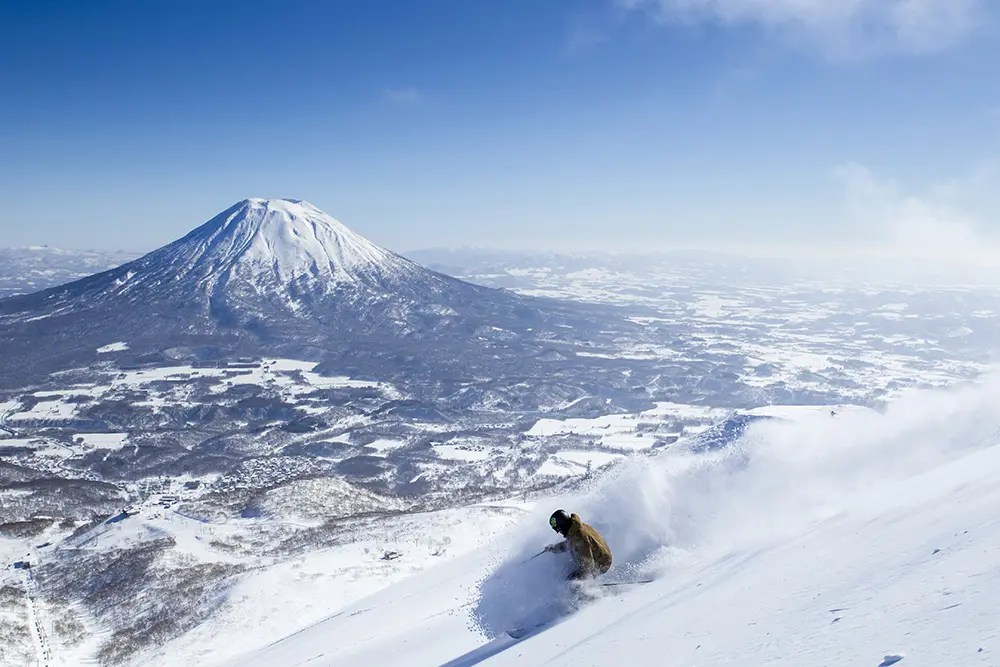
One area that has been popular among foreigners is Niseko in Hokkaido, which is famous for its ski slopes and excellent powder conditions. According to an article that appeared last June in the Asahi Shimbun, if you go to Niseko, you will see a lot of for-sale signs and billboards in English hawking land. The Asahi reporter who went there in May says he saw many construction workers and dump trucks in the area, where there are subdivisions for vacation homes. However, many of the lots in these subdivisions remain vacant, and appear to have been vacant for some time. He found four that were recently put up for public auction due to foreclosure, but not because the owners failed to keep up their loan payments, but rather because they have not kept up with their property tax payments. 

According to public records, the four plots were originally sold by a Tokyo realtor in 1988, meaning during the bubble period when everyone thought land prices in Japan would continue increasing forever. The realtor has since gone out of business. Two of the plots are in a vacation home subdivision 2 km south of the main ski area. Land registration records indicate that the subdivision was carved out of a tract of forested land in the 1980s. There is obviously still some demand for second houses, because the reporter saw construction taking place on some plots, but the two in question remain empty. One of the plots is 205 square meters and the market price is ¥3.444 million. 

Two other vacant plots originally sold by the Tokyo realtor are located in a mostly forested subdivision 3 km north of the ski area. Though the plots are on prepared ground, they are still empty, and are cheaper than the plots in the south subdivision, ¥492,000 for 385 square meters. 

Originally, the plots were bought by someone who lived in Sapporo between 1979 and 1983 as investments, but after the bubble ended there were few buyers, which is why development stalled and many plots remained vacant. However, starting about 20 years ago, the ski area became popular among foreigners, in particular Australians. But the reporter also found several plots that were registered to addresses in China, and still more registered to addresses in local towns but with names that were in katakana, thus indicating the owners weren’t Japanese. 

A bulletin board in front of the town hall lists notifications of properties with unpaid property tax bills that includes the addresses of the delinquent owners, most of which live overseas. In almost all the cases, the reporter learned, notices of delinquent payments were sent to the addresses overseas and later returned because the notice was undeliverable for some reason. The number of unreachable owners exceeds 100. 

A representative of the town’s tax division told the reporter that after a certain period of time, the town can foreclose on the land and put it up for sale. Last year, they did that for 11 plots. And it isn’t just individual plots earmarked for vacation homes. In 2022, the town foreclosed on a construction company that owned a hotel near the ski area due to unpaid property tax bills. The company is based in Tokyo, but the president’s name is, again, in katakana and the company is registered in the Cayman Islands, a famous tax haven. 

Read More

Point of entry

A minpaku “mansion” in Ota Ward, Tokyo

The perhaps not-so-surprising media dominance of the right-wing Sanseito in the recent general election is predicated on the party’s perceived prioritizing of Japanese citizens over foreigners. As others have already pointed out, this analysis is an over-simplification of certain Sanseito characteristics, the most obvious one being its motto, “Japanese people first,” which has given rise to a contrasting hashtag, #gaikokujinfirst, meaning “foreigners first,” or the idea that foreigners in Japan have privileges that Japanese don’t. This belief is based on a few loopholes that Sanseito has fixated on, in particular a means for some tourists to be able to exchange their home country drivers licenses for Japanese ones. The present administration, spooked by the popularity of Sanseito, has pledged to study whether foreigners are getting special breaks and tighten up rules accordingly. 

So it will be interesting to see if the government does something with another loophole related to the private lodging (minpaku) law, which regulates short-term private accommodation transactions, like those handled by AirBnB. The law is fairly strict about how many days a year an owner can rent out their property, as well as where and how they can operate. But the government did allow for “special districts” throughout Japan where such regulations are more relaxed, and one of these places is Osaka. 

According to a recent article in the weekly magazine Aera, Osaka was given this special status during the runup to the current Expo 2025, since it was believed that Osaka did not have enough hotel rooms and other short-term accommodations to handle the expected demand. Consequently, Osaka has become a veritable bastion of private lodgings, causing problems on various fronts. Prof. Yoshihisa Matsumura of Hannan University is doing field work on the subject in Japan, and told Aera that he sometimes walks around Osaka neighborhoods with an open map looking for private lodgings and is often approached by local residents who think he is looking for one of these lodgings as a customer. Or they think he is a “Chinese realtor,” because many private lodgings in Osaka are owned by Chinese, be they residents of Japan or China. The local residents are afraid that Matsumura is scouting out possible new properties to acquire for Chinese clients. 

Obviously, these residents don’t like it that Chinese are buying up properties for short-term rentals, the ostensible reason being that guests who use these lodgings are loud and don’t follow local ordnances. But in truth the “trouble,” as it were, goes deeper. Most of the properties that Chinese are buying are rental apartments, which means the new owner will evict any present tenants. The Aera article cites several examples of tenants who refused to leave but were then forced out because the new owner increased their rent. After the tenant leaves, the new owner renovates the property in order to make it more appealing to travelers. 

There are also more ambitious buyers, usually developers or real estate companies, who buy up entire buildings and either kick out all the tenants or tear the building down and make a new one that is completely made up of short-term private lodgings that are sold piecemeal to potential lodging landlords. In some cases, these developers and real estate companies have Chinese connections and they work directly with Chinese buyers in China who see the purchases as good investments. 

Read More

Imposter syndrome

The Japanese media is reporting that monthly fees for condo owners have increased significantly in recent years. We’ve often talked on this blog about these monthly charges, namely building management fees and repair fees, and how in many cases the repair fees were initially set low by developers so as to make them more attractive to buyers. Since these fees go into a fund that will be used down the road for large-scale repairs, often they are insufficient to the task, and when the repairs are finally undertaken there is not enough in the reserve fund and owner-residents have to cough up more money. In a sense, the recent increases in repair fees is a reaction to this reality, since more and more condos are reaching an age when large-scale rapairs are required.

Consequently, the reserve funds for long-term repairs can be quite fat, depending on the size of the building and the number of residents, and with construction companies that specialize in residential buildings losing business because of the decline in population they are eyeing these funds as they expand into renovation. A recent article in the Asahi Shimbun reported on a strange trend that seems to be related. Apparently, non-residents are impersonating residents in order to get into homeowners association meetings so that they can vote on approving plans for repairs, usually earlier than needed. It’s believed these imposters are working for construction companies who want the work.

Asahi cites several cases in the Tokyo metropolitan area. In May, two employees of construction contractors were arrested for “trespassing” after pretending to be residents of a condominium in Kanagawa Prefecture. Since 2024, the two men had attended the condo owners’ association meetings a total of four times using names of real resident-owners. One of the building managers was alerted to the possible imposture and checked one of the names with the real owner, who eventually confessed that he had allowed one of the men to use his family name in exchange for some kind of “reward.” 

The same thing happened at a condo in Chiba Prefecture. A man who did not live in the building attended 10 owners association meetings since July of last year by pretending to be the son of a resident-owner. Another resident who knew the owner in question felt that the “son” looked nothing like the resident and reported their suspicions to police. 

A woman from a different condo who talked to Asahi said that in March of 2024 she received a flyer in her mailbox soliciting “interviewees” for a survey who would be compensated for their participation. She answered the ad and learned that the inquiring company was an Osaka-based marketing firm that was doing undercover work. They needed identities of real people so that they could patronize restaurants and other service providers to check their service. The woman thought it would be her doing the undercover work and thus could get some free meals, but when she met the martketing company liaison in person she found out the real purpose. The liaison said the  service investigation was a ruse, and that their real mission was to check condo management associations to make sure they weren’t wasting or otherwise misusing funds. The liaison asked the woman if he could use her husband’s name to attend meetings. In exchange she would be compensated on a monthly basis. She accepted the offer.

Later, a different man contacted her saying he would impersonate her husband’s brother, and thus needed personal information in order to make the imposture more convincing. He even asked her for a duplicate key so that he could enter the building freely. She did as she was asked. 

Eventually, someone from building management found out and visited the woman. When she tried to contact the marketing company she got no reply and eventually confessed everything to management and later the police, who arrested one of the imposters in early June.

Read More

A pox on your tax

The current income tax deduction on housing loans will expire at the end of this year, but, as in the past, it will probably be renewed in some form. The tax deduction was first implemented in 1972 and has been revised repeatedly ever since. The current deduction, revised in 2022, cut the rate from 1.0 to 0.7 percent of the balance of the loan in a given year for up to 13 years. Originally, the deduction was 1 percent of the entire price of the house for up to 3 years, and has fluctuated rather liberally over time, depending on how desperately the government wanted to use home sales as an economic stimulus measure. 

That’s why the reason the deduction will likely be renewed again isn’t just that it’s become an expected feature of home ownership. On April 21, the welfare ministry announced the results of a survey of people who bought homes between 2022 and 2025. Twenty-one percent of the 8,400 respondents said that if there had been no tax deduction on housing loans they wouldn’t have purchased a home. Kyodo says that this survey will be used to decide on whether to extend the deduction after this year, with the implication that it will be. Among respondents, only 20 percent said that the housing loan tax deduction had “no influence” over their decision to buy a home. 

Higher income buyers have lost something over time. Currently, anyone making more than ¥20 million a year is ineligible for the deduction, though the ceiling used to be ¥30 million. The carryover has also been decreased. If the amount of the tax deduction turns out to be more than the income tax owed the government, the excess can be applied to local taxes, but only up to ¥97,500. The maximum used to be ¥136,500. 

The housing loan tax deduction has always been controversial, and not just in Japan, because it’s basically discriminatory. Why should people who can afford to buy a home get a special break on their taxes? The ostensible reason is to promote home ownership, which is generally assumed to be a good thing for society, but it ignores the situation of renters. Landlords in Japan do not get a deduction when they buy property because it only applies to people who purchase a home they will live in, but landlords undoubtedly pass the cost of all the taxes they pay on to their tenants, so landlords always have a means of handling tax issues. They don’t need a deduction. The only purpose of the deduction for homeowners is to encourage sales, which helps the real estate and construction industries, not to mention the banks that provide the housing loans. 

Read More

Time bombs

For years we have been writing about the future of Japan’s condominiums, which is dire. Though condos continue to sell relatively well in Japan, especially in Tokyo where prices for new ones continue to break records, evidence is ever mounting that the life spans of the buildings themselves are more limited than most people previously thought, if, in fact, they thought of it at all. And while much of this problem is demographic in nature—Japan’s declining population is certainly a factor—the real culprit is everyday economics. The cost of maintaining the buildings so that they will be attractive to future buyers is usually too much for the people who do buy them, and so they aren’t kept up.

Now the Japanese media is finally coming around to this realization in a concerted way, as exemplified by the Japan Times, for which we once wrote a monthly housing column, running a feature about the difficulties being faced by condo owners as their properties slowly fall apart. Soon, they will be abandoned in increasing numbers, just like millions of single-family houses throughout Japan. However, the best coverage of this phenomenon we’ve seen so far was a multi-part series in the Asahi Shimbun about “shukatsu mansion,” with “mansion” being the foreign loan word used for condominiums as promoted by the real estate industry, and “shukatsu” an in-vogue word at the moment representing the increasingly valid idea of the importance of end-of-life planning. In other words, owners of older condominiums are facing the fact that they will be the last owners of their units, because not only will no one want to buy them, but they may not even be inhabitable. 

The Asahi refers to these condos as “time bombs,” and while most are forty years old, a few are newer. One article focuses on a 19-unit, 30-year-old building in Kawasaki that’s a 15-minute walk from a station on the Odakyu Line. The design is terrace-style, which was popular in the 1990s and costs more to maintain and repair than conventional apartment buildings. The original buyers carried out large-scale repair work using funds from their saved shuzenhi (repair fee) contributions in the past, and the present owners say they need to do it again. One member of the homeowners association (HOA) told Asahi that they are thinking of “rebuilding” the whole thing, meaning they would tear down the present building and then construct a new one, hopefully with extra units whose sale can offset some of the rebuilding cost for present owners. However, when they hired a consultant to estimate how much such a rebuilding would cost each owner, they were shocked with the answer: ¥47.4 million. The average age of the present owners is somewhere in the 60s, meaning many are living on fixed incomes, which would make it not only impractical to spend that kind of money but impossible. The main problem is the capacity rate, meaning the amount of condo floor area that can be built in relation to the amount of land the building occupies. When the condo was originally built, it took up the maximum capacity allowed, and the local government has not changed regulations since then (many other local governments have done so in recent years in order to attract more developers). So they can’t add new units to a new building unless they reduce the floor area of all the new units.

Another problem is the 15-minute walk to the station, which in today’s market is considered far. It will become increasingly difficult to sell any of the units to someone who still needs to commute to Tokyo, unless they price the units much lower than what it would cost to build them. Consequently, it will be difficult to get a developer involved in the rebuilding, since there wouldn’t be much profit in it for them. 

Read More

Kyoto says hold on

Two of the proposed routes

Last spring we wrote about the newly opened extension of the Hokuriku Shinkansen connecting Kanazawa and Tsuruga for Number 1 Shimbun. Eventually, the line will go to Shin-Osaka, but at the time the exact route had yet to be determined. Three possibilities were being discussed, with two of them going through the city of Kyoto. 

In December, three priests representing the Kyoto Buddhist Association, which oversees thousands of temples, visited the Kyoto prefectural offices in their ceremonial robes to deliver a petition to Governor Takatoshi Nishiwaki stating the association’s opposition to the ruling coalition’s preference that the Hokuriku route go through Obama in Fukui Prefecture and then on to Kyoto Station via an underground tunnel. According to a feature in the Asahi Shimbun, the Liberal Democratic Party and its coalition partner, Komeito, decided in 2016 that this would be the route and have been trying to finalize the plan ever since. Last August, the land ministry studied the three proposed plans. The priests’ gripe has to do with ground water, which is important to Kyoto’s traditional food and beverage makers, especially the many sake brewers who rely on the prefecture’s famously pure mineral water. The tunnel for the Hokuriku Shinkansen would destroy much of the prefecture’s water source. 

Asahi says that when the priests arrived with the petition, Nishiwaki was “about to leave the office,” thus suggesting he was trying to avoid them. The priests told him that they “would not be around when construction of the proposed line is finished,” and so they feel they are responsible to those who will come after them. 

But it isn’t just the ground water that is causing locals to question the proposed route. Last August, local officials also calculated a new estimate for the cost of constructing the route from Tsuruga to Osaka, and found that it could be as much as ¥3.9 trillion, which is much more than the last estimate projected in 2017. And if present consumer price index trends continue as they are, the price could increase to ¥5.3 trillion. Both the municipal government and the prefectural government said they don’t know how they could possibly afford that. 

Read More

Do you qualify?

Tax season is our least favorite time of the year, and probably yours, too, so we weren’t necessarily inclined to read an article about housing loan income tax deductions that appeared in the Jan. 26 Asahi Shimbun, and not just because we don’t want to be reminded of all the calculations we will have to make and the forms we still have to fill out, but also because we paid off our meager mortgage just a few years ago and so the article has nothing to say to us. But it may have something to say to others.

The article focuses on one particular qualification for a housing loan tax cut, which sounds fairly obvious. You qualify if you bought a residential property to live in and took out a loan to pay for it. The article mentions a realtor who received a phone call from someone who bought a house from them, complaining that they had been refused a tax deduction for their housing loan. As it turned out, the client, who is a salaried employee, had been transferred to another location by his company, and so he decided to rent out the house he bought through the realtor during the indefinite transfer period. The client’s whole family moved with him to his new location. After he submitted the proper form for the housing loan deduction with his tax return, he received a call from the tax office saying that he no longer qualified because he didn’t live in the house for which he took out the loan.

In principle, the deduction covers 0.7 percent of the housing loan balance for a given tax year up to 13 years, a maximum loan amount of ¥50 million, and a maximum tax deduction of ¥4.55 million. The deduction applies to both income tax and local tax, and if the income tax deduction is more than the tax that is actually paid, then the difference is applied to the local tax. 

But as the tax office pointed out to the property owner in question, if the person who took out the housing loan is not living in or on the property for which they took out the loan then the deduction does not apply. A tax accountant told the Asahi that the tax office is very strict about this rule since the central government essentially forfeits ¥1 trillion a year in potential tax revenues because of the housing loan tax deduction. 

In the case mentioned above, the borrower/owner should have reported rental income after deducting expenses, but apparently many people in the same situation neglect to do that. The client in this case was angry that the realtor did not inform him of this rule when he bought the property, but the realtor didn’t know that the client would be transferred so there was no reason to talk about such things. Nevertheless, there are a number of circumstances under which the housing loan tax deduction does not apply, and realtors should be clear about them. In many cases, homeowners who file for housing loan tax deductions who do not live in the homes themselves are breaking the law. The tax accountant says that in all likelihood, if the tax office finds out that someone is renting out a property that they own without reporting the rental income, the tax office will not only cite the owner for claiming a tax deduction they didn’t qualify for, but will charge a penalty on top of the taxes owed for the unclaimed rental income and the loss of the deduction. 

Read More