Make mine maglev (5)

At the end of March, JR Tokai admitted something that we have been writing about for a number of years, which is that the inaugural Shinagawa-Nagoya leg of the Chuo Shinkansen, more popularly known as the linear motorcar in Japanese and the maglev in English, will not open in 2027 as originally planned. JR Tokai, the railway company in charge of the project (often referred to as JR Central in English), had already submitted a notification to the transport ministry in December saying that the maglev wouldn’t open until “after 2027,” but didn’t announce the revision publicly until March 28. Some reporters and at least one major media outlet, the Nihon Keizai Shimbun (Nikkei), have been suggesting for years that, given the unprecedented scale of the project, there was no way JR Tokai was going to open the line, which will zip passengers between Tokyo and Nagoya in 40 minutes, by 2027.
The company was going to have to deliver the bad news eventually and needed a convenient scapegoat. They already had one in the form of Shizuoka Prefecture Governor Heita Kawakatsu, who had been a thorn in the side of the project for more than a decade (though the prefecture’s beef with JR Tokai extends back to before his administration). JR Tokai is now blaming Kawakatsu almost exclusively for the delay. As we’ve explained in the past, the governor, who professes to be in favor of the maglev, had refused to grant the company permission to carry out tunnel construction in his prefecture until it could guarantee that the Oi River, which is in the vicinity of the construction work, would not lose any water as a result. Tens of thousands of residents rely on the river as a water source, and JR Tokai’s own impact study projected that tunnel construction would result in a significant loss. The problem has been a matter of debate between the prefecture and the railway since 2014.
According to Nikkei, the transport ministry called a meeting at the end of March where the water problem was discussed within a framework of environmental conservation related to the maglev construction, and at the start of the meeting JR Tokai President Shunsuke Niwa said that, due to Shizuoka’s intransigence, he could no longer project when the Shinagawa-Nagoya leg would open. Another JR Tokai official explained that the original construction period of 17 years “could not be shortened,” and since it would have taken ten years to complete the line after construction of the Shizuoka section started, even if they did so this year they wouldn’t be able to finish the 8.9 kilometers of tunnel that passes through the prefecture until 2034. This is a big problem for JR Tokai since local governments and businesses located along the maglev line have been carrying out infrastructure construction and redevelopment in anticipation of a 2027 opening, and the delay could cost them money and, more significantly, public trust.
Then, on April 2, Kawakatsu announced he would resign in June, one year before his fourth term is up, for something that had nothing to do with the maglev or JR Tokai. During a speech to welcome new prefectural employees, the governor made a stupid remark belittling vegetable sellers and other occupations. All the media reports on the resignation mentioned that JR Tokai had blamed Kawakatsu for the fact that the maglev wouldn’t open in 2027, and while the ostensible reason for Kawakatsu’s standing down is the remark, he told reporters, perhaps passive-aggressively, that he wanted to remove himself as an obstacle to the tunnel construction.
Read More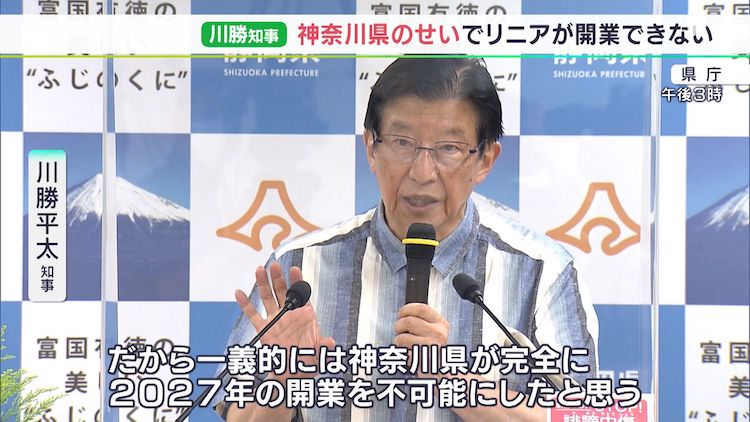


 Cat Foreheads & Rabbit Hutches