Gas pains
In the last three years, almost 30 cities in California have moved to reduce the use of natural gas in buildings, mainly through banning installations of gas lines in new structures. Last summer, the state legislature, in fact, approved energy standards that, while not actually prohibiting the use of natural gas, would greatly expand the use of electrical appliances for heating, cooling, and cooking in a move to greatly reduce consumer reliance on fossil fuels, including natural gas, which is considered a prime contributor to global warming. In December, New York City went California one better with an outright ban on fossil fuel combustion in future construction of residential and commercial buildings, thus bringing about the beginning of the end to gas use in the city.
This trend seems irreversible as more countries approach their deadlines for reducing greenhouse gases as dictated by various global agreements. Though some pundits insist that replacing natural gas with electricity will not solve climate change since electricity has to be generated somehow, and often through the burning of fossil fuels, the concerted worldwide push toward greater use of renewable sources will eventually obviate the need for these fuels. And, of course, the problems of natural gas go beyond its immediate and long-term effects on the atmosphere. Mining damages soil and water resources; gas is inherently dangerous and expensive to transport, whether across continents or across cities; and gas usage within homes is now known to cause health problems, including cancer.
None of these issues entered into our decision to not use gas in the house we built in 2013 since “city gas,” as it’s called in Japan, is not accessible in the place where we built the house. However, it didn’t really bother us because we had had it with gas and even if it had been available we wouldn’t have used it. This attitude had less to do with worries about the environment than with our own preferences and convenience. Using it as a heating source, we’d always felt ripped off by Tokyo Gas, the monopoly in the places we rented up until 2013. The company is the perfect example of a capitalist enterprise that uses its stranglehold on a utility to bleed customers. Not only does Tokyo Gas (and probably every regional gas utility in Japan) overcharge for the gas itself, but it makes it so that the infrastructure that delivers the product requires serious investment. When we moved to a high-rise rental in Tokyo that had just been built, in order to use gas for heating we had to buy special stand-alone units for each room from Tokyo Gas because the piping system was unique to the building. Each unit cost as much as ¥45,000, and then when we moved out of the building more than ten years later and into a new rental that had gas heating from Tokyo Gas, we couldn’t use these units because the apartment we rented didn’t have the same system, even though it was built after the one we lived in previously. Tokyo Gas had already moved on, and there was no demand for the units we owned, so we had to throw them away.
Moreover, we had fallen out of the habit of deep frying foods at home or even grilling fish. If we wanted those dishes, we’d buy them already prepared at the supermarket. Mainly we were tired of scrubbing the burners and the range hood with steel wool, and storing and disposing of rancid cooking oils, and tended to associate these things with gas ranges and open flames.
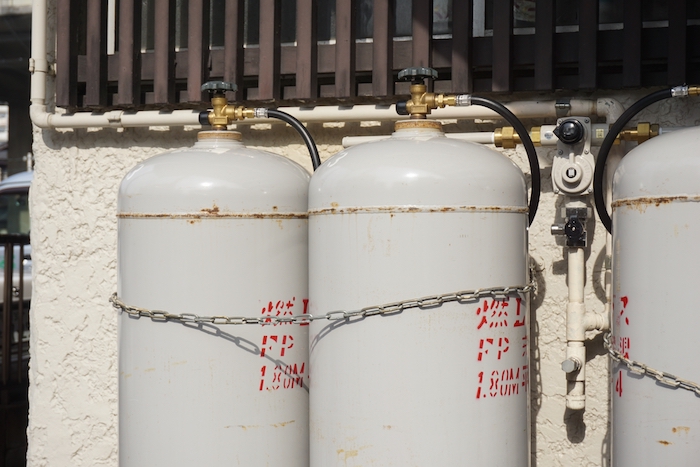
So our house is all-electric, the stovetops IH, which are easy to clean. That isn’t to say we couldn’t have gas in our lives any more, only that we couldn’t have natural gas. We could have liquefied petroleum gas, sometimes called propane, which is available everywhere in Japan, but that would require appropriate piping within the house, and when the builder suggested it to us we thought about it and declined, also mainly for aesthetic reasons. When we lived in Omiya for 3 years we rented a house that used LPG, and didn’t really like the sight of all those cannisters lined up outside under the kitchen window. So our decision to not use LPG in our new house was consistent with our dislike of natural gas: We didn’t want to use it for cooking or heating. We were through with open flames.
Read More Cat Foreheads & Rabbit Hutches