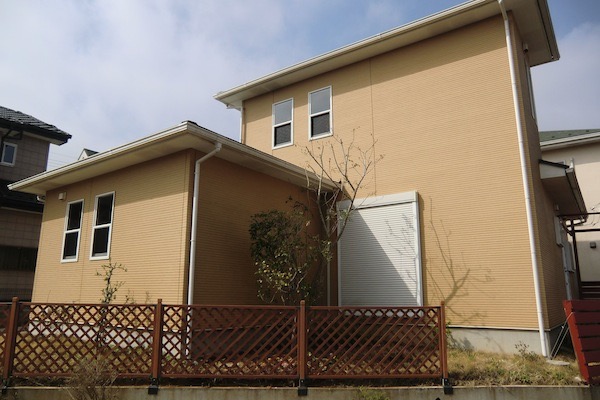
Last week the Ministry of Internal Affairs and Communications (MIC) finally released its latest survey of the Japanese housing situation. We say “finally” because the survey is conducted every five years and the last one came out in 2018, so we’d been waiting for it since last fall. The big news is that the number of vacant houses, or akiya, has grown to more than 9 million, or 13 percent of all homes in Japan, a statistic that’s earned headlines all over the world, though the last time the survey was published the number was already way over 8 million, so it’s not as if it’s a surprise. Still, given the global housing situation vis-a-vis inflation and other economic pressures, it’s a mighty powerful indicator of something that few people have explained satisfactorily. We think we know the reason, and we’ve discussed it for years on this blog, but that’s not our concern today. What we want to talk about is the real mystery surrounding the survey, which is how it’s conducted.
For the most part, nobody questions the MIC’s methodology, but given the sheer scale of the akiya situation, one would naturally wonder how the field staff who carry out the survey could possibly count every single vacant home. And, of course, they can’t, so they use the common statistical technique known as extrapolation, which means inferring the unknown based on the known. Specifically, it means taking a scientifically derived sample of a population and then using those results to draw a conclusion about the larger picture. So the real question is: How do they choose a sample?
In 2016, the real estate investment website, Rakumachi, published an article about how the akiya survey was conducted based on questions it had submitted to the MIC. The first point was how the ministry defined a vacant home, and, as it turns out, it has five categories, which are:
1. “Second homes,” meaning vacation properties that are used only on weekends and/or holidays; no year-round occupancy.
2. “Other” second homes, such as residences that are used only for work purposes and occasional overnight stays.
3. Vacant properties that are for rent, regardless of age.
4. Vacant properties that are listed for sale, new or used.
5. “All others,” including homes owned by people who are not occupying them at the time due to work transfers or extended hospital stays, homes that are being “prepared for demolition or rebuilding,” and homes that are vacant but to which none of the above criteria apply.
We assume that “abandoned homes” (hochi akiya) are included in category 5, and in the latest survey they total 4 million, which is quite substantial. Nevertheless, it also means that most of the residences described in the survey are still in use to some extent, so the term “vacant” needs to be qualified.
When Rakumachi asks how the akiya statistic is estimated, the MIC gives a fairly detailed answer. A vacant home is defined as a residence that is not occupied “on a daily basis,” and an evaluation is reached without necessarily interacting with the owners of the residences in question. The field surveyors “make an effort” to talk to the owner/titleholder of a property several times. But mainly they inspect the exterior of the property and question neighbors or, if the property is collective housing, like an apartment building or a condominium, they try to talk to the manager. They collect all this information for a sample of a given area and, using other information specific to the locality, extrapolate. The MIC stresses that collective housing is more difficult for different reasons, the most obvious one being that field surveyors usually cannot enter the building to interact with residents.
So already there is guesswork involved in compiling the information that will form the basis for the akiya statistic. In January 2021, Nikkei Business ran a story that questioned this methodology with the headline, “Is the 10 percent vacancy rate in Tokyo true?” Nikkei ran off the most recent vacancy statistics: 8.49 million akiya out of a total of 62.4 million residential units in Japan; more than 800,000 vacant properties in Tokyo out of a housing stock of 7.67 million. The reporter, Takeshi So, wondered about these statistics because he rarely sees what he would describe as an akiya, be it a single-family house or an apartment, in Tokyo. (For what it’s worth, we’ve seen quite a few, but we are sensitive to that sort of thing.) And when So looked carefully at the MIC’s methodology he was struck by one thing, namely the discrepancies between the MIC’s numbers and those reported by local governments.
And these discrepancies weren’t small. According to the 2008 MIC survey, the vacancy rate in Toshima Ward was 12.9 percent, though the ward’s own estimate was only 1.6 percent. Similarly, the central government estimated Kita Ward’s vacancy rate that year was 10.3 percent while the ward calculated it was 5.6 percent. Further out from the city center, the difference in rates narrowed somewhat. In 2008, the MIC said Mitaka City’s vacancy rate was 5.3 percent and the city’s number in 2013 was 2.1 percent. Ome City’s was even narrower: 5.2 percent for the government, 3.4 percent for the city. The reporter points out that the methodologies are significantly different. Setagaya Ward , for instance, only includes houses in its vacant property statistics, not apartments or condominiums.
So says the main problem with the MIC’s methodology is that the “standards” for judging whether a property is vacant are “vague.” In addition to mostly drawing conclusions based on outward appearances, the survey also invites scrutiny with its distribution of questionnaires, since the response rate tends to be quite low, and So suspects that the MIC is assuming that an unreturned questionnaire could represent a vacant property.
Even the land ministry, which carries out its own periodic housing survey, thinks there are problems with the MIC’s methodology. In one region under study, the MIC deemed 2,700 homes vacant, but when the land ministry did its own survey of the same area, it could confirm less than half that number through a more thorough survey practice, including talking directly to property owners. The main problem with the MIC’s methods is placing so much statistical weight on outward appearance, since it’s difficult to tell how “occupied” a property is by looking exclusively at the exterior. According to the land ministry’s 2014 survey, 30 percent of the akiya as determined by the MIC are actually “occupied.”
So says that the purpose of the MIC survey is not so much to determine the real number of akiya in Japan, but rather to show trends over time, which is why they stick to a methodology that many find dated. The problem is that the media only reports the MIC statistics when it discusses akiya without comparing it to the land ministry’s or even individual local governments’ numbers. In the latter case, this may be understandable since local governments don’t necessarily want to publicize their vacant housing rates.
So thinks the akiya “problem” isn’t as bad as the MIC makes it out to be, and points out that a healthy housing market depends on a certain rate of unoccupied properties. If anything, So believes there is a housing shortage in many markets, especially Tokyo. Though post-pandemic urban and suburban housing sales would seem to support this theory, it also seems irrefutable that Japan does have an inordinate number of vacant homes—maybe not 9 million, but certainly a lot, and a good portion, especially in rural areas, are probably vacant for good, meaning they’ve been effectively abandoned. Given Japan’s depopulation trend, there just aren’t enough people to occupy all the houses that exist now and which are being built at a rapid pace all over Japan. So what the authorities, as well as the real estate industry and the public, need to take away from the MIC survey is not how many empty homes there are, but how to make the housing situation as it stands work for the people who live in Japan now and who will live in Japan in the future. That means reassessing new construction targets that lead to oversupply; providing reasonable incentives for owners to either demolish properties that are no longer viable or renovate those that are; and giving renters who can’t afford or don’t want to own a home a fair shake.
 Cat Foreheads & Rabbit Hutches
Well you know the old quote about statistics….
Governments put out all sorts of statistics and some governments are better than others. Many governments put out nothing but lies.
I am quite surprised that there is no coordination between the MIC and the ward offices. The ward offices would have much better data based on the records they keep.
And while the MIC data is interesting it is not a major economic statistics like the CPI or unemployment data that major economic decisions are based on.
LikeLike
Off topic.
My Kindle just recommended a new book called “Shitamachi Scam” by a Michael Pronko, characterized as a noir detective story about a real estate scam set on Tokyo.
Reviewing real estate fiction might be a nice addition to the blog!
LikeLike
If Akiya are abandoned residences it should be relatively easy for government especially local governments to identify them. The properties will no longer be paying local land rates, water bills and electricity bills . Some none payment may be due to poverty or other reasons , which the local government may also have an welfare interest in , but a thorough investigation of the prefectural paperwork seems a much more effective investigative tool for true abandonment then paper surveys.
LikeLike
Just wondering if you still look at various houses for sale around Japan?
I spend (waste??) some of my free time looking at houses for sale listed on some of the Japanese real estate web sites in areas that I would have been interested in living in Japan if I had the opportunity to move back years ago.
I am often surprised at some of the houses that are for sale not only for their prices, but also the style. I think many people would be shocked by at what is built and is for sale in Japan as it wouldn’t fit the traditional Japanese stereotype for housing.
Unfortunately where I live most of the houses are nothing more than big boxes with a few having vaulted ceilings. In other words the houses are pretty boring.
An example of what I am talking about is this one for sale in Sapporo:
https://www.athome.co.jp/kodate/1049532276/?DOWN=1&BKLISTID=001LPC&sref=list_simple
What do you think about this house?
This might be an interesting topic for your blog.
Lee
LikeLike
We occasionally check the portal sites to see what’s available but no longer go out in the field. The property listing you linked to is certainly interesting, but at ¥250 million it would have been way out of reach for us when we were looking to buy. I assume a good portion of that price is for the land. As compelling as the design is, I doubt if many people would want to buy it, unless they planned to open a restaurant or a nightclub.
LikeLike
Hi,
Thanks for the reply.
While that house is interesting, I doubt that it is very “liveable”. An interesting showpiece. I wonder how much it would cost to heat it in winter?
The price probably reflects the land value and the uniqueness of the building and if I had that kind of money I certainly wouldn’t buy it as other houses in areas like Kamakura would be of more interest.
And while Japan has lots of problems, one of them isn’t extremely high real estate prices throughout the country.
Yes, Tokyo has it high prices, but other areas are cheap compared to other countries. Japan still has low interest rates for real estate loans as well.
You can’t even buy a dump of a house in the suburb where I live for less than A$800,000 and interest rates are around 7 % too.
LikeLike
FYI,
STV story I don’t know how long it will be up.
https://m.stv.jp/news/stvnews/kiji/st2b2b72db88384e5f87e33583082c1ddf.html
LikeLike