Backed up
Japan has one of the most extensive and sophisticated sewerage systems in the world. As of 2021, slightly more than 80 percent of the population was served by sewerage systems, an impressive statistic considering that less than 10 percent of the population had access to sewerage in 1960. This increase in coverage is just another indication of how quickly and completely Japan rebuilt and improved its infrastructure after World War II.
A recent article in Asahi Shimbun, however, reported that this trend may be reversing. According to surveys conducted by the Ministry of Land, Infrastructure, Transport and Tourism, one-third of local governments in Japan have cancelled their plans to extend their sewerage systems to new and existing residential development. Instead, household waste will be processed by on-site septic tanks.
The reason is obvious: Japan’s population is dropping, and the cost of building and maintaining sewerage systems depends greatly on population density. With fewer people living in a given area, the construction of the new sewerage comprising pipes and treatment facilities cannot be paid off in the long run.
It’s necessary to note that one-third of local governments does not mean one-third of the population. The local governments of large cities represent much larger populations than local governments of smaller cities and rural areas, and it’s mostly in the suburbs and the countryside where these governments are reviewing and cancelling their sewerage construction plans. But what’s perhaps most significant about the Asahi report is its assertion that some local governments will actually backslide on sewerage, meaning that they will replace existing sewerage systems with individual jokaso (septic tanks).
Urban-style sewerage systems collect household waste water and night soil in one central location and then treat it before releasing the filtered water back into the environment. Septic tanks, including so-called multipurpose tanks that process waste from toilets and sinks/baths separately, use on-site filters and bacteria before releasing the filtered water as runoff into the ground or rivers. Sewerage is obviously more cost-intensive because it requires long stretches of pipepines and the purchase of land where those pipes are buried. Septic tanks, including those shared by communities, are on-site, meaning they are completely contained within the property of the user.
The Asahi says that in the 1990s many local governments drew up plans for constructing new sewerage systems based on the assumption that the population would continue to increase. Reality quickly put a damper on those plans. The land ministry found that as of 2014 throughout Japan, local governments had fallen short of their stated plans to extend sewerage systems to their communities by 625,000 hectares, meaning that 625,000 hectares of land that were slated to receive sewerage infrastructure by 2014 had not undergone any construction, or about 34 percent. In fact, as of 2019, 158,000 hectares of land that were initially supposed to receive new sewerage systems instead had those systems replaced with septic tanks. And between 2019 and 2025, at least 80,000 hectares of land slated for sewerage were changed to septic tanks. For the record, the prefectures who altered their plans the most were Chiba (29,646 hectares), Ibaraki (26,726), and Fukushima (15,869).
Moreover, some local governments actually stopped using existing sewerage systems due to their inability to keep up with maintenance and improvement costs. There just weren’t enough customers any more. The article uses the example of Sanmu in eastern Chiba Prefecture, which had devised plans for new sewerage in 1995 when it was still designated as a town before consolidating with neighboring municipalities to become a city. In 1995, the population was still on the rise, but by 2015 it was decreasing, so the city revised its plans when it realized that even if it carried out the construction according to plan, it would only cover 7 percent of the city’s total population. Projections said that the city would have to spend ¥1.3 billion over the next 40 years on maintenance of this new construction. There was no way that fees from such a small number of households could pay for it, so the plan was cancelled. Around the same time, 9 other local governments in Chiba cancelled their sewerage construction plans. At present, there are 18 municipalities in the prefecture that still do not have any sewerage systems and obviously never will, regardless of whether they once made plans to construct them.
It should be noted that the central government subsidizes sewerage construction, and the land ministry itself, having taken note of the population decrease, has encouraged local governments to abandon their sewerage construction plans in favor of septic tanks. This past summer alone, 97 local governments told the ministry that they would change their plans in accordance with the ministry’s request. A representative of the general affairs ministry in charge of public waterworks told the Asahi that this change in policy of the government was mainly implemented in the face of looming infrastructure repairs, which will cost a lot of money in coming years. It would be better if local governments with older sewerage systems that are no longer financially feasible replace them with septic tanks.
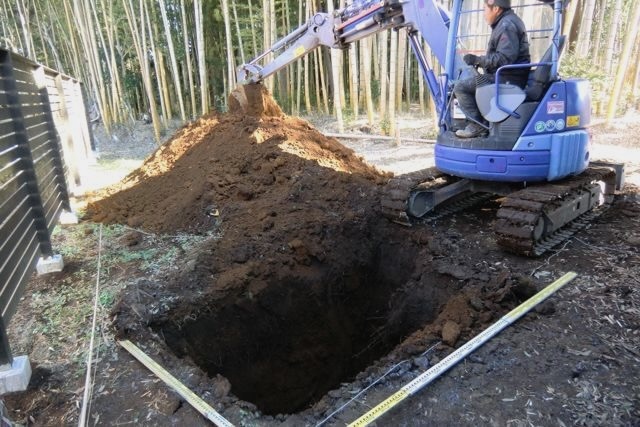
One of the reasons we are reporting this news is that we use a multi-purpose septic tank, even though neighborhoods less than half a kilometer from our home are all hooked up to the city sewerage system. When we had our house built in 2013, we learned that the city had no plans to extend sewerage to our area, though we haven’t been able to find out if there were any plans in the past to extend sewerage to our area.
Still, we wanted to compare the cost per household between sewerage and septic by comparing bills we received when we were renting an apartment in the more urban portion of our city in the past and the bills we receive for maintaining our septic tank now. When we were in the city we (two people) paid a little more than ¥3,000 every two months for both water and sewerage, or about ¥18,000 a year. That was in 2013. Now we pay about ¥15,000 a year for a worker to inspect our septic tank as required by local law every three months. Since we also do not have access to municipal waterworks, we use well water, for which we pay nothing, so in a sense the septic tank is more expensive than sewerage, but that doesn’t take into account initial costs. We had to, of course, sink a septic tank and dig a well, but our local government, at the time, subsidized the cost of the septic tank since infrastructure wasn’t available in our (literal) neck of the woods; and while we had to pay several hundred thousand yen to dig a well, if we had access to the local waterworks we would have had to pay an initial cost of about ¥300,000 just to have it turned on, so to speak. In the end, the difference wasn’t that much, and in the long run, we’re probably paying less, though, we have to admit, well water around here isn’t that great.
 Cat Foreheads & Rabbit Hutches