New values

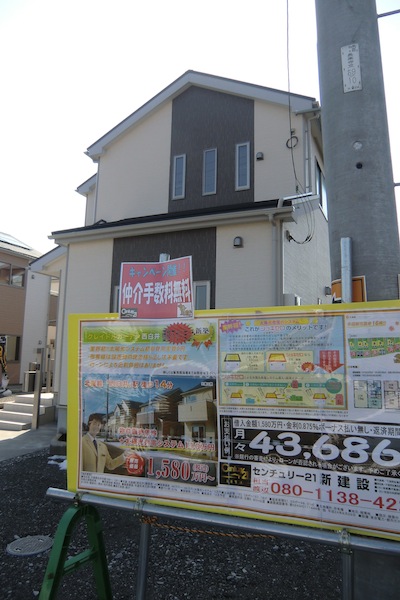
CIMG2031Earlier this week the national tax agency announced that, on average, land values throughout Japan went down 1.8 percent, raising hopes in financial circles since it’s the lowest drop in a long time. Any sign that the economy is improving is given a lot of play in the media, though a closer reading of the statistics indicates it may not be what it seems. As almost all the stories point out, the main brake on the drop in property values was the sudden surge in sales of luxury condos in the major cities. If you discount those sales, much of which is being spurred by overseas investors, the drop in value is pretty much the same as it’s been for the past decade or so. In Asahi Shimbun’s coverage, a reporter talked to a 37-year-old salaried worker who was looking to buy a used condominium in Ichikawa, Chiba Prefecture. He found one that was very cheap and only 10 minutes from Motoyawara Station, but was disappointed by the “undeveloped” quality of the neighborhood. A local realtor told the reporter that his business has not changed at all. Property values in the area are 4.7 percent less than they were a year ago, when the values were 4.4 percent less than they were in 2011. “The only place that’s any good is the center of Tokyo,” he said.

Another realtor in Kofu, Yamanashi Prefecture, told the paper that the value of properties near the main train station declined 3.8 percent over the previous year, and he didn’t sound hopeful, citing the fact that there has been no increase in the last year of “inquiries for home remodelings” that actually lead to contracts for work. “That’s because nobody’s income has increased.” The media was expecting a rush on home sales prior to the increase in the consumption tax next April, and until May, housing starts rose year-on-year for nine months straight. That statistic may go south, however, since there is a suspicion that interest rates will also go up in line with the government’s monetary easing policy, thus discouraging some potential new homeowners. Almost everyone Asahi talked to, from realtors to securities analysts, believe that the situation won’t change significantly unless average people start making more money.

Highrises revisited

DSCF1857Though we miss living in Tokyo, especially shitamachi, we don’t really miss the highrise kodan where we spent eleven years. Until the earthquake our main complaint was the mostly insular nature of highrise life, the feeling that it was always difficult to get in and out, but during those weeks after the temblor it became a nerve-wracking experience, even as we became convinced that the structure was safe. We wrote a number of posts here about that experience and even one related column for the Japan Times (though it seems to have been taken off the JT site). For a while the media and the market seemed to concur with us that highrises may not be a wise option for a city that could be hit with its own big earthquake at any time, but eventually fears subsided and highrise condos started selling again; quite well, in fact, so we assumed our fears were just our own and didn’t extend to the general population. Even Tsutomu Yamashita, a housing journalist who is unusually frank about these sorts of matters, has come around and said that investing in a highrise Tokyo condo is a good idea since they’ve become even safer since the quake.

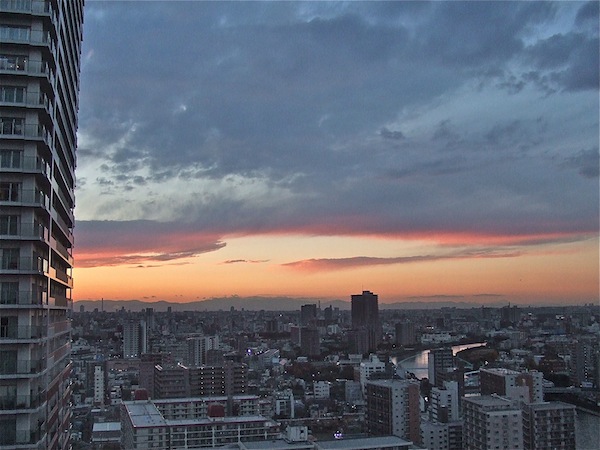
A recent article in Aera, however, has confirmed our initial sentiments. Opening with a frightening “what-if” scenario describing a 7.3 magnitude quake happening under the capital, the feature makes the case that even though these highrises will not collapse, life will essentially be impossible in them indefinitely. The most immediate concern, and the one that made the biggest impression on us in the aftermath of the 311 quake, whose epicenter was hundreds of kilometers away, was the loss of elevators, which shut down automatically when a building shakes. According to law, they can only be turned on by a certified technician, which means even when the shaking stops residents will have to wait for that technician to show up, and he may be inspecting other highrises. This problem multiplies with the intensity of the jolt. And if the quake is strong enough to knock out electricity, then the elevator problem is exacerbated. Under such circumstances, the residents on higher floors become like “people stranded on the top of a mountain in bad weather.” The idea of walking down and then up emergency stairways to run errands or whatever is just impractical, and virtually impossible for the elderly, the handicapped, and pregnant women. Most highrises have emergency generators, but these are for contingencies and thus only have enough power for maybe two hours. So if the elevators are out due to loss of power, that means the stairways are also dark. And even if the building structure is sound, some elements, such as doorframes, could be compromised, making it difficult to get out of an apartment. All highrises have emrgency ladders connecting verandas for use during fires, but it will be very difficult to use them to get all the way to the ground. The Tokyo metropolitan government has said that in the event of a major quake their estimate is that it will take at least a week to recover electrical power. Also, highrise residents will likely be lower down on the list of people receiving attention during rescue operations because of the difficulty for crews to access higher floors. Emergency services will first attend to victims they can reach more easily. Read More

Time’s up

Kobe 1997

Kobe 1997

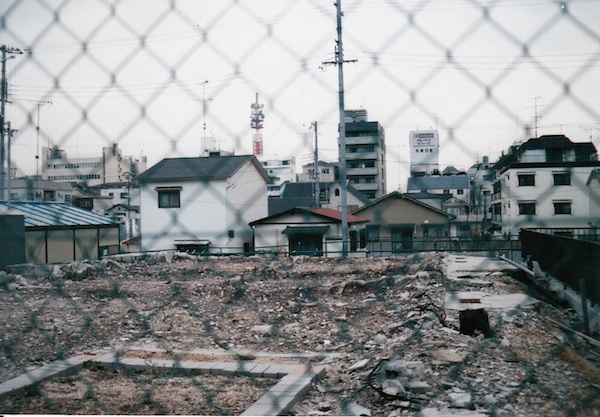
While victims of the 2011 earthquake and tsunami continue to struggle with housing issues almost two years into their ordeal, a group of refugees from an earlier natural disaster has been given notice that they will soon be on their own. Ever since the 18th anniversary on Jan. 17 of the Great Hanshin Earthquake, various media have reported on the notifications distributed by local governments to residents of 6,600 rental units saying that they have two years to vacate their apartments. These people were living in public housing for low-income residents when the earthquake struck in 1995, and most of their dwellings were destroyed, so the governments of Hyogo Prefecture and six cities made contracts with private landlords. The residents paid as much rent as they could in accordance with their incomes and the local governments made up the rest. The deal was limited to 20 years, which means that between 2015 and 2017, depending on when they moved in, the tenants will have to move out of their current apartments, either to public housing or somewhere else. Most of these people are elderly, and the public housing (shiei jutaku) that has been built in the meantime tends to be located far from where they presently live. They are reluctant to move at their age, having formed bonds with their neighborhoods and their neighbors, which are extremely important in terms of mental and physical well-being.

The authorities say they have given the tenants ample notice. According to an article in the Tokyo Shimbun, announcements were first distributed in 2010, and the contracts the residents signed when they first moved is stipulated the 20-year limit, though supporters of the tenants point out that this term is vaguely stated and buried in small print. Most of the apartment buildings were hastily constructed by developers right after the earthquake in anticipation of just such a need for low-income housing. With local governments guaranteeing the rents of tenants, it was a virtual goldmine for landlords, which include semi-public housing juggernaut UR, and one can easily imagine that the landlords are fully supportive of the residents who are protesting the pending evictions since they themselves will lose revenue as a result–the rental housing market is not in good shape. The mayor of Nishinomiya recently received a petition with 3,251 signatures.

The local governments have said there’s nothing they can do about the situation since the 20-year limit is built into the civil code and Public Housing Law, even though the law itself was revised right after the earthquake to allow commercial properties to be used for public housing (kariage fukko jutaku). Some media, including the Japan Communist Party organ Akahata, mention that the controversy has ramifications for the current situation in Tohoku. As in Hyogo, private developers have been invited to build rental housing for people who lost homes to the tsunami or nuclear disaster, and apparently the authorities learned their lessons in Kobe because they are explaining to tenants that there is a 20-year limit. Of course, in Tohoku there are considerations that people in Kobe didn’t have to worry about, so at the moment a 20-year lease may be the least of their problems.

Unsafe as houses

Ever since the March 2011 earthquake, Tokyo has been reassessing its disaster preparedness policies with mixed results. Though the residents of the city have definitely become more knowledgeable about their vulnerability and what needs to be done to save as many lives as possible in the event of a major quake, not much, in fact, has been done, owing mainly to the usual issues involving private property versus public responsibility. Tens of thousands of old wooden houses, packed tightly together in some neighborhoods, are basically kindling for the inevitable conflagrations that will start after an earthquake hits. Since the local government doesn’t feel it can force these people to move or rebuild their houses (which would, in accordance with zoning laws that have gone into effect since they were originally built, force them to construct smaller abodes then they already occupy) their dire prediction falls on deaf ears. Libertarians and individuals with fond feelings about Tokyo’s uniquely quaint neighborhoods condemn any sort of regulatory move that would change the character of those neighborhoods, but it’s clear that these neighborhoods, as well as the people who live in them, won’t survive a big quake. They didn’t survive the 1923 quake, and the situation isn’t really that much different.

The same seems to go for condominiums and apartments, though in a different way. Late last year, the Tokyo government sent out questionnaires to building management companies and condo owner associations to determine the status of quake-proofing for collective housing in the city. Owner-occupied and rental combined, Tokyo has some 132,600 multi-resident buildings, 24,000 of which were built before 1981 when stricter quake-proofing standards went into effect. About 52,000 questionnaires were sent out, and one-tenth were completed and returned. Of these, only 11 percent said that their buildings have been inspected for structural integrity–17 percent for condos and 6 percent for rental apartments. Another 8 percent said they “planned to carry out inspections,” while 9 percent plan to “discuss the matter.” Sixty-three percent responded that they have no plans to do anything. Among the buildings that did carry out inspections, 60 percent were told that they needed “further reinforcements,” but only 4 percent have actually carried out any reinforcement work. Read More

Not quite

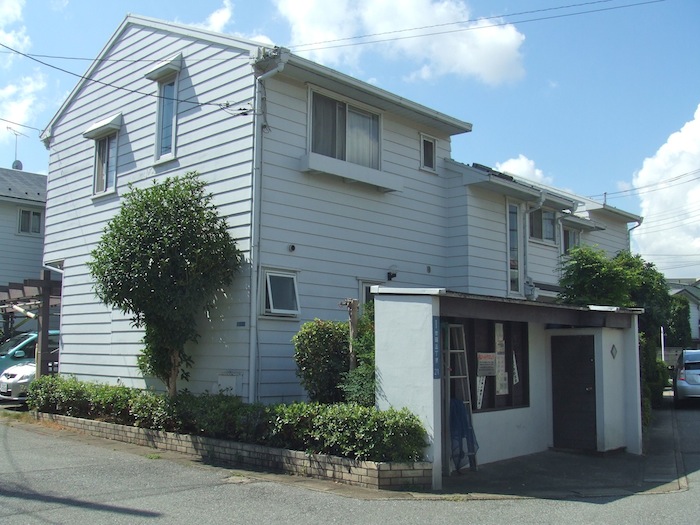
We’ve always been interested in town houses and are still thinking of dedicating a Japan Times column to them. Town houses were briefly popular in the late 70s and early 80s. Japan has always had an indigenous town house, called nagaya or machiya depending on which part of the country you’re in, but the structures called “town houses” in English (sometimes “terrace houses”) were more like their Western cognates: two-story structures with walls adjoining their neighbors. In urban environments town houses offer more effective utilization of land than normal detached houses while providing a similar level of creature comfort. However, once land prices skyrocketed in the mid-80s town houses were considered economically inefficient, even in the suburbs, which is where you normally found them anyway. Everybody started building condos with boxy floor plans in order to get as much cash out of a block of air as possible. Every so often we come across an old town house on sale and check it out, but because of their relative scarcity they tend to be overpriced. Of course, “overpriced” is all a matter of perception. Because town houses are relatively unusual, owners think that makes them more valuable, but they’re still old and always need a lot of work, as much as a detached house of the same vintage does if it hasn’t been renovated (and usually they haven’t been). A few weeks ago, as a matter of fact, we were amused to see a listing in which town houses were qualified as being “popular.” They aren’t, at least not in the general definition of the word. They are simply “rare,” which means it’s assumed some people will pay a bit more to have one. Read More

Home Truths, Aug. 2012

Here is this month’s Home Truths column in the Japan Times, about pets. Though we have two cats ourselves, and basically believe that anyone who has a pet should be able to live where they want, we’re not entirely comfortable with the increasingly open acceptance of pets in collective residences. As we suggest several times, it’s a two-way street. Tenants and condo owners who do not demonstrate sufficient understanding of what it means to have an animal companion should not have them, though we’re not sure how that point can be driven home in a way that doesn’t discriminate against people who do demonstrate responsibility and understanding. Is it right to keep large dogs in small apartments? Should all dog owners who live in collective housing be obliged to train their pets? Should cats be confined indoors or allowed to roam free, and if the latter is allowed, should they be required to be spayed/neutered? Rules are unavoidable, but education is essential.

Semi-detached

Though we still look at condos, it’s mostly for academic purposes. We have nothing against condos aesthetically or practically, but collective living automatically brings with it certain restrictions that we don’t really want to buy into. That may sound strange coming from people who still rent, but the responsibilities inherent in owning a property are more pronounced when the property is collective. For one thing, the condominiums we tend to like in terms of layout and design are actually those that were built by the housing authority, now called UR, and most of those still don’t allow pets. (We plan to cover the pet problem in more detail in a later article.) This small but significant restriction is indicative of the condo experience: people who own are understandably more caught up in the collective enterprise and thus pay closer attention to their neighbors. Renters are relatively forgiving, maybe because they tend to think they won’t be staying here forever. Owners have more of a stake and thus there are more rules and the rules are enforced. We’re not against rules, but it seems less stressful to own a house, where you can pretty much do whatever you want, than a condo, where you may not be sure what you can do until you move in. Read More

Nailed

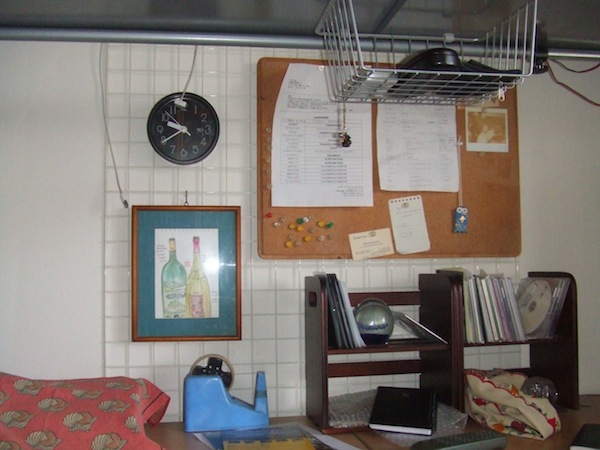
Extendable grid panel used as coat rack

In the most recent newsletter published our landlord, the semi-public housing corporation UR, and deposited in our mailbox there’s a specious “conversation” between a theoretical apartment renter and a theoretical apartment owner about the respective advantages of each mode of living. Discounting the whole economic side of the issue, the most obvious distinction is that owners can “freely change and remodel their apartment and replace or install amenities.” The renter counters by saying it may be nice to change your apartment the way you want, but what a pain in the neck! You have to hire someone to do the work and then move out while the work is being done. And, in any case, you can’t actually change the size of an apartment the way you can a house; whereas with some rentals, (s)he argues, the landlord will gladly remodel the unit to the tenant’s specification before the latter moves in. What’s perplexing about this line of thinking is that, while it may be true in “some” cases, as the speaker says, it isn’t true in the case of UR rentals. You have to take it the way you see it. The only part of the renter’s argument that holds water is that renters have more freedom to choose, meaning once they move in they can always move out and find something more suitable or desirable. Owners don’t have that freedom; or, they do, but it depends on how easily they can sell their property and how much of their initial investment they get back, and those points are hardly guaranteed in Japan.

Stand-alone grid panel for office use

Still, remodeling needs to be addressed. In UR apartments, as with most rental units, tenants are very limited with regard to how they can decorate, since almost all rental agreements include a term that says the tenant must leave the apartment in the exact same state as he or she found it. And while usually contracts don’t specifically say you can’t make holes in the wall, that is how most people interpret it. In any case, we’ve heard of people having had money taken out of their security deposit because of holes in the wall–but then, private landlords will find any excuse to keep that money. Read More

Community first

The inability to sell or rent out vacant houses and condominiums is not just a concern for the owners. In many places it’s something that the community as a whole worries about, especially now with all the talk about the erosion of “kizuna” (bonds) and the attendant loss of community-mindedness, which may have been over-stated in Japan, but in any case the atomization of urban life is definitely on the increase. A neighborhood in Chiba Prefecture is actually doing something about the problem in an unusually proactive way.

In a section of Chiba City’s Mihama Ward near Kaihin Makuhari Station, residents have put together a non-profit organization called Chiba Regional Renovation Research, whose job is to rent out vacant properties at less than their market value as a means of “reinforcing communication.” The idea is not simply to find tenants, but to make the neighborhood more viable as a community. A recent article in the Tokyo Shimbun explained that collective housing in the area in question was developed by the prefectural and municipal governments in the 1960s, and now the apartments are superannuated and mostly occupied by elderly people. After last year’s earthquake, even more people moved out of the area over fears of liquefaction, which affected many coastal areas Chiba along Tokyo Bay. The NPO is made up of 107 condominium associations in the area. Their research found that out of 800 units, about 300 were empty. (The vacancy rate for all of Chiba Prefecture is about 15 percent) In most cases, the owners of the units didn’t live there and/or were unable to rent them out, but in some cases, the owners of the units could not be identified or located. Of those empty units whose owners were interviewed–245 in all–30 percent said they wanted to rent or sell but couldn’t, and in the meantime they have to pay monthly management fees and repair fund contributions, not to mention property taxes. Since many are retired, this is a big burden for them.

The condo associations formed the NPO because their membership is so diluted it has become difficult to formulate disaster and anti-crime countermeasures. The purpose of the organization is to act as a bridge between owners and potential tenants. For instance, by offering units for less than market prices they hope to attract students. They also think that some units could be used by younger families as collective daycare centers or leisure facilities for seniors. At the same time, they will promote renovations in terms of both safety and comfort, working with prefectural authorities and the construction ministry.

First-timers

In real estate parlance, there is a term for people who are buying a home for the first time: ichiji shutokusha. In fact, there are homes that are specially designated for these buyers. Almost all are condominiums, and to qualify for the ichiji shutokusha designation they have to have at least 60 square meters of floor area and cost less than ¥35 million. To put it succinctly, they are designed for families and are cheap.

According to the Asahi Shimbun, in 2010 80,204 brand new condominiums designated for ichiji shotuksha were put on sale in the Tokyo metropolitan area. That’s a little more than 18 percent of all the new condos that went on sale in the area that year and a little more than one percent less than the number put on sale in 2009. In fact, the share of new first-time condos among all new condos in Tokyo and its environs has been dropping since the turn of the millennium. In 2001, they accounted for 38 percent of all new condos, and for the next five years the share remained in the 30 percentile range. In 2007, the share dropped to about 25 percent and has been steadily dropping ever since.

The Asahi article doesn’t analyze why this is happening, though one could get a fairly good idea of why such condominiums would become less popular. The above-mentioned criteria would exclude the vast majority of new condos built within Tokyo proper, which is where most people in the region work. The majority of first-time condos are probably located in the far suburbs on inconvenient train lines, which means that their value depreciates even more quickly than condos in Tokyo or other major cities. They are also more difficult to sell, thus contradicting one of the salient features of a first home–it’s appeal as an investment, as a stepping stone to a larger house down the line. The standard middle class narrative says you buy a first house young and then trade up to something better and larger as your family grows. But if the value of your property shrinks over time, that sort of upward mobility is difficult to achieve, since you’re not going to get as much money as you paid for it; and the longer you hold on to the property, the less it’s worth and the less likely you can use the sale money to buy a “better” place. At least with a detached home, the land value may at least stay the same, but there is very little land value involved in condo sales. And since developers are always building new first-time condos that are more appealing than used ones, it becomes almost a self-fulfilling prophecy.

The farther Japan gets from the bubble period of the late 1980s–the last time when condo owners believed the value of their homes would increase–the more likely first-time condo buyers will opt for something that they think they can live in their whole lives, and that doesn’t necessarily include condos designated for ichiji shutokusha. Or, at least, that’s our analysis.