Last resorts: Izu division

CI Villa

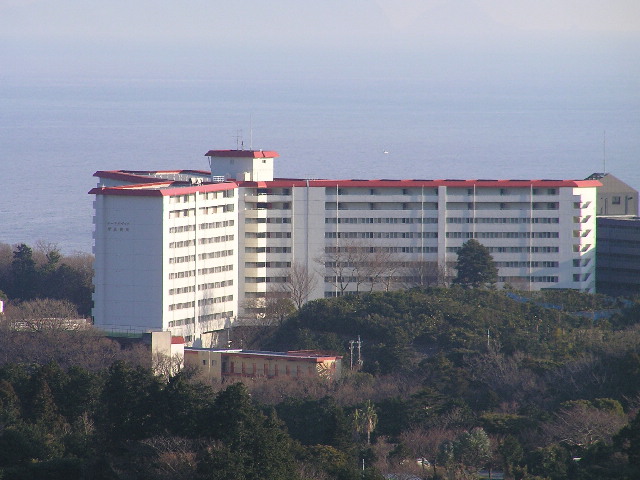
Last weekend TBS ran a long report on resort condos on the Izu Peninsula, focusing mainly on the Atsukawa Onsen region. The hook for the piece was an advertisement for a ¥20,000 condo. That may not sound like much of a bargain, but we’re talking sale here, not rent. The reporter visited the CI Villa condo, which is only 20 years old and commands a beautiful view of the Pacific. He wasn’t allowed to inspect the unit being advertised but he was able to visit another one of comparable size (43 square meters) and age. In any event, while the sale price turned out to be the real thing there were strings attached. The buyer would also have to pay more than ¥3 million in unpaid management and repair fees that have accumulated during the years since the unit was abandoned by its owner and seized by the authorities. And then, of course, the new owner would have to start paying these fees at a rate of ¥30,000 a month.

As the reporter pointed out after learning all this, the condo is still a bargain. Not only does it come with a view, but the management fees entitle the owner to use the building’s elaborate spa facilities, swimming pools, and other amenities. He thought the place was a steal, but as he started talking to local residents and public officials he came to understand why no one was snatching up these low-priced properties (there were quite a few, and not just in CI Villa). He remembered the TV drama series, “Zeni no Hana,” that aired many years ago and which was set in this particular town. It was a huge hit and sparked a travel boom to Atsukawa and in turn a building craze. About half the residences in the region were built after 1975, with construction peaking during the late 80s bubble period. The average price of a condo in CI Villa when it was new ranged between ¥40 and ¥50 million.

Of course, the end of the bubble also ended all that. One local merchant estimated that the number of tourists who come to the town is about “one-hundredth” of what it was during the peak times. And as more and more businesses who relied on these tourists left, the town fell into disrepair. Many people, it seems, do come down with an eye to buy property, most of which is in good condition, but once they see the boarded up shops and derelict infrastructure they get discouraged. The mayor said that the year-round population has aged even more quickly than the national average, and that welfare costs have increased six-fold since 1990. Because the tax base is so small, the town can’t keep up appearances. It’s a vicious cycle. One solution would be to exploit the region’s hot springs to produce and sell geothermal power. The temperature of the onsen approaches 100 degrees, and since local inns only need 50 degrees, the town thinks it could transform those wasted 50 degrees into revenues. The problem is that inn owners, who constitute the biggest block of business interests, are basically wary of geothermal, mainly because they think, wrongly, that it will sap the long-term onsen capabilities. One told the reporter that he had doubts about the local government’s belief that tourists would flock to the area out of curiosity and a desire to support such an environmentally effective project. Apparently, other onsen regions have had some success with such an endeavor.

Put out

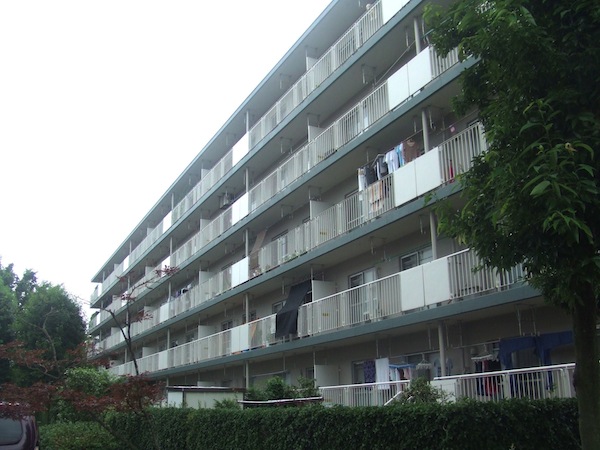
We recently received a DVD screener of “Sayonara UR,” a video documentary by Yumiko Hayakawa. The doc chronicles the situation of a group of residents of Bldg. 73 of the Takahamadai apartment complex in Hino, Tokyo, which is run by the semi-public housing concern UR. The structure was built in 1971 and Bldg. 73 did not meet earthquake standards that were made mandatory in 1981. The company was going to carry out reinforcement work, but in 2007 it announced that the work would cost too much and everyone was asked to move out. The company would help residents relocate to other UR apartments if they needed it. They would also compensate them in part if they agreed to move out within two years of the announcement. Nevertheless, some residents refused to move, saying that they were simply being made victims of UR’s well-publicized move toward privatization. Bldg. 73 was not profitable and so UR planned to tear it down and sell the land to a developer. The quake-proofing story, according to these tenants, was merely an excuse, and not a particularly believable one since there was no inspection made by third parties, even though the tenants asked for it.

It was a classic eviction tale, and Hayakawa clearly sided with the tenants. As advocacy journalism goes, “Sayonara UR” has its good points. Throughout the doc, she refers to UR as representing “social housing,” something she believes is essential to the well-being of a well-ordered and responsible society. UR, as noted thoroughly in our blog, is semi-public, which means their obligations as a public housing provider are limited, and Hayakawa is careful about this point. She shows how UR still uses a lot of tax money in its operations, and interviews an outspoken professor who describes how UR is a money sink, more than ¥1 trillion in the red. The government has been trying to find ways of setting the company free. One of the main reasons they can’t, as evidenced by this documentary, is that people who rent UR apartments, especially those who have lived there a long time, don’t want the company to be made 100 percent private. There are many reasons for this, including the fact that UR does not follow the extortionary practices private landlords are known for, such as charging extra fees–gift money and contract renewal fees–that have no purpose. Hayakawa doesn’t address these reasons or the lack of laws that would protect tenants, but she does an excellent job of interviewing all sides of the story and giving equal weight to each. However, viewers not familiar with Japan’s housing situation may mistakenly equate social housing with low-income housing, which it is not. It’s a difference Hayakawa neglects to clarify, and because she doesn’t specify how much rent these people pay some will think they are poor, when actually they are quite middle class. In fact, given their economic status and the superannuated state of their abodes (most public apartments built in the 1970s for families are less than 60 square meters), many viewers may wonder why these holdouts aren’t jumping at the chance to move to newer, cleaner apartments that will cost proportionately about the same. She also doesn’t clarify that only ten of the 250 households asked to leave refused to do so by June of 2010, when the topic was covered by TBS. By April of the next year, the number was down to 7. Read More

Now on sale

It’s fairly well-known that Japanese people like new things, and if their budget allows they prefer buying a brand new house or condo rather than one that’s already been lived in. Half of the almost six million condominiums in Japan were built within the last 15 years, and reportedly the pace of construction is slowing due to the ongoing recession. According to statistics recently released by Reins Tower (East Japan Real Estate), sales of older condos also went down over the past year. Sales contracts were concluded for 1,943 used condos in August in the Tokyo Metropolitan area. That’s a 6 percent drop from the same month last year. However, the 920 sales in Tokyo alone represented a 0.9 percent increase over last year. The suburbs were a bit different, with Chiba seeing a 6.8 percent drop and Kanagawa a whopping 14.1 percent decline.

But that isn’t the whole story. While sales on the whole have gone down slightly, the average prices of the condos sold have gone up, as much as 4.6 percent in Saitama, for instance. What this would seem to indicate is that more newer used condos are being sold, since condominiums lose their value with time on a pretty consistent basis. In Tokyo, the trend is more localized. Sales of used condos in the three central wards (Chiyoda, Chuo, Minato) decreased by 15.4 percent, while those in the eastern portion of the city increased by 8.6 percent. Condos in the center of the capital are, of course, much more expensive that those in the eastern part, even though prices in central Tokyo have dropped 6 percent while those in eastern Tokyo declined only 1.4 percent (for comparison’s sake, prices in the western wards dropped the most, 8.2 percent, while those in the southwest–Meguro, Shinagawa, Ota–lost only 0.6 percent).

All indications point to a buyers market for used condos, which is hardly surprising. The stock is increasing. For the entire Tokyo metropolitan area, the available stock of used condos is 52 percent higher than it was last year, and in central Tokyo it’s gone up by 25 percent (all Tokyo by 35 percent). What this means is that it’s becoming more difficult to sell older condos, even in those areas like central Tokyo where it used to be considered easy to do so.

The awful truth

We often go out in the field to do research, but it’s always a two-pronged activity. On the one hand we study the housing situation and the market in an up close and personal manner. On the other hand, we’re still thinking about buying property ourselves someday, and though after more than fifteen years of searching off-and-on we haven’t bought anything, it doesn’t mean we never will. Still, the longer this goes on and the more we learn, the more frustrated we become, especially as our income situation remains precarious owing to the ongoing recession. Having a permanent abode that we can’t be kicked out of, regardless of our job circumstances, is a vital consideration, but looking at what we can afford we invariably fall into a funk wondering why we have to settle for such places. Inevitably, you prevaricate: This may be livable.

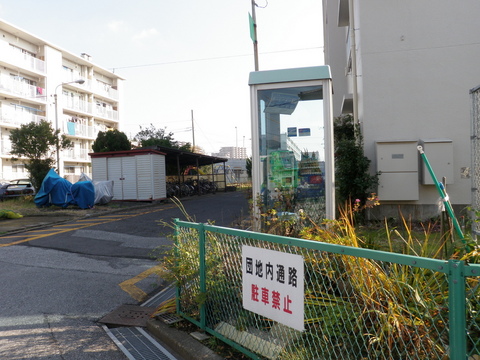
Our latest subject is old danchi/kodan for sale, which have become semi-popular due to media coverage of “danchi moe,” or fans of old public housing. We’ve written before about enterprising people who’ve bought old apartments in buildings constructed during the 50s-70s and remodeled them as attractive modern spaces, which they often sell for a profit. Because they only cost a few million yen to buy and a few million yen to fix up, they can be had quite cheap in the end, but most of the units that have been covered on TV and in magazines are small; fine for a single person but still a bit cramped for a couple and certainly not big enough for a family, though in all likelihood they were occupied by a family when they were new.

When you get out of the main cities, these danchi and kodan get bigger and even cheaper. And in most cases they’re also newer, which means more amenities. However, they still look like danchi, meaning they’re usually contained in dull concrete buildings of three to five stories without elevators. The fact that they are designed with these parameters in mind means that the apartment layouts tend to be more sensible than those in newer buildings. The classic kodan design has a staircase and apartment entrances on each side of the landings, which means you usually enter at ninety degrees to the length of the apartment. That allows for windows on both ends of the apartment, which means there is not only more sunlight, but cross-ventilation, an important consideration until the 1980s, when air conditioning started to become a fixture of apartment life. It also means the rooms are more practically positioned, unlike modern apartments where the entrances open up to a common outside hallway or light well, which means all the light and air comes from only one direction. In order to maximize space for commercial purposes, the rooms are basically carved out of a boxy shape, thus creating what is often referred to as “kamaboko” living spaces. Kamaboko are those rectangular fish paste loaves that you divide into smaller rectangular pieces.

So discounting the unappetizing exteriors, older danchi, especially when they’ve been fixed up, can be quite desirable, and in this spirit we called a few real estate agents and had them show us some in northern Chiba. Read More

Make mine menshin

The Asahi Shimbun reports that more and more companies are interested in fortifying their buildings with so-called menshin technology. Menshin involves placing shock absorbers in the foundations to mitigate the vibration accompanying earthquakes. Quite a bit of media attention was directed at the 18-story Sendai MT Building, which not only survived the March 11 earthquake in the largest city of the affected area, but made it through with minimal shaking, according to people who were in the building at the time. Sendaki MT Building is a commercial building run by Mori Trust, and it acted as a kind of makeshift refugee center for office workers who couldn’t get home the night of March 11. Though there were aftershocks all through the night, most people in the building said they didn’t feel them as much as they did in their own office buildings. After the quake, the building’s occupancy rate increased 20 percent and is now almost completely filled.

And it wasn’t just high-rises. The two-story distribution center for Suzuden Logistics in Matsudo is menshin-equipped. None of the goods stored in the building were damaged at all. Another menshin building is the Aizu Central Hospital in Aizu Wakamatsu, Fukushima Prefecture. Though it also underwent 5-plus shaking, the building suffered no damage and regular treatment continued normally. No in-patients had to be moved out or transferred.

The Asahi reports that, while menshin features add between 10 to 20 percent to the cost of construction, major contractors have seen inquiries into the system triple since March 11, and just as many are for factories and warehouses as they are for office buildings.

Sourced

Masako was used as the framing voice in an article by Hiroko Tabuchi in this morning’s New York Times about the Tokyo high-rise market following the quake. You can read it here, though you may have to register first.

All fall down

In the months after the March 11 earthquake, a condominium management association conducted a survey of the Tohoku region to find out the damage sustained by multi-resident buildings. Almost all those that were built since 1981, when stricter earthquake-proofing codes went into effect, survived with minimal damage, but there were quite a few built before 1981that didn’t do as well. In fact, the survey found that about 60 structures in Sendai alone had been declared zenkai (“completely damaged”; in other words, legally uninhabitable).

The Asahi Shimbun looked at several of these buildings. One, the somewhat optimistically named Sunny Heights Takasago, was built in 1976 and was actually damaged in 1978 during a large earthquake that struck Sendai. However, the damage wasn’t “complete” and repairs were made. The building was not so lucky this time. The condominium is actually two 14-story buildings positioned in an L-shape. During the initital earthquake the two structures knocked against each other, but afterward inspectors declared them yochui–residents should take caution but they could keep living there. But the condos sustained further damage in the aftershock of April 7: window and door frames deformed, cracks appeared on outside corridors, steel beams were exposed. Even worse, the ground itself was “damaged.” Consequently, the properties were condemned. Read More

Wasted

Planned obsolescence

Moving house is a pain in the ass, but it can also be a rush. Basically, you shlep your entire life to a new abode and in the process assess that life in concentrated form. Inevitably, you are forced to pick and choose what you want to keep from it and what you want to discard. Some things you get rid of simply because you want to get rid of them, and some things you get rid of simply because you have to.

Yesterday we threw away two perfectly good heaters because we can’t use them in our new apartment. We also can’t sell tor even give them away, and it’s hard to shake the feeling that it was somehow planned to be this way. The heaters are made and sold by Tokyo Gas. Unlike standard gas heaters, which directly convert “city gas” piped into your home into heat, these draw hot water from your boiler (or, to use the redundant Americanism “hot water heater”). In that way they function in much the same way that baseboard heating does, except for one very significant difference. Baseboard heating is built into a house or apartment, and is generally designed in such a way that it doesn’t get in the way. These water heaters, on the other hand, are stand-alone boxes that do get in the way since they connect to wall outlets via thick hoses. Ideally, Tokyo Gas wants you to buy one for every room in your apartment, and priced at between ¥28,000 and ¥45,000, they can add up to quite an investment. Read More

High anxiety

You can’t get there from here

Since the earthquake of Mar. 11, I have been extra sensitive to stories of people living in Tokyo high-rises and have expected to see more dispatches like the one I wrote above. Interestingly, they’ve been few and far between, and mostly dwell on how well these high-rises performed during the earthquake. I said as much in my blog post, but that’s not the most salient observation I took away from the experience and I doubt if others who live in tall buildings did as well. Then, last week Asahi Shimbun printed an article relating the experiences of two koso mansion owners. Unfortunately, since then the story is gone from the Asahi.com site, either locked behind a pay wall or taken off completely. I doubt the latter, but M. says she read a few tweets from people who thought Asahi might have been pressured by developers or real estate companies, who are big advertisers. That seems a fairly conspiratorial take on the matter, but one thing’s for sure: New high-rise luxury condos have been one of the few reliable success stories in the Tokyo real estate market in the past few years.

In the article, a 32-year-old full-time housewife was in her 55th floor apartment in Chuo Ward when the quake struck. She ducked under a table. The swaying lasted for a full five minutes. Terrified, she remained under the table during the subsequent aftershocks while she tried to call her husband, a doctor, and the day care center where her two children were. (M.: “She’s a full-time housewife. Why are her two kids in day care?”) She couldn’t get through to either. Read More