Home Truths, April ’12

Minami Senju

Here’s this month’s Home Truths column, which is about cramped urban neighborhoods that could turn into death traps in the event of a major earthquake. Though much is made in the column about the Tokyo Metropolitan Government’s measures to address this problem, we don’t really think it will make much of a difference. Anyone who has read Edward Seidensticker’s fascinating, peculiar, and often frustrating history of the city will understand one thing, that Tokyo defies any notion of city planning with an almost rabid resolution. The “low city” that is Seidensticker’s main subject is portrayed as an organic entity, one that resists any foreign (i.e., governmental) claim to its control as if it were a virus. Most of these neighborhoods sprang up almost overnight after disasters devastated other portions of shitamachi. Working class people moved on to farmland in the outer portions of the city because the place they used to live was destroyed by an earthquake, a fire, or American bombs. Economies of necessity superseded any authoritative prerogatives and communities were born. Those communities are still there. Romantic types love these neighborhoods because they represent what it is they appreciate most about Tokyo, its makeshift conviviality and resistance to conventional ideas of city order. And because those neighborhoods did develop organically, they really do characterize the urban experience in its purest form. But part of the appeal has to do with that hoariest of Japanese cliches, the beauty of transience. These neighborhoods were created by disaster and they will disappear by disaster again. The authorities’ means of addressing this situation may seem flat-footed and ill-advised, but the reasoning is unassailable. In their present state, these neighborhoods will go under, and they will take their inhabitants with them. Maybe there’s nothing anyone can do about that, but it doesn’t mean we shouldn’t at least think about it.

Negative legacies

We’ve often talked about how the media has glossed over the worsening housing crisis. Though newspapers, magazines, and TV will occasionally run stories about specific cases of foreclosure in order to illustrate structual economic problems, they almost never connect these examples to the structural problems inherent in the nation’s housing policy, which hasn’t really changed for forty years. Our feeling is that the media itself has too much at stake in terms of advertising to point out these structural problems and that, fundamentally, the idea that new housing fuels the economy as a whole is so unassailable that it doesn’t even occur to many reporters that problems related to housing could be systemic and related to other social problems. But a few weeks ago, Shukan Bunshun ran an article that reflected, at least in part, much of what we’ve been trying to explain on this blog.

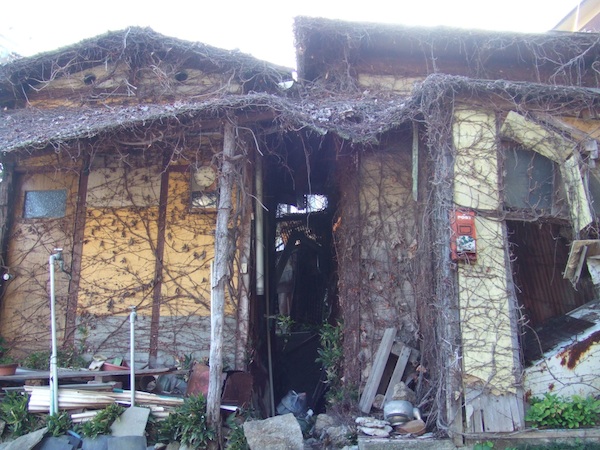
The article was about properties as legacies, which most people tend to view as “assets.” However, the reporter discovered that in many cases properties have turned out to be considerable liabilities for heirs, some of whom would prefer not inheriting them at all. The first illustration they give is the most potent. A 53-year-old man who lives and works in Tokyo recently traveled to his home town in Hiroshima Prefecture to dispose of his parents’ house, a 50-year-old wooden structure built on a steep grade. His father died six years ago and his mother, who suffers from dementia, entered a nursing home two years ago. The house is in disrepair and the small piece of land around it is overgrown with vegetation. The neighbors have repeatedly complained to local authorities, and the son understands that he has to do something. He decided to tear the structure down, but the lowest demolition estimate he could get was ¥2 million, owing to the fact that access to the property is difficult. Since he had no intention of using the land and couldn’t afford the demolition, he put it off. One could reasonably assume the cost might have been covered by selling the land, but that was another problem. The title was still under his father’s name, which meant, according to the law, it belonged to his mother. Since she was not legally competent to handle the matter, it fell to the next in line, his older brother, who had been estranged from the family for many years. No one knew how to get in touch with him. So in order for the second son to dispose of the property, he would first have to go to court to assume title, a process that would require a great deal of time and money, neither of which he had. Meanwhile, the neighbors become more angry, but the local authorities can’t do anything. Read More

Unreal estate

“Property prices go up and down, but the main thing is not to pay them a blind bit of notice, unless and until you have a good reason to move. I learnt that a rising price will not rise forever; that when prices stop rising, it will be difficult to sell your flat, because the reason the price has stopped rising is because the climate has changed. The money you have in your house is not liquid money; it’s not money which can easily be converted into something else other than your house. It’s stupid to feel richer beause the value of your house has gone up, since the resulting rise almost always isn’t money you can use or spend. If you’re going to move, you still need somewhere to live, and the cost of that place too will have gone up, so there will be no net gain from the increase in your property’s value.”

In the above passage from his book about the credit crunch, I.O.U., John Lanchester is mainly talking about the United Kingdom, where he lives. However, his remark about needing somewhere to live and the notion that property value means little in the world where most people do live has stayed with me. Elsewhere in the book he tosses off the idea that the value of your house or apartment or land is only as much as the other guy is willing to pay you for it, in the end. Read More

Last resorts: Izu division

CI Villa

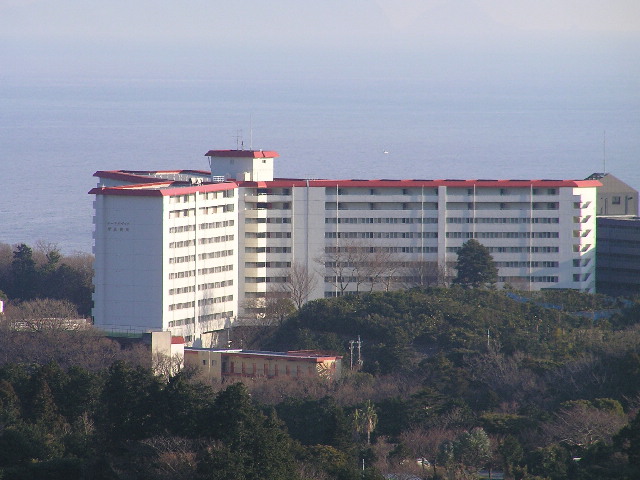
Last weekend TBS ran a long report on resort condos on the Izu Peninsula, focusing mainly on the Atsukawa Onsen region. The hook for the piece was an advertisement for a ¥20,000 condo. That may not sound like much of a bargain, but we’re talking sale here, not rent. The reporter visited the CI Villa condo, which is only 20 years old and commands a beautiful view of the Pacific. He wasn’t allowed to inspect the unit being advertised but he was able to visit another one of comparable size (43 square meters) and age. In any event, while the sale price turned out to be the real thing there were strings attached. The buyer would also have to pay more than ¥3 million in unpaid management and repair fees that have accumulated during the years since the unit was abandoned by its owner and seized by the authorities. And then, of course, the new owner would have to start paying these fees at a rate of ¥30,000 a month.

As the reporter pointed out after learning all this, the condo is still a bargain. Not only does it come with a view, but the management fees entitle the owner to use the building’s elaborate spa facilities, swimming pools, and other amenities. He thought the place was a steal, but as he started talking to local residents and public officials he came to understand why no one was snatching up these low-priced properties (there were quite a few, and not just in CI Villa). He remembered the TV drama series, “Zeni no Hana,” that aired many years ago and which was set in this particular town. It was a huge hit and sparked a travel boom to Atsukawa and in turn a building craze. About half the residences in the region were built after 1975, with construction peaking during the late 80s bubble period. The average price of a condo in CI Villa when it was new ranged between ¥40 and ¥50 million.

Of course, the end of the bubble also ended all that. One local merchant estimated that the number of tourists who come to the town is about “one-hundredth” of what it was during the peak times. And as more and more businesses who relied on these tourists left, the town fell into disrepair. Many people, it seems, do come down with an eye to buy property, most of which is in good condition, but once they see the boarded up shops and derelict infrastructure they get discouraged. The mayor said that the year-round population has aged even more quickly than the national average, and that welfare costs have increased six-fold since 1990. Because the tax base is so small, the town can’t keep up appearances. It’s a vicious cycle. One solution would be to exploit the region’s hot springs to produce and sell geothermal power. The temperature of the onsen approaches 100 degrees, and since local inns only need 50 degrees, the town thinks it could transform those wasted 50 degrees into revenues. The problem is that inn owners, who constitute the biggest block of business interests, are basically wary of geothermal, mainly because they think, wrongly, that it will sap the long-term onsen capabilities. One told the reporter that he had doubts about the local government’s belief that tourists would flock to the area out of curiosity and a desire to support such an environmentally effective project. Apparently, other onsen regions have had some success with such an endeavor.

Put out

We recently received a DVD screener of “Sayonara UR,” a video documentary by Yumiko Hayakawa. The doc chronicles the situation of a group of residents of Bldg. 73 of the Takahamadai apartment complex in Hino, Tokyo, which is run by the semi-public housing concern UR. The structure was built in 1971 and Bldg. 73 did not meet earthquake standards that were made mandatory in 1981. The company was going to carry out reinforcement work, but in 2007 it announced that the work would cost too much and everyone was asked to move out. The company would help residents relocate to other UR apartments if they needed it. They would also compensate them in part if they agreed to move out within two years of the announcement. Nevertheless, some residents refused to move, saying that they were simply being made victims of UR’s well-publicized move toward privatization. Bldg. 73 was not profitable and so UR planned to tear it down and sell the land to a developer. The quake-proofing story, according to these tenants, was merely an excuse, and not a particularly believable one since there was no inspection made by third parties, even though the tenants asked for it.

It was a classic eviction tale, and Hayakawa clearly sided with the tenants. As advocacy journalism goes, “Sayonara UR” has its good points. Throughout the doc, she refers to UR as representing “social housing,” something she believes is essential to the well-being of a well-ordered and responsible society. UR, as noted thoroughly in our blog, is semi-public, which means their obligations as a public housing provider are limited, and Hayakawa is careful about this point. She shows how UR still uses a lot of tax money in its operations, and interviews an outspoken professor who describes how UR is a money sink, more than ¥1 trillion in the red. The government has been trying to find ways of setting the company free. One of the main reasons they can’t, as evidenced by this documentary, is that people who rent UR apartments, especially those who have lived there a long time, don’t want the company to be made 100 percent private. There are many reasons for this, including the fact that UR does not follow the extortionary practices private landlords are known for, such as charging extra fees–gift money and contract renewal fees–that have no purpose. Hayakawa doesn’t address these reasons or the lack of laws that would protect tenants, but she does an excellent job of interviewing all sides of the story and giving equal weight to each. However, viewers not familiar with Japan’s housing situation may mistakenly equate social housing with low-income housing, which it is not. It’s a difference Hayakawa neglects to clarify, and because she doesn’t specify how much rent these people pay some will think they are poor, when actually they are quite middle class. In fact, given their economic status and the superannuated state of their abodes (most public apartments built in the 1970s for families are less than 60 square meters), many viewers may wonder why these holdouts aren’t jumping at the chance to move to newer, cleaner apartments that will cost proportionately about the same. She also doesn’t clarify that only ten of the 250 households asked to leave refused to do so by June of 2010, when the topic was covered by TBS. By April of the next year, the number was down to 7. Read More

Shift that burden

Professor Yosuke Hirayama of Kobe University, probably Japan’s foremost scholar on the subject of housing and social policy, was the subject of a fairly long interview in the Asahi Shimbun recently, and though everything he said has been discussed at length in this blog, his explanation of what’s wrong with Japan’s official housing policy deserves to be summarized, especially in light of the current worldwide movement to close the income gap. For sure, Hirayama’s belief that government must shift its policy away from home ownership may raise the hackles of free market advocates and libertarians since it basically takes for granted the idea that housing is such a basic need for all members of society that the authorities need to be involved. What’s notable is that his ideas are based on classic, some might say prosaic economic principles; but in any case it was government that created the problem in the first place.

In a nutshell, Hirayama says that Japan’s long-time housing policy, which is based on promoting home ownership, has hit a wall, and that the government should shift this policy to promoting rentals. He begins by citing the disaster in the Tohoku region, where home ownership is even higher than the national average and where a good portion of these homeowners are elderly people who live alone. They are already in debt, and to encourage them to build new houses is simply to push them further into debt. Instead, the government should promote the construction of more rental housing and offer subsidies to renters. He mentions that he himself lived through the Great Hanshin Earthquake of 1995, and at the time was renting. Compared to homeowners, he survived the situation without as much emotional or financial trouble, because all he had to do was move. Of course, earthquakes are unpredictable, and by themselves can not be used to argue against home ownership (though he also points out that seismologists predict a better than even chance of a major earthquake hitting a large populated area in Kanto or Tokai in the next 30 years). The point is that renting has its advantages, a notion that has no traction in Japan. Read More

Home Truths #2

Caveat emptor

Our latest column in the Japan Times was published today. You can read it here. It’s about the recent Supreme Court decision regarding koshinryo (renewal fees). One small clarification: The photo caption mentions that cheaper rents may mean higher renewal fees and “gift” money. In many cases if the landlord has set the rent lower for the purpose of attracting potential tenants, he/she may also not charge gift money for the same reason. Renewal fees, however, are more hidden because they are usually only mentioned in the fine print, meaning they kick in later, when the tenant has to renew the contract a year or two after moving in. Also, some landlords, especially corporate ones, are making their rental agreements longer, say five years, and then setting the renewal fee a bit higher than average. Another theory associated with renewal fees that we neglected to mention is that some landlords use it to generate higher turnover. Since supplemental fees allow the property owner to make a bit more money in a slumping market, logic says that you make more money if the turnover is higher because more new tenants mean more supplemental fees. This is the same economic logic behind the shaken (regular vehicle inspection), which all car owners have to pay for every two years (or every year, depending on the age of your automobile). When the shaken, which is expensive, comes due, many car owners simply trade their vehicle in for a new one. The first shaken for a new car is three years. The same concept is supposedly used for renewal fees: People will move to a new place because they don’t feel like paying it. The reason we didn’t mention this theory is because we’re not really sure it’s credible. People’s attachment to the place where they live is different from their attachment to their car. If people move because they don’t want to pay the koshinryo it probably means they don’t like the dwelling in the first place.

Dynasty end

Unwanted

In 1941, 22 percent of all dwellings in Japan were owned by the people who inhabited them. By 1948, the portion had swelled to 48 percent in the cities and 67 percent nationally. Even before the war housing was at a premium, but thanks to the wholesale destruction of the Japanese archipelago during the final years of the war, it had become even more dear when the American occupation started. Inflation was rampant, and in order to make sure property prices didn’t spiral out of control a directive was issued in 1946 to freeze land prices and rents. It wasn’t the first time. Similar directives were issued in 1939 and 1940, but they were provisional. The 1946 directive was more open-ended, and the result was that landlords couldn’t raise rents. One of their countermeasures, at least in Tokyo, was to implement the now infamous koshinryo system: Every time the rental agreement expired, the landlord would charge the tenant an extra month or two worth of rent as a renewal fee. (This will be the topic of our next “Home Truths” column in the Japan Times on Tuesday) However, most landlords, unable to pass on maintenance costs, simply sold the properties to their tenants. Moreover, there was no incentive to build new rental properties, so construction companies started building houses for the few people who could actually afford to buy them. Ever since then, there have been more homeowners than renters in Japan.

The home ownership rate first peaked to 71 percent in 1958, then slid down to 64 percent by 1963 and 60 percent by 1968. The main reason is that more people migrated to cities for jobs. They couldn’t afford to buy houses, so more rental properties were built in urban and suburban areas. However, by this point home ownership became a national priority, since it spurred growth. With the population increasing and nuclear families replacing extended families as the household norm it wasn’t difficult for the government to promote home ownership through schems such as the Home Finance Law (1950), which made mortgages affordable; and the Public Housing Law (1955), which set up a government corporation to oversee the building of affordable rental properties in cities so that young families had a stepping stone to home ownership. The main problem is that in order to make home-ownership possible for the new generation of urban workers they had to be made relatively cheaply, since land prices have always been high. In other words, the houses themselves weren’t meant to outlast their mortgages. Read More

Cheap fix

Here is a housing-related article we wrote for our sister blog at the Japan Times about a recent government study about reserve funds for condo repairs. It relates to a lot of the themes we have covered in this blog.

Matsudo as microcosm

Many municipalities in Japan have local natural history museums, and the one in Matsudo, a Chiba Prefecture bedroom community about 45 minutes by train from central Tokyo, is typical even if its summary explanation of purpose may sound inadvertently funny: “From the birth of humanity to the Tokiwadai housing complex.” It’s the juxtaposition of the epic with the plebeian, but the exhibit itself, which does exactly what it claims to do, provided a thorough encapsulation of socioeconomic development in Japan from the standpoint of what can only be described as “the average person.”

As with all natural history museums, Matsudo’s traces the area’s geological makeup and how its proximity to the river that flowed from the north into what is now Tokyo Bay, which shifted greatly over time, determined its economy. However, with no natural resources or development of special technologies that could take root and turn into ongoing regional industries (salt processing and pear growing were successful endeavors, but only for short, isolated periods), Matsudo’s most salient feature was and still is its topography: valleys called “yatsu” etched between plateus called “dai” and lowlands that straddled rivers called “shitaya.” Each was distinct geographically (dai were at least 30 meters above sea level, yatsu 10 meters, and shitaya 2 to 5 meters) and economically. Rice farmers lived in the shitaya, which often flooded during the typhoon season. The houses and, especially, grain storage facilities were built on man-made elevations to keep them dry. They were also built close to one another and in columns that stretched north to south, with the entrances facing south, often in “terrace” formations. The direction was important because the often destructive winds that would seasonally race through the lowlands came from the north and the west. This might explain the Japanese obsession with positioning housing is a southward orientation, regardless of the view such positioning provides. Read More