Matsudo as microcosm

Many municipalities in Japan have local natural history museums, and the one in Matsudo, a Chiba Prefecture bedroom community about 45 minutes by train from central Tokyo, is typical even if its summary explanation of purpose may sound inadvertently funny: “From the birth of humanity to the Tokiwadai housing complex.” It’s the juxtaposition of the epic with the plebeian, but the exhibit itself, which does exactly what it claims to do, provided a thorough encapsulation of socioeconomic development in Japan from the standpoint of what can only be described as “the average person.”

As with all natural history museums, Matsudo’s traces the area’s geological makeup and how its proximity to the river that flowed from the north into what is now Tokyo Bay, which shifted greatly over time, determined its economy. However, with no natural resources or development of special technologies that could take root and turn into ongoing regional industries (salt processing and pear growing were successful endeavors, but only for short, isolated periods), Matsudo’s most salient feature was and still is its topography: valleys called “yatsu” etched between plateus called “dai” and lowlands that straddled rivers called “shitaya.” Each was distinct geographically (dai were at least 30 meters above sea level, yatsu 10 meters, and shitaya 2 to 5 meters) and economically. Rice farmers lived in the shitaya, which often flooded during the typhoon season. The houses and, especially, grain storage facilities were built on man-made elevations to keep them dry. They were also built close to one another and in columns that stretched north to south, with the entrances facing south, often in “terrace” formations. The direction was important because the often destructive winds that would seasonally race through the lowlands came from the north and the west. This might explain the Japanese obsession with positioning housing is a southward orientation, regardless of the view such positioning provides. Read More
Passing unnoticed

It’s a long way to the bottom

A recent article in the Mainichi Shimbun mentioned a study carried out by 98 local governments that operate public housing. In 2009, this study found, 1,191 people who lived in these public housing units died alone and in most cases their deaths were not discovered for at least several days. The vast majority of these people were over 65, about 74 percent. In addition, the Mainichi said that UR, the semi-private housing corporation attached to the national government, reported that 472 people over 65 died alone in apartments they run nationwide in 2009.

This seems to be the first time any housing entities have recorded and publicized statistics related to kodokushi (dying alone), which will become much more common as the population ages. A greater percentage of elderly people live in public housing, not just because it can be cheaper (UR rents, however, are market rates), but because private landlords usually don’t like to rent to older people who plan to live by themselves, for reasons that aren’t difficult to figure out.

Another reason why older people tend to live in public housing is that they’re already there. A lot of public apartments were built in the 60s and 70s. People moved in and had families. Their children moved out and a spouse died, thus leaving them alone.

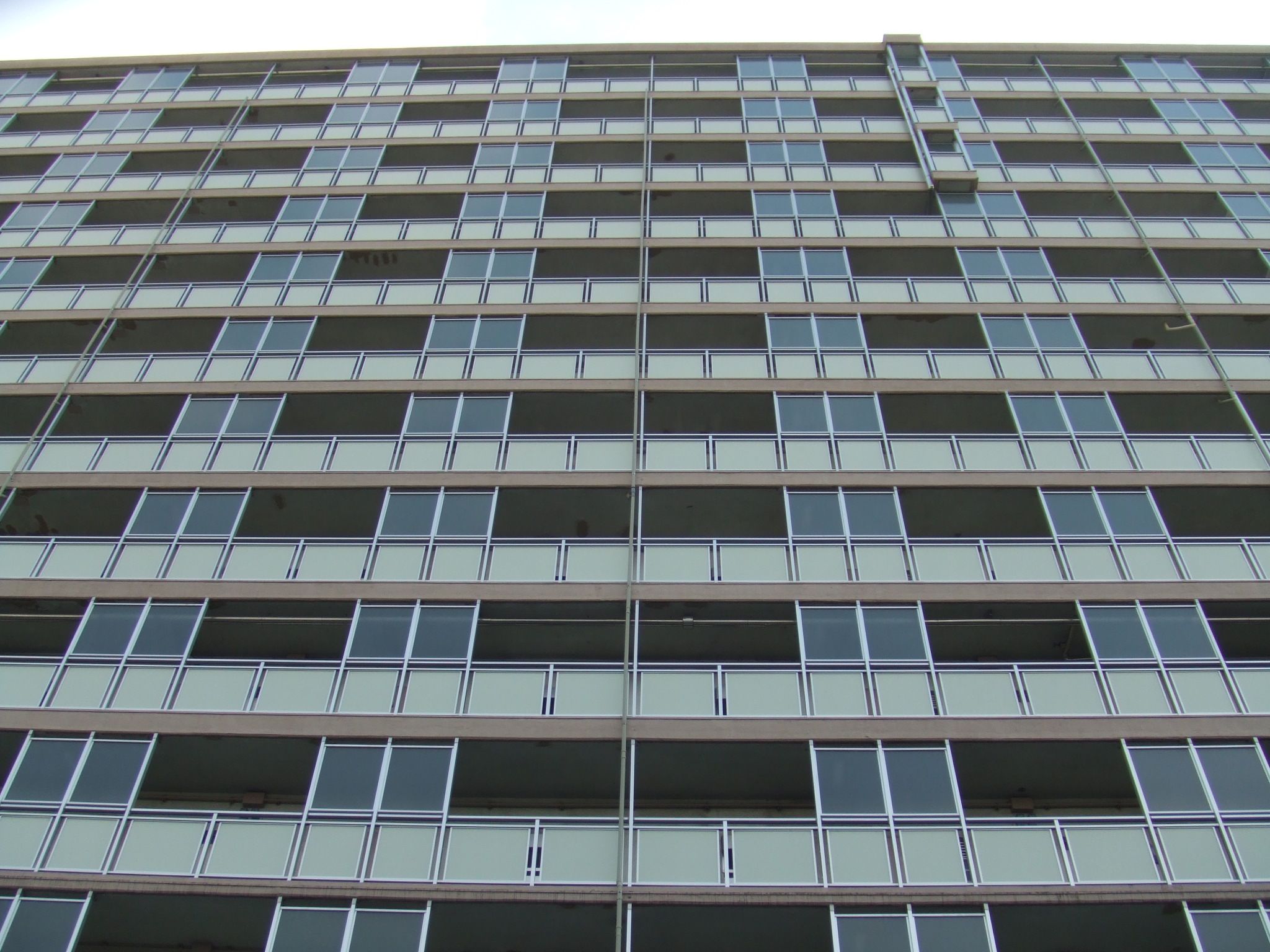
A more troubling aspect is why these people die alone and aren’t discovered days or even weeks after they do. The vast majority tend to live in cities, and urban apartment life discourages the kind of community life that nurtures relationships. It’s difficult for older people to leave their apartments, take the elevator down, and go out to see people; and obviously it’s less likely for acquaintances to drop by the way they would if the older person lived on the ground.

Yuzawa’s last resorts

Yuzawa-machi

In 1987, at the height of the so-called bubble era, when land and stock prices were on a bender, the Diet passed the Law for the Development of Comprehensive Resort Areas, whose idea was to make the development of leisure facilities a national project. Developers and local governments were given financial incentives, and property laws were relaxed so that more holiday-oriented projects could be carried out. One of the outcomes of the law was the invention of the “resort mansion,” condominium complexes that were built in outlying areas where city folk could spend their vacations. Read More

Illegitimacy

The column for legitimacy

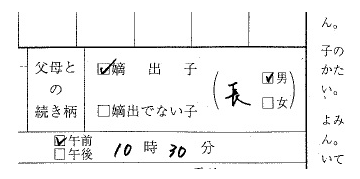
In Japan, if you are the mother of a newborn baby you have to check a column on the birth report you file with your local government office acknowledging that your baby is “legitimate.” On May 5th, which is Children’s Day in Japan, the justice ministry issued a directive saying that the authorities can now accept birth reports with the “legitimacy” column left blank.

The Koseki (family registration) Law stipulates that a child’s legitimacy must be indicated in writing on the birth report. If the parents refuse to check the column, the report will not be accepted. That means your newborn baby cannot be included in your family registration form (koseki), which in turn means that the newborn baby doesn’t exist legally. The child cannot receive any services from the local government because the child cannot be issued a residence card, which is based on the existence of a koseki; although, depending on the particular local govenment, some babies without kosekis have been issued residence cards in the past under special circumstances so that the child can receive services such as public education or medical insurance.

If the local government offers these services regardless of legitimacy, then as long as the child remains in Japan he or she will have no problem, but if he or she wants to get married or wants to travel overseas, then there is a big problem.  Without a koseki a passport cannot be issued, nor can the person register his or her marriage. In the past few decades several parents and children have appealed to the authorities, including the justice ministry and the foreign ministry, which issues passports, to repeal this rule, but they have not been successful.  The government uses the passport law as a means to assert its authority over the matter of legitimacy, thinking that parents who disapprove of the law will eventually yield and make a koseki for their children. It means that the parents acknowledge that their children are not legitimate persons. Many of the parents who have refused to check the column do so as a kind of protest against Japan’s legal discrimination of “illegtimate” children.  So even though the authorities now no longer have to force them to check the column, discrimination is still built into the law.  More than two decades ago the UN Human Rights Commission asked Japan to abolish this law.