Field diary: Tomisato

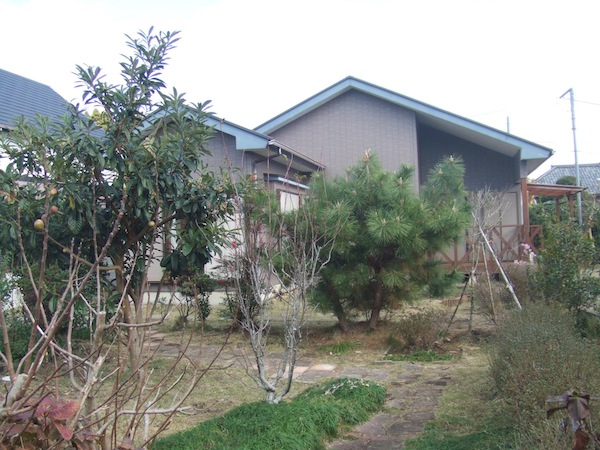
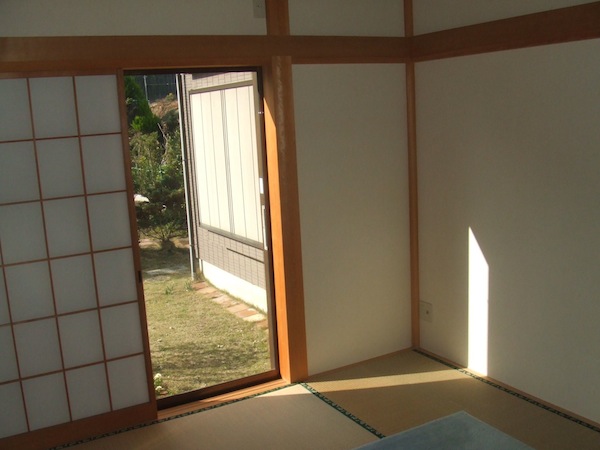
Tomisato is out in the direction of Narita Airport. In fact, according to the real estate agent we talked to when we went there recently, a good portion of the residents of the city make their living off the airport in one way or another, which may explain the density of motor traffic. The nearest train stations are actually in Narita City, which means everyone drives to wherever they have to go, including their workplaces. It would appear there are almost no Tokyo commuters in this stretch of Chiba Prefecture, which is understandable. At some point, you have to reach a distance where people don’t go to Tokyo to work, but the lack of public transportation is notable. Read More

Field diary: Nishi Shiroi

At ¥17.8 million it wasn’t a house we could afford, but we’d been to the city of Shiroi in Chiba Prefecture a number of times–it’s only a few stations from our own–and found its surburban ambience more appealing than most; and the photographs posted on the realtor’s website made it look attractive, at least from the outside: lots of green and the property adjoined a wide promenade on its eastern side. The fact that there were no photos of the interior of the house should have told us something.

We got lost on the way and called the agent by phone. He picked us up not far from the property and seemed genuinely shocked that we would actually walk the 17 minutes from the station. The shock was compounded when we told him we didn’t own a car. Even more garrulous than the usual salesmen he was open to our questions, even as they became bitter after we discovered just what a dump the place was. Built in the early 90s, the house looked as if it had never been taken care of at all. The laminate floors were dull and scuffed, the wallpaper brown with mildew. The layout wasn’t bad. All the rooms opened up on one another in a way that was well-thought out and provided a lot of light; or, at least, as much light as could be expected given that there was little space between neighboring houses to the south and the north. The kitchen was the best part. It was large and featured a corner counter with an accompanying corner window. Unfortunately, the view from the window was dominated by the neighbor’s ugly makeshift backyard shed, one of the most common blights of suburban living in Japan. The promenade that made an impression in the photos wasn’t quite as wide as we thought, but at least it afforded space to the east. Nevertheless, the kitchen would need to be completely redone. There was also a “workshop” in back of the kitchen that was filled with garbage. Read More

Seller beware

Everyone knows that it’s cheaper to buy a property directly from the owner than it is to buy one through a realtor. In Japan, the buyer usually pays a 3 percent commission to the realtor (plus consumption tax plus a ¥60,000 “handling fee” whose purpose has never been sufficiently explained to us), who also gets 3 percent from the seller. Many potential homeowners resent the commission, and for good reason. Often the realtor does nothing for the buyer and everything for the seller. If the price of the property is really low to begin with, it may seem as if the realtor is wasting his time by even showing it to a customer. We don’t know how many times we’ve gotten an agent to come a very long distance to show us a house that we probably knew we weren’t going to buy in the first place, but in any case even if we did buy it his commission would hardly mean much to him. But the main sticking point with regard to the realtor’s actual role in the deal is that, in Japan at least, he doesn’t do much in the way of negotiation.

We’ve heard of cases of real estate companies actually refusing to list a property by someone who wants to sell, for the simple reason that the realtor believes the property is unsellable; or if it is sellable, it would be at a price so low it’s not worth the realtor’s time and effort. But when they do list a property sometimes they will advise the seller of an appropriate price and even suggest remodeling work to make it more presentable. As the market has become glutted over the years such tactics become subject to scrutiny. How much improvement is enough? If the property is so difficult to unload that even extensive remodeling isn’t going to make it any more sellable, is it even worth it? These are considerations the realtor should help the seller understand, but occasionally we’ve met realtors who would just as soon stay out of it. Read More

Soft sell the hard way

The one that got away

Most of the properties we inspect we find over the Internet. Sometimes they’re on real estate portal sites like Suumo, which includes listings of multiple agents, and some are on sites run by individual real estate companies. If we want to inspect a property we find on a portal site, we usually call the real estate agent whose office is closest to the property itself, because we know what a pain it is for an agent to come a long distance just to open a house up for maybe fifteen minutes without much chance of a sale. Remember that real estate agents are salespeople, which means even if they know there isn’t much chance of selling a particular property they have to be polite, and we try to make their job easier.

So we were totally unprepared for the attitude we encountered last week when we called a realtor about a property in central Chiba. The house was 94 square meters on a piece of land covering 191 square meters. It was built in 1980, which is pretty old by Japanese standards, but it only cost ¥6.5 million. The picture of the exterior was impressive enough to make us think that it could be remodeled into something pretty good, since at that price we could afford to put more money into it. We found the property listed four times on one particular portal site and called the realtor whose office was closest to the house. Also, we were planning to be in the area to inspect another property, so thought we’d kill two birds with one stone. This is how the conversation went. Read More

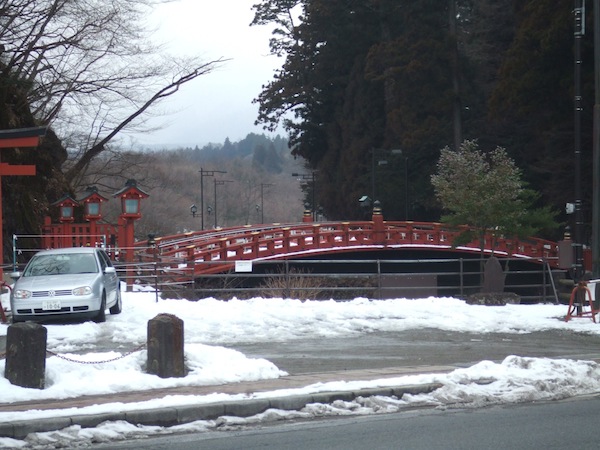
Field diary: Nikko

For a while now we have been looking at properties up near Nikko, though we couldn’t tell you exactly why the area appealed to us. Subconsciously, we may have thought of it as being the poor man’s Kamakura, which is where we would like to live but can’t really afford. Since the quake it’s also been more appealing since it’s obviously very far from the ocean and though it gets quakes itself it seems to be on relatively solid ground. But mainly because we always thought it was a nice town with good people and pleasant scenery. However, any time we’d been there to check out properties it was usually outside Nikko proper, and the houses were the usual suburban-style prefab junk.

This time we went to Nikko proper. In fact, the first place we looked at was a ten-minute walk from Nikko Station. The fact that is was only ¥5 million will give you an idea of the condition it was in, but from the photos on the realtor’s website it looked salvageable. Obviously, at that price we were essentially buying the land. The house was built in the early 70s, though the second floor was a later addition.

We met the agent about a block from the property. He had taken the train up from Tokyo and rented a car, since he would be showing us another property a little further out of town. The house was located next to a makeshift parking lot to the west. To the north there was plenty of space between the house and its neighbor and the garden was located to the east; beyond it was nothing. So on three sides there was a lot more room than you might expect from this part of town, which was residential in a pleasantly diverse way. Unfortunately, as with almost all Japanese buildings, the house “faced” south, and there was barely three meters between it and its neighbor. This is unfortunate because all the windows looked out on the wall of the house next door. Since the kitchen and bathroom are always located in the north portion of a Japanese house there were no windows on that side and for some reason there were no windows to the east either. The genkan was located on the west side. So that meant the only light would come from the south, and it didn’t look like much was going to make it into the house itself.

It was in even worse shape than we thought. The agent told us the owners had only left less than six months ago, but it was difficult to believe anyone could live in such a decrepit building: moldy tatami, peeling laminate floors and paneling, buckled cabinets in the kitchen. The second floor add-on consisted of two rooms that smelled as if someone had died in them. Any renovations would cost upwards of ten million, though the place really needed to be torn down. That would cost about a million, and then a new house would run another 15 probably. The location was good, but that was too much work. Read More
Field diary: Matsudo-Mabashi

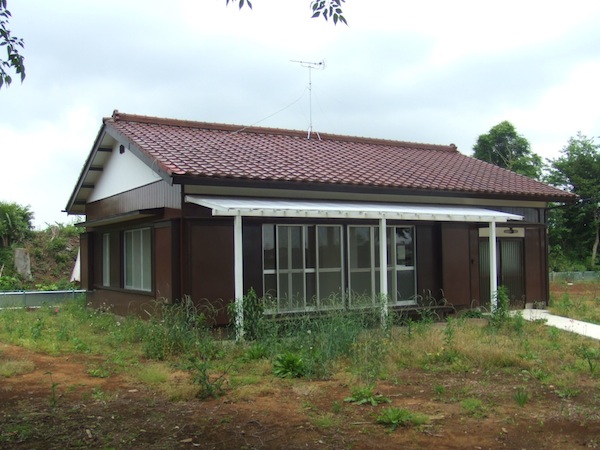
The house we inspected was in Matsudo, the nearest station Mabashi on the Joban Line, but the Joban line that connects with the Chiyoda subway line, not the one with the express stops that goes all the way to Tohoku. It was an eleven-minute walk from the station, and since Mabashi is 22 minutes from Nishi Nippori on the Yamanote Line, it makes it quite a convenient location with regards to Tokyo. This is significant since the house price is ¥12.8 million. That could be considered quite cheap; or expensive since it was built in 1975: 65 square meters of floor space comprising two floors on 75 square meters of land. There was another house on sale 15 minutes from the station, of approximately the same age, slightly smaller, but that one cost only ¥6.2 million. Read More

Field Diary: Onjuku-Kamifuse

Type: One-story house; slate roof; wooden frame; siding exterior
Age: 14 years
Land: 165 square meters
Floor area: 76.6 square meters
Distance from nearest station (Onjuku on the Sotobo Line): 3.8 km
Price: ¥7.9 million

Unlike the previous property we inspected in the coastal town of Onjuku, Chiba Prefecture, this one was firmly embedded in a subdivision, albeit a sparsely occupied subdivision. Slammed up against a dense forest, the sad-looking little gray house had no southern exposure to speak of, and so was situated perpendicularly to the road, offering the vacant lots to the west and east its only views. The fact that the house is 14 years old and nobody has snatched up these lots in the meantime probably means they never will, what with other, more elaborate and better planned subdivisions going up elsewhere in the town–and closer to the station.

We couldn’t imagine anyone buying this house, which, aside from being dark, was mold-infested and falling apart. Given the low price, one might think it could be fixed up, but up close the structure, at least, seemed hopeless. The design was out of whack: The toilet on the west side? The agent was polite and helpful but obviously understood the property’s unsellability and didn’t even bother taking our data the way he’s supposed to. There would be no follow-up. We all agreed, however, that it was nice to see somebody install double-glazed windows.

Field diary: Onjuku-Jikkoku

Type: One-story house; slate roof; wooden frame; siding exterior
Age: 12 years
Land: 404 square meters
Floor area: 78.3 square meters
Distance from nearest station (Onjuku on the Sotobo Line): 3.9 km (6 min. by car)
Price: ¥10 million

Situated on the edge of a huge rice field, the land that comes with this property is probably its most attractive feature, providing a sizable front yard, which the previous residents tried to make into a combination vegetable/Japanese garden. Considering how overgrown and tacky it’s become–not to mention the fact that the original asking price was ¥11 million–no one has obviously lived there for a while. The agent told us that the house was originally connected to its almost identical neighbor to the west. At some point the corridor that bound them was torn down, leaving a mysterious windowless storeroom off the bathroom as its only evidence of prior existence.

The layout was reasonable: two Japanese rooms situated in staggered parallel, both looking south; an open living/dining area perpendicularly positioned to the kitchen, which is large and airy. Despite the efficient use of space the rooms are darker than we like, owning mainly to the low ceilings and small windows. Also, a small wooden deck was built outside of the double sliding doors on the east side of the living room, facing the farmhouse next door, which is uncomfortably close. The agent said that someone still lives there though we couldn’t see any signs of recent life. It was the model of a derelict fire trap and would make any venture out on to the deck for purposes of enjoying the sunrise or whatever depressing.

Verdict: House would need at least 3 million more to make is livable, and the land size alone, not to mention the distance from transportation, couldn’t justify the price.

Dying to get in

Who died here?

Further on the subject of the property values of places where people died, which was started in the comments section of the previous post, there was actually a book titled “Tokyo Laundering” published last year about a fictional occupation: people who are hired by landlords or realtors to live for one month in houses or apartments where people just died. By having somebody occupy the place legally, the owner can rent or sell the property at its listed value rather than the cut-rate price that most owners are compelled to advertise for such a property since, according to law, they have to tell prospective buyers/renters that a person died there. If someone lives there for a month, they’re no longer obliged to reveal that information. It’s such a clever subterfuge, we’re surprised no one has actually put it into practice.

As far as we know, the only outfit that openly advertises such properties is UR, which lists rental apartments where people have died for something like half the normal price for up to two years. Supposedly, within their system 300 units become vacant each year because someone died. We’ve also heard of realtors soliciting doctors, people in the funeral business, and foreigners for such properties since such people usually aren’t grossed out by the idea of someone having died in the place they just moved into. There’s also a website that lists properties where “incidents” occurred, and though they detail the incident that took place (with the help of inadvertently humorous illustrations) and even show you the location on a map, you’ll need to do a bit of detective work to find out about renting or buying, since all they give as contact is the name of the realtor or owner. It’s a great site, however, for those into ghoulish walking tours.

And lastly, some insurance companies offer coverage to landlords for apartment deaths. If a tenant dies in one of their properties, they can receive up to ¥1 million, which should cover the money lost as a result of an extended vacancy or decreased rent.

A riddle

The house pictured above is on a major road in the city of Inzai, Chiba Prefecture. It was built in 2004 on a 446.28-square-meter plot of land. The floor area of the house itself is 82.29 square meters. It is less than one minute from a bus station. The bus ride from that station to Inzai Makinohara station on the Hokuso train line is 13 minutes (from Inzai Makinohara to Nihombashi is a little less than an hour). Since the land is relatively large, there are none of the usual privacy problems one gets in Japanese housing developments, and the lack of buildings in the surrounding area means the house gets a lot of sunshine from three different directions.

According to Inzai city records, the average price of a single-family home in this particular area of the city is ¥24 million. This house is now on sale for ¥15 million. It has been on sale for more than three months, which is why we went to see what it looked like. With the conditions we mentioned above, this should be a steal, but for some reason no one seems to want it. Of course, normally in Japan, a house that’s older than 20 years, unless it’s in the middle of a major city, has no value. This one isn’t that old, and though it’s hardly impressive in terms of design or style, it still seems to be in good shape. Moreover, the land, which is on a major thoroughfare, should be worth quite a bit (if Inzai’s assessment protocols can be considered accurate).

But even if the property’s continued vacancy seems a mystery, it’s not a place that we ourselves would ever want to own, and maybe that feeling, more than the logic of the economics, says something.