That sinking feeling

Tilt: Park City Townhouses in May

It was recently reported that 32 households in the city of Urayasu, Chiba Prefecture, plan to sue Mitsui Fudosan, the company that developed their neighborhood. Urayasu, of course, suffered particularly bad liquefaction during last March’s big earthquake, since most of it is built on landfill. Some of the residents of Park City Townhouse, where homes originally went on sale in 1981, have accused Mitsui of neglect, since their homes were extensively damaged while surrounding neighborhoods, which were built by other developers, experienced much less damage. The plaintiffs are asking for ¥700 million.

Many people in Urayasu have already carried out repairs on their homes, including jacking up building that sunk during the quake. The local government gave up to ¥2 million to each household that suffered damage, but for some homes that isn’t nearly enough. Jacking up a house costs at least ¥10 million. The problem with a place like Park City Townhouse is that all 70 households are supposed to act as one when making a decision, and for months the community was split between repairing and rebuilding. In order to use the large-scale repair fund (shuzenhi), which all the homeowners contribute to on a monthly basis, three-fourths of the residents have to approve. And in order to rebuild the whole neighborhood–which would require a considerable investment from everyone–four-fifths of the residents have to say yes. So far, neither of those proposals have been addressed, but almost half have decided they will file a suit “in solidarity” against Mitsui. Those residents who are not taking part in the suit, according to the weekly magazine Aera, seem to doubt that they could possibly win against such a big company. In addition, some are averse to the publicity, which will do even greater damage to their property values than the quake itself has already done.

Park City Townhouse has always been something a model community. The homes, which originally cost about ¥30 million, retained their value better than most Japanese homes do, up until the quake, that is. Made up completely of two-story townhouses–a style that was popular until land values skyrocketed, thus making multi-story condos more feasible from a financial standpoint–Park City has been used as a backdrop for many movies and TV dramas when producers want to show modern lifestyles. However, the quake revealed what a shoddy job the developer did in preparing the land. Across the street, the predecessor of the semi-public housing corporation UR developed a three-story apartment complex on land that was prepared with a process called sand compaction. (Tokyo Disneyland, which isn’t far away, used the same process, which is why only the parking lot, which didn’t use it, was damaged in the quake) It suffered very little damage in the quake. In Park City, all 70 units were designated hankai (destroyed) to some extent by housing authorities. In addition, large cracks appeared in the ground from which deposits of old garbage such as discarded carpeting–i.e., landfill–come up to the surface. Geologists say that there is no real difference between Park City and the UR complex in terms of potential for ground liquefaction, so the plaintiffs are charging Mitsui with neglect when they prepared the land, and according to Aera’s research other Mitsui developments in other cities suffered liquefaction as well.

Mitsui has said it feels no obligation to pay for repairs or reconstruction, citing the now familiar reason that the earthquake was “beyond what anyone could have expected” (soteigai). Aera points out that the company is very powerful in Urayasu, having helped turn it into one of Tokyo’s most thriving suburbs, and therefore the local government is anxious about taking sides. There are similar suits pending in other neighborhoods throughout the affected areas targeting different developers, but Park City seems to be the one capturing the most attention.

Home Truths: property taxes

Our Home Truths column this month, which appears in the Japan Times today, is about property taxes, a fact of economic life that is taken for granted. As we imply in the article, most first-time home buyers don’t really take taxes into consideration when they embark on the biggest purchase of their lives, presumably because, like death and…well, taxes, it’s something you can’t avoid so there’s no reason to worry about it. And maybe it isn’t, depending on where you buy property. Outside of large cities and productive suburbs, property taxes can be minimal. What we found troubling, and the reason we decided to write about it, was the frequent looks of bewilderment we received from real estate agents when asked how much a particular property would run a buyer in terms of annual taxes. Some knew approximately, but some said they didn’t know at all and would check at the office (and then never called back because they sensed–rightly, in most cases–that we weren’t that interested in buying in the first place). This was odd in more ways than one. In the most significant way, property tax should be something a realtor knows by heart, since it has a direct bearing on the financial ability of the buyer to maintain whatever loan repayment schedule he or she will be responsible for. In a less signficant but more bizarre way, many real estate companies actually print the annual property tax levy in the ads for properties, so for their agents to profess ignorance is just downright laziness, and also indicates that none of them are ever asked such questions by potential buyers. In other words, the inevitability of property taxes has rendered them a moot concern; maybe people just prefer not knowing. Read More

A riddle

The house pictured above is on a major road in the city of Inzai, Chiba Prefecture. It was built in 2004 on a 446.28-square-meter plot of land. The floor area of the house itself is 82.29 square meters. It is less than one minute from a bus station. The bus ride from that station to Inzai Makinohara station on the Hokuso train line is 13 minutes (from Inzai Makinohara to Nihombashi is a little less than an hour). Since the land is relatively large, there are none of the usual privacy problems one gets in Japanese housing developments, and the lack of buildings in the surrounding area means the house gets a lot of sunshine from three different directions.

According to Inzai city records, the average price of a single-family home in this particular area of the city is ¥24 million. This house is now on sale for ¥15 million. It has been on sale for more than three months, which is why we went to see what it looked like. With the conditions we mentioned above, this should be a steal, but for some reason no one seems to want it. Of course, normally in Japan, a house that’s older than 20 years, unless it’s in the middle of a major city, has no value. This one isn’t that old, and though it’s hardly impressive in terms of design or style, it still seems to be in good shape. Moreover, the land, which is on a major thoroughfare, should be worth quite a bit (if Inzai’s assessment protocols can be considered accurate).

But even if the property’s continued vacancy seems a mystery, it’s not a place that we ourselves would ever want to own, and maybe that feeling, more than the logic of the economics, says something.

Land with a catch

Thanks. A lot.

A few weeks ago we talked to the prefabricated home manufacturer Tama Home about their wares. We did so in the guise of a couple who is looking to build a house, which isn’t completely a lie because we have entertained that possibility for a number of years; but unless the salesman is really good, we never thought of buying a prefab home, which seems to be the preferred route for most Japanese people who start from scratch. Usually, these companies work with realtors and land development companies and sell homes through subdivisions, just the way they do it in the U.S. and other countries. The idea of prefab homes, meaning manufactured houses that are planned down to the last fixture, is that they’re cheaper, but once you factor in these companies’ adminstrative costs, overhead, and promotional expenses (Tama Homes uses SMAP’s Takuya Kimura in its ads) they can get pretty pricey.

In any event, once we toured a couple of models and listened to the safety spiel (Tama does have a pretty convincing countermeasure for land that is “soft” or subject to liquefaction) we had to get down to brass tacks, which is the matter of land. Obviously, there wasn’t going to be a sale of a house until there was a sale of a plot, and we admitted that we were “still looking.” No problem, because the salesman introduced us to a realtor who just happened to be in the office. He heard our story and our ridiculously low budget and then pulled out a book of land diagrams in the vicinity that might fit our financial terms. In the back of our minds, of course, there was no way we would be able to accommodate both the land and the house in our budget, and of course these two guys knew that (and knew that we knew that), but they kept making their pitches, which were soon veering off into the matter of loans, which we hadn’t talked about yet. The strategy was obvious, though: They would show us how easy it was to borrow money so that we wouldn’t have to worry about the tightness of our budget.

But there was another matter that came to our attention when looking at the lots being proposed. They were all joken lots, meaning they came with “conditions,” the main one being that if we bought them we would be obliged to build a Tama Home on them. Some of them happened to be in already developed subdivisions, but a few were on land that had yet to be properly prepared (meaning sewage, water, etc.). And we wondered later: If you actually bought the land and afterwards decided to use another housing company or builder, would it be illegal? A friend of ours who is an architect told us he didn’t think it would be, since once you had the title to the land you should be able to do anything with it that you want to do. We’re not sure, but considering how many vacant lots-for-sale have “joken” attached to them, it’s worth finding out.

Higher ground

Aobayama Park, overlooking Sendai

The land ministry has decided to monitor real estate transactions in the disaster-affected areas of the Tohoku region. As evacuees start moving out of temporary shelters and rebuilding their lives, many will likely seek new properties on higher ground, thus causing steep appreciation in land prices on elevations considered out of the reach of future tsunami. The ministry, along with the prefectural governments of Iwate, Miyage, and Fukushima, is afraid that real estate companies will try to corner the market on these tracts of land.

The ministry has already asked local governments to gather information about land transactions. The idea is for the local authorities to designate certain choice areas for monitoring purposes based on the Land-use Planning Law, which regulates the buying and selling of properties. Any transactions that take place within the monitored areas will have to be approved by the pertinent prefectural governor before any contracts are concluded in order to preempt deals deemed “improper” by the law. If the governor does not approve the transaction he can have it voided or ask that the terms be changed.

It’s obviously a necessary policy, but it may be difficult to carry out. Local governments are still hashing out whether or not to allow people who own certain low-lying properties to rebuild on the same land. Until they decide, those families are in limbo. Meanwhile, families who have already decided to move to higher ground may be in the process of looking for land and will thus get a jump on everyone else. The competition could end up being fierce, so it will be difficult to judge what constitutes an “improper” deal in some cases if the buyer and the agent come to an agreement. Also, if the local government decides that certain plots of land on lower elevations should be left clear, they will probably have to compensate the owners, something that could take time. And until those families receive their compensation they won’t be able to move. This will be particularly difficult for fishermen and other people in the seafood business, who want to live as close to the sea as possible.

According to the Tokyo Shimbun smaller, more isolated coastal communities aren’t waiting for the government. Some have already started rebuilding. Since tsunamis have been a fact of life in those villages for many centuries, a kind of lore has developed that instructs the villagers where it is safe to build and where it isn’t. After a tsunami, everybody moves to higher ground, and then over the course of decades they slowly work their way closer to the sea, since they’re all fishermen, until the next tsunami hits. It’s an inevitable, tragic cycle.

No parking

It takes two

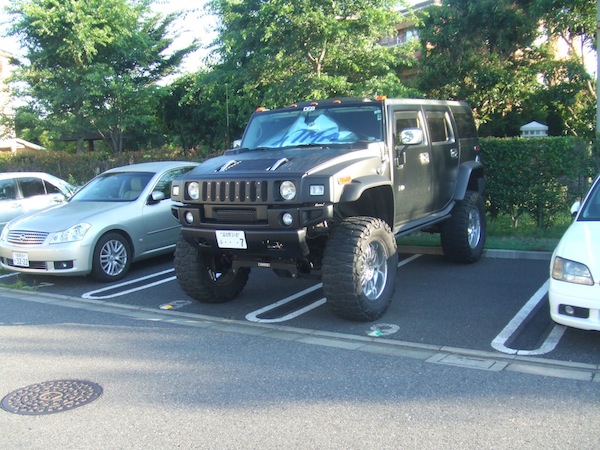
Yesterday at our sister blog, Yen for Living, we posted an article about big cars that probably needs some clarification. By no means are we fans of big cars and, in fact, we sort of denounced cars in general when we sold ours in 2006. We aren’t necessarily against cars in principle, but the automobile is privileged way too much in Japan and America (we can’t vouch for Europe and the rest of Asia). We simply wanted to comment ironically on what we thought was the strange marketing logic of GM, and also wanted to use this photo of a Hummer that is parked not far from our apartment. The fact that the owner needs to rent two parking spaces says a lot about Japan’s car-ownership situation, though it should be pointed out that these spaces only cost ¥4,000 each. For another look at how parking explains Japan’s car-ownership situation, after the jump is an article we wrote for the Asahi Shimbun in 2004, when we were still car owners ourselves. Read More

The price you pay

The following is an article I wrote in 2004 for an occasional column that I and several other non-Japanese wrote for the Asahi Evening News about the “expat” experience in Japan. In a way it explains our skittishness about buying property today.

Naive days: The land when it was pure

In the early 90s, my partner and I discussed the possibility of buying a condominium or a house. Both of us had recently become self-employed and our financial situation wasn’t assured, so we talked about buying property as if it would occur sometime in the middle-distant future, meaning not soon enough that we needed to start looking right away.

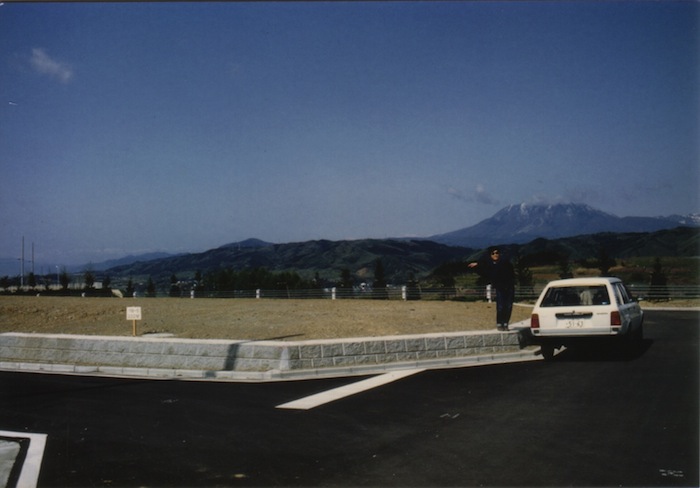
Our friends knew of this vague plan, and once, while visiting a couple we knew in Nagano prefecture, they told us of a housing scheme being promoted by a nearby local government. The city was developing a large piece of land on the top of a hill and offering plots by lottery at below-market prices. The stated aim was to attract new people to the city, which had been losing population over the past decade.

We went to the lottery drawing not thinking that we would participate, but our friends talked my partner into picking a number out of the hamper just for fun. The odds against actually winning were almost ten-to-one. But she did.

Everything suddenly changed. The prospect of buying property had so far been theoretical, but now we had to face the decision head on because we had been given an opportunity.

We returned home and agonized over whether or not we should buy the land. On the plus side, it was very cheap and the lot we had “won” was located on a corner of the hill with an unblocked view of a green valley. On the minus side, we would have to move to Nagano and we would have to build a house, but as we talked these negatives slowly moved over into the positive column. Because of the nature of our work (mostly writing and translating) we didn’t need to live near Tokyo, and having to build our own house meant that we could build the house we wanted. Read More

Let’s share

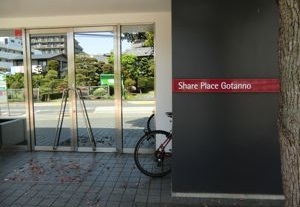
Considering how expensive housing is in Japan, foreigners just off the boat tend to be surprised that there isn’t more communal living going on. Usually the only shared residences outside of company and student dormitories are those occupied by foreigners just off the boat, those little oases of non-Japanese manners and mores known as “gaijin houses.” Of course, most Japanese apartments, even the larger ones, are not really adequate for communal living the way apartments in the West are, and in any case Japanese landlords tend to frown on renting out properties to multiple persons if those persons are not married or otherwise related. Consequently, there’s no vocabulary for shared dwellings, much less a market.

That is until now, and it appears to be a market-driven development. The explosion of vacant rental properties in the larger cities have prompted some real estate companies to take it upon themselves to offer what is being calle “share rooms,” meaning houses and apartment buildings with communal living rooms, kitchens and bathrooms. These companies rent out the bedrooms as they would apartments, and the practice has caught on so much so that the media is covering it as a fashionable trend. The internet is overflowing with share room bulletin boards. Read More

Give them services and they will come

On Mar. 18 the land ministry released its latest list of property values throughout Japan. For at least two years running land prices, both for residential areas and commercial areas, have been dropping nationwide. Of the approximately 27,000 localities checked only 7 recorded any increase in land values. Though the government says the economy continues to show signs of recovery, property values remain stagnant, which means the economy can never recover fully.

The average price decrease for residential areas was 4.2 percent. The drop in the same period a year ago was 3.2 percent. Similarly, the drop for commercial land was 6.1 percent compared to 4.7 percent a year earlier. The drop for commercial land was even steeper in the three metropolitan areas of Tokyo, Osaka, and Nagoya: about 7.1 percent. This greater drop was blamed on a mini-bubble for commercial property in some areas of Tokyo in 2006. Read More