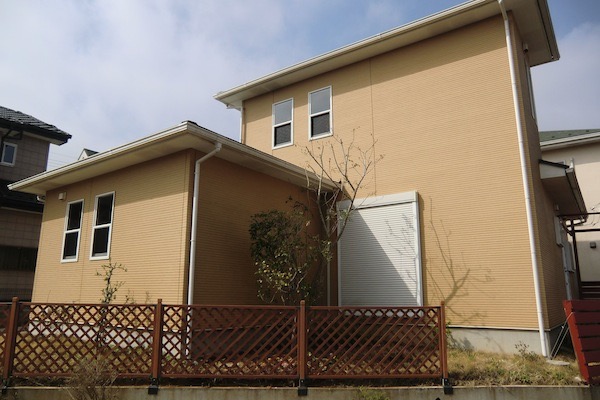
Insulation blues

We use storage heaters in the winter, and they do a good job of keeping our two-story house uniformly warm, but the technology was partially based on the idea of off-peak electricity, meaning the ceramic bricks inside the storage units are heated in the middle of the night when electricity is cheaper and we’re asleep. Unfortunately, when our utility raised rates more than a year ago it also did away with off-peak discounts and last winter our electricity bills almost doubled. This year it’s been a bit better owing to government intervention, but anyone who lives in Japan, especially if they grew up in Europe or North America, understands how poorly Japanese homes retain heat. For one thing, central heating is not common in Japan, which means each room needs to have its own heat source, be it electric, gas, or kerosene. But the main reason for Japan’s cold houses is poor insulation due to lack of proper design standards that are mandatory in other countries. Even China and South Korea have strict insulation standards they adopted to address energy conservation needs and lower carbon emission targets.

Japan does have standards for insulation, and they were last upgraded in 1999. At the time, these standards were called “next generation energy conservation protocols,” but, in truth, they aren’t even mandatory, thus making Japan unique in that regard among G7 countries. They are simply guidelines, and while most builders adhere to them, the fact that the authorities don’t force them to indicates a curious lack of will that is difficult to explain, but a recent article in Shukan Playboy News made an attempt by comparing Japan’s insulation standards to those of Germany, which has the strictest in the world. 

An engineering professor tells the magazine that maintaining a certain temperature for 100 square meters of interior floor area in a house built to Japanese insulation standards requires seven times as much kerosene as maintaining the same temperature for the same floor area in a house built to German standards. And that’s using the 1999 standards, which only apply to 10 percent of all homes in Japan as of 2023. About 70 percent of Japanese homes were built using insulation standards implemented in 1980, which, of course, are less stringent than the ones implemented in 1999. Then there are still homes standing that have no insulation at all. 

That’s why Japanese houses are “naturally” cold, says the engineer, a situation that is actually illegal in many other countries. In the UK, for instance, a landlord is prohibited from renting out a residence if the uniform interior temperature falls below 18C. Also, in many countries landlords cover utilities, so it’s in their interest to maintain high energy efficiency. In Japan, it’s up to the tenant.

So why doesn’t Japan have stricter insulation standards? One reason is the commonly held prejudice that Japan is a hot country, so traditionally homes were built to maximize ventilation for hot, humid summers. Because of the draftiness of old Japanese homes, heating in the winter was done on a room-to-room basis. Nowadays, few Japanese live in traditionally styled houses, but the idea of cooling or heating individual rooms still holds, only now people use stand-alone heating units and wall-mounted air conditioners. 

Read More

Capital gains

As recently as a decade ago there was fairly active discussion in the Japanese government about moving certain central government functions out of Tokyo. The reasons were varied, but it mostly came down to their being too much power concentrated in the capital, be it administrative, economic, or cultural. Besides the most urgent issue of what this concentration means if a major disaster strikes Tokyo, there are the demographic considerations. As the city remains affordable to most workers and the center of government and commerce, the rest of the country is drained of manpower, resources, and capital, since young people still move to Tokyo and its suburbs in large numbers. On the most basic level, the job of moving millions of people twice a day to-and-from their jobs becomes an undertaking of enormous precision, and while Tokyo has managed to do it with miraculous agility, the cost to the country in terms of both money and individual well-being has never been properly gauged. As the pandemic recently proved, it seems most people would prefer working either at home or much closer to home. At the very least, twice daily 90-minute-plus-long commutes on crowded trains take their toll, and the main reason is that they have to work in Tokyo but prefer living in a place where they can own a home without risking their savings and raising a family in a comfortable environment. 

Nevertheless, the idea of moving government functions out of Tokyo as a means of encouraging decentralization has never received anything more than lip service. Some years ago a tourist-related government office was removed to Kanazawa or thereabouts, and there was talk about transferring culture-related bureaus to Kyoto, but Tokyo remains the overwhelming center of the Japanese universe. 

With this in mind, it’s interesting to observe how South Korea has addressed its own decentralization problem. Seoul is also a kind of black hole that sucks resources and people from other areas of the country, attracted by the concentration of corporate, administrative, and educational functions. But the government has actually tried to do something about it, and a recent interview in the Asahi Shimbun with the mayor of Sejong, which is located in the middle of the country, points up the differences in approach between Korea and Japan. In 2012, the central government of Korea designated Sejong, then just a patch of dirt about one hour south of Seoul, as an autonomous district and the future administrative capital of South Korea. Now, some 23 government entities have permanently moved their operations there, which is more than the number that remains in Seoul. In the end, the only ministries that will not move are those involved in foreign affairs and national security. They even plan to build a second presidential office and second parliament building in Sejong. 

The current mayor, Choi Min-ho of the People Power Party, who was elected last year, has been involved in the project since its beginning. Choi is an alumnus of Georgetown but, more significantly, studied local government administration at the University of Tokyo graduate school, thus giving him a unique insight into how the Japanese government’s approach to decentralization compares to Korea’s. As he notes during the interview, the main difference is “the speed of decision-making.” In South Korea, politicians have more power in this regard than do bureaucrats. The opposite is true in Japan, he says, where all matters are discussed thoroughly by civil servants and thus take a long time to reach any kind of realization. “And once a decision is made in Korea,” he says, “we take action.”

Of course, such a process has its own demerits in that decisions made in haste require ongoing repairs and improvements. He presents as an example the transfer of personnel along with the offices in which they work. “We had to think about housing them and their families, and if they already owned homes in Seoul, it might be difficult for them to sell them and move here. Some may decide not to move, preferring to commute, and then the problem is transportation.”

Though these problems were formidable, in time they became workable. A massive construction project to build collective housing was approved and carried out, and the government built a high-speed train between Seoul and Sejong that takes 50 minutes one-way. 

Read More

Not cool

According to news reports, the extreme heat we’ve had to put up with this summer is going to be a normal thing from now on. For a while it seemed as if Japan was going to be spared the worst of it, but that isn’t the case any more and forecasters are saying we’ll be sizzling until early October. The authorities warn people, especially the elderly, to use their air conditioners whenever necessary because heat stroke can creep up on you, even when you’re indoors and out of the sun. According to the land ministry, 89 percent of Japanese homes have air conditioners, but that portion drops along with income. Of households that earn less than ¥3 million a year, 84 percent have AC. 

There’s one demographic, however, that lacks AC almost altogether, and mainly for systematic reasons: people who live in public housing. An August 1 report in the Asahi Shimbun told of a 43-year-old woman who lives with her three children in a 3DK apartment run by the Tokyo Metropolitan Government for low income families. The rent and management fees for the apartment come to about ¥30,000 a month, which is half what the woman paid for a private rental apartment before she moved into the prefectural building 3 years ago. At the time, the apartment did not have an air conditioner, so she bought one for ¥70,000, including installation, at a discount appliance shop. Her apartment is situated on the corner of the 6th floor and gets a lot of sun, so nights can still be intolerable due to poor air circulation. The woman and her 13-year-old daughter share a six-mat room, leaving her two sons, one 19 years old, the other 17 years old, with a room each to themselves, but in the summer they all sleep in the same room because that’s the only one with AC, which isn’t strong enough to cool the whole apartment. Consequently, the sleeping arrangements in the summer are close and uncomfortable. During the day, they place electric fans strategically throughout the hallways to distribute the cool air, but it doesn’t work very well. The woman would like to buy a second AC, but there’s no place to put it. Her room is next to the veranda, so the fan unit can be placed there, but there are no other places in the apartment where a second AC could be installed. The building, which is 40 years old, was not designed with AC in mind. The electrical current in each apartment is set at 20 amperes, though it can be increased to 30, which still would not be enough. If the AC is on, she has to  be careful not to use too many other appliances, otherwise the circuit breaker will trip. And, of course, her electric bills are high. Public housing is notorious for having bad insulation, and her salary as a caregiver is only ¥220,000 a month. Besides, if and when she leaves the apartment, she is required to leave it as she found it, which means she will have to remove the AC and take it with her. 

There are 2.16 million public housing units in Japan, all run by local governments. The central government requires that all have kitchens, flush toilets, wash rooms, and bath rooms. AC is not required. The land ministry says that 60 percent of public housing units are more than 30 years old and 60 percent contain a head-of-household over 60. The Tokyo Metro government only provides 260,000 units (individual wards may run their own low-income public housing), 79,000 of which were built before 1970. None of the public housing in Tokyo comes with AC, though newer buildings have features that make it possible to install AC units. When Asahi contacted the relevant prefectural authorities, they said that older buildings are regularly renovated but not in terms of improving insulation or making it possible to install AC units. One staff member said, “We formulate design policies in terms of cost effectiveness.” 

A professor of environmental engineering told Asahi that all public housing in Japan is concrete-based and poorly insulated compared to wooden buildings. That means that temperatures don’t drop appreciably at night. Even if a unit in such a building has AC, it’s possible that the interiors will remain above 30 degrees. This is particularly worrisome for elderly tenants, who are more susceptible to heat stroke. Top floors are particularly dangerous since rooms sit right under the roof. According to medical statistics, about half the people who suffer from heat stroke and live on the first floor of a collective housing facility end up hospitalized while 90 percent of heat stroke patients from top floors are hospitalized. 

Another professor who studies low income households says that even when they have AC installed, elderly people in public housing often don’t use it because of the electricity costs. He cited statistics showing that most of the people hospitalized in Tokyo for heat stroke were old people who simply did not turn on their AC, especially this summer after electrical utilities nationwide raised prices considerably. He has demanded for years that local governments not only improve insulation in public housing, but that they install air conditioners in all apartments, because the problem of heat stroke among lower income people is only going to get worse from now on.

Resort resources

One of the resort condos in Yuzawa offering short-term stays

Last month, Gendai Business published an interesting article about the glut of empty resort condominiums throughout Japan and what some local communities and businesses are doing about them. This blog has addressed the “resort mansion” problem, which stemmed from a post-bubble construction boom of vacation properties. Many of these condos were built near popular ski resorts, since there was also a ski boom in the 80s and 90s that eventually went bust. Consequently, the owners of these condos stopped coming to ski and didn’t keep up their properties. Market values plummeted, sometimes, as Gendai points out, to as little as ¥100,000 for a standard 50-square meter unit. The reason for the cheap price was more than just low demand. Resort condos have higher monthly management and repair fees owing to extra facilities, like large, collective bathing facilities and ski lockers. Absentee owners were not paying these fees and anyone who bought the units were expected to pay them retroactively. There were also property taxes that local governments were keen to recoup.

Gendai’s take on the matter is optimistic, starting with the idea that, as inbound tourist traffic goes back to pre-COVID levels and the yen remains low vis-a-vis the dollar and other currencies, foreigners have become interested in these properties. The novel inference in the article is that most of the interested parties are rich Southeast Asians for whom snow is a fascinating draw. The reporter states that while “there are high mountains” in other Asian countries, “the snow doesn’t normally accummulate,” meaning that a sport like skiing isn’t feasible in these countries. Even China had to manufacture snow when it hosted the Winter Olympics. So if Asians do partake of skiing and they have money, Japan is a much more convenient destination, because ski resorts are eash to access from Tokyo or any other city with an international airport. 

The reporter may be stressing this point beyond its natural flexibility, but what he wants to show is why one ski resort town, Yuzawa in Niigata prefecture, is seeing a Renaissance in its property market. Yuzawa is an hour and 20 minutes by Shinkansen from Tokyo; 3 hours if you take a highway bus. And while some ski resorts in Japan have seen less snow in recent years, Yuzawa still has enough of the stuff to maintain its ski and snowboard cred. It may not be Niseko in Hokkaido, which is treasured by world ski freaks for its natural powder, but Niseko is also expensive and more remote and, besides, it seems to be overrun with Australians during the high ski season. So Yuzawa is accessible and affordable to a wider cross section of tourists. Moreover, it has hot springs, which are just the frosting on the cake for Asian travelers. And, in fact, as Gendai points out, this aspect at first made Yuzawa a problem for Asian tourists, since most Japanese tend to think of Yuzawa first as a hot spring destination rather than a ski resort, which didn’t really show up until the late 80s, so there are still some inns in the region that don’t welcome non-Japanese speaking guests. 

But Yuzawa has plenty of resort condos, and local real estate companies, not to mention the local government, are keen to introduce them to foreign buyers. Last February, another business publication, Toyo Keizai, ran an article focusing on the condo market in Yuzawa. Since the end of COVID, prices have almost doubled, which may not necessarily say much since, as Gendai pointed out, some units were going for as little as ¥100,000. But Toyo Keizai claims that the average price for a resort condo in Yuzawa now is more than ¥2 million. 

Read More

Occupy Kyoto

(Kyoto Shimbun)

Last week, the Kyoto city assembly passed a regulation to introduce a special tax on unoccupied properties or underutlized second homes for the purpose of opening up the used housing market. Kyoto is experiencing an acute housing shortage that is pushing up prices and, as a result, making the city unaffordable for young families, who are moving out to the surburbs. Before the regulation goes into effect it has to be approved by the internal affairs ministry, and when it does it will be the first such local tax system that targets vacant properties, or akiya, as they’ve come to be called.

The regulation, which wouldn’t be implemented until 2026, targets three categories of empty properties according to appraised value: properties that are less than ¥7 million, those between ¥7 million and ¥9 million, and those that are more than ¥9 million. Each category would entail a different rate of taxation, and if the appraised value is actually less than ¥1 million, no extra tax is imposed for the first five years after the new regulation goes into effect. There are probably very few, if any, properties worth less than ¥1 million in Kyoto, since the appraised value would be for both the structure and the land together. Unoccupied properties includes non-rental condominiums and apartments that are empty. Excluded from the new tax are “historically significant structures,” such as Kyoto’s famous machiya row houses; as well as properties used exclusively for business purposes, rental properties, and empty houses and apartments that the owner plans to put on sale. 

According to the Nippon Keizai Shimbun, during the press conference to announce the new tax, the mayor said that the purpose is not to raise revenue, but rather to “improve civic life and stimulate urban renewal.” Apparently, the idea for the tax originated in a proposal for a kind of vacation home property tax, but experts who studied the proposal told the city that it would be better if Kyoto’s large number of unoccupied properties, including vacation homes that seemingly no one was using, were either made available for others to occupy or torn down and replaced by new homes. 

In effect, the tax would be levied on any property deemed to be unoccupied or vacant. The special tax would increase the property tax on such a property by about 50 percent, the idea being that owners who didn’t live there or rent them out would be thus encouraged to either sell them or destroy them and build something new or sell the land. Empty land, it should be noted, is taxed at an even higher rate, as much as six times as land which contains a structure, whether vacant or not. It should also be noted that properties that are categorized as residences but which are being used only for storage are not exempt from the tax; as well as properties that are only occupied a few times a year—though exactly how few isn’t clear from media reports so far.

Read More

Honeymoon in the danchi

The administration of Prime Minister Fumio Kishida is determined to increase the birth rate—last year it fell below 800,000, 10 years earlier than expected—by any means necessary, even going so far as to suggest raising the consumption tax in order to fund programs that would encourage young people to marry and procreate, which sounds not only desperate but eminently wrong-headed. Another head-scratcher is the proposal to forgive student loans to either spouse or both spouses in a marriage when they produce a child, an idea that opposition lawmakers have found risible for a variety of reasons.

Koichi Hagiuda, the ruling Liberal Democratic Party’s policy chief, has another idea: Give young couples, regardless of income, priority to enter low-rent public housing. Tokyo Shimbun reports that Hagiuda made the suggestion at a party meeting in Saitama, saying that the first order of business for newleyweds is finding a place to live. The thing is, the central government doesn’t manage housing for the general public. Public housing in Japan is only maintained at the prefectural and municipal levels, so the government would have to get them to agree to the proposal. 

The party’s secretary-general, Toshimitsu Motegi, elaborated on the idea by saying that the usual upper income limitations would have to be waived for the proposal to work. He also said that initial estimates indicate such a program would cost about ¥150 billion, most of which would be spent on renovations of public housing. On January 30, Hagiuda explained in the Diet that the current income qualification for public housing applicants—household monthly income should not exceed ¥158,000—would have to be changed for newlyweds, but in any case he said it shouldn’t be a problem since there are 200,000 vacant public housing units nationwide.

Read More

Putting on heirs, Part 2

On April 27, the government will launch a new system that will allow people to “return” land they own but don’t want to the state. The main reason for this new procedure is that there has been a marked increase in recent years of land whose ownership is not clear. In 2016, a specially appointed research group found that 4.1 million hectares of land in Japan, an area larger than the island of Kyushu, had no clear titleholders. If this trend continues apace, then by 2040 there will be 7.2 million hectares of unclaimed land. The reason for the increase is that it is assumed that as more land-owners die, a good portion will not have heirs to take over that property. Unmanaged land becomes a problem for the authorities in terms of disaster prevention and general administration, which includes appropriating land for public works and other projects. 

There are many reasons why people either abandon property they own or avoid inheriting it from family or relatives. Mostly, it has to do with the cost, including property taxes, of maintaining land and structures that they will never use and can’t sell, especially if they are located in remote areas. Sometimes the property is a rental apartment building that still has a mortgage but no tenants. Sometimes it’s a parent’s home that no one wants to occupy and, again, isn’t sellable for some reason. Then there are forested tracts of land that require management by law, which can be expensive. According to a survey carried out by the land ministry in 2019, 42.3 percent of people who own land or expect to inherit land think that such ownership is a “burden.” This portion goes up when the land is either vacant or zoned for residential use. In addition, 63 percent of unused or vacant land in Japan was inherited by the current owner, a common situation given that land inheritances are taxed at a lower rate than cash inheritances. 

Read More

Putting on heirs, Part 1

On Jan. 23, the Asahi Shimbun reported that in 2021, ¥64.7 billion in assets were left to no one by people who had died. In other words, these people had passed away with no heirs and no will. In the end, most of this money will go to the national treasury. The amount mentioned is 7.5 percent more than the previous year’s amount, making it the highest ever recorded, and it will likely continue increasing until sometime after the baby boom generation dies off. As it stands, heirless assets have doubled in the past ten years and sextupled in the past twenty years, coinciding directly with the sharp increase in single-person households, many of which are occupied by seniors. In 2020, there were 6.71 million single-person households whose sole member was over 64, a 40 percent increase over the number in 2010. By 2030, this number is projected to increase to 8 million. Another reason for the increase is the decline in the rate of marriage. According to the Population Research Center, 28 percent of men over the age of 50 and 18 percent of women over 50 have never married. These portions are on the rise. 

The lesson that Asahi wants readers to take away from this information is that they should draw up wills as soon as possible if they haven’t already, especially if they have no children or family to whom they can or want to leave their money and property. 

When someone dies without an heir or will, any so-called interested parties can apply to family court for resolution, and the court will then appoint an executor to manage the assets. If the executor finds someone who they think deserves a share of the assets, say a caregiver or neighbor who may have been close to the deceased, those people may inherit something, but whatever is left over goes to the state. In 2021, 27,208 executors were appointed by family courts, another record. 

In order to explain the importance of legally binding wills, Asahi presents an example of a well-off man with lots of real estate assets who died at the age of 92 in Morioka with no heirs. His funeral was carried out by the real estate company he used in his property transactions as executor per his instructions before he died, and he gave the company ¥20 million to set up a grave at a nearby temple. He also wanted to set up a foundation and a scholarship with his money. These instructions were done verbally, however, and later a court rejected this “will” because it wasn’t written down. 

The court instead appointed a lawyer to be the executor of the estate, who then acquired the keys to the man’s house and all his bank records. The money he had in financial institutions amounted to ¥492 million. The safe in his home contained ¥810 million in cash. His real estate holdings, including his own 1,500 square meter home, which was located 10 minutes by foot from the nearest station, were assessed at ¥700 million. So the total worth of the estate was more than ¥2 billion.

Read More

Simple plans

Here is another chapter from our unpublished book about housing in Japan based on our own experience of building a home. This one is about the final preparations before construction of our house began.

The design came together quickly because it was so simple. In fact, we thought that whatever form it took it would never be simple enough. Each item that went into it was going to cost us, so we didn’t want a wall or a door or even an electrical outlet that we didn’t need. It’s one of the reasons we chose A-1 as the builder, because every plank and screw was subject to our approval, and while the simplicity of our basic idea made it quick and easy to plan, refining it took time.

The initial estimate was close to ¥14 million, which was reasonable but more than we originally wanted to pay given what the land had cost. The A-1 design our plan was based on cost less than ¥11 million. The difference was taken up by the design fee and some custom add-ons, like the extra toilet. So we scrutinized the plans. Did we really need a door to the office on the first floor? Would a mail slot be cheaper than a mailbox? Could we find less expensive lighting fixtures than the ones A-1 would purchase through its usual supplier? We weren’t being cheap for the sake of being cheap. Several decisions actually cost us more than if we had let A-1 go its normal route. The bathroom on the second floor did not have a standard vanity unit, which would have been less expensive than the built-in sink and mirror combo we requested. We gave in to the unit bath because on further inspection we didn’t think we would find a tradesman who could build the kind of Western bathroom we preferred at a price we could afford. As antiseptic as we found unit baths, they tend to have more structural integrity and are easier to maintain than custom-made bathrooms. And though we weren’t crazy about the standard system kitchen we’d been forced to choose at Housetec, we didn’t need to buy overhead cabinets since it’s an open kitchen. We also opted for sliding doors for the upstairs bathroom and the downstairs toilet, and they are more expensive than conventional hinged doors. Sliding doors take up less room, and at 89 square meters the house didn’t have any extra room to spare. We had already eliminated the “veranda” that tends to be standard in any Japanese home, and that saved us a lot. And since our house is essentially a big box there were fewer angles and thus less surface area. With A-1, real wood panel walls are standard, but for a bit more you can have conventional sheetrock walls, and for a bit less again you can have OSB (oriented strand board), which we chose for the walls of the office and the walk-in closet, since they would eventually be covered by bookcases and other furniture, so the look wasn’t important. Originally, we opted to leave out a UHF-BS antenna unit on the roof, thinking we’d get cable or Internet TV, but after calling around to various cable companies and internet providers we discovered that such services weren’t yet available in our neck of the woods. In fact, they might not be available for some time, so we opted back in for the antenna unit. In the name of simplicity again we asked them not to tile the genkan (foyer), but just leave it as bare concrete, and not just because it’s less money. We like bare concrete and since we included in the design a small recessed storage area just to the right of the genkan it would all be of a piece. We also wanted a lot of windows, which costs more than having less windows, though due to the usual “modular” Japanese design methodology, which bases all measurements on ikken multiples or portions of the length of a tatami (182 cm), we had to chose window sizes accordingly. Any other sizes would require custom work, which would mean going outside the modular parameters and spending more.

Another reason for the simplicity was that it would allow us to change things later more easily. Once everything was built it would be expensive, not to mention stupid, to change features we didn’t like, so rather than risk putting in something we might not like in the long run, we left out as much as possible. We’d be paying for whatever post-construction changes we made, but they would be easier to carry out and probably cheaper. A-1 wasn’t going to do any landscaping–no concrete apron or approach to the front door–and while those are always options they are options most homebuyers want because they think that as long as they’re building a house they should get as much done as possible. We may have been asking for trouble by leaving all that until later, but until the house was built it was difficult to make decisions that would have a permanent effect on the look and practicality of the property as a whole.

It was this aspect of the building process that was the most difficult to address. As we’ve already mentioned, one way A-1 saves money is by doing away with promotional schemes, including model homes. Building and maintaining model homes is expensive, and those costs add to the prices of the homes people buy. A-1 doesn’t see the necessity, and neither did we given how simple we were trying to keep things. But there is a big advantage to model homes, which is that the buyer has a clearer idea of what things will look like once the house is finished. We didn’t. A-1 brought us photos of other houses they’ve built with similar features to ours, but our design was unique, and so these photos could only give us an idea. Take the stairway. Though we thought it might be good aesthetically to have a metal stairway, it would have been very expensive, as much as a million yen more. Nagaoka showed us the standard wooden stairway A-1 installs and it looked nice in the house depicted, but that house is very different from ours. The fact is, we wouldn’t know what it would look like and what sort of practical improvements it would need until it was finished, so we wanted to keep all our options open until we could make choices based on reality.

Read More

Condos can be akiya, too

Reviewing our posts on this blog for the past year or so, we noticed that much of our writing is related to akiya, or vacant housing, which has become an increasingly visible problem that the media is finally addressing. However, when we look at the statistics, we notice that akiya are not limited to single-family houses, which is usually how the problem is framed in the press, but, in fact, is mostly comprised of apartments and condominiums. 

The reasons for this lack of coverage may have to do with the fact that the image of apartments is that they are rented out, while the image of akiya is that of abandoned properties, so it’s difficult to imagine an apartment that temporarily does not have a tenant to be permanently vacant. However, condominiums are a different story since they are bought and sold, and for the most part when the press talks about the condo market they only talk about Tokyo, where apartments and condos are still in demand, even used ones.

But we found an article that appeared last spring in the business magazine President that covered vacant condominiums in depth, and, apparently, the situation is as dire as it is for single-family houses, even if the problem isn’t as visible. 

The article quotes a number of experts, including an economics professor, Hiroaki Miyamoto, who says that in ten years one out of every four housing units in Japan will be vacant, and that the majority will be collective housing units, meaning condos or apartments. The main reason will be the lack of funds available to carry out long-term repairs and renovations on older buildings, which, as a result, will fall into disrepair and become not only difficult to sell, but in many cases uninhabitable. 

To the international finance community, Japan is already considered a “pioneer” in the onset of permanently vacant properties, especially after the IMF conducted a study of the phenomenon in 2020. The outcome of the study was that vacant properties bring down property values in the communities where they are, and thus adversely affect regional economies. 

As we’ve noted a number of times, the Japanese government carries out a large-scale survey of the housing and land situation every five years, and according to these surveys the gross number of housing units in Japan continues to increase even as the population has leveled off and started to decrease due to the birth rate. In 2018, the last time a report was released, the number of housing units stood at 62.4 million, while the number of households was 54 million, meaning that there is a 16 percent excess of housing units. 

Until 1963, the number of households in Japan exceeded the number of units, but this ratio reversed in 1968 and ever since the number of units has continually increased in relation to the number of households. 

Moreover, 85.9 percent of households in Japan, or 53. 6 million, contain full-time residents, meaning that 8.79 million units, or 14.1 percent of the total, contain no residents, and almost all of these are defined as “vacant” by the government—8.49 million, or 13.6 percent of all housing units. A property’s “vacant” status depends on how much or often it is used. In that regard, the portion of vacant properties has been increasing since 1988, when the vacancy rate was 9.4 percent. 

President cites the methodology of the National Social Welfare Population Issues Laboratory, which has determined that the number of households in Japan will peak at 54.19 million in 2023, which also happens to be the year when the government releases the results of its latest housing survey. From now on the number of households will drop, and by 2040, the laboratory predicts the number of households will be 50.76 million, or 3.24 million less than it was in 2018. Extrapolating this trend further, the number of akiya will invariably continue to increase at an accelerating rate; that is, unless more properties are demolished.

As it stands, the number of demolished properties is also accelerating. Between 2008 and 2012, the number of homes demolished was 30 percent of the number of new homes that were built. Between 2013 and 2017, this portion increased to 62 percent. Nomura Research used this statistic to predict the vacancy rate for the future. If the 2008-2012 rate of 30 percent is used, the vacancy rate will be 25 percent by 2033 and 31 percent by 2038, but if the tendency shown in the change in the rate through 2017 is used, the vacancy rate will be 18 percent by 2033 and 20.9 percent by 2038. 

So while the vacancy rate will continue to increase, it could slow down if the rate of destruction of superannuated properties increases as well, but that isn’t a given, since new home construction isn’t slowing down appreciably. 

Read More