Mind the gap

Yours in exchange for your first-born male child

Tokyo real estate has become even more expensive, though it should be noted that it’s still reasonable when compared to other large cities in the world. An article that appeared Dec. 7 in the Tokyo Shimbun cited a survey about luxury condominiums where the price of a representative example in trendy Moto Azabu was pegged as the standard. If the Moto Azabu condo price is set at 100, then the price of a comparative condo in London is 181 and one in Hong Kong 218. (Masako: “And even with a luxury condo in Japan, you still get only one toilet.”)

Tokyo isn’t as expensive as most foreign media think it is, but even disregarding the usual markups for properties designed for so-called expats, condominiums in the capital are still out of reach for the average worker, and have become more so since the advent of the pandemic. According to the same Tokyo Shimbun article, the average price of a new condominium in the 23 wards in October exceeded ¥90 million. For sure, after COVID hit, more people decided that if they could telework, they’d rather live outside of Tokyo, but that didn’t really put any downward pressure on prices in the city center, which are not only popular, but extremely popular among rich people, the only socioeconomic layer that has seen an appreciable rise in income in recent years. In 2021, the average price of a new condo in the 23 wards went over ¥80 million for the first time since the bubble era, and in October the average was ¥93.65 million.

The main reason has less to do with COVID than with the Bank of Japan, whose president, Haruhiko Kuroda, implemented his infamous money easing policy when he assumed his position ten years ago. Since then, most of the cash that the BOJ has pumped into the money supply has ended up in the accounts of the very well-off, and they’ve used it to buy expensive property, thus pushing up prices across the board, but mainly in the high-end market. Add to this pressure the construction crunch that accompanied the Olympics, when labor and materials shortages made it more expensive to build anything, and prices of new apartments have outpaced the spending capabilities of the average Japanese family. Tokyo Shimbun quotes a 27-year-old “homemaker” who lives in Shinjuku with her husband and three children and frets that she wants to buy a new condominium in the area rather than “keep paying rent,” but that prices are way too high. “I want to move when the kids get settled in school,” she says, “but I want to live in central Tokyo and there’s nothing we can afford.” Dream on!

It may seem shortsighted to talk only about new condos in Tokyo, but the mainstream media has never been very interested in covering available stock anywhere but in the Tokyo metropolitan area. Still, for argument’s sake let’s leave the rest of Japan alone. If the woman cited above was herself employed and half of a “power couple” (at least ¥15 million combined yearly income), then she would not only be able to qualify theoretically for the down payment and loan conditions for a new condo in Shinjuku, but she’d be part of the demographic that was pushing up prices. Another demographic doing that is seniors with a lot in the way of assets. A real estate representative says that market growth is being spurred by people who already live in central Tokyo and want to “replace their present homes.” Redevelopment is progressing apace and the portion of the population that has this kind of money on hand remains stable. If these are mostly retired people, they are not the kind of retired people who sell their apartments and then move to the suburbs. They stay in the city center, and get a nicer place. They can afford it. 

A real estate agent who mostly represents foreign buyers and whose network extends to 70 countries told Tokyo Shimbun that through May of this year, the number of inquiries they’ve gotten from real estate companies in the U.S. for Tokyo properties has nearly tripled since the beginning of the year, owing mainly to the drop in the value of the yen against the dollar. To Americans, Tokyo real estate is like one big fire sale right now, and buyers are snatching up deals in the most famous neighborhoods in the city—meaning, the ones whose names they’ve heard before—Shinjuku, Shibuya, Ginza, Roppongi. The truly wealthy are buying condos in the ¥500 million-¥1 billion price range, which, as mentioned already, is still cheap compared to other world class cities. 

Read More

Planned Obsolescence

Variable interest housing loan campaign from early 2020

With constant talk of a looming worldwide recession, economic news tends to be gloomy, and each country has its own particular problems. Some financial commentators say that Japan’s interest rates remain ridiculously low compared to elsewhere, but no one seems to see it as an issue to fret about. A Nihon Keizai Shimbun article that appeared Nov. 6 tries to examine the matter as it relates to Japan’s overall financial health and the prognosis is not good.

However, the reason for Nikkei’s pessimism is rooted in a larger problem where interest rates play a part: Japan’s over-supply of housing. This blog has covered this topic every which way since it launched in 2009, and none of the conclusions reached by Nikkei are particularly fresh, but as Japan’s population continues to shrink and age they are more relevant than ever and bear repeating.

The main concern of the article is variable interest loans, which account for more than 70 percent of all mortgages in Japan. Variable interest means that the lender has the discretion of changing the interest rate during the period that the borrower pays back the loan, meaning it could go up or down at a designated time. The reason most people take out variable interest loans is that they charge lower rates in the beginning than fixed interest loans do. In Japan, housing loan interest rates are still absurdly low compared to the rest of the developed world. The lowest we could find right now is the 0.289 percent charged by au Jibun Bank, followed by Mizuho’s 0.375-0.675 percent. When people take out variable interest loans starting at these rates, they likely think that even if they go up, it won’t make that much of a difference, but actually it does. According to MFS, a service company that helps customers compare housing loan rates and conditions, a 0.1 point increase in the interest rate would lead to an increase of ¥110 billion in interest debt throughout Japan. In simpler terms, if your variable interest rate rises from 0.5 percent to 1.0 percent, your interest payments will double. 

Such an increase wouldn’t necessarily be a problem if the asset value of the home being financed remained the same or went up, but in Japan, as we’ve said here many times, that isn’t the case. Conventional wisdom says that if your mortgage becomes too much to handle you can refinance the loan using your home as collateral, or sell the house, pay off the loan, and then buy something cheaper with the money left over. But in Japan, depending on how old the house is, it may be difficult to sell it for the amount needed to pay off a loan, which means the owner is at risk of going bankrupt if their personal financial situation changes for the worse due to loss of income, sudden severe illness, or whatever.

Read More

Harumi Pre-flag

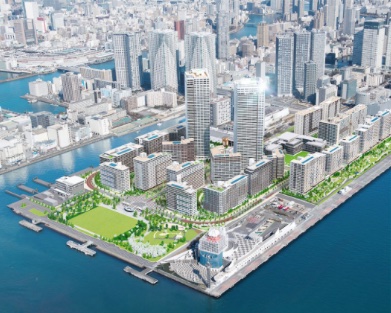
While searching for any news about the current state of the Harumi Flag condo complex in Tokyo’s Chuo Ward, we came across an older related article with detailed information we weren’t aware of. As we’ve written here before, Harumi Flag was originally the athletes village for the 2020 Olympics, after which the apartments were renovated into condo units, many of which had already been sold. Because of the one-year delay for the Games, people who had put down deposits and made plans to move in had to put off those plans for at least an extra year, thus causing a lot of grumbling among the buyers. 

According to a special report that appeared in July 2019 on the Min-IREN website, a consumer advocacy and social justice concern, people who already lived in the Harumi area of Chuo Ward on the waterfront had filed a lawsuit against the Tokyo prefectural government. The reporter was Nobuyuki Kitaoka, who often writes for the muckraking weekly Kinyobi, and he makes the point that the lawsuit had/has similarities to the 2017 scandal surrounding Moritomo Gakuen, the educational company that bought land in Osaka from the central government for a fraction of its assessed value, thus setting off speculation that this special deal was due to the fact that the wife of then prime minister Shinzo Abe was an honorary principal of the elementary school that Moritomo planned to build on the property. Apparently, the developers who would build the athletes village for the Olympics and then redevelop the complex into luxury condominiums also got the land at a fraction of its worth, and existing residents wanted to know why. According to Kitaoka, Moritomo paid only 20 percent of what the land it bought from the central government was worth, while the developers of Harumi Flag paid only 10 percent of the value to the Tokyo prefectural government, which owned it. Located only 3 kilometers from Ginza, the market value of the Harumi land was ¥959,000 per square meter, but Tokyo sold it to a consortium of 11 developers, including Mitsui Fudosan Residential, for only ¥97,000 per square meter. This consortium ended up paying a total of ¥12.96 billion for 133,900 square meters. 

Read More

Money out of mind

As with many families, my partner and I contribute to the living situation of an aged relative, who is currently living in a facility for seniors. We share this contribution with other members of her family, and in addition to paying directly for things like laundry service and supplemental meals, we also manage her pension and other social service income, which are directly deposited into her savings account. Another member of the woman’s family has the bank ATM card, with which that person can make money transfers to cover her care. In our case, we have the passbook, which can also be used to transfer money but not to withdraw cash from the account. Often we make necessary payments on her behalf and then transfer money from her account to reimburse ourselves.

This system is not uncommon, but it isn’t really legitimate, either, since we are not registered proxies for the woman. Because she has a cognitive disability owing to her age, she cannot handle her assets herself and thus relies on family to manage her finances, but legally speaking we—meaning not only my partner and I, but the other members of her family—should have registered as proxies with power of attorney well before she started losing her mental faculties. Now it is too late, and we are basically gaming the system. No one has prevented us from doing this because no one has complained, but recently banks have started phasing out passbooks in order to save money and paper. All records are being transferred to online systems, so we are afraid that once the current passbook fills up, we will not be able to get a new one, and thus will not have access to her account, since we can’t apply for an extra ATM card without her written compliance, which, legally, she can’t give because of her mental state.

A recent article that appeared in the Asahi Shimbun discussed this problem in more general terms, and it appears that our dilemma is one that many families also face. In principle, cash savings, real estate, and other assets owned by people who lose their cognitive functions cannot be touched except by people who have been granted such access by a court. The Civil Code says that if a person has no ability to make judgements regarding legal actions, those actions are not recognized. According to Mitsui Sumitomo Trust Bank, as of 2020, the amount of cash in Japanese bank accounts that has been frozen because their signatories have lost cognitive faculties amounts to ¥175 trillion. In terms of real estate and other assets, ¥80 trillion. That’s the equivalent of 8 percent of all household assets in Japan. By 2040, frozen assets are projected to reach ¥349 trillion, or 12 percent of all household assets. “Frozen” means that this money cannot be spent or otherwise circulated in the economy, which will slow down even further as a result. 

Read More

The Lie of the Land

Here is another chapter from our unpublished book about housing in Japan based on our own experience of trying to buy a home. This one is about residential land usage.

Example of a private road built for a future fukurokoji housing development

“It’s about the size of a cat’s forehead” – proverbial Japanese rejoinder when asked how much land a person owns

The real estate agent picked us up at the train station in a company car with long scratches on the side, probably inflicted during attempts to park in tight, unfamiliar spaces. We drove to the property through dense suburban sprawl overshadowed by pylons and interrupted by small plots of farmland. 

The two-story house had royal blue siding and was sixteen years old. The owner moved out two years ago. The wallpaper was discolored, the laminate wood floors spongey, the second floor “veranda” filled with debris. The price: ¥5.8 million. We estimated it would take at least ¥6 million to make it livable, but ¥12 million for the whole thing seemed too much. Moreover, anyone who bought the house would have to assume the lease for the land, which was ¥38,000 a month.

The agent explained that the same landlord owned the property under the other four houses on the street. The owners all had them built at the same time and paid the same rent. The leases were 50 years, which meant the owner of the blue house was still paying rent even though he didn’t live there any more, and would continue paying rent until he found someone to buy the house and take over the lease. He originally wanted ¥12 million, but had come down to ¥5.8 million about a year ago. We asked what the options were if he couldn’t find a buyer.

“Oh, he could easily rent this place, depending on how much he asked,” the agent said. “Many people in this situation do that.”

This concept of owning a house on rented land, in Japanese called shakuchiken, isn’t uncommon. According to the land ministry, between 1993 and 2007, 35,492 single-family homes and 18,937 condominium units were built on rented land, a trend that peaked in 2001, when many companies in the Tokyo Metropolitan area starting selling off property, fueling a development boom characterized by cheaper condos. When prices rose after 2005, shakuchiken started becoming popular again. The agent said that the number of people building houses on rented land was increasing, “but you don’t see so many for sale.”

As a rule, the value of homes in Japan depreciates rapidly, but land is still expensive, and not just in urban and suburban areas. Because of usage laws that make it difficult to shift land designated for agriculture to residences, even the countryside can be costly. 

We had decided to check out shakuchiken after talking to a friend, also self-employed, who had a house built on rented land seven years earlier. He and his family wanted to live in Kamakura, the trendy center of traditional culture located on the Miura peninsula just south of Tokyo, but were looking to rent since they didn’t think they could afford to buy a house there. A real estate agent directed him to a plot of land being developed by a housing company. The plot was owned by a local Buddhist temple.

Read More

Guilty as charged

Storage heater and friend

In the previous post we talked about our decision to go all-electric from the perspective of not wanting to deal with gas any more. However, this reasoning should not be taken as an unconditional endorsement of all-electric houses. Electricity is what it is—electrons moving in a certain way to transfer energy—and is separate in meaning from how it is produced. Natural gas is a substance whose mining and combustion have negative effects on the biosphere. Electricity is not a substance, so the issue surrounding electric power is how it is derived, and since we weren’t going to install solar panels—a choice that, at the time, was based on our financial outlook, and one we now regret—we assumed that we would have to buy all our electricity from the monopoly that supplied it in our area, Tepco, because at the time the energy market had not yet been liberalized. So it was a devil’s bargain, since at the time (2014) Tepco generated electricity chiefly from burning fossil fuels, though it was no secret to anyone that the company’s main wish was to bring back all the nuclear reactors it shut down in the wake of the Fukushima meltdown. We weren’t comfortable with either of these energy sources, and therefore had to live with the fact that we would (by buying thermally derived power) or could (by buying nuclear power) be paying into a system that was in some way unsustainable. 

In terms of climate control, summertime wasn’t a problem since we haven’t used air conditioners for years, mainly as a matter of preference. In fact, one of the criteria for choosing a place to build a house was relatively cooler temperatures during the summer. Given that we still opted to live in the Kanto region, that wasn’t very easy, but we managed to find a plot of land within a wooded area that was two to three degrees cooler on average than surrounding areas. So the main problem was heating the house in the winter with electricity, which can be expensive. We opted for storage heaters, which tend to be more popular in northern Japan and along the Japan Sea. The units are large boxes filled with ceramic bricks that heat up at night using electricity and then radiate this stored energy during the day. This method takes advantage of two phenomena—the human sleep cycle, and Japanese power companies’ practice of charging less for electricity at night than they do in the daytime. This latter point is based on the idea that large power generators are always online, but that the electricity they produce at night mostly goes unused, so businesses and homes that can use that surplus power pay less for it. Of course, our storage heating solution did nothing to help the environment, but at least it used power that would otherwise have gone to waste. Our water heating system, called Eco-Cute (a play on the Japanese word kyuto, or “hot water supply”), used the same cycle—heat the water at night for use in the daytime. We’ve been happy with the storage heating system. There is one unit on the first floor and another on the second floor, and by adjusting the amount of energy absorbed depending on projected temperatures, we’ve enjoyed a uniformly warm house throughout all the rooms during the winters we’ve lived here, something we, as a couple, have never really enjoyed in Japan, as anyone who has lived here for any length of time knows well. Moreover, we calculate that we don’t pay anymore to heat our home exclusively with electricity than we did to heat our home with gas, kerosene, and/or electricity in the past. 

But that may not last much longer. We recently received a notice from Tepco outlining payment changes for the future. The notice is supposed to be good news, since it essentially says that unit fees for electricity will be going down. However, the nighttime discount that we take advantage of for our heating uses will be discontinued. We were a bit taken back by this development, since the whole point of the storage heating system is to tap that surplus energy, but then we realized what it was all about. Some years ago, when we started writing about energy issues in Japan, especially with regard to nuclear energy following the 2011 meltdown, we learned that the nighttime discount was originally implemented because of nuclear energy. Reactors cannot easily be shut or powered down, and thus, unless they have to be serviced for whatever reason, they always run at full capacity. Thermal power stations that use fossil fuels—furnaces, to be exact—can be shut off or powered down more readily. So the nighttime discount became a normalized business practice in Japan because nuclear power by definition always produces a large capacity surplus at night. After the Fukushima meltdown, Japan shut off its nuclear reactors, and only 10 have come back online since, so the reasons for nighttime discounts are no longer as compelling, even though thermal power also produces a nighttime surplus. More importantly, as renewable energy becomes widespread, nighttime discounts become meaningless, especially with regard to solar power—the sun doesn’t shine at night, so there’s no excess power being generated. None of these functional aspects make our storage heating system any less effective in the task it was developed to perform, which is heat our house, but it does change the whole economic rationale for the system. 

Read More

Gas pains

In the last three years, almost 30 cities in California have moved to reduce the use of natural gas in buildings, mainly through banning installations of gas lines in new structures. Last summer, the state legislature, in fact, approved energy standards that, while not actually prohibiting the use of natural gas, would greatly expand the use of electrical appliances for heating, cooling, and cooking in a move to greatly reduce consumer reliance on fossil fuels, including natural gas, which is considered a prime contributor to global warming. In December, New York City went California one better with an outright ban on fossil fuel combustion in future construction of residential and commercial buildings, thus bringing about the beginning of the end to gas use in the city.

This trend seems irreversible as more countries approach their deadlines for reducing greenhouse gases as dictated by various global agreements. Though some pundits insist that replacing natural gas with electricity will not solve climate change since electricity has to be generated somehow, and often through the burning of fossil fuels, the concerted worldwide push toward greater use of renewable sources will eventually obviate the need for these fuels. And, of course, the problems of natural gas go beyond its immediate and long-term effects on the atmosphere. Mining damages soil and water resources; gas is inherently dangerous and expensive to transport, whether across continents or across cities; and gas usage within homes is now known to cause health problems, including cancer. 

None of these issues entered into our decision to not use gas in the house we built in 2013 since “city gas,” as it’s called in Japan, is not accessible in the place where we built the house. However, it didn’t really bother us because we had had it with gas and even if it had been available we wouldn’t have used it. This attitude had less to do with worries about the environment than with our own preferences and convenience. Using it as a heating source, we’d always felt ripped off by Tokyo Gas, the monopoly in the places we rented up until 2013. The company is the perfect example of a capitalist enterprise that uses its stranglehold on a utility to bleed customers. Not only does Tokyo Gas (and probably every regional gas utility in Japan) overcharge for the gas itself, but it makes it so that the infrastructure that delivers the product requires serious investment. When we moved to a high-rise rental in Tokyo that had just been built, in order to use gas for heating we had to buy special stand-alone units for each room from Tokyo Gas because the piping system was unique to the building. Each unit cost as much as ¥45,000, and then when we moved out of the building more than ten years later and into a new rental that had gas heating from Tokyo Gas, we couldn’t use these units because the apartment we rented didn’t have the same system, even though it was built after the one we lived in previously. Tokyo Gas had already moved on, and there was no demand for the units we owned, so we had to throw them away.

Moreover, we had fallen out of the habit of deep frying foods at home or even grilling fish. If we wanted those dishes, we’d buy them already prepared at the supermarket. Mainly we were tired of scrubbing the burners and the range hood with steel wool, and storing and disposing of rancid cooking oils, and tended to associate these things with gas ranges and open flames. 

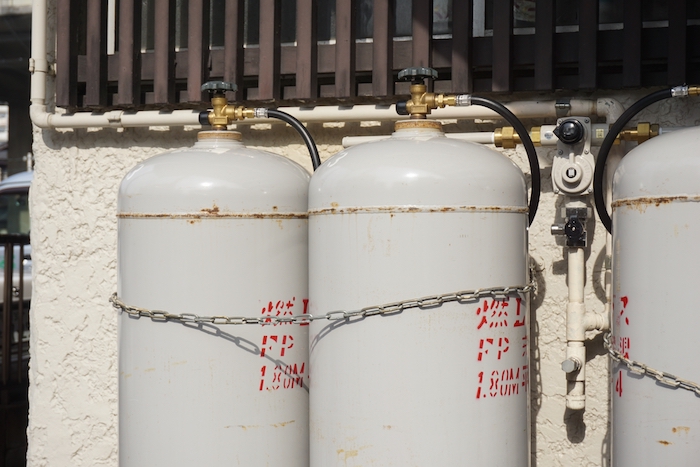
So our house is all-electric, the stovetops IH, which are easy to clean. That isn’t to say we couldn’t have gas in our lives any more, only that we couldn’t have natural gas. We could have liquefied petroleum gas, sometimes called propane, which is available everywhere in Japan, but that would require appropriate piping within the house, and when the builder suggested it to us we thought about it and declined, also mainly for aesthetic reasons. When we lived in Omiya for 3 years we rented a house that used LPG, and didn’t really like the sight of all those cannisters lined up outside under the kitchen window. So our decision to not use LPG in our new house was consistent with our dislike of natural gas: We didn’t want to use it for cooking or heating. We were through with open flames.

Read More

Last Resorts

Here is another draft chapter from our unpublished book about our house-hunting adventure. This one is about second homes and so-called resort mansions. 

Second-home inspecting in Nikko

One late summer morning in 2012 we were on the Tokaido Shinkansen super express and ran into a friend we hadn’t seen in years. He asked us if we were still living in Tokyo and we said we had moved some time ago because of the earthquake. He then asked what we were doing on the bullet train and we said we were on our way to Atami on the Izu Peninsula to look at some properties we might be interested in buying. He gave us a funny look. “That would seem to be the worst place to live if you’re afraid of earthquakes.”

True. Just the day before Japan’s Cabinet Office Disaster Council had updated its projections for a major earthquake occurring in the Nankai Trough, the deep indentation in the sea bed off the Pacific coast, and Shizuoka Prefecture, which contains Izu, was deemed the worst location in terms of projected casualties, though, technically, most of those casualties would be in the western part of the prefecture, not Izu. In any case, we weren’t completely serious about buying a place there. Having been frustrated in our search for a home we could afford, we were entertaining the idea of keeping our rental and buying a cheap old fixer-upper in a location with cooler summers. If our income situation worsened and we had to give up renting, then we would at least have a roof over our heads, and if things continued as they had been then we’d have a weekend/summer place. There are plenty of old dumps in the highlands of Tochigi and Nagano, or in the wilds of Chiba that can be had for under ¥7 million, though they’d require another ¥3-5 million to make livable. And during our search we noticed there were quite a few such places in Izu, too, mainly besso (separate homes), which we had avoided so far. Second homes tend to be built in specially designated developments managed by companies that charge yearly fees. Also, besso are usually impractical for year-round living, but since we weren’t necessarily going to be living in one year-round we thought we’d see what was available. And Izu is, as they say, the “Riviera of Japan.” More to the point, it’s cooler in the summer.

Read More

The good landlord

In our previous post, we talked about rent relief, and how the Japanese government had expanded its assistance to at-risk renters after the onset of the pandemic. As a result, the number of approved applications in 2020 was 34 times the number approved the previous year, though, in the end, it may not be enough since the people who need the money have to apply anew every three months up to a total of 12 or 15 months. Groups that advocate for at-risk households have tried to convince the government to make the relief open-ended, but the current limits are in line with government policy regarding public assistance, which, as once outlined by former Prime Minister Yoshihide Suga, is made available after an individual had tapped their own individual resources, and then those of their “community.” Government aid is the last resort.

An article published by the Asahi Shimbun on Jan. 5 gives some idea of what kind of assistance the “community” might offer in these cases. The piece profiles a 42-year-old landlord named Tomoyuki Matsumoto, who owns about 80 rental units in Osaka, Kyoto, and Tokyo. He rents the properties to people who may have difficulty finding places to live otherwise because they are poor and/or elderly. The article illustrates Matsumoto’s business model by describing one of his properties, a 3-story nagaya (town house) located in Daito, Osaka Prefecture, that’s more than 50 years old. The interior walls are traditional doheki (wattle and daub), the roof occasionally leaks when it rains, and the toilet sometimes overflows. The tenant, an 81-year-old widow who has resided there 3 years, doesn’t seem to mind these inconveniences because the rent is only ¥35,000 a month, which means she can live there on her national pension. Matsumoto shows up once every two months to collect the rent in person, which she finds very agreeable. As he tells the newspaper, having a personal connection with his tenants is very important to him, and as a result he responds to maintenance problems fairly promptly.

Read More

Renting in the plague years

At the moment, the government continues to debate a plan to give families with younger children whose incomes are below a certain line payouts of ¥100,000 per child as a countermeasure to the continuing financial strain brought on by the COVID-19 pandemic. One point of contention is that the government would like to pay half the funds in “coupons” that can only be used to purchase items at offline retailers, preferably within the municipality where they live. The obvious reason for this scheme is to stimulate businesses that are suffering due to the pandemic. Reportedly, the government has said it is up to local governments, who would prefer coupons since the money would likely be spent in their bailiwicks. However, the coupon scheme automatically limits the recipient families’ discretion with what they can do with their handouts. Many would obviously like to use that money for things other than purchases.

Like rent. In a front page article that appeared Dec. 15, Tokyo Shimbun reported that there is a good possibility that the rate of evictions nationwide will increase “rapidly” in the coming year. Actually, the newspaper doesn’t use the word “eviction” since there is really no exact equivalent in Japanese. The word that’s used is “taikyo,” which means “leaving” in various senses of the term. In principle, it is difficult for a landlord legally to evict a tenant for any reason in Japan, but there are many other ways to get a tenant to leave a property if the landlord doesn’t want them there anymore. 

The thing about the anti-eviction law is that it is the only national law that protects the interests of tenants, and while it sounds like a major protection, other tenant rights that are taken for granted in other countries regarding things like fees and rent control and property maintenance are not similarly protected in Japan. However, tenants who are not formally receiving government assistance and find themselves in temporary financial straits can apply for rent relief from the central government. After the pandemic hit almost two years ago, the government relaxed some of the conditions so that more people could receive the subsidy and for longer periods of time. It proved to be popular. According to Tokyo Shimbun, the number of approved applications in fiscal 2020 was 34 times what it was the previous year.

Obviously, many renters were suffering financially and the subsidy was a big help, but while the period for applications was extended, it wasn’t made indefinite, and many recipients who have been relying on that money will soon be cut off. According to the emergency revision to the rental subsidy law, households in need could receive the funds for a maximum of 15 months. Tokyo Shimbun, in fact, covered the matter because a number of citizens groups had a meeting in Tokyo on Dec. 14 to demand the government make the rental subsidy program permanent and open-ended. 

Read More