Gas pains

In the last three years, almost 30 cities in California have moved to reduce the use of natural gas in buildings, mainly through banning installations of gas lines in new structures. Last summer, the state legislature, in fact, approved energy standards that, while not actually prohibiting the use of natural gas, would greatly expand the use of electrical appliances for heating, cooling, and cooking in a move to greatly reduce consumer reliance on fossil fuels, including natural gas, which is considered a prime contributor to global warming. In December, New York City went California one better with an outright ban on fossil fuel combustion in future construction of residential and commercial buildings, thus bringing about the beginning of the end to gas use in the city.

This trend seems irreversible as more countries approach their deadlines for reducing greenhouse gases as dictated by various global agreements. Though some pundits insist that replacing natural gas with electricity will not solve climate change since electricity has to be generated somehow, and often through the burning of fossil fuels, the concerted worldwide push toward greater use of renewable sources will eventually obviate the need for these fuels. And, of course, the problems of natural gas go beyond its immediate and long-term effects on the atmosphere. Mining damages soil and water resources; gas is inherently dangerous and expensive to transport, whether across continents or across cities; and gas usage within homes is now known to cause health problems, including cancer. 

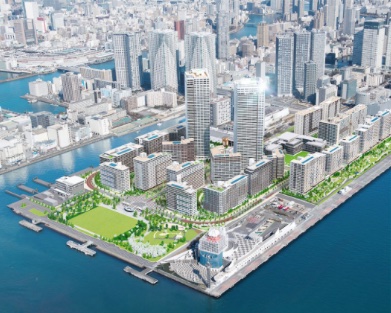
None of these issues entered into our decision to not use gas in the house we built in 2013 since “city gas,” as it’s called in Japan, is not accessible in the place where we built the house. However, it didn’t really bother us because we had had it with gas and even if it had been available we wouldn’t have used it. This attitude had less to do with worries about the environment than with our own preferences and convenience. Using it as a heating source, we’d always felt ripped off by Tokyo Gas, the monopoly in the places we rented up until 2013. The company is the perfect example of a capitalist enterprise that uses its stranglehold on a utility to bleed customers. Not only does Tokyo Gas (and probably every regional gas utility in Japan) overcharge for the gas itself, but it makes it so that the infrastructure that delivers the product requires serious investment. When we moved to a high-rise rental in Tokyo that had just been built, in order to use gas for heating we had to buy special stand-alone units for each room from Tokyo Gas because the piping system was unique to the building. Each unit cost as much as ¥45,000, and then when we moved out of the building more than ten years later and into a new rental that had gas heating from Tokyo Gas, we couldn’t use these units because the apartment we rented didn’t have the same system, even though it was built after the one we lived in previously. Tokyo Gas had already moved on, and there was no demand for the units we owned, so we had to throw them away.

Moreover, we had fallen out of the habit of deep frying foods at home or even grilling fish. If we wanted those dishes, we’d buy them already prepared at the supermarket. Mainly we were tired of scrubbing the burners and the range hood with steel wool, and storing and disposing of rancid cooking oils, and tended to associate these things with gas ranges and open flames. 

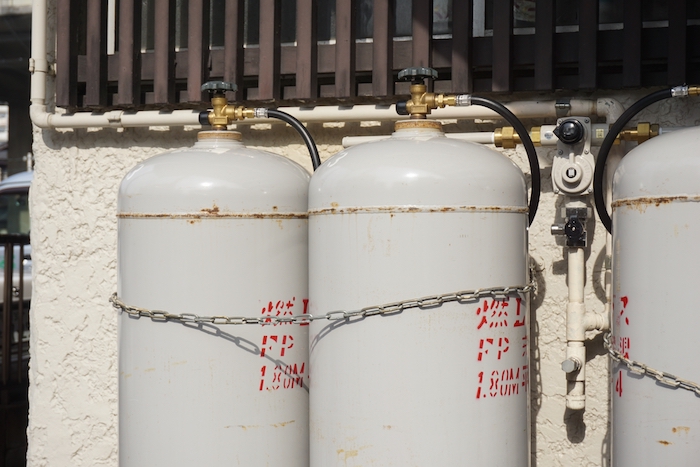
So our house is all-electric, the stovetops IH, which are easy to clean. That isn’t to say we couldn’t have gas in our lives any more, only that we couldn’t have natural gas. We could have liquefied petroleum gas, sometimes called propane, which is available everywhere in Japan, but that would require appropriate piping within the house, and when the builder suggested it to us we thought about it and declined, also mainly for aesthetic reasons. When we lived in Omiya for 3 years we rented a house that used LPG, and didn’t really like the sight of all those cannisters lined up outside under the kitchen window. So our decision to not use LPG in our new house was consistent with our dislike of natural gas: We didn’t want to use it for cooking or heating. We were through with open flames.

Read More

Last Resorts

Here is another draft chapter from our unpublished book about our house-hunting adventure. This one is about second homes and so-called resort mansions. 

Second-home inspecting in Nikko

One late summer morning in 2012 we were on the Tokaido Shinkansen super express and ran into a friend we hadn’t seen in years. He asked us if we were still living in Tokyo and we said we had moved some time ago because of the earthquake. He then asked what we were doing on the bullet train and we said we were on our way to Atami on the Izu Peninsula to look at some properties we might be interested in buying. He gave us a funny look. “That would seem to be the worst place to live if you’re afraid of earthquakes.”

True. Just the day before Japan’s Cabinet Office Disaster Council had updated its projections for a major earthquake occurring in the Nankai Trough, the deep indentation in the sea bed off the Pacific coast, and Shizuoka Prefecture, which contains Izu, was deemed the worst location in terms of projected casualties, though, technically, most of those casualties would be in the western part of the prefecture, not Izu. In any case, we weren’t completely serious about buying a place there. Having been frustrated in our search for a home we could afford, we were entertaining the idea of keeping our rental and buying a cheap old fixer-upper in a location with cooler summers. If our income situation worsened and we had to give up renting, then we would at least have a roof over our heads, and if things continued as they had been then we’d have a weekend/summer place. There are plenty of old dumps in the highlands of Tochigi and Nagano, or in the wilds of Chiba that can be had for under ¥7 million, though they’d require another ¥3-5 million to make livable. And during our search we noticed there were quite a few such places in Izu, too, mainly besso (separate homes), which we had avoided so far. Second homes tend to be built in specially designated developments managed by companies that charge yearly fees. Also, besso are usually impractical for year-round living, but since we weren’t necessarily going to be living in one year-round we thought we’d see what was available. And Izu is, as they say, the “Riviera of Japan.” More to the point, it’s cooler in the summer.

Read More

The good landlord

In our previous post, we talked about rent relief, and how the Japanese government had expanded its assistance to at-risk renters after the onset of the pandemic. As a result, the number of approved applications in 2020 was 34 times the number approved the previous year, though, in the end, it may not be enough since the people who need the money have to apply anew every three months up to a total of 12 or 15 months. Groups that advocate for at-risk households have tried to convince the government to make the relief open-ended, but the current limits are in line with government policy regarding public assistance, which, as once outlined by former Prime Minister Yoshihide Suga, is made available after an individual had tapped their own individual resources, and then those of their “community.” Government aid is the last resort.

An article published by the Asahi Shimbun on Jan. 5 gives some idea of what kind of assistance the “community” might offer in these cases. The piece profiles a 42-year-old landlord named Tomoyuki Matsumoto, who owns about 80 rental units in Osaka, Kyoto, and Tokyo. He rents the properties to people who may have difficulty finding places to live otherwise because they are poor and/or elderly. The article illustrates Matsumoto’s business model by describing one of his properties, a 3-story nagaya (town house) located in Daito, Osaka Prefecture, that’s more than 50 years old. The interior walls are traditional doheki (wattle and daub), the roof occasionally leaks when it rains, and the toilet sometimes overflows. The tenant, an 81-year-old widow who has resided there 3 years, doesn’t seem to mind these inconveniences because the rent is only ¥35,000 a month, which means she can live there on her national pension. Matsumoto shows up once every two months to collect the rent in person, which she finds very agreeable. As he tells the newspaper, having a personal connection with his tenants is very important to him, and as a result he responds to maintenance problems fairly promptly.

Read More

Renting in the plague years

At the moment, the government continues to debate a plan to give families with younger children whose incomes are below a certain line payouts of ¥100,000 per child as a countermeasure to the continuing financial strain brought on by the COVID-19 pandemic. One point of contention is that the government would like to pay half the funds in “coupons” that can only be used to purchase items at offline retailers, preferably within the municipality where they live. The obvious reason for this scheme is to stimulate businesses that are suffering due to the pandemic. Reportedly, the government has said it is up to local governments, who would prefer coupons since the money would likely be spent in their bailiwicks. However, the coupon scheme automatically limits the recipient families’ discretion with what they can do with their handouts. Many would obviously like to use that money for things other than purchases.

Like rent. In a front page article that appeared Dec. 15, Tokyo Shimbun reported that there is a good possibility that the rate of evictions nationwide will increase “rapidly” in the coming year. Actually, the newspaper doesn’t use the word “eviction” since there is really no exact equivalent in Japanese. The word that’s used is “taikyo,” which means “leaving” in various senses of the term. In principle, it is difficult for a landlord legally to evict a tenant for any reason in Japan, but there are many other ways to get a tenant to leave a property if the landlord doesn’t want them there anymore. 

The thing about the anti-eviction law is that it is the only national law that protects the interests of tenants, and while it sounds like a major protection, other tenant rights that are taken for granted in other countries regarding things like fees and rent control and property maintenance are not similarly protected in Japan. However, tenants who are not formally receiving government assistance and find themselves in temporary financial straits can apply for rent relief from the central government. After the pandemic hit almost two years ago, the government relaxed some of the conditions so that more people could receive the subsidy and for longer periods of time. It proved to be popular. According to Tokyo Shimbun, the number of approved applications in fiscal 2020 was 34 times what it was the previous year.

Obviously, many renters were suffering financially and the subsidy was a big help, but while the period for applications was extended, it wasn’t made indefinite, and many recipients who have been relying on that money will soon be cut off. According to the emergency revision to the rental subsidy law, households in need could receive the funds for a maximum of 15 months. Tokyo Shimbun, in fact, covered the matter because a number of citizens groups had a meeting in Tokyo on Dec. 14 to demand the government make the rental subsidy program permanent and open-ended. 

Read More

The sky above, the mud below

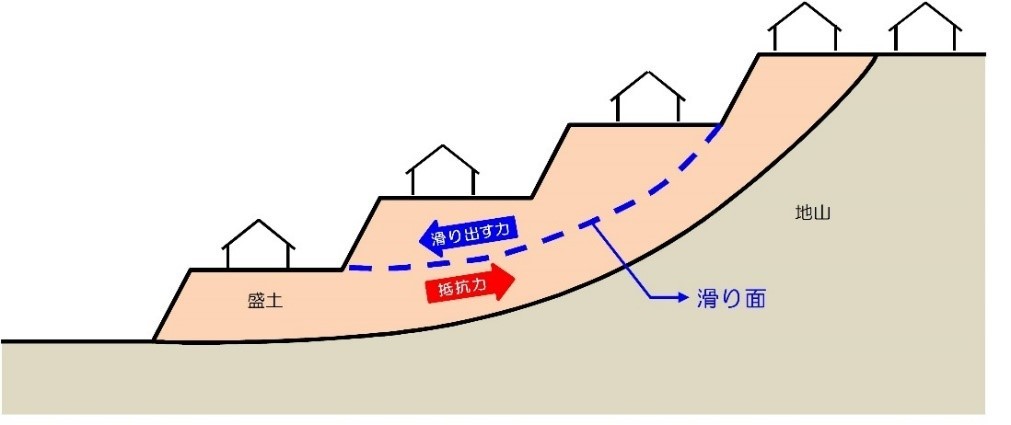
Typical “morido” terrace formation for housing development

The disastrous mudslide that hit the city of Atami on July 3 brought attention to the term “morido,” which has no real equivalent in English, though some people might use “landfill.” In some cases, morido does qualify as landfill, but as it literally means “added soil” it has a wide variety of applications. In the case of the Atami mudslide, the consensus now is that the disaster was caused by an accumulation of soil at the top of a ravine that came loose during torrential rains and rushed down the ravine toward the sea, destroying dozens of houses along the way. The soil in question was apparently deposited there by a real estate company more than ten years ago, though it hasn’t been clearly explained what the purpose of the soil was. Media reports say that the company submitted a “report” to local authorities saying that they planned to build housing on the land, which they owned at the time, but the local government never properly checked the progess of this plan. Neighbors, however, startled by the succession of dump trucks that constantly came through to deposit soil on the site, contacted the authorities, who then “warned” the real estate company that it might be breaking the law. The company never responded to the warning and, in any case, there is no indication that they ever really intended to build anything on the “added soil.” Local regulations only permit soil accumulation of up to 15 meters, but just prior to the disaster it is estimated that the mound was 50 meters deep. The volume of soil, rock, and what is deemed to be industrial waste that flowed down the ravine is estimated to be 56,000 cubic meters. 

Some anti-solar (i.e., pro-nuclear) elements have pointed to the subsequent owner of the land as being to blame for the mudslide, since they cleared trees above the already existing mound and installed a solar farm. For sure, the clear-cutting removed some of the area’s water-retention capability, thus contributing to the disaster, but the solar energy company did not create the morido, and whatever the drawbacks of so-called mega-solar installations in terms of environmental impact, it appears that the company was operating within the law. The real estate company, which has since gone out of business, has yet to explain what the purpose of the mound was, but circumstances seem to point to it being a place to simply dump refuse and excavated soil, probably from construction projects far away. The local residents, for instance, said that the dump trucks all had Yokohama license plates. And then, of course, the industrial waste mixed in with the mud. This sort of problem is becoming more prevalent as construction continues undeterred with a dwindling number of places approved for refuse landfill. We’ve written about this before and the measures some contractors go to in order to find places to get rid of soil and other junk. 

Another kind of morido is that which is used to fill in valleys or create terraces on the sides of inclines in order to create level land for residential or agricultural development. As with all situations where soil is deposited on existing land, drainage must be assured by laying pipes within the mound of soil and the soil itself must be manually compacted so that it will not come loose. Unfortunately, even these measures may not be enough, though from what we’ve learned the main problem with this kind of morido doesn’t come from excessive rain but rather from earthquakes, which can cause the soil to shift, or, if it contains lots of ground water, liquefy. This happened throughout residential subdivisions affected by the 311 earthquake. Consequently, when we were shopping for land in 2012-13, we consulted topographical maps of the areas we were interested in in order to find out if a particular property was the result of morido. If it was, then we avoided it. We also avoided low-lying properties because of Japan’s problem with typhoons and heavy rains. But, in any case, morido is more prevalent than you might think, and most of it is perfectly legal, though not necessarily safe. That said, media reports have also said that the kind of morido that caused the Atami disaster is also very prevalent, despite the fact that it is illegal, so we can probably expect more of this kind of catastrophe. 

Baby you can park my car

We sold our car in 2006 and have never replaced it, despite the fact that in the meantime we moved out of the city and into a suburb where a car is considered essential. Our original reason for getting rid of ours was the cost. We were paying for insurance and biannual inspections and parking just for the privilege of owning a vehicle that we really didn’t use that much. Living where we did we had ready access to several train lines and as we both aged what we once considered the convenience of having a car at our disposal faded, mainly because driving in Japan isn’t very enjoyable, what with the narrow streets, highway tolls, and difficulty with street parking. Though we’ve often thought of buying a car again for emergency use, we keep putting it off because it’s really nice not to have that burden any more. We manage just fine with bicycles and car share services. 

The last place we lived had an underground mechanical parking facility. The space you rented was actually a pallet that moved vertically and horizontally. Parking lots are two-dimensional and thus require a lot of ground space. Mechanical parking garages, what we liked to call “3D parking lots,” used space both above and below the ground level to store cars, thus requiring less real estate. When we wanted to use our car, we went to the carousel assigned to us and, inputting a special code, “retrieved” the pallet by rearranging the other pallets in the carousel in order to place ours right at the front of the gate. This means, of course, that you have to wait for all the pallets to be rearranged properly, and sometimes it took a little time. It was especially troublesome if somebody else who had rented a pallet in your particular carousel was retrieving their car just as you arrived. On a few occasions, we needed our car quickly in order to make it in time for an appointment, and someone was already there getting their car so we had to wait. Fortunately, we never had, like, a medical emergency that required an automobile. The only saving grace was the rent, which was relatively cheap for Tokyo. Before living in that apartment we lived close to the Saitama border and rented a parking space from JR under the railroad tracks. It was unpaved but the tracks protected the vehicles from rain, and we paid ¥23,000 a month. The pallet we rented was ¥18,000 a month, and it was much closer to the center of the city. 

Read More

A place in the sun

About a year ago, many people in our part of Chiba Prefecture were still struggling with loss of electricity after two typhoons plowed through the peninsula in rapid succession. Our house was lucky and only lost power intermittently for short periods. Not far from where we live, however, there were some households who didn’t have power for more than a month, and the local authorities, not to mention the regional power providers, seemed at a loss as to what to do about it. Moreover, they didn’t seem sure of how to prevent such problems from recurring in the future, seeing how, with climate change and all, it was likely that these kinds of extreme weather events would happen again and perhaps more frequently.

Extended blackouts are, of course, a serious matter. In addition to loss of lighting function, it means your refrigerator won’t work and thus all your food contained inside will spoil; it means no air conditioning, which could be a big problem at the height of summer; it means no television, which provides emergency information in times when disasters like this strike; and it means no cell phones because no recharging capability. These are all problems that can occur to anyone in the path of a typhoon, but in the cases of the people mentioned above it could be even more serious. We live in an area where a lot of infrastructure is not available. Most of us get our water from wells, and so we need pumps that are run by electricity, so that means no water for bathing and toilets. We also aren’t hooked up to natural gas lines, so unless you get propane deliveries, it probably means you run your household on an all-electric system, so that means no cooking or hot baths/showers. 

At least one local municipality has taken preliminary action to be more prepared, and in doing so may spark a trend that should be promoted nationwide. In the city of Sosa, on the Pacific coast, a group of environmental activists has set up a “solar sharing” operation that started out with farmers who allowed the group to install solar panels on tall stanchions above their fields. The panels absorb sunlight, but are far enough from the ground to allow peripheral sunlight to reach most of the ground underneath them, so the fields still produce crops. The farmers still sell their wares, and the sharing group sells excess electricity from the solar setup to the local power company and puts the revenue back into the local government, which uses the money to promote solar energy on a household-by-household basis. According to an article in Harbor Business Online, Sosa seems to be the only local government carrying out such a program. What’s particularly interesting is that, besides the money made from selling the electricity, the program has no relationship with any major power companies, which makes sense. Electricity providers are very concerned about people generating their own power for their own use, since it means using less electricity from the grid, which they control. However, after last year’s typhoons, many residents of Chiba have realized they can’t count on the grid and its overlords to guarantee service in the event of an emergency. 

Read More

Out of the city

Suburban street in Sakae

We’ve written in the past about how local governments come up with schemes to repopulate their areas, often by dangling cash incentives in front of families or couples who plan to have children. The coronavirus crisis has reinvigorated these efforts since more people are now working from home. Prior to the mid-90s, the pattern of home ownership was that breadwinners who worked in large cities but wanted their own home would buy one in the suburbs and commute, because they often couldn’t afford city prices. There was also the idea that it was better to raise a family in the suburbs. And because employers paid for transportation, they put up with ever more punishing commutes. However, some years after the bubble burst and the so-called ice age of stalled employment possibilities set in, younger people with no real certainty of promotion within their companies and less likelihood of settling down decided that they would live near their place of work, regardless of what it cost, because they didn’t want to spend two hours-plus on the train every day. Maybe their fathers did that and they decided, no way am I going to do that. So they live in cramped, expensive rental apartments in the heart of the city, even if they didn’t like the city.

So the increased ingress of young people to places like Tokyo is not entirely due to decisions based on desire. But now, if your employer says you can work from home there’s no reason to live “near the office,” and, according to news reports, more people are leaving the city because they don’t like living there. Some local governments are already trying to exploit that trend. Sakae, a town in northern Chiba Prefecture just west of Narita, is now offering families ¥50,000 if they move to their area. The catch is that the family has to prove that one or more of the members is teleworking, a condition we find a bit puzzling—if the purpose of the money is to lure families, then why limit it to only teleworking people? Also, a one time payment of ¥50,000 doesn’t sound like much of a mind-changer, especially since the family has to pledge they will remain in Sakae for at least three years. Read More

Dirty deeds done dirt cheap

Mound of dirt created after we had our septic tank installed.

In the six years we’ve lived in our house we’ve done some landscaping and in many cases were left with soil that had been removed from the ground. The contractor would always offer to dispose of the dirt for a fee, but we always had them dump it on the adjoining property, which is mostly covered with a bamboo grove. We know this is illegal, because it is not our land, but the plot, which is quite large, already has loads of dead wood and bamboo, and the amount of dirt we leave there is hardly noticeable. Besides, we’ve often helped ourselves to the soil we put there for gardening purposes.

But there is a real problem in Japan of where to put excavated soil resulting from large-scale construction projects. This week, Asahi Shimbun ran a fairly in-depth story that illustrates almost too perfectly this problem. Read More

The now and future isolated

A superannuated New Town

Around the time the central government finally decided to declare a state of emergency to get people to stay indoors and help halt the spread of the coronavirus, we wondered if anyone would mention our pet peeve—tower condominiums—as an ideal residential accommodation for self-isolating individuals in Tokyo. The problem with living in a metropolis during an epidemic is that most people reside in collective housing, which makes it more difficult to not come into contact with others if you decide to emerge from your apartment. Consequently, the closer you are to the ground, the more insistent the urge to get some fresh air. High-rise apartment buildings make it that much more difficult to leave one’s home, since it requires getting into an elevator, which is the worst environment in a pandemic—cramped and unventilated—in order to come and go. So in a sense people who live in high-rises are already isolated to a certain degree, since, in our own experience as tower dwellers, such residents require more energy and initiative just to get out the door.

Novelist Jin Mayama doesn’t make this exact point in his essay for Asahi Shimbun that appeared April 18, but he comes close. He acknowledges that families will be trapped inside together for an indefinite period of time and hints that people in high-rises will be more stressed out owing to the cramped conditions. However, he sees this as a kind of opportunity, not so much for the residents, who are mostly stuck with their lot, especially if they bought their apartment, but rather for the rest of us who don’t live in high-rises. The epidemic puts the future of tower condominiums in a new light, or, maybe it would be better to say, a new shade.

Mayama predicts that the lot of tower condos will be strikingly similar to that of New Towns right now, which is that the latter have essentially become “slums.” Most of Mayama’s explanation mirrors what we’ve talked about at length in this blog, but it’s worth going through again for the sake of clarity. Collective housing is still a fairly recent trend in Japan, since it wasn’t anywhere near the norm, even in cities, before World War II. To him, the idea of collective housing as a social trend really took off in 1955, when the central housing authority started planning New Towns, which were based on a British idea but, physically, resembled Soviet apartment blocks. The New Towns were broadly covered by the media as being futuristic and progressive, and were instrumental in creating what was called “new families,” which, to Westerners, were basically nuclear families. Extended families, which had always been the norm and ideal in Japan, didn’t fit the new housing plan. Moreover, the New Towns epitomized the government’s drive to create a “100 million-strong middle class.” Read More