A pox on your tax

The current income tax deduction on housing loans will expire at the end of this year, but, as in the past, it will probably be renewed in some form. The tax deduction was first implemented in 1972 and has been revised repeatedly ever since. The current deduction, revised in 2022, cut the rate from 1.0 to 0.7 percent of the balance of the loan in a given year for up to 13 years. Originally, the deduction was 1 percent of the entire price of the house for up to 3 years, and has fluctuated rather liberally over time, depending on how desperately the government wanted to use home sales as an economic stimulus measure. 

That’s why the reason the deduction will likely be renewed again isn’t just that it’s become an expected feature of home ownership. On April 21, the welfare ministry announced the results of a survey of people who bought homes between 2022 and 2025. Twenty-one percent of the 8,400 respondents said that if there had been no tax deduction on housing loans they wouldn’t have purchased a home. Kyodo says that this survey will be used to decide on whether to extend the deduction after this year, with the implication that it will be. Among respondents, only 20 percent said that the housing loan tax deduction had “no influence” over their decision to buy a home. 

Higher income buyers have lost something over time. Currently, anyone making more than ¥20 million a year is ineligible for the deduction, though the ceiling used to be ¥30 million. The carryover has also been decreased. If the amount of the tax deduction turns out to be more than the income tax owed the government, the excess can be applied to local taxes, but only up to ¥97,500. The maximum used to be ¥136,500. 

The housing loan tax deduction has always been controversial, and not just in Japan, because it’s basically discriminatory. Why should people who can afford to buy a home get a special break on their taxes? The ostensible reason is to promote home ownership, which is generally assumed to be a good thing for society, but it ignores the situation of renters. Landlords in Japan do not get a deduction when they buy property because it only applies to people who purchase a home they will live in, but landlords undoubtedly pass the cost of all the taxes they pay on to their tenants, so landlords always have a means of handling tax issues. They don’t need a deduction. The only purpose of the deduction for homeowners is to encourage sales, which helps the real estate and construction industries, not to mention the banks that provide the housing loans. 

Read More

Not buying it

The home ownership rate in Japan has stayed around 60 percent for the past five decades, a bit less than the world average. However, according to the Paris-based global market research company, IPSOS, that rate may be dropping in the near future. 

Recently, IPSOS conducted a survey of 22,000 people in 30 countries and found that the “desire” for home ownership was the lowest in Japan. About 42 percent of the Japanese people surveyed who do not presently own homes said they were planning to buy a home in the future. The average among the 30 countries was 71 percent, with the U.S. at 68 percent and Germany just above Japan at 48 percent. 

Of the reasons given for not planning to buy a home, the most common among Japanese respondents was high taxes, mentioned by 52 percent. The world average of people saying that high taxes was a reason for not buying a home was 28 percent. Italy was closest to Japan at 42 percent. The second most cited disincentive in Japan was the high price of property. 

Broken down further, 68 percent of the Japanese respondents said they wanted to buy a home but didn’t think they would be able to afford it. About the same percentage of Germans and Australians said the same thing. Of course, the real question here is how many people do not even want to buy a home, which would tell us more about people’s attitude toward investing for the future. As we’ve said in this blog many times, outside of the main big cities, one’s home is not an investment in terms of getting anything back from it in the long run, so while home ownership does have advantages over renting, mainly that it gives one a guaranteed place to live, in terms of money spent there may not be enough of a difference, something more people may be realizing these days. 

Coincidentally or not, the land ministry also conducted a survey in late 2023 whose results were reported in the housing magazine Suumo in February. The ministry surveyed 72,000 heads of household nationwide covering all ages and incomes, with 72.4 percent of respondents owners of their homes and 27.6 percent renters. 

In terms of satisfaction, 79 percent of the homeowners said they were satisfied with their present situation, while 74 percent of renters said the same thing. However, when asked about the future, the results were startling. To the question, “If you were to move again, which would you prefer: owning or renting?” Only 33 percent of both categories said they wanted to own while 49 percent said they wanted to rent. According to Suumo, this is a huge change since 2003, when the land ministry conducted a similar survey. Almost all the respondents in that survey said they preferred to own. Broken down a bit further, most of the owners and renters who said they wanted to own their next abode said they would prefer a new home, but there was a notable increase over previous surveys in respondents who said they would be fine buying a used home. 

One reason for the presumed high portion of homeowners who said they would rent if they moved is the fact that almost half the heads-of-household surveyed were over 64, meaning they have likely lived in the same place their entire homeowning lives and probably think they don’t need to purchase another one in their old age. One stone cold statistic that’s always been true of Japanese housing is that the older the cohort, the higher the home ownership rate, so the real question is, how do today’s home ownership rates among people still in their so-called productive years compare to those in the past? The IPSOS survey would seem to indicate that it’s not as much and will continue to decline. 

Future shock

We’ve written extensively about Tokyo’s current condo boom without really addressing what it will lead to in the long run. Most commentators seem to expect a burst bubble, like the one that happened in the early 90s following a similar over-valuation of properties in the late 80s. However, there is an important difference in that the current Tokyo bubble is being pumped up by rich people. The average price of a new condo in the capital has exceeded ¥100 million. In the late 80s, the bubble was caused by everyone, since the huge boomer cohort had secured its lifetime employment and banks were willing to lend them money. Even though housing interest rates are low in Japan compared to the bubble era, younger families with average incomes who still insist on buying new condos are finding it difficult to find anything they can afford in the 23 wards, according to local media.

A recent video on the YouTube real estate channel Rakumachi put the present bubble in perspective, especially in terms of what it holds for the future. According to Tomohiro Makino, a “real estate producer” whose career started in the 80s, people who say the Tokyo condo market is “over-heated” need to look at classic supply-and-demand. “Over-heated” suggests that the market will eventually cool, but since this particular bubble is being caused by rich people and institutional or business investors, it isn’t that simple. Scarcity is one of the factors fueling the over-heated prices: the number of new condos on sale in recent years is one-third the number that were on sale in a given year two decades ago. Much of the reason for this scarcity is the high cost of building materials and lack of labor. Building a condominium is much more time- and capital-intensive than it used to be, so developers have scaled down. And with prices so high, buyers trend toward people who benefit from certain financial realities, such as foreign investors who can exploit the historically cheap yen. Even rich elderly Japanese who don’t necessarily need a new place to live are buying high-end condos in Tokyo as hedges against taxes their heirs will have to pay when they die. So they invest their cash in real estate, which can lower the inheritance tax burden by as much as 70 percent. Those who do buy new Tokyo condos for living purposes tend to be so-called power couples—married people whose combined incomes exceed ¥15 million a year. 

So the high condo prices are essentially being maintained by a small group of people. Nomura Securities says the number of “very wealthy” households in Japan, meaning they are worth more than ¥500 million each, is around 90,000, for combined assets (not counting debt) of ¥105 trillion. Merely “wealthy” households (¥100-¥500 million) number around 1.4 million with ¥259 trillion in assets; “less wealthy” (¥50-¥100 million) number 3.3 million with ¥258 trillion; upper middle class (¥30-¥50 million) number 7.2 million with ¥332 trillion; and the vast middle class (less than ¥30 million), numbering 42 million, is worth ¥678 trillion. Though the top two tiers account for a bit more than 2 million households, the amount of assets they control is considerable. Much has been made of the global income gap in recent years, and Makino says the top 1 percent in Japan has seen its wealth increase by 80 percent since 2013, when Abenomics. The investment market was flooded with easy money, but average households received no comparable benefit from the policy. Makino says that its effect on real estate has led to the over-heated condo market, putting Tokyo real estate out of the reach of the middle class. Developers don’t even think about this group of consumers, because they know that even if every condo they build is luxury-class, they can still sell them. Consequently, they don’t have to build that many in order to make as much money as they used to make when they sold to everyone. The average price of a new condo in the 23 wards as recently as 2015 was ¥60 million. Last year it was ¥115 million. And due to the lag in construction costs, prices will continue to go up for the near future. 

And it’s construction costs that are the main concern for developers, since right now they account for 70 percent of the cost of a condo, the other 30 percent being land. This aspect is very significant, because while land prices vary greatly depending on location, construction costs do not. It costs almost the same to build a condo in the suburbs as it does to build one in the center of Tokyo, so most developers are putting as much of their money and resources as they can into the city. Even mid-sized developers that tend to do all their work in the suburbs are foregoing new construction to invest in new condos in Tokyo by borrowing money to buy them from major developers. Then they quickly resell them to make money. The most prevalent example of this kind of practice in the news right now is the Harumi Flag complex on the waterfront, which was built as the Tokyo 2020 Olympic athletes village and then sold or rented out afterwards. A substantial number of the condos remain empty because they’ve been bought by corporations, including developers, as investments, thus pushing the price of individual units up. According to Makino, some companies have bought from 10 to 20 units in Harumi Flag.

Makino sees this trend continuing as long as interest rates remain low, since most investors don’t use their own money to buy real estate. Once rates start to rise, he says, the market will cool as investors pull out. Now that the era of the “negative interest rate” has ended in Japan, he thinks that such a change is on the horizon, even if many experts believe the Bank of Japan won’t increase interest rates due to the amount of government bonds it has. But the BOJ doesn’t control interest rates. Other factors, including environmental disasters, international politics, even rumors, will always come into play, and once they do “the party will be over,” meaning even foreign investors will bail regardless of the exchange rate. This could prove to be a huge shock to the system. After all, young Japanese adults today know nothing about interest, having been born without any experience of bank deposits earning interest. It’s unrealistic to think that this kind of environment will persist indefinitely, but until it does change it’s also unrealistic to thing that average Japanese people will step in when wealthy investors drop out. It’s just too risky for the average household to buy a condo in Tokyo now or in the near future.

If Makino were to give advice to potential middle class homeowners who want to live in Tokyo, it would be to wait, probably until 2030, by which time he says the “market will surely change.” Not only will prices for condos, used and new, go down, but so likely will rents. And his reasons for thinking so are grounded in an unavoidable truth. Households headed by people over 65 in the Tokyo metropolitan area now number 9 million, with half of those headed by people over 75. That number will steadily increase. After 2025 all the 1.5 million boomers living in the metro area will be over 75, and while lifespans are also increasing, it won’t be long before this cohort starts dying out in record numbers, which means their property will either be left to heirs or abandoned, if it hadn’t already been sold. These people came to the metro area in their youth to work, and they bought homes. But their children, now middle aged, mostly own their own homes, too, and so won’t need their parents’, which means they’ll sell it or do something worse (pretend to ignore it?), but in any case there will be a lot of empty homes on the market. This, as Makino points out, is the heart of the akiya problem, which will only intensify by the end of the decade, throwing the real estate market, including Tokyo’s, into turmoil. Oversupply will become a chronic issue unless the construction industry and the authorities change their tune with regard to building new residences, which is pretty much all they think about now. 

Read More

Too much of not enough

One of the prime purposes of this blog is to explain the paradox of Japan’s housing situation. The country’s residential real estate market is one of the liveliest in the world, and yet most homeowners can’t count on their properties being net assets in the long run. And then there’s those 8.5 million empty residences, which, despite the occasional media story about some foreigner swooping in and turning a derelict kominka into a dream home, will likely remain empty forever without a concerted effort on the part of the central and local goverments to either find a way to make them desirable or get rid of them. 

A recent story that appeared on the financial magazine Toyo Keizai‘s web site reinforces this paradox. The writer, a real estate consultant named Yujin Oki, claims that there is a critical housing shortage in Japan. In a long article dense with statistics he doesn’t even mention the akiya (empty house) situation, probably because his focus is still on urban housing, and most abandoned homes are in the countryside or outlying suburbs (though there are also quite a few in Tokyo). The part of the paradox he does mention is the demographic angle: Japan’s population is declining, which means the available housing stock should be increasing, but it isn’t. He then endeavors to explain why. 

Since 2013, he writes, the price of condominiums in Japan has increased by 70 percent. The main reason is Abenomics, or, more precisely, the monetary easing policy that was a core component of the late Shinzo Abe’s master plan to bring the Japanese economy back to its former glory. The Bank of Japan would print more money and give it to commercial banks at low interest rates. Most of this cash was loaned out to buy land, since it is the most secure investment, and that drove prices up. This always happens with monetary easing. 

However, the situation was complicated by extraneous factors, namely the sudden increase in the price of construction materials and the more gradual decrease in the construction labor pool. Residential developers who borrowed all this available cash were faced with rising construction costs and delays in construction time due to lack of workers, thus driving the price of newly built homes higher. On top of the boost in land prices, new housing was more expensive, especially in places like Tokyo and its surrounding suburbs. Though he doesn’t specify exactly when, Oki says that the number of new condos in the Tokyo metropolitan area going on sale was once 90,000 a year, but this year the number has dropped to only 30,000. That’s why there is a shortage.

As we’ve often pointed out in this blog, almost all the writing about real estate trends focuses on Tokyo, and this article is no exception. Oki does make a point of saying that the shortage he’s talking about is in “places where people want to live,” but doesn’t interrogate that qualification any further. For instance, we can say for a fact that the suburb where we live, an hour from Nihonbashi by train, has seen a lot of new building in the last five years and many young families moving in, but this kind of growth seems to play no part in Oki’s calculations. New homes still seem to be affordable and plentiful for people with average incomes in our neck of the woods.

Read More

Not cool

According to news reports, the extreme heat we’ve had to put up with this summer is going to be a normal thing from now on. For a while it seemed as if Japan was going to be spared the worst of it, but that isn’t the case any more and forecasters are saying we’ll be sizzling until early October. The authorities warn people, especially the elderly, to use their air conditioners whenever necessary because heat stroke can creep up on you, even when you’re indoors and out of the sun. According to the land ministry, 89 percent of Japanese homes have air conditioners, but that portion drops along with income. Of households that earn less than ¥3 million a year, 84 percent have AC. 

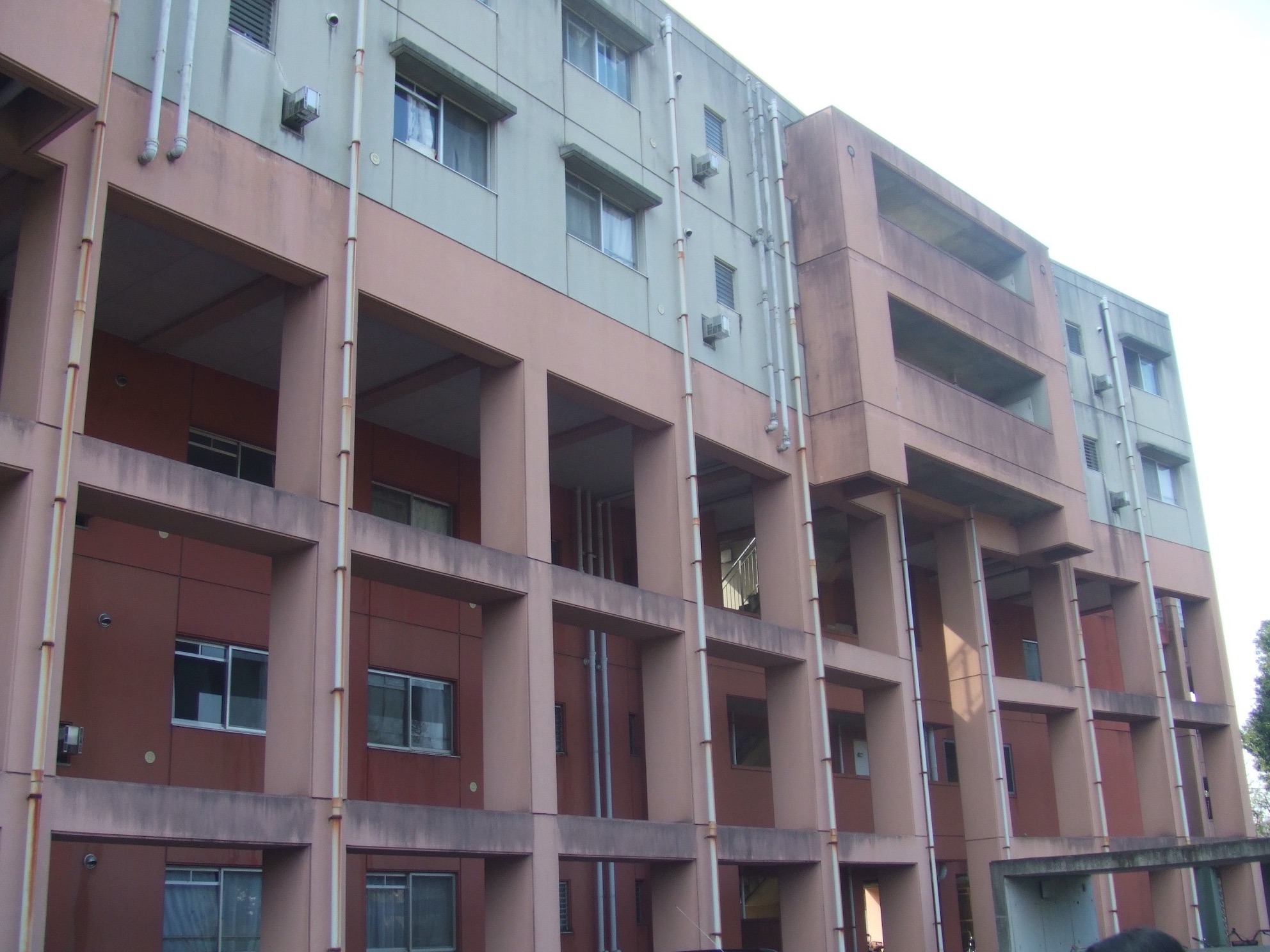
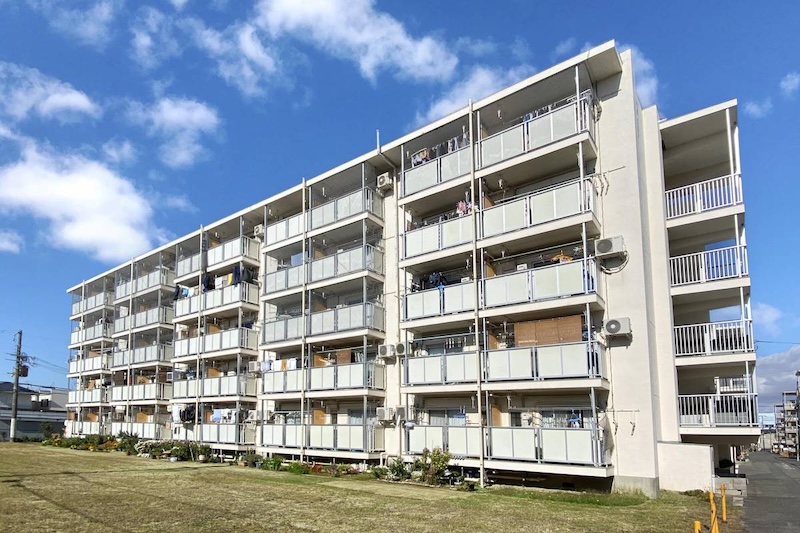
There’s one demographic, however, that lacks AC almost altogether, and mainly for systematic reasons: people who live in public housing. An August 1 report in the Asahi Shimbun told of a 43-year-old woman who lives with her three children in a 3DK apartment run by the Tokyo Metropolitan Government for low income families. The rent and management fees for the apartment come to about ¥30,000 a month, which is half what the woman paid for a private rental apartment before she moved into the prefectural building 3 years ago. At the time, the apartment did not have an air conditioner, so she bought one for ¥70,000, including installation, at a discount appliance shop. Her apartment is situated on the corner of the 6th floor and gets a lot of sun, so nights can still be intolerable due to poor air circulation. The woman and her 13-year-old daughter share a six-mat room, leaving her two sons, one 19 years old, the other 17 years old, with a room each to themselves, but in the summer they all sleep in the same room because that’s the only one with AC, which isn’t strong enough to cool the whole apartment. Consequently, the sleeping arrangements in the summer are close and uncomfortable. During the day, they place electric fans strategically throughout the hallways to distribute the cool air, but it doesn’t work very well. The woman would like to buy a second AC, but there’s no place to put it. Her room is next to the veranda, so the fan unit can be placed there, but there are no other places in the apartment where a second AC could be installed. The building, which is 40 years old, was not designed with AC in mind. The electrical current in each apartment is set at 20 amperes, though it can be increased to 30, which still would not be enough. If the AC is on, she has to  be careful not to use too many other appliances, otherwise the circuit breaker will trip. And, of course, her electric bills are high. Public housing is notorious for having bad insulation, and her salary as a caregiver is only ¥220,000 a month. Besides, if and when she leaves the apartment, she is required to leave it as she found it, which means she will have to remove the AC and take it with her. 

There are 2.16 million public housing units in Japan, all run by local governments. The central government requires that all have kitchens, flush toilets, wash rooms, and bath rooms. AC is not required. The land ministry says that 60 percent of public housing units are more than 30 years old and 60 percent contain a head-of-household over 60. The Tokyo Metro government only provides 260,000 units (individual wards may run their own low-income public housing), 79,000 of which were built before 1970. None of the public housing in Tokyo comes with AC, though newer buildings have features that make it possible to install AC units. When Asahi contacted the relevant prefectural authorities, they said that older buildings are regularly renovated but not in terms of improving insulation or making it possible to install AC units. One staff member said, “We formulate design policies in terms of cost effectiveness.” 

A professor of environmental engineering told Asahi that all public housing in Japan is concrete-based and poorly insulated compared to wooden buildings. That means that temperatures don’t drop appreciably at night. Even if a unit in such a building has AC, it’s possible that the interiors will remain above 30 degrees. This is particularly worrisome for elderly tenants, who are more susceptible to heat stroke. Top floors are particularly dangerous since rooms sit right under the roof. According to medical statistics, about half the people who suffer from heat stroke and live on the first floor of a collective housing facility end up hospitalized while 90 percent of heat stroke patients from top floors are hospitalized. 

Another professor who studies low income households says that even when they have AC installed, elderly people in public housing often don’t use it because of the electricity costs. He cited statistics showing that most of the people hospitalized in Tokyo for heat stroke were old people who simply did not turn on their AC, especially this summer after electrical utilities nationwide raised prices considerably. He has demanded for years that local governments not only improve insulation in public housing, but that they install air conditioners in all apartments, because the problem of heat stroke among lower income people is only going to get worse from now on.

Resort resources

One of the resort condos in Yuzawa offering short-term stays

Last month, Gendai Business published an interesting article about the glut of empty resort condominiums throughout Japan and what some local communities and businesses are doing about them. This blog has addressed the “resort mansion” problem, which stemmed from a post-bubble construction boom of vacation properties. Many of these condos were built near popular ski resorts, since there was also a ski boom in the 80s and 90s that eventually went bust. Consequently, the owners of these condos stopped coming to ski and didn’t keep up their properties. Market values plummeted, sometimes, as Gendai points out, to as little as ¥100,000 for a standard 50-square meter unit. The reason for the cheap price was more than just low demand. Resort condos have higher monthly management and repair fees owing to extra facilities, like large, collective bathing facilities and ski lockers. Absentee owners were not paying these fees and anyone who bought the units were expected to pay them retroactively. There were also property taxes that local governments were keen to recoup.

Gendai’s take on the matter is optimistic, starting with the idea that, as inbound tourist traffic goes back to pre-COVID levels and the yen remains low vis-a-vis the dollar and other currencies, foreigners have become interested in these properties. The novel inference in the article is that most of the interested parties are rich Southeast Asians for whom snow is a fascinating draw. The reporter states that while “there are high mountains” in other Asian countries, “the snow doesn’t normally accummulate,” meaning that a sport like skiing isn’t feasible in these countries. Even China had to manufacture snow when it hosted the Winter Olympics. So if Asians do partake of skiing and they have money, Japan is a much more convenient destination, because ski resorts are eash to access from Tokyo or any other city with an international airport. 

The reporter may be stressing this point beyond its natural flexibility, but what he wants to show is why one ski resort town, Yuzawa in Niigata prefecture, is seeing a Renaissance in its property market. Yuzawa is an hour and 20 minutes by Shinkansen from Tokyo; 3 hours if you take a highway bus. And while some ski resorts in Japan have seen less snow in recent years, Yuzawa still has enough of the stuff to maintain its ski and snowboard cred. It may not be Niseko in Hokkaido, which is treasured by world ski freaks for its natural powder, but Niseko is also expensive and more remote and, besides, it seems to be overrun with Australians during the high ski season. So Yuzawa is accessible and affordable to a wider cross section of tourists. Moreover, it has hot springs, which are just the frosting on the cake for Asian travelers. And, in fact, as Gendai points out, this aspect at first made Yuzawa a problem for Asian tourists, since most Japanese tend to think of Yuzawa first as a hot spring destination rather than a ski resort, which didn’t really show up until the late 80s, so there are still some inns in the region that don’t welcome non-Japanese speaking guests. 

But Yuzawa has plenty of resort condos, and local real estate companies, not to mention the local government, are keen to introduce them to foreign buyers. Last February, another business publication, Toyo Keizai, ran an article focusing on the condo market in Yuzawa. Since the end of COVID, prices have almost doubled, which may not necessarily say much since, as Gendai pointed out, some units were going for as little as ¥100,000. But Toyo Keizai claims that the average price for a resort condo in Yuzawa now is more than ¥2 million. 

Read More

Dead reckonings

Typical wooden apartment building

An article in the July 1 Asahi Shimbun reported on a police investigation of a staff member of Tokyo’s Edogawa Ward’s public welfare department who was suspected of “abandoning a dead body.” Usually, when police make such an accusation, it’s a preliminary stop toward a charge of murder, but this case is very different. 

According to the article, a 65-year-old man died in his Edogawa home in January. A caregiver who regularly visited the man discovered the body on January 10 and called a physician at the clinic that dispatched the caregiver. The doctor went to the residence and confimed that the man was dead and, following official procedures, reported the death to the relevant case worker in the ward’s welfare department, since the deceased had been receiving public assistance. 

But while the case worker later acknowledged that he had received the doctor’s report, apparently he did nothing. On March 27, an agent of a rental supply organization visited the deceased’s home to pick up some equipment that had been lent to the man through the welfare program and found that the body was still there two-and-a-half months after being reported. In trying to explain this lapse in procedure, the case worker said they had been overwhelmed with work and had simply kept putting off the matter of the dead body. It should be noted, however, that this worker wasn’t the only person aware that the man had died. After receiving the doctor’s report, the case worker immediately informed their superior about the death so that the ward would stop its public assistance to the man. Following an investigation, the police said they sent their file to prosecutors, but apparently the case worker wasn’t charged. When contacted by the Asahi, the head of the ward’s welfare department said they purposely did not publicize the incident and would have nothing to say until a news conference scheduled for July 3, which is today. 

According to subsequent media reports the deceased had been renting, which makes the story even more bizarre: When they didn’t receive a monthly payment, why didn’t the landlord check on the tenant?

In any case, the story will likely only reinforce an unfortunate trend that has been on the rise for several decades and which was described in a June 16 post on the Daily Spa!. Landlords have become increasingly averse to renting to people “over 60” because they are afraid that elderly tenants will die on the premises, thus causing them considerable expense in preparing the residence to be reoccupied.

The main thrust of the article is that more and more seniors are having difficulties finding rental properties that will accept them. Many real estate agents for rental properties don’t even allow elderly people through the front door because it’s too much trouble. Spa! says that the general image in Japan is that the elderly are all homeowners, but, in fact, according to a government white paper, one-in-three people living in single-person households who are over 65 do not own the homes they live in. And this portion is increasing. As one agent who specializes in helping senior renters find dwellings told the magazine, most conventional realtors won’t even talk to elderly renters “no matter how much money they have.” The agent said that according to his company’s in-house survey one out of four elderly people say they’ve been rejected for rental housing as least once, and of these 13 percent said they’ve been rejected more than 5 times. 

Read More

Honeymoon in the danchi

The administration of Prime Minister Fumio Kishida is determined to increase the birth rate—last year it fell below 800,000, 10 years earlier than expected—by any means necessary, even going so far as to suggest raising the consumption tax in order to fund programs that would encourage young people to marry and procreate, which sounds not only desperate but eminently wrong-headed. Another head-scratcher is the proposal to forgive student loans to either spouse or both spouses in a marriage when they produce a child, an idea that opposition lawmakers have found risible for a variety of reasons.

Koichi Hagiuda, the ruling Liberal Democratic Party’s policy chief, has another idea: Give young couples, regardless of income, priority to enter low-rent public housing. Tokyo Shimbun reports that Hagiuda made the suggestion at a party meeting in Saitama, saying that the first order of business for newleyweds is finding a place to live. The thing is, the central government doesn’t manage housing for the general public. Public housing in Japan is only maintained at the prefectural and municipal levels, so the government would have to get them to agree to the proposal. 

The party’s secretary-general, Toshimitsu Motegi, elaborated on the idea by saying that the usual upper income limitations would have to be waived for the proposal to work. He also said that initial estimates indicate such a program would cost about ¥150 billion, most of which would be spent on renovations of public housing. On January 30, Hagiuda explained in the Diet that the current income qualification for public housing applicants—household monthly income should not exceed ¥158,000—would have to be changed for newlyweds, but in any case he said it shouldn’t be a problem since there are 200,000 vacant public housing units nationwide.

Read More

Condos can be akiya, too

Reviewing our posts on this blog for the past year or so, we noticed that much of our writing is related to akiya, or vacant housing, which has become an increasingly visible problem that the media is finally addressing. However, when we look at the statistics, we notice that akiya are not limited to single-family houses, which is usually how the problem is framed in the press, but, in fact, is mostly comprised of apartments and condominiums. 

The reasons for this lack of coverage may have to do with the fact that the image of apartments is that they are rented out, while the image of akiya is that of abandoned properties, so it’s difficult to imagine an apartment that temporarily does not have a tenant to be permanently vacant. However, condominiums are a different story since they are bought and sold, and for the most part when the press talks about the condo market they only talk about Tokyo, where apartments and condos are still in demand, even used ones.

But we found an article that appeared last spring in the business magazine President that covered vacant condominiums in depth, and, apparently, the situation is as dire as it is for single-family houses, even if the problem isn’t as visible. 

The article quotes a number of experts, including an economics professor, Hiroaki Miyamoto, who says that in ten years one out of every four housing units in Japan will be vacant, and that the majority will be collective housing units, meaning condos or apartments. The main reason will be the lack of funds available to carry out long-term repairs and renovations on older buildings, which, as a result, will fall into disrepair and become not only difficult to sell, but in many cases uninhabitable. 

To the international finance community, Japan is already considered a “pioneer” in the onset of permanently vacant properties, especially after the IMF conducted a study of the phenomenon in 2020. The outcome of the study was that vacant properties bring down property values in the communities where they are, and thus adversely affect regional economies. 

As we’ve noted a number of times, the Japanese government carries out a large-scale survey of the housing and land situation every five years, and according to these surveys the gross number of housing units in Japan continues to increase even as the population has leveled off and started to decrease due to the birth rate. In 2018, the last time a report was released, the number of housing units stood at 62.4 million, while the number of households was 54 million, meaning that there is a 16 percent excess of housing units. 

Until 1963, the number of households in Japan exceeded the number of units, but this ratio reversed in 1968 and ever since the number of units has continually increased in relation to the number of households. 

Moreover, 85.9 percent of households in Japan, or 53. 6 million, contain full-time residents, meaning that 8.79 million units, or 14.1 percent of the total, contain no residents, and almost all of these are defined as “vacant” by the government—8.49 million, or 13.6 percent of all housing units. A property’s “vacant” status depends on how much or often it is used. In that regard, the portion of vacant properties has been increasing since 1988, when the vacancy rate was 9.4 percent. 

President cites the methodology of the National Social Welfare Population Issues Laboratory, which has determined that the number of households in Japan will peak at 54.19 million in 2023, which also happens to be the year when the government releases the results of its latest housing survey. From now on the number of households will drop, and by 2040, the laboratory predicts the number of households will be 50.76 million, or 3.24 million less than it was in 2018. Extrapolating this trend further, the number of akiya will invariably continue to increase at an accelerating rate; that is, unless more properties are demolished.

As it stands, the number of demolished properties is also accelerating. Between 2008 and 2012, the number of homes demolished was 30 percent of the number of new homes that were built. Between 2013 and 2017, this portion increased to 62 percent. Nomura Research used this statistic to predict the vacancy rate for the future. If the 2008-2012 rate of 30 percent is used, the vacancy rate will be 25 percent by 2033 and 31 percent by 2038, but if the tendency shown in the change in the rate through 2017 is used, the vacancy rate will be 18 percent by 2033 and 20.9 percent by 2038. 

So while the vacancy rate will continue to increase, it could slow down if the rate of destruction of superannuated properties increases as well, but that isn’t a given, since new home construction isn’t slowing down appreciably. 

Read More

Til death traps

One of the main themes, if not the central theme, of this blog is that Japanese homes don’t hold their value over time the way they usually do in other developed countries, and while this situation does have a silver lining in that homes are affordable to a larger cross section of people, including young families, in the long run it makes it difficult for retired people to expect much in the way of a return on the investment they made in their home, which is usually the most expensive thing they own by a huge margin. But this feature of Japanese economic life has even broader effects on the quality of life for seniors, as revealed in a June 5 article in the Nihon Keizai Shimbun.

Certainly the main advantage of owning one’s home anywhere is that once the mortgage is paid off no one can kick you out. Regardless of income, a person who owns their home will always have a roof over their head. In Japan, this notion is usually conveyed by referring to the house or condominium as the person’s “final home” in that the person can live there until they die. The theme of the Nikkei article is that even this concept is no longer guaranteed or, at least, not assured in the way that most seniors thought it would be. The main reason is that the cost of renovations for homes has increased by 20 percent over the past ten years on average. This increase, combined with the fact that Japanese people are living longer, makes the possession of homes in Japan more difficult for people on fixed incomes. 

According to a survey conducted by the justice ministry, the home ownership rate of households with two or more members and whose head of household is over 60 is above 90 percent, which is quite an impressive portion and speaks to the success of Japanese housing policy in how it has promoted home ownership over the years. In practical terms, it means the people who live in these households have a “final home” that should remove any economic anxiety from their twilight years, but Nikkei says that isn’t the case. For one thing, standalone houses in Japan tend to need extensive renovation work done on exteriors and roofs every 15 to 30 years, depending on when the house was built—the older the house, the more frequent such renovations are needed, and each time they are carried out they require at least ¥9 million. In the past year alone, costs for renovation have gone up substantially owing to inflation and the world distribution crisis. These costs are not expected to go down.

Read More