Backed up

Where it’s buried

Japan has one of the most extensive and sophisticated sewerage systems in the world. As of 2021, slightly more than 80 percent of the population was served by sewerage systems, an impressive statistic considering that less than 10 percent of the population had access to sewerage in 1960. This increase in coverage is just another indication of how quickly and completely Japan rebuilt and improved its infrastructure after World War II. 

A recent article in Asahi Shimbun, however, reported that this trend may be reversing. According to surveys conducted by the Ministry of Land, Infrastructure, Transport and Tourism, one-third of local governments in Japan have cancelled their plans to extend their sewerage systems to new and existing residential development. Instead, household waste will be processed by on-site septic tanks. 

The reason is obvious: Japan’s population is dropping, and the cost of building and maintaining sewerage systems depends greatly on population density. With fewer people living in a given area, the construction of the new sewerage comprising pipes and treatment facilities cannot be paid off in the long run. 

It’s necessary to note that one-third of local governments does not mean one-third of the population. The local governments of large cities represent much larger populations than local governments of smaller cities and rural areas, and it’s mostly in the suburbs and the countryside where these governments are reviewing and cancelling their sewerage construction plans. But what’s perhaps most significant about the Asahi report is its assertion that some local governments will actually backslide on sewerage, meaning that they will replace existing sewerage systems with individual jokaso (septic tanks). 

Urban-style sewerage systems collect household waste water and night soil in one central location and then treat it before releasing the filtered water back into the environment. Septic tanks, including so-called multipurpose tanks that process waste from toilets and sinks/baths separately, use on-site filters and bacteria before releasing the filtered water as runoff into the ground or rivers. Sewerage is obviously more cost-intensive because it requires long stretches of pipepines and the purchase of land where those pipes are buried. Septic tanks, including those shared by communities, are on-site, meaning they are completely contained within the property of the user. 

The Asahi says that in the 1990s many local governments drew up plans for constructing new sewerage systems based on the assumption that the population would continue to increase. Reality quickly put a damper on those plans. The land ministry found that as of 2014 throughout Japan, local governments had fallen short of their stated plans to extend sewerage systems to their communities by 625,000 hectares, meaning that 625,000 hectares of land that were slated to receive sewerage infrastructure by 2014 had not undergone any construction, or about 34 percent. In fact, as of 2019, 158,000 hectares of land that were initially supposed to receive new sewerage systems instead had those systems replaced with septic tanks. And between 2019 and 2025, at least 80,000 hectares of land slated for sewerage were changed to septic tanks. For the record, the prefectures who altered their plans the most were Chiba (29,646 hectares), Ibaraki (26,726), and Fukushima (15,869).

Moreover, some local governments actually stopped using existing sewerage systems due to their inability to keep up with maintenance and improvement costs. There just weren’t enough customers any more. The article uses the example of Sanmu in eastern Chiba Prefecture, which had devised plans for new sewerage in 1995 when it was still designated as a town before consolidating with neighboring municipalities to become a city. In 1995, the population was still on the rise, but by 2015 it was decreasing, so the city revised its plans when it realized that even if it carried out the construction according to plan, it would only cover 7 percent of the city’s total population. Projections said that the city would have to spend ¥1.3 billion over the next 40 years on maintenance of this new construction. There was no way that fees from such a small number of households could pay for it, so the plan was cancelled. Around the same time, 9 other local governments in Chiba cancelled their sewerage construction plans. At present, there are 18 municipalities in the prefecture that still do not have any sewerage systems and obviously never will, regardless of whether they once made plans to construct them. 

It should be noted that the central government subsidizes sewerage construction, and the land ministry itself, having taken note of the population decrease, has encouraged local governments to abandon their sewerage construction plans in favor of septic tanks. This past summer alone, 97 local governments told the ministry that they would change their plans in accordance with the ministry’s request. A representative of the general affairs ministry in charge of public waterworks told the Asahi that this change in policy of the government was mainly implemented in the face of looming infrastructure repairs, which will cost a lot of money in coming years. It would be better if local governments with older sewerage systems that are no longer financially feasible replace them with septic tanks.

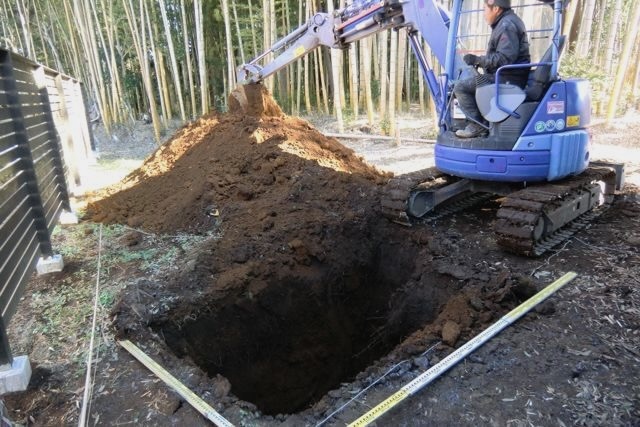
One of the reasons we are reporting this news is that we use a multi-purpose septic tank, even though neighborhoods less than half a kilometer from our home are all hooked up to the city sewerage system. When we had our house built in 2013, we learned that the city had no plans to extend sewerage to our area, though we haven’t been able to find out if there were any plans in the past to extend sewerage to our area. 

Still, we wanted to compare the cost per household between sewerage and septic by comparing bills we received when we were renting an apartment in the more urban portion of our city in the past and the bills we receive for maintaining our septic tank now. When we were in the city we (two people) paid a little more than ¥3,000 every two months for both water and sewerage, or about ¥18,000 a year. That was in 2013. Now we pay about ¥15,000 a year for a worker to inspect our septic tank as required by local law every three months. Since we also do not have access to municipal waterworks, we use well water, for which we pay nothing, so in a sense the septic tank is more expensive than sewerage, but that doesn’t take into account initial costs. We had to, of course, sink a septic tank and dig a well, but our local government, at the time, subsidized the cost of the septic tank since infrastructure wasn’t available in our (literal) neck of the woods; and while we had to pay several hundred thousand yen to dig a well, if we had access to the local waterworks we would have had to pay an initial cost of about ¥300,000 just to have it turned on, so to speak. In the end, the difference wasn’t that much, and in the long run, we’re probably paying less, though, we have to admit, well water around here isn’t that great. 

A pox on your tax

The current income tax deduction on housing loans will expire at the end of this year, but, as in the past, it will probably be renewed in some form. The tax deduction was first implemented in 1972 and has been revised repeatedly ever since. The current deduction, revised in 2022, cut the rate from 1.0 to 0.7 percent of the balance of the loan in a given year for up to 13 years. Originally, the deduction was 1 percent of the entire price of the house for up to 3 years, and has fluctuated rather liberally over time, depending on how desperately the government wanted to use home sales as an economic stimulus measure. 

That’s why the reason the deduction will likely be renewed again isn’t just that it’s become an expected feature of home ownership. On April 21, the welfare ministry announced the results of a survey of people who bought homes between 2022 and 2025. Twenty-one percent of the 8,400 respondents said that if there had been no tax deduction on housing loans they wouldn’t have purchased a home. Kyodo says that this survey will be used to decide on whether to extend the deduction after this year, with the implication that it will be. Among respondents, only 20 percent said that the housing loan tax deduction had “no influence” over their decision to buy a home. 

Higher income buyers have lost something over time. Currently, anyone making more than ¥20 million a year is ineligible for the deduction, though the ceiling used to be ¥30 million. The carryover has also been decreased. If the amount of the tax deduction turns out to be more than the income tax owed the government, the excess can be applied to local taxes, but only up to ¥97,500. The maximum used to be ¥136,500. 

The housing loan tax deduction has always been controversial, and not just in Japan, because it’s basically discriminatory. Why should people who can afford to buy a home get a special break on their taxes? The ostensible reason is to promote home ownership, which is generally assumed to be a good thing for society, but it ignores the situation of renters. Landlords in Japan do not get a deduction when they buy property because it only applies to people who purchase a home they will live in, but landlords undoubtedly pass the cost of all the taxes they pay on to their tenants, so landlords always have a means of handling tax issues. They don’t need a deduction. The only purpose of the deduction for homeowners is to encourage sales, which helps the real estate and construction industries, not to mention the banks that provide the housing loans. 

Read More

Not buying it

The home ownership rate in Japan has stayed around 60 percent for the past five decades, a bit less than the world average. However, according to the Paris-based global market research company, IPSOS, that rate may be dropping in the near future. 

Recently, IPSOS conducted a survey of 22,000 people in 30 countries and found that the “desire” for home ownership was the lowest in Japan. About 42 percent of the Japanese people surveyed who do not presently own homes said they were planning to buy a home in the future. The average among the 30 countries was 71 percent, with the U.S. at 68 percent and Germany just above Japan at 48 percent. 

Of the reasons given for not planning to buy a home, the most common among Japanese respondents was high taxes, mentioned by 52 percent. The world average of people saying that high taxes was a reason for not buying a home was 28 percent. Italy was closest to Japan at 42 percent. The second most cited disincentive in Japan was the high price of property. 

Broken down further, 68 percent of the Japanese respondents said they wanted to buy a home but didn’t think they would be able to afford it. About the same percentage of Germans and Australians said the same thing. Of course, the real question here is how many people do not even want to buy a home, which would tell us more about people’s attitude toward investing for the future. As we’ve said in this blog many times, outside of the main big cities, one’s home is not an investment in terms of getting anything back from it in the long run, so while home ownership does have advantages over renting, mainly that it gives one a guaranteed place to live, in terms of money spent there may not be enough of a difference, something more people may be realizing these days. 

Coincidentally or not, the land ministry also conducted a survey in late 2023 whose results were reported in the housing magazine Suumo in February. The ministry surveyed 72,000 heads of household nationwide covering all ages and incomes, with 72.4 percent of respondents owners of their homes and 27.6 percent renters. 

In terms of satisfaction, 79 percent of the homeowners said they were satisfied with their present situation, while 74 percent of renters said the same thing. However, when asked about the future, the results were startling. To the question, “If you were to move again, which would you prefer: owning or renting?” Only 33 percent of both categories said they wanted to own while 49 percent said they wanted to rent. According to Suumo, this is a huge change since 2003, when the land ministry conducted a similar survey. Almost all the respondents in that survey said they preferred to own. Broken down a bit further, most of the owners and renters who said they wanted to own their next abode said they would prefer a new home, but there was a notable increase over previous surveys in respondents who said they would be fine buying a used home. 

One reason for the presumed high portion of homeowners who said they would rent if they moved is the fact that almost half the heads-of-household surveyed were over 64, meaning they have likely lived in the same place their entire homeowning lives and probably think they don’t need to purchase another one in their old age. One stone cold statistic that’s always been true of Japanese housing is that the older the cohort, the higher the home ownership rate, so the real question is, how do today’s home ownership rates among people still in their so-called productive years compare to those in the past? The IPSOS survey would seem to indicate that it’s not as much and will continue to decline. 

Tomorrow never knows

There’s a certain information lag that comes with media reporting on larger social phenomena. The whole akiya/vacant housing issue has become big news in Japan over the last decade, but it was a fact of Japanese life well before that. This blog, in fact, which began in 2009, was initially conceived as a means of explaining our belief that Japan would eventually have to face a surplus of housing due to its policy of building and selling new homes without any regard for existing and future housing stock. Akiya had been on the increase well before the media started paying attention, and just now the press is beginning to report on other effects of oversupply, but in the context of the demographic crisis, meaning depopulation. 

A recent story in Gendai Business covered a bestseller by Masashi Kawai called Mirai no Nenpyo (Chronology of the Future), which puts into perspective how depopulation will affect the economy with respect to four fields: housing, medical care, local government, and public safety. In terms of housing, Kawai says the main immediate effect will be that houses will become difficult to sell, a situation that is already quite apparent in certain rural suburban areas of Japan. However, Kawai is not just talking about existing or used housing, which has been difficult to sell for a while now, but also new housing. That’s because the prime demographic for new house sales, people in their 30s with families, is shrinking in size so significantly. Statistics can be misleading. Overall, land value has increased in Japan, as well as the demand for new housing, but these two circumstances have been spurred by seniors with money to burn. They buy expensive condominiums in city centers as a means of reducing the inheritance tax burden for their heirs; or these high-end properties are being bought as investments because the buyers believe that real estate is the most stable place to park their money. Consequently, the market as a whole seems primed for growth, but it’s lopsided. 

Tomorrow will bring what could be termed the 30-30-30 problem: In 30 years the number of people in their 30s—the prime demographic for new house sales—will have shrunk 30 percent compared to right now. This cohort is already marrying later in life than their parents did, which means if they do buy a home it might not be until they are in their 40s or even later. Right now, the common time frame for housing loans is 30 years, but as the home-buying layer of the population ages, the terms for most mortgages may shorten to 20-25 years, which means the people seeking these loans will likely be faced with higher interest rates and thus be looking for less expensive housing.

Read More

Counter intuitive

Is it or isn’t it?

Last week the Ministry of Internal Affairs and Communications (MIC) finally released its latest survey of the Japanese housing situation. We say “finally” because the survey is conducted every five years and the last one came out in 2018, so we’d been waiting for it since last fall. The big news is that the number of vacant houses, or akiya, has grown to more than 9 million, or 13 percent of all homes in Japan, a statistic that’s earned headlines all over the world, though the last time the survey was published the number was already way over 8 million, so it’s not as if it’s a surprise. Still, given the global housing situation vis-a-vis inflation and other economic pressures, it’s a mighty powerful indicator of something that few people have explained satisfactorily. We think we know the reason, and we’ve discussed it for years on this blog, but that’s not our concern today. What we want to talk about is the real mystery surrounding the survey, which is how it’s conducted.

For the most part, nobody questions the MIC’s methodology, but given the sheer scale of the akiya situation, one would naturally wonder how the field staff who carry out the survey could possibly count every single vacant home. And, of course, they can’t, so they use the common statistical technique known as extrapolation, which means inferring the unknown based on the known. Specifically, it means taking a scientifically derived sample of a population and then using those results to draw a conclusion about the larger picture. So the real question is: How do they choose a sample?

In 2016, the real estate investment website, Rakumachi, published an article about how the akiya survey was conducted based on questions it had submitted to the MIC. The first point was how the ministry defined a vacant home, and, as it turns out, it has five categories, which are:

1. “Second homes,” meaning vacation properties that are used only on weekends and/or holidays; no year-round occupancy.

2. “Other” second homes, such as residences that are used only for work purposes and occasional overnight stays.

3. Vacant properties that are for rent, regardless of age.

4. Vacant properties that are listed for sale, new or used.

5. “All others,” including homes owned by people who are not occupying them at the time due to work transfers or extended hospital stays, homes that are being “prepared for demolition or rebuilding,” and homes that are vacant but to which none of the above criteria apply.

We assume that “abandoned homes” (hochi akiya) are included in category 5, and in the latest survey they total 4 million, which is quite substantial. Nevertheless, it also means that most of the residences described in the survey are still in use to some extent, so the term “vacant” needs to be qualified.

When Rakumachi asks how the akiya statistic is estimated, the MIC gives a fairly detailed answer. A vacant home is defined as a residence that is not occupied “on a daily basis,” and an evaluation is reached without necessarily interacting with the owners of the residences in question. The field surveyors “make an effort” to talk to the owner/titleholder of a property several times. But mainly they inspect the exterior of the property and question neighbors or, if the property is collective housing, like an apartment building or a condominium, they try to talk to the manager. They collect all this information for a sample of a given area and, using other information specific to the locality, extrapolate. The MIC stresses that collective housing is more difficult for different reasons, the most obvious one being that field surveyors usually cannot enter the building to interact with residents. 

So already there is guesswork involved in compiling the information that will form the basis for the akiya statistic. In January 2021, Nikkei Business ran a story that questioned this methodology with the headline, “Is the 10 percent vacancy rate in Tokyo true?” Nikkei ran off the most recent vacancy statistics: 8.49 million akiya out of a total of 62.4 million residential units in Japan; more than 800,000 vacant properties in Tokyo out of a housing stock of 7.67 million. The reporter, Takeshi So, wondered about these statistics because he rarely sees what he would describe as an akiya, be it a single-family house or an apartment, in Tokyo. (For what it’s worth, we’ve seen quite a few, but we are sensitive to that sort of thing.) And when So looked carefully at the MIC’s methodology he was struck by one thing, namely the discrepancies between the MIC’s numbers and those reported by local governments. 

Read More

Not what they paid for

In December, the Chiba city office of East Japan Railways (JR East) announced a change in the timetable for the Keiyo Line that would start in March. The Keiyo runs from Tokyo Station parallel to the Tokyo Bay shoreline south to Soga Station in Chiba city. It is the train line that services Tokyo Disneyland and the Makuhari district of Chiba, which is the home of Makuhari Messe, one of the metro area’s biggest exhibition and convention facilities. The reason for the timetable change was the removal of the Commuter Express train, which does not make any stops between Shin Kiba Station in Tokyo and Soga, and which operated twice in the morning and twice in the evening. The Commuter Express would be replaced by local trains, which stop at every station on the line, but several Rapid Express trains would be added during off-peak hours in the daytime. 

According to the transportation-oriented website Impress Watch, the announcement was met with opposition from local governments affected by the Keiyo Line, including Chiba city’s and Chiba Prefecture’s. In addition, the major media covered the matter with an eye as to how the changes would affect commuters, many of whom demanded that JR East reinstate the Commuter Express. As a compromise, the company added two Rapid Express trains to the morning peak and two to the evening peak, which was highly unusual. Once a railway company changes a timetable they almost never change it back, even partially. However, the compromise may not be enough for commuters who rely on the Keiyo Line to get to their jobs in the capital. In fact, many probably bought their homes on the Chiba peninsula because of the Keiyo Commuter Express, which is why many real estate companies and residential housing developers are nervous about the timetable changes. 

JR East told NHK that the number of passengers on the line has decreased by up to 30 percent during peak periods compared to before the pandemic. There are a total of 18 stations on the Keiyo Line, of which 7 are not serviced by the Commuter Express and the Rapid Express. The company thinks that people who live near these stations are inconvenienced by the former express train timetables, and wanted to give them more opportunities to use the line. In addition, local trains have to wait at certain stations along the line for Commuter Express and Rapid Express trains to pass, thus further inconveniencing local train users. Though JR East emphasizes that they’re thinking about local line users, it’s their own bottom line that’s really at issue. Those who use the various express trains to get to work are already locked in as customers, so the strategy of the timetable change is to add passengers by increasing local runs and making them more “efficient” for those passengers. And on paper, at least, the difference in time doesn’t seem that bad. During peak hours, the local train from Soga to Tokyo, and vice versa, takes only 19 more minutes than the Commuter Express. 

Read More

Capital means

One more 2023 story about living in Tokyo, mainly from a Tokyo Shimbun article published on Dec. 14. Counter-intuitively (if you read some of the more recent posts on this blog), statistics show that the number of households with children is rapidly increasing in the city’s 23 wards, and that more than half of these households have annual incomes that exceed ¥10 million. More to the point, between 2017 and 2022, the number of households in the 23 wards where the breadwinner(s) is in their 30s increased by 20 percent, with median income being ¥9.86 million. The main reason for the increase is the improved daycare situation. Remember some years ago when the main story about living in Tokyo was the dire shortage of slots in daycare centers? With the rapid rise of double income households, daycare became a make-or-break consideration for living in the capital, because there weren’t enough services or the services that were available were inconvenient. That problm has all but been solved. According to a 5-year survey conducted by the interior ministry, since 2017 the household income of married couples with children has increased, with couples in their 30s showing the largest increase, and those living in the 23 wards saying their incomes have increased the most. The median income nationwide of households whose breadwinners are in their 30s is now ¥6.86 million, which represents a 13.2 percent increase from 2017 to 2022. However, the increase for the same demographic in the 23 wards was 23.4 percent. 

The main change over time is the predominance of double-income households with kids (as opposed to the derided demographic DINKS: double income with no kids). In the past, single-income households were the norm in the 23 wards, and it has been the availability of convenient daycare in central Tokyo that has attracted more double income households, which, as a block, has lifted the median income level in Tokyo. In 2017, 20 percent of all households nationwide that were waiting for a daycare opening were in Tokyo, accounting for 5,665 children. In 2022 the number of children in Tokyo on waiting lists had dropped to 32. According to one research company, income has increased on average for households with parents in their 30s at a much greater rate than for previous generations, owing to this combination of double incomes and available daycare. But at the same time the cost of living, especially in the 23 wards, has skyrocketed. Young persons with stable employment who desire to live in Tokyo and raise a family find that they are being priced out of their dream and alter their plans accordingly, with ¥10 million being the level that determines their choices. They think that anything less will make having a family in Tokyo impossible. Tokyo Shimbun’s conclusion is that, unless employers “give up their idea of how to compensate their labor” there is no way that the birth rate will ever be increased. This is probably a simplistic way of looking at the issue, but it sounds logical. 

Read More

Putting on heirs, Part 2

On April 27, the government will launch a new system that will allow people to “return” land they own but don’t want to the state. The main reason for this new procedure is that there has been a marked increase in recent years of land whose ownership is not clear. In 2016, a specially appointed research group found that 4.1 million hectares of land in Japan, an area larger than the island of Kyushu, had no clear titleholders. If this trend continues apace, then by 2040 there will be 7.2 million hectares of unclaimed land. The reason for the increase is that it is assumed that as more land-owners die, a good portion will not have heirs to take over that property. Unmanaged land becomes a problem for the authorities in terms of disaster prevention and general administration, which includes appropriating land for public works and other projects. 

There are many reasons why people either abandon property they own or avoid inheriting it from family or relatives. Mostly, it has to do with the cost, including property taxes, of maintaining land and structures that they will never use and can’t sell, especially if they are located in remote areas. Sometimes the property is a rental apartment building that still has a mortgage but no tenants. Sometimes it’s a parent’s home that no one wants to occupy and, again, isn’t sellable for some reason. Then there are forested tracts of land that require management by law, which can be expensive. According to a survey carried out by the land ministry in 2019, 42.3 percent of people who own land or expect to inherit land think that such ownership is a “burden.” This portion goes up when the land is either vacant or zoned for residential use. In addition, 63 percent of unused or vacant land in Japan was inherited by the current owner, a common situation given that land inheritances are taxed at a lower rate than cash inheritances. 

Read More

Condos can be akiya, too

Reviewing our posts on this blog for the past year or so, we noticed that much of our writing is related to akiya, or vacant housing, which has become an increasingly visible problem that the media is finally addressing. However, when we look at the statistics, we notice that akiya are not limited to single-family houses, which is usually how the problem is framed in the press, but, in fact, is mostly comprised of apartments and condominiums. 

The reasons for this lack of coverage may have to do with the fact that the image of apartments is that they are rented out, while the image of akiya is that of abandoned properties, so it’s difficult to imagine an apartment that temporarily does not have a tenant to be permanently vacant. However, condominiums are a different story since they are bought and sold, and for the most part when the press talks about the condo market they only talk about Tokyo, where apartments and condos are still in demand, even used ones.

But we found an article that appeared last spring in the business magazine President that covered vacant condominiums in depth, and, apparently, the situation is as dire as it is for single-family houses, even if the problem isn’t as visible. 

The article quotes a number of experts, including an economics professor, Hiroaki Miyamoto, who says that in ten years one out of every four housing units in Japan will be vacant, and that the majority will be collective housing units, meaning condos or apartments. The main reason will be the lack of funds available to carry out long-term repairs and renovations on older buildings, which, as a result, will fall into disrepair and become not only difficult to sell, but in many cases uninhabitable. 

To the international finance community, Japan is already considered a “pioneer” in the onset of permanently vacant properties, especially after the IMF conducted a study of the phenomenon in 2020. The outcome of the study was that vacant properties bring down property values in the communities where they are, and thus adversely affect regional economies. 

As we’ve noted a number of times, the Japanese government carries out a large-scale survey of the housing and land situation every five years, and according to these surveys the gross number of housing units in Japan continues to increase even as the population has leveled off and started to decrease due to the birth rate. In 2018, the last time a report was released, the number of housing units stood at 62.4 million, while the number of households was 54 million, meaning that there is a 16 percent excess of housing units. 

Until 1963, the number of households in Japan exceeded the number of units, but this ratio reversed in 1968 and ever since the number of units has continually increased in relation to the number of households. 

Moreover, 85.9 percent of households in Japan, or 53. 6 million, contain full-time residents, meaning that 8.79 million units, or 14.1 percent of the total, contain no residents, and almost all of these are defined as “vacant” by the government—8.49 million, or 13.6 percent of all housing units. A property’s “vacant” status depends on how much or often it is used. In that regard, the portion of vacant properties has been increasing since 1988, when the vacancy rate was 9.4 percent. 

President cites the methodology of the National Social Welfare Population Issues Laboratory, which has determined that the number of households in Japan will peak at 54.19 million in 2023, which also happens to be the year when the government releases the results of its latest housing survey. From now on the number of households will drop, and by 2040, the laboratory predicts the number of households will be 50.76 million, or 3.24 million less than it was in 2018. Extrapolating this trend further, the number of akiya will invariably continue to increase at an accelerating rate; that is, unless more properties are demolished.

As it stands, the number of demolished properties is also accelerating. Between 2008 and 2012, the number of homes demolished was 30 percent of the number of new homes that were built. Between 2013 and 2017, this portion increased to 62 percent. Nomura Research used this statistic to predict the vacancy rate for the future. If the 2008-2012 rate of 30 percent is used, the vacancy rate will be 25 percent by 2033 and 31 percent by 2038, but if the tendency shown in the change in the rate through 2017 is used, the vacancy rate will be 18 percent by 2033 and 20.9 percent by 2038. 

So while the vacancy rate will continue to increase, it could slow down if the rate of destruction of superannuated properties increases as well, but that isn’t a given, since new home construction isn’t slowing down appreciably. 

Read More

Planned Obsolescence

Variable interest housing loan campaign from early 2020

With constant talk of a looming worldwide recession, economic news tends to be gloomy, and each country has its own particular problems. Some financial commentators say that Japan’s interest rates remain ridiculously low compared to elsewhere, but no one seems to see it as an issue to fret about. A Nihon Keizai Shimbun article that appeared Nov. 6 tries to examine the matter as it relates to Japan’s overall financial health and the prognosis is not good.

However, the reason for Nikkei’s pessimism is rooted in a larger problem where interest rates play a part: Japan’s over-supply of housing. This blog has covered this topic every which way since it launched in 2009, and none of the conclusions reached by Nikkei are particularly fresh, but as Japan’s population continues to shrink and age they are more relevant than ever and bear repeating.

The main concern of the article is variable interest loans, which account for more than 70 percent of all mortgages in Japan. Variable interest means that the lender has the discretion of changing the interest rate during the period that the borrower pays back the loan, meaning it could go up or down at a designated time. The reason most people take out variable interest loans is that they charge lower rates in the beginning than fixed interest loans do. In Japan, housing loan interest rates are still absurdly low compared to the rest of the developed world. The lowest we could find right now is the 0.289 percent charged by au Jibun Bank, followed by Mizuho’s 0.375-0.675 percent. When people take out variable interest loans starting at these rates, they likely think that even if they go up, it won’t make that much of a difference, but actually it does. According to MFS, a service company that helps customers compare housing loan rates and conditions, a 0.1 point increase in the interest rate would lead to an increase of ¥110 billion in interest debt throughout Japan. In simpler terms, if your variable interest rate rises from 0.5 percent to 1.0 percent, your interest payments will double. 

Such an increase wouldn’t necessarily be a problem if the asset value of the home being financed remained the same or went up, but in Japan, as we’ve said here many times, that isn’t the case. Conventional wisdom says that if your mortgage becomes too much to handle you can refinance the loan using your home as collateral, or sell the house, pay off the loan, and then buy something cheaper with the money left over. But in Japan, depending on how old the house is, it may be difficult to sell it for the amount needed to pay off a loan, which means the owner is at risk of going bankrupt if their personal financial situation changes for the worse due to loss of income, sudden severe illness, or whatever.

Read More