Number 1 Shimbun, Aug. 2024
Here is an article we wrote for the Foreign Correspondents Club of Japan’s Number 1 Shimbun about the financial reality behind the huge akiya (vacant home) problem in Japan, which is mostly about inheritance.
Here is an article we wrote for the Foreign Correspondents Club of Japan’s Number 1 Shimbun about the financial reality behind the huge akiya (vacant home) problem in Japan, which is mostly about inheritance.

The most perplexing part of writing about housing in Japan is the mass media’s fixation on Tokyo. As we’ve said in this blog many times before, Tokyo is distinct from the rest of Japan when it comes to real estate, and while trends in the capital can often be extrapolated to cover Japan as a whole, many specific aspects don’t apply, the most obvious one being that people who own or are looking to buy property in Tokyo can expect at least some return on their investment, if not always an actual profit; whereas those who live in the rest of Japan, not counting certain regional urban centers, cannot. Even the akiya (vacant housing) probem is different in Tokyo. There are akiya there—quite a few, in fact—but they have not been completely abandoned, which is often the case in the suburbs and the countryside. Sometimes their owners are just waiting for the right opportunity to sell and sometimes there are financial obstacles involved, such as a failure to pay property taxes or inheritance issues. But the land will always be worth something, and that isn’t necessarily true elsewhere.
Consequently, the big real estate news in recent months has been the skyrocketing value of Tokyo real estate, in particular, that of new condominiums. The average price of a condominium in the 23 wards has now breached the ¥100 million mark, thanks mainly to the fact that brand new condos at the high end of the price spectrum sell out almost immediately. According to the land ministry, if the average price index were set at 100 in 2010 for condos throughout Tokyo prefecture, it would be 190.1 as of April of this year. In contrast, new house prices in Tokyo would only be 125.6 as of April 2023. The main accelerant is the rash of ultra-luxury apartments that have gone on sale in the central wards. The average price of a condo in the newly opened 65-story Azubadai Hills is ¥2 billion, with the top price reaching ¥20 billion. And they’ve all been sold. According to one real estate research company, in July, 1,542 newly built condos went on sale in the 23 wards. The average price was ¥134 million, and only 20 percent of them could be had for less than ¥70 million. Moreover, 93 percent of the units priced above ¥100 million have been sold, but that’s true of only 64 percent of the units priced between ¥80 and ¥100 million.
Tokyo real estate values have always been supported by people of means, but it should be noted that the average income nationwide has not increased at all in the last 20 years. In fact, it’s now going down. The tax agency reported that the average income was ¥4.61 million in 2020. The following year it dropped to ¥4.43 million. This means the real estate gap in Tokyo is getting wider all the time, and pretty soon only very wealthy people will be able to live in the center of the city.
This intelligence is certainly newsworthy, but the amount of obsessive detail that has gone into the story in the mass media has precluded what such economic shifts mean for the rest of us who don’t live in Tokyo and don’t make even the average income cited. There is very little. One example of this kind of reporting is a Yahoo! News special report posted Nov. 4 about the Tokyo condo boom and how hard it has been on two-income households that make less than ¥15 million a year. It is not a schadenfreude-fueled piece, but rather a serious study of how the condo boom has adversely affected the fortunes of those who get by at the lower end of the upper middle class.
Read MoreHere is a link to our November column in the FCCJ’s Number 1 Shimbun, which is about how people without cars are finding it more and more difficult to access transportation options in Japan.
Everyday we read about advances being made in the field of renewable energy, in terms of both technology and commercial viability, so much so that it is seriously disappointing to also read that so many people in the developed world still rely heavily on fossil fuels, not to mention nuclear power, whose increasing acceptance as a solution to global warming by parties that used to dismiss it demands more scrutiny. The gripes against renewables remain much the same as they’ve ever been: limited access due to natural phenomena, poor infrastructure, corporate laziness and/or impacted interests.
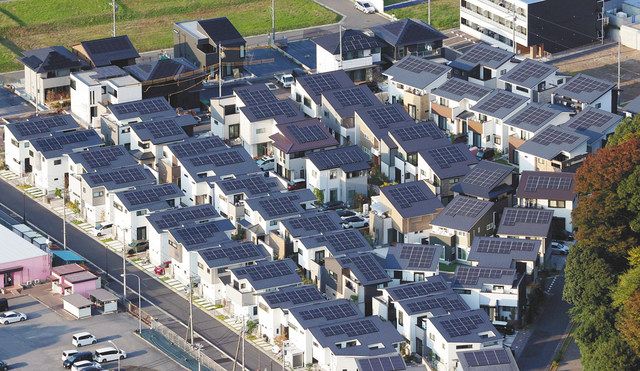
In the end, the problems facing renewables come down mainly to availability and their relationship to what we’ve come to call the grid. The utopian ideal for residences is for every home or apartment building to have its own solar system that would be supplemented by storage batteries or connections to the grid that itself would be powered by renewable energy sources, and a new community in Saitama Prefecture has come about as close to this ideal as we’ve yet seen in Japan.
An article in the Nov. 26 Tokyo Shimbun describes an experimental community in Midori Ward, Saitama City, which is being managed by the “new” energy company Looop. At present, the housing development contains 51 tightly packed single-family homes, each with its own rooftop solar system connected to a grid that serves only this community. The first thing that struck me upon reading the article was that Looop sees it as a profit-making endeavor. The residents do not get free electricity the way many homeowners with unique solar systems do. They pay Looop for the energy they need.
Consequently, the advantage, at least economically, isn’t immediately apparent, so Tokyo Shimbun gives an example of how one household uses the system. A 35-year-old man, husband and father, gets up in the morning and takes his three kids to daycare and school. He then returns home and rinses the breakfast dishes, after which he asks the AI service Alexa to boot up the special tablet and access the power table, which predicts, based on weather forecasts, the day’s solar energy collection potential and displays the resulting usage in units of ¥5 per hour. The minimum cost of the electricity is ¥20 for 1 kw/hour. He then consults the graph to decide when is the best time to run the dishwasher, the appliance that uses the most energy.
Read More
In this blog we often write about how Japanese houses lose their value quickly and become money pits, but we’re usually talking about housing tract structures and prefab or manufactured homes. Recently, however, there was a minor celebrity story in the news that illustrated how this phenomenon even applies to what many would consider legacy housing, meaning quality homes that were built to last multiple generations.
An article that appeared in the Mainicishi Shimbun July 16 told the tale of enduring TV talent Akiko Matsumoto and her difficulties in maintaining the family home, which is located in the mountainous part of Takamatsu City on the island of Shikoku. Matsumoto’s father, who worked for a construction company, had the house built at a cost of ¥30 million in 1972 when she was 6 years old. Though the price included the land, which was located on the side of a hill with a breathtaking view of both the sea and the city of Takamatsu, ¥30 million was a lot in those days. The one-story house was custom built using expensive Japanese cypress and the carpenters were miyadaiku, meaning craftsman skilled in the art of shrine construction, which does not use any nails but instead incorporates special joinery technology. From the description in the newspaper it was a magnificent traditional style Japanese house, not quite a kominka but of the same pedigree.
Such a house is meant to be handed down to one’s children, but Matsumoto’s brother, who is 10 years older, moved to Tokyo for his work 3 years after the house was completed. Matsumoto herself left Takamatsu after she graduated from junior high school to seek her fame and fortune in the capital as a singer, and initially met with some success in that regard. She made her idol debut in 1983 at the age of 17. However, there was too much competition at the time and eventually her management started selling her as a variety show guest because of her sense of humor and knack for celebrity impersonations. She became an emcee in her own right during the initial variety show boom of the 90s and made a lot of money.
Read MoreIn light of yesterday’s U.S. Supreme Court decision to allow individual states to outlaw abortion, we are here posting an article we wrote about Japanese abortion practices in 2012 in our money blog for The Japan Times. Though the article is still on the newspaper’s website, it seems to be behind the paywall and not necessarily in its original complete form. Of course, some of the information contained herein have changed in the past decade, especially with regard to contraception and non-surgical forms of pregnancy termination. We plan to write a new article about abortion in Japan in the coming weeks, but, essentially, the legal and financial matters mentioned below are still in place.
Contrary to what most people believe, abortion in Japan is not legal. The reason abortions are performed freely in Japan–officially about 210,000 in 2010, though there certainly were more–is due to amendments to the daitaizai (illegal abortion) law. These amendments, implemented shortly after World War II, allow for a pregnant woman to abort her child if the pregnancy threatens her life or health, or if the woman is financially unable to raise the child. It is assumed, for legal purposes, that the vast majority of women who undergo abortions do so for economic reasons. However, since there is no real provision for having women state her reasons when seeking an abortion, and no woman in Japan has been prosecuted for aborting a fetus since World War II, the procedure is considered effectively legal. It is also quite expensive. Unless the abortion is being carried out for health reasons, national insurance will not cover it. This situation has lead to a paradox: Most women in Japan who seek abortions ostensibly do so because of financial hardship, but are nevertheless forced to pay a great deal of money to have those abortions performed.
According to our own Internet survey of gynecology services and comments on various blogs and websites, the cost of an abortion up to the twelfth week of pregnancy ranges from ¥80,000 to ¥150,000, which is only the cost of the procedure and does not include consultation fees and medication. However, after the twelfth week of pregnancy, the cost increases considerably. Abortions performed between the twelfth and 22nd week of pregnancy cost between ¥300,000 and ¥500,000. Also, if the patient suffers from a chronic condition that could complicate the procedure, such as asthma, she is required to undergo the procedure at a general clinic, which tends to be more expensive than a women’s clinic or a gynecology office. Of course, if a physician concludes that the pregnancy threatens the woman’s life or health, insurance can be used for the abortion, and if the cost of the operation goes above a certain level, she can even receive a refund for any money she pays out of pocket. Even if the cost does not rise above that designated level, if she files an income tax return she can deduct the cost of her abortion on her return, including money she paid for sanitary napkins and even the taxi fare to the clinic. But this is only if the procedure was done for health reasons. Other costs that apply but usually aren’t mentioned have to do with the aborted fetus. If an abortion (or miscarriage) takes place after the eleventh week of pregnance, the attending physician has to fill out a death report that the mother files at the local city office. She then has to pay for cremation. There are also optional costs for mizuko kuyo, or memorial services for aborted babies, which start at about ¥40,000.
The high cost of pregnancy termination figured into a recent survey carried out by the Asahi Shimbun, which sent questionnaires to 932 medical institutions that offer abortions, of which 343 responded. The two most common methods for surgical abortions are suction and D&C (dilation and curettage). The former method literally vacuums the fetus out of the uterus. With the latter method (soha-ho), the doctor cuts the fetus into pieces and scrapes the pieces out through the cervix. According to the Asahi article, suction is the preferred method in most developed countries, while in Japan most gynecologists use the D&C method. Of the survey respondents, 11 percent said they offer only suction, 35 percent D&C, and 48 percent both. In 2003 the World Health Organization released guidelines for “safe abortions” that recommended either suction or the so-called abortion pill (RU-486 or mifepristone). D&C was recommended during the early stages of pregnancy only when the other two methods were not available. The article also said that the American Centers for Disease Control has stated that D&C results in 2 to 3 times more serious side effects than the suction method and that used properly the abortion pill is perhaps the safest method.
The abortion pill is available in most developed countries but not Japan, and the Asahi article implies that there is little chance of it being approved in the near future. Though the pill is expensive–in the U.S., it’s about $500–it is still cheaper than a surgical abortion. There is no indication in the article as to the relative costs of the two surgical methods, but the writer says the reason for the preference for D&C in Japan is that “most abortions are performed by older doctors who prefer to use the method they’re accustomed to.” One gynecologist quoted in the article says that “Japanese doctors” prefer D&C because “they are more skillfull with their hands.” The Japan Gynecological Academy reported only 21 “accidents” related to abortion procedures in 2010, but this figure is not reliable since most abortions are not covered by insurance and so reporting is not thorough.
We contacted the director of a women’s clinic in Tokyo to ask about the Asahi article. The director answered on the condition that we not use her name or the name of the clinic, and she took issue with almost everything the article stated. The WHO recommendations were misrepresented, she said, since they were mainly targeted at developing countries, many of which do not permit abortion. In these countries the suction method is preferable because it is easier. Doctors in those countries may not possess the skills necessary for a D&C, which the director says is a more efficient method of abortion when carried out properly. She also believes D&C is safer. As to whether one method is less expensive than another, she says they’re about the same in Japan, but in any case since they aren’t covered by insurance each institution sets its own price for abortion procedures. She offered no opinion on the abortion pill and whether the government would ever approve it, but she did imply that the risks were underappreciated. If the government ever did approve its use she believed it would be very expensive since pharmaceutical companies would be free to set a high price, citing the cost of so-called emergency contraception pills in Japan as evidence. The cheaper pills cost ¥5,000 for two, while the more expensive ones (less side effects) are ¥15,000 for two. She said gynecologists remain “astonished” at these prices. In the U.S., they cost between $10 and $70.
It should be noted that the number of abortions continues to drop every year (during the 1950s the number averaged a million a year) thanks to the introduction of the low dose birth control pill more than a decade ago, even though the health ministry reports that in 2009 only 3 percent of women used it as a contraception method. The cost of using the pill in Japan runs about ¥3,000 a month and also is not covered by insurance if used to prevent pregnancy.
More talk about morido, and references to lack of forest management in Japan.
The following article was written by Masako for the July-September 1996 issue of the English-language Japan Quarterly, which is no longer published. We are posting it here because we think it offers some useful background for the never-ending debate over whether Japanese married couples should be allowed to use separate surnames for legal functions. The article is about the family registration system, the koseki, and offers not only a brief history of the document, but a summary of its use in a practical sense. Since the article was published, certain changes have taken place in the Civil Code, and we have added updates to the story where they apply. These updates are provided in brackets. However, the article itself is here recreated exactly as it appeared in 1996, so that readers can get some sense of how much progress has been made. For the most part, not much; and as Masako implies throughout the piece, a lot of the process surrounding changes made in the koseki depends on the individual civil servant who carries it out at the counter. Consequently, some of the matters explained here that were contentious at the time have become less so due to a looser attitude on the part of front-line officials; but, in theory, the koseki hasn’t changed very much since 1996, and the surname issue, which is directly linked to the bureaucratic primacy of the koseki, is just as contentious now as it was when the article was written, if not more so. For a detailed and very readable discussion of the legal aspects of the koseki, we recommend the 2016 series that Colin P.A. Jones wrote for The Japan Times. We should also mention that Sato Bunmei, who talked to Masako at length for this article and was probably the most knowledgeable person at the time about the koseki, has since died.
Read MoreIn this week’s Media Mix column in the Japan Times, we wrote about mortgage tax breaks and rent relief measures implemented by the government to counteract the effects of the pandemic. We also wrote an addendum to the column.
About a year ago, many people in our part of Chiba Prefecture were still struggling with loss of electricity after two typhoons plowed through the peninsula in rapid succession. Our house was lucky and only lost power intermittently for short periods. Not far from where we live, however, there were some households who didn’t have power for more than a month, and the local authorities, not to mention the regional power providers, seemed at a loss as to what to do about it. Moreover, they didn’t seem sure of how to prevent such problems from recurring in the future, seeing how, with climate change and all, it was likely that these kinds of extreme weather events would happen again and perhaps more frequently.
Extended blackouts are, of course, a serious matter. In addition to loss of lighting function, it means your refrigerator won’t work and thus all your food contained inside will spoil; it means no air conditioning, which could be a big problem at the height of summer; it means no television, which provides emergency information in times when disasters like this strike; and it means no cell phones because no recharging capability. These are all problems that can occur to anyone in the path of a typhoon, but in the cases of the people mentioned above it could be even more serious. We live in an area where a lot of infrastructure is not available. Most of us get our water from wells, and so we need pumps that are run by electricity, so that means no water for bathing and toilets. We also aren’t hooked up to natural gas lines, so unless you get propane deliveries, it probably means you run your household on an all-electric system, so that means no cooking or hot baths/showers.
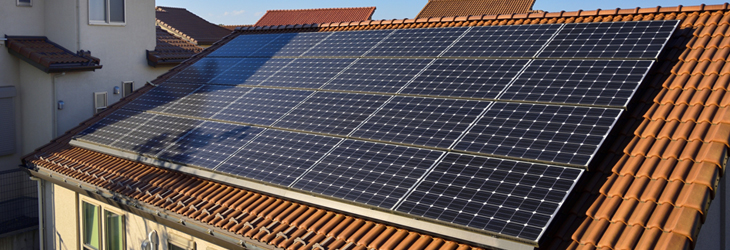
At least one local municipality has taken preliminary action to be more prepared, and in doing so may spark a trend that should be promoted nationwide. In the city of Sosa, on the Pacific coast, a group of environmental activists has set up a “solar sharing” operation that started out with farmers who allowed the group to install solar panels on tall stanchions above their fields. The panels absorb sunlight, but are far enough from the ground to allow peripheral sunlight to reach most of the ground underneath them, so the fields still produce crops. The farmers still sell their wares, and the sharing group sells excess electricity from the solar setup to the local power company and puts the revenue back into the local government, which uses the money to promote solar energy on a household-by-household basis. According to an article in Harbor Business Online, Sosa seems to be the only local government carrying out such a program. What’s particularly interesting is that, besides the money made from selling the electricity, the program has no relationship with any major power companies, which makes sense. Electricity providers are very concerned about people generating their own power for their own use, since it means using less electricity from the grid, which they control. However, after last year’s typhoons, many residents of Chiba have realized they can’t count on the grid and its overlords to guarantee service in the event of an emergency.
Read More Cat Foreheads & Rabbit Hutches