Field diary: Nishi Shiroi

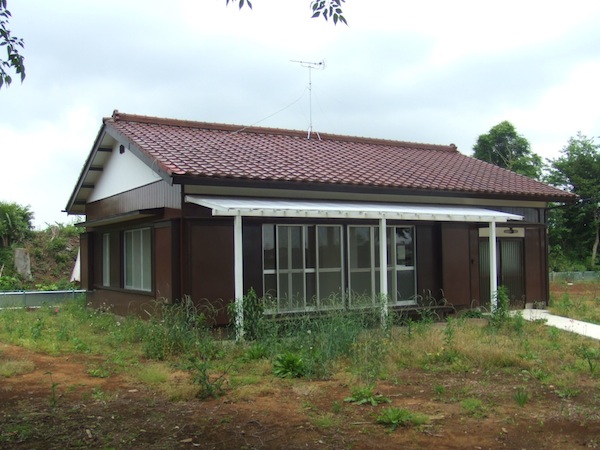
At ¥17.8 million it wasn’t a house we could afford, but we’d been to the city of Shiroi in Chiba Prefecture a number of times–it’s only a few stations from our own–and found its surburban ambience more appealing than most; and the photographs posted on the realtor’s website made it look attractive, at least from the outside: lots of green and the property adjoined a wide promenade on its eastern side. The fact that there were no photos of the interior of the house should have told us something.

We got lost on the way and called the agent by phone. He picked us up not far from the property and seemed genuinely shocked that we would actually walk the 17 minutes from the station. The shock was compounded when we told him we didn’t own a car. Even more garrulous than the usual salesmen he was open to our questions, even as they became bitter after we discovered just what a dump the place was. Built in the early 90s, the house looked as if it had never been taken care of at all. The laminate floors were dull and scuffed, the wallpaper brown with mildew. The layout wasn’t bad. All the rooms opened up on one another in a way that was well-thought out and provided a lot of light; or, at least, as much light as could be expected given that there was little space between neighboring houses to the south and the north. The kitchen was the best part. It was large and featured a corner counter with an accompanying corner window. Unfortunately, the view from the window was dominated by the neighbor’s ugly makeshift backyard shed, one of the most common blights of suburban living in Japan. The promenade that made an impression in the photos wasn’t quite as wide as we thought, but at least it afforded space to the east. Nevertheless, the kitchen would need to be completely redone. There was also a “workshop” in back of the kitchen that was filled with garbage. Read More

Seller beware

Everyone knows that it’s cheaper to buy a property directly from the owner than it is to buy one through a realtor. In Japan, the buyer usually pays a 3 percent commission to the realtor (plus consumption tax plus a ¥60,000 “handling fee” whose purpose has never been sufficiently explained to us), who also gets 3 percent from the seller. Many potential homeowners resent the commission, and for good reason. Often the realtor does nothing for the buyer and everything for the seller. If the price of the property is really low to begin with, it may seem as if the realtor is wasting his time by even showing it to a customer. We don’t know how many times we’ve gotten an agent to come a very long distance to show us a house that we probably knew we weren’t going to buy in the first place, but in any case even if we did buy it his commission would hardly mean much to him. But the main sticking point with regard to the realtor’s actual role in the deal is that, in Japan at least, he doesn’t do much in the way of negotiation.

We’ve heard of cases of real estate companies actually refusing to list a property by someone who wants to sell, for the simple reason that the realtor believes the property is unsellable; or if it is sellable, it would be at a price so low it’s not worth the realtor’s time and effort. But when they do list a property sometimes they will advise the seller of an appropriate price and even suggest remodeling work to make it more presentable. As the market has become glutted over the years such tactics become subject to scrutiny. How much improvement is enough? If the property is so difficult to unload that even extensive remodeling isn’t going to make it any more sellable, is it even worth it? These are considerations the realtor should help the seller understand, but occasionally we’ve met realtors who would just as soon stay out of it. Read More

NHK looks at ‘akiya’ problem

Last Wednesday, NHK’s in-depth news series, Closeup Gendai, covered the issue of abandoned houses (akiya) in Japan, a topic we’ve addressed several times on this blog. Though the report left out a number of points that we think are essential to the discussion, there is only so much NHK can cover in half an hour, and what they did cover was well considered. Of the major broadcast media, perhaps only NHK can do this since they do not have to worry about offending advertisers. Right now house manufacturers and developers, both of which rely on new housing construction for their livelihoods, buy huge amounts of broadcast time. Certainly the most important point that NHK made in the report is that the nation’s focus on new housing as a means of keeping the economy afloat is not sustainable.

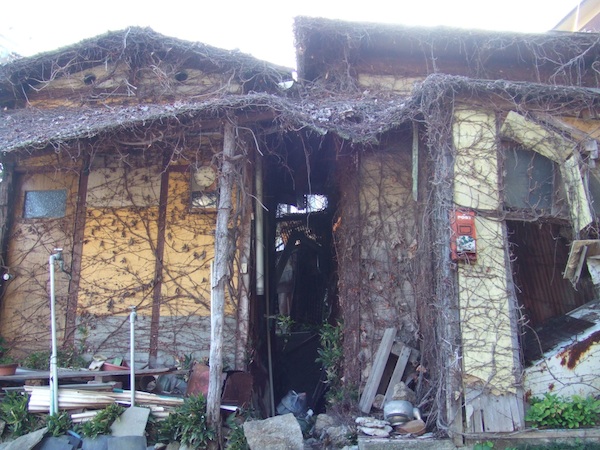
The program reiterated a lot of statistics that we’ve already reported, in particular the figure of 7.57 million homes–single-family houses and condos–that stand vacant in Japan. That’s 13 percent of all residences. Of these, 1.81 million are classifed as being abandoned, meaning not only are they vacant, they are not for sale or rent either. They are just sitting there, about to collapse, all the while attracting garbage and arsonists. Thus they are not only eyesores but safety hazards, and the source of complaints by neighbors, who ask their local governments to do something about them. As we discussed in an earlier post, some localities have passed regulations that allow them to confront the problem, which is difficult to do because, as NHK pointed out, there is a “taboo” against public entities forcing themselves into matters having to do with private property. The model of this new public action is the city of Daisen in Akita Prefecture, where, as of 2011, there were 1,415 akiya. The problem was so bad that the city passed a law allowing authorities to demand of owners that such firetraps be torn down and if the owner did not respond then the city can move in a carry out the demolition itself. Sixty-one houses were initially targeted for action, but so far only two have actually been torn down. The main problem is locating the owners. As it turns out, many have never even registered the properties, which, of course, is illegal, and the first question that we thought of was: If a house was not on the city rolls, it means the owner never payed property taxes, so what was the city doing all these years? NHK didn’t ask that question. It did find the owner of one derelict house who said he had inherited it from his aunt but didn’t have the money (¥700,000) to tear it down. He thought he might be able to sell the land and then use the proceeds to pay for demolition, but he couldn’t find a buyer. So the city tore the house down and, presumably, absorbed the cost. Though the program didn’t say as much, it seems obvious that such a small city cannot afford to tear down every abandoned house in its jurisdiction. Read More

Soft sell the hard way

The one that got away

Most of the properties we inspect we find over the Internet. Sometimes they’re on real estate portal sites like Suumo, which includes listings of multiple agents, and some are on sites run by individual real estate companies. If we want to inspect a property we find on a portal site, we usually call the real estate agent whose office is closest to the property itself, because we know what a pain it is for an agent to come a long distance just to open a house up for maybe fifteen minutes without much chance of a sale. Remember that real estate agents are salespeople, which means even if they know there isn’t much chance of selling a particular property they have to be polite, and we try to make their job easier.

So we were totally unprepared for the attitude we encountered last week when we called a realtor about a property in central Chiba. The house was 94 square meters on a piece of land covering 191 square meters. It was built in 1980, which is pretty old by Japanese standards, but it only cost ¥6.5 million. The picture of the exterior was impressive enough to make us think that it could be remodeled into something pretty good, since at that price we could afford to put more money into it. We found the property listed four times on one particular portal site and called the realtor whose office was closest to the house. Also, we were planning to be in the area to inspect another property, so thought we’d kill two birds with one stone. This is how the conversation went. Read More

Home Truths, April ’12

Minami Senju

Here’s this month’s Home Truths column, which is about cramped urban neighborhoods that could turn into death traps in the event of a major earthquake. Though much is made in the column about the Tokyo Metropolitan Government’s measures to address this problem, we don’t really think it will make much of a difference. Anyone who has read Edward Seidensticker’s fascinating, peculiar, and often frustrating history of the city will understand one thing, that Tokyo defies any notion of city planning with an almost rabid resolution. The “low city” that is Seidensticker’s main subject is portrayed as an organic entity, one that resists any foreign (i.e., governmental) claim to its control as if it were a virus. Most of these neighborhoods sprang up almost overnight after disasters devastated other portions of shitamachi. Working class people moved on to farmland in the outer portions of the city because the place they used to live was destroyed by an earthquake, a fire, or American bombs. Economies of necessity superseded any authoritative prerogatives and communities were born. Those communities are still there. Romantic types love these neighborhoods because they represent what it is they appreciate most about Tokyo, its makeshift conviviality and resistance to conventional ideas of city order. And because those neighborhoods did develop organically, they really do characterize the urban experience in its purest form. But part of the appeal has to do with that hoariest of Japanese cliches, the beauty of transience. These neighborhoods were created by disaster and they will disappear by disaster again. The authorities’ means of addressing this situation may seem flat-footed and ill-advised, but the reasoning is unassailable. In their present state, these neighborhoods will go under, and they will take their inhabitants with them. Maybe there’s nothing anyone can do about that, but it doesn’t mean we shouldn’t at least think about it.

Negative legacies

We’ve often talked about how the media has glossed over the worsening housing crisis. Though newspapers, magazines, and TV will occasionally run stories about specific cases of foreclosure in order to illustrate structual economic problems, they almost never connect these examples to the structural problems inherent in the nation’s housing policy, which hasn’t really changed for forty years. Our feeling is that the media itself has too much at stake in terms of advertising to point out these structural problems and that, fundamentally, the idea that new housing fuels the economy as a whole is so unassailable that it doesn’t even occur to many reporters that problems related to housing could be systemic and related to other social problems. But a few weeks ago, Shukan Bunshun ran an article that reflected, at least in part, much of what we’ve been trying to explain on this blog.

The article was about properties as legacies, which most people tend to view as “assets.” However, the reporter discovered that in many cases properties have turned out to be considerable liabilities for heirs, some of whom would prefer not inheriting them at all. The first illustration they give is the most potent. A 53-year-old man who lives and works in Tokyo recently traveled to his home town in Hiroshima Prefecture to dispose of his parents’ house, a 50-year-old wooden structure built on a steep grade. His father died six years ago and his mother, who suffers from dementia, entered a nursing home two years ago. The house is in disrepair and the small piece of land around it is overgrown with vegetation. The neighbors have repeatedly complained to local authorities, and the son understands that he has to do something. He decided to tear the structure down, but the lowest demolition estimate he could get was ¥2 million, owing to the fact that access to the property is difficult. Since he had no intention of using the land and couldn’t afford the demolition, he put it off. One could reasonably assume the cost might have been covered by selling the land, but that was another problem. The title was still under his father’s name, which meant, according to the law, it belonged to his mother. Since she was not legally competent to handle the matter, it fell to the next in line, his older brother, who had been estranged from the family for many years. No one knew how to get in touch with him. So in order for the second son to dispose of the property, he would first have to go to court to assume title, a process that would require a great deal of time and money, neither of which he had. Meanwhile, the neighbors become more angry, but the local authorities can’t do anything. Read More

Unreal estate

“Property prices go up and down, but the main thing is not to pay them a blind bit of notice, unless and until you have a good reason to move. I learnt that a rising price will not rise forever; that when prices stop rising, it will be difficult to sell your flat, because the reason the price has stopped rising is because the climate has changed. The money you have in your house is not liquid money; it’s not money which can easily be converted into something else other than your house. It’s stupid to feel richer beause the value of your house has gone up, since the resulting rise almost always isn’t money you can use or spend. If you’re going to move, you still need somewhere to live, and the cost of that place too will have gone up, so there will be no net gain from the increase in your property’s value.”

In the above passage from his book about the credit crunch, I.O.U., John Lanchester is mainly talking about the United Kingdom, where he lives. However, his remark about needing somewhere to live and the notion that property value means little in the world where most people do live has stayed with me. Elsewhere in the book he tosses off the idea that the value of your house or apartment or land is only as much as the other guy is willing to pay you for it, in the end. Read More

On home ownership

Yesterday Dr. Christian Dimmer tweeted about a Bloomberg article that covered Japan’s housing market, specifically the boost to the Japanese economy that will be brought about by sales of new homes to “echo boomers” (or “junior boomers,” as some in the Japanese media refer to them), the children of the baby boom generation. It’s a good article in that it contains lots of helpful statistics in one place. However, one number stuck out for its incongruity, at least as far as we’re concerned. In the middle of the article, the reporters state that, according to a survey taken by the housing research company Zentakuren, “about 86 percent of Japanese own their own home.” First of all, the diction is imprecise: Does this mean that 86 percent of every single person in Japan owns a home? Of course not. So what does it mean? We assume it means that the home ownership “rate” is 86 percent, but in that regard one has to understand how such a figure is reached. Most likely it means: What percentage of homes are owned by the people who live in them? If that’s what the sentence is saying, it’s a shock to us. We have been working under the assumption that Japan’s home ownership rate has been in the low 60-percentile ranks for decades, and so we double checked. Japanese reports tend to cite the Ministry of Internal Affairs surveys and the most recent one we could find, for 2006, put Japan’s home ownership rate at 61 percent. This sounds about right. Toyama’s, the prefecture with the highest home ownership rate, is 79 percent, while Tokyo’s is about 44 percent. So we looked up Zentakuren’s survey (7,145 respondents) and found that it did not register home ownership but rather how many people “wanted” to own a home.

This is very different from what the Bloomberg article implied, and doesn’t make any sense anyway. If 86 percent of Japanese people owned their own homes, that would probably mean almost all the “echo boomers” already do, so one wouldn’t be able to expect any related economic boost. But in any case, it’s a small error on the part of the writers in relation to the whole article, whose tone is upbeat in that, since housing plays such a huge role in GDP, Japan’s economy will be better off, at least in the short run. What the article doesn’t touch on at all is the previously-owned housing market. As always in financial reports having to do with housing, “house starts” are the main indicator of fiscal health, because new housing spurs construction and sales of more products. Such a statistic is only hopeful in certain contexts, such as the United States, where the population continues to grow thanks to influx of new immigrants and the families they are raising. Japan’s population is shrinking, and every new house that’s built for an echo boomer is one less older house that gets sold, and thus one less opportunity for a current homeowner to capitalize on his or her investment. Unfortunately, these sorts of statistics never figure in most financial reporting about housing in Japan, mainly because no one really knows what sort of impact it will have in the long run, but as we’ve stated many times on this blog, there are millions of vacant homes in Japan that will never be sold, and the number is growing every day. The generation after the echo boomers is already famous as a “lost generation,” meaning a good portion of them have never secured the kind of long-term employment that sustains a country which was once the second biggest economy in the world. Ten years from now, when they come of home-buying age, they probably won’t be able to afford new homes. Maybe they’ll buy older homes, which will definitely be very cheap, in every sense of the word.

Field diary: Nikko

For a while now we have been looking at properties up near Nikko, though we couldn’t tell you exactly why the area appealed to us. Subconsciously, we may have thought of it as being the poor man’s Kamakura, which is where we would like to live but can’t really afford. Since the quake it’s also been more appealing since it’s obviously very far from the ocean and though it gets quakes itself it seems to be on relatively solid ground. But mainly because we always thought it was a nice town with good people and pleasant scenery. However, any time we’d been there to check out properties it was usually outside Nikko proper, and the houses were the usual suburban-style prefab junk.

This time we went to Nikko proper. In fact, the first place we looked at was a ten-minute walk from Nikko Station. The fact that is was only ¥5 million will give you an idea of the condition it was in, but from the photos on the realtor’s website it looked salvageable. Obviously, at that price we were essentially buying the land. The house was built in the early 70s, though the second floor was a later addition.

We met the agent about a block from the property. He had taken the train up from Tokyo and rented a car, since he would be showing us another property a little further out of town. The house was located next to a makeshift parking lot to the west. To the north there was plenty of space between the house and its neighbor and the garden was located to the east; beyond it was nothing. So on three sides there was a lot more room than you might expect from this part of town, which was residential in a pleasantly diverse way. Unfortunately, as with almost all Japanese buildings, the house “faced” south, and there was barely three meters between it and its neighbor. This is unfortunate because all the windows looked out on the wall of the house next door. Since the kitchen and bathroom are always located in the north portion of a Japanese house there were no windows on that side and for some reason there were no windows to the east either. The genkan was located on the west side. So that meant the only light would come from the south, and it didn’t look like much was going to make it into the house itself.

It was in even worse shape than we thought. The agent told us the owners had only left less than six months ago, but it was difficult to believe anyone could live in such a decrepit building: moldy tatami, peeling laminate floors and paneling, buckled cabinets in the kitchen. The second floor add-on consisted of two rooms that smelled as if someone had died in them. Any renovations would cost upwards of ten million, though the place really needed to be torn down. That would cost about a million, and then a new house would run another 15 probably. The location was good, but that was too much work. Read More

Community first

The inability to sell or rent out vacant houses and condominiums is not just a concern for the owners. In many places it’s something that the community as a whole worries about, especially now with all the talk about the erosion of “kizuna” (bonds) and the attendant loss of community-mindedness, which may have been over-stated in Japan, but in any case the atomization of urban life is definitely on the increase. A neighborhood in Chiba Prefecture is actually doing something about the problem in an unusually proactive way.

In a section of Chiba City’s Mihama Ward near Kaihin Makuhari Station, residents have put together a non-profit organization called Chiba Regional Renovation Research, whose job is to rent out vacant properties at less than their market value as a means of “reinforcing communication.” The idea is not simply to find tenants, but to make the neighborhood more viable as a community. A recent article in the Tokyo Shimbun explained that collective housing in the area in question was developed by the prefectural and municipal governments in the 1960s, and now the apartments are superannuated and mostly occupied by elderly people. After last year’s earthquake, even more people moved out of the area over fears of liquefaction, which affected many coastal areas Chiba along Tokyo Bay. The NPO is made up of 107 condominium associations in the area. Their research found that out of 800 units, about 300 were empty. (The vacancy rate for all of Chiba Prefecture is about 15 percent) In most cases, the owners of the units didn’t live there and/or were unable to rent them out, but in some cases, the owners of the units could not be identified or located. Of those empty units whose owners were interviewed–245 in all–30 percent said they wanted to rent or sell but couldn’t, and in the meantime they have to pay monthly management fees and repair fund contributions, not to mention property taxes. Since many are retired, this is a big burden for them.

The condo associations formed the NPO because their membership is so diluted it has become difficult to formulate disaster and anti-crime countermeasures. The purpose of the organization is to act as a bridge between owners and potential tenants. For instance, by offering units for less than market prices they hope to attract students. They also think that some units could be used by younger families as collective daycare centers or leisure facilities for seniors. At the same time, they will promote renovations in terms of both safety and comfort, working with prefectural authorities and the construction ministry.