Logged in

loghousecatDesigner homes are a luxury anywhere in the world, but in Japan they are even more so given the price of land and the cost of construction. And until not too long ago homes that were considered “distinctive,” meaning that they were obviously designed and built to the specifications of their original owners, were considered risky by bank lenders, who believed their distinction would make them difficult to resell, regardless of their quality. Read More

Putting on heirs

The Nihon Keizai newspaper reports that the land ministry is seriously “studying” yet another housing-related tax reform that will effectively increase the tax exemption for inheritances from parents to children if the inheritance is used to buy/build a home or reform an existing home. Currently, up to ¥6.1 million of an inheritance is exempt from tax if it is used for housing. The ministry wants to increase it to ¥20 million. Read More

Comparative payoffs

The Oct. 10 issue of the weekly financial magazine Toyo Keizai lists the price earnings ratios (PER) of used properties in accordance with their closest railway stations in the Tokyo Metropolitan, Kinki, and Chubu regions. PER is more commonly used to determine the value of stocks. Toyo Keizai uses it to compare housing as an investment, specifically when a property is bought to generate income in the form of rent. PER = condo price / (monthly rent X 12). PER is an important indicator since more and more people are investing in rental housing. A lower PER means a better return on investment. In order to make the statistics meaningful, all the PERs are for 70 square meter apartments. Some representative numbers from the list are included after the jump. Read More

The blacklist is back

More than a month ago Yen For Living reported on a plan by a group of rental guarantee companies to develop a blacklist of rental scofflaws. The plan was temporarily shelved after rental guarantee companies that didn’t belong to the association complained, saying that business was bad enough right now without alienating potential renters, and NPOs protested, saying that such a blacklist would only create more homeless.

Well, according to the Asahi Shimbun, the association has turned around again. They are now dead set on making sure the blacklist becomes a reality, though now they insist it should be called a database, since it will not only list people who have repeatedly been delinquent in rent payments, but will also list people who have been consistent in their payments. Read More

What the poor are for

A company called FIS is currently being investigated by the government for welfare fraud. Usually, welfare fraud is carried out by individuals who receive welfare, but in this case a company allegedly got homeless people to apply for welfare benefits in exchange for housing and then scammed the money they received.

FIS leases apartment buildings from landlords and lets the rooms to homeless men. In order to receive welfare, you have to have an address, and the people (almost all men) that FIS solicit apply for benefits with their new addresses. The company then reportedly deducted rent from the welfare benefits and kept this money to go to the rent, but it was found that the money being paid to the landlord was half the amount that they had collected from the tenants. The rest they appeared to be pocketing. In other words, the tenants were paying twice what they would pay had they rented their rooms directly from the landlord. Read More

High-rise haters

The famous Senso Temple, located in one of Tokyo’s oldest residential neighborhoods, Asakusa, and five residents of the area are suing the Tokyo Metropolitan Government in Tokyo District Court in regards to a 37-story condominium being built about 400 meters west of the temple.

Except for a hotel closer to the station, there are no high rises in Asakusa, and the plaintiffs are claiming that the condo will destroy the neighborhood’s unique atmosphere, not to mention the special character of its skyline. The reason they are suing the government rather than the developer is that Tokyo eased regulations in the Construction Law that allows a builder to make a structure higher than that normally allowed if the builder maintains a certain amount of empty land on the property where the building is located. Basically, Senso Temple is saying that the law is such that it can be manipulated so that any sort of building can be constructed. Height restrictions are meaningless.

It’s not the first time a community group has brought a suit against a building that takes advantage of loopholes in the building laws–the infamous “capacity rate” exceptions are usually the culprit–but once a building is started it’s very difficult to get is stopped, and construction of the Asakusa condo commenced earlier this month.

All down

The land ministry released its most recent statistics for land prices nationwide yesterday and it was all down. Average value for commercial properties dropped 5.9 percent from last year and for residential land the drop was 4 percent. It was the second year in a row commercial property dipped and the 18th year in a row for residential properties.

However, the main news was the drop in land values in the three metropolitan areas of Tokyo, Nagoya, and Osaka. In those three areas, business land prices declined 8.2 percent and commercial prices 5.6 percent, the first drop in four years. Property investment in the big cities has enjoyed a “mini-bubble” lately thanks to foreign companies buying up land and buildings, but since the “Lehman shock” last year most of this foreign money has retreated. In Tokyo, the decline in land values was 8.9 percent.

Some economists believe prices have bottomed out while more pessimistic parties believe they will go lower. Evidence to support the former view is that the vacancy rate in Tokyo has stopped going down and condo sales are improving slightly. Contract closing for new condos has stayed at about 70 percent since the spring.

Of course, outside the cities, things are just getting worse simply because nothing can stop the exodus from rural areas to urban areas.
Check that house

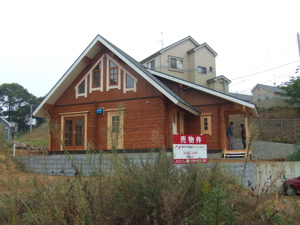
oldhouseFor reasons that should be talked about by someone with more knowledge about this sort of thing, the government’s latest figures for sales of previously lived in homes are from 2003. In that year, 13 percent of home sales were for previously lived in residences, compared to 78 percent in the US, 89 percent in the UK, and 66 percent in France.

It would nice to have more recent figures, especially since the land ministry started a 10-year plan in 2006 to increase the remodeling rate for older homes (both condos and single family houses) from 2.4 percent to 5 percent for the purpose of boosting the used housing market to 23 percent. Read More

The landlords respond

On Aug. 27, the Osaka High Court reversed a ruling by the Kyoto District Court that found in favor of the defendant in a civil case brought by a tenant who thought the renewal fee stipulated in his rental agreement was unfair. It was the second verdict in a month in the Kansai region regarding renewal fees that found in favor of tenants. Not long after, a group calling itself The Association to Consider the Issue of Rental Condominium Contract Renewal Fees posted a message on its blog stating its position in the case and that it would appeal the High Court ruling.

In this particular case, the renter had to pay a contract renewal fee every year that amounted to twice his monthly rent. The judge basically said that if the fee is considered rent, then it should be incorporated into the monthly rent, otherwise it becomes an indefensible burden on the renter.

After the jump, the main points of the association’s post. Read More

Goodbye work

A “white paper” recently released by the Health, Labor and Welfare Ministry reported that, according to a survey of Hello Work outlets (i.e., government-run employment offices), since last October approximately 229,000 non-regular workers lost their jobs. The ministry looked at about 125,000 of these cases more closely and found that 3,400 of them also lost their housing as a direct result of their sudden unemployment, which probably indicates that these unfortunate people were kicked out of their residences because those residences was provided by their employers. The report went on to say that these people did not have any money saved, thus further indicating that they are most likely homeless at the moment, unless they had family or friends who will put them up. The longer-term problem of no savings is that without the money for the deposits and key money required to move into a rental property, these people are stuck in a Catch-22 situation. They can’t ask for welfare or apply for unemployment insurance without an address, and they can’t get an address without a job.