New Shinkansen comes up short
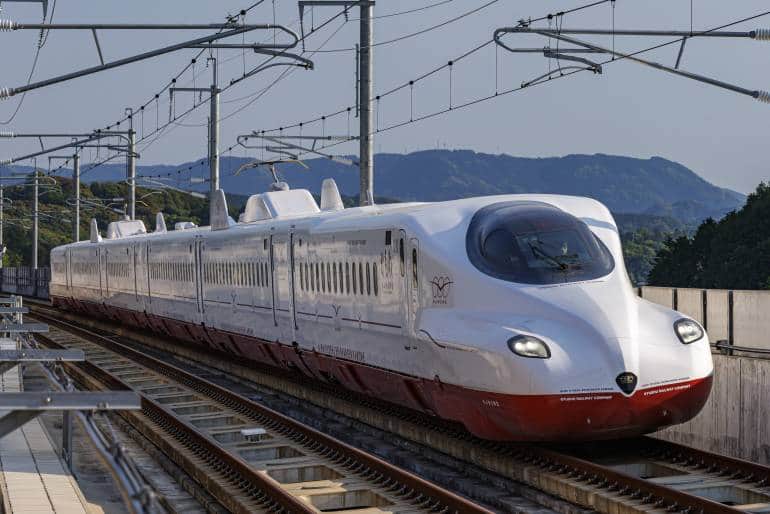
While we’re in the mood to talk about high speed express trains, we should discuss the West Kyushu Shinkansen, which opened for business on Sept. 23. Its most notorious feature as far as the media is concerned is that it’s the shortest Shinkansen line, at least for the time being: 66 kilometers long, connecting Takeo Onsen and Nagasaki stations in as little at 23 minutes, having replaced the Kamome limited express train. In fact, the new Shinkansen, which will run 44 round trips a day, has appropriated the Kamome name, probably to make locals feel more familiar with something they likely didn’t see much need for; or, at least, not in its present form.
JR Kyushu, which operates the new train, makes a big deal in its advertising of the fact that the Kamome Shinkansen will reduce the journey from Hakata in Fukuoka, the main Kyushu hub, to Nagasaki by 30 minutes. However, the new line does not connect directly to the main Kyushu Shinkansen line. It’s actually completely independent and self-contained, meaning that it only exists between Takeo Onsen and Nagasaki. To get from Takeo Onsen to Hakata, you transfer at Takeo Onsen to the Relay Kamome, which is not a Shinkansen and doesn’t have a connection to the main Kyushu Shinkansen line either. In order for the new Shinkansen to connect directly to the Kyushu Shinkansen line, a new route would have to be made from Takeo Onsen to Shin Tosu station on the Kyushu Line, a distance of about 50 kilometers, and while JR Kyushu has said that it wants to someday build such a line, there are no plans at present to do so. That’s because Saga Prefecture, through which the connecting line would pass, doesn’t want to pay for any more construction.
Why it doesn’t want to pay for something that would seem to add value to its infrastructure is an interesting, complicated story. Though JR Kyushu, like all JR group companies, is privately owned, it can’t really operate without considerable assistance from the central government, which guarantees the huge amounts of money necessary for constructing Shinkansen lines. The West Kyushu line cost ¥620 billion to construct, which was 20 percent more than the initial estimate. Much of that had to be covered by the central government and Nagasaki and Saga Prefectures.
Read More Cat Foreheads & Rabbit Hutches