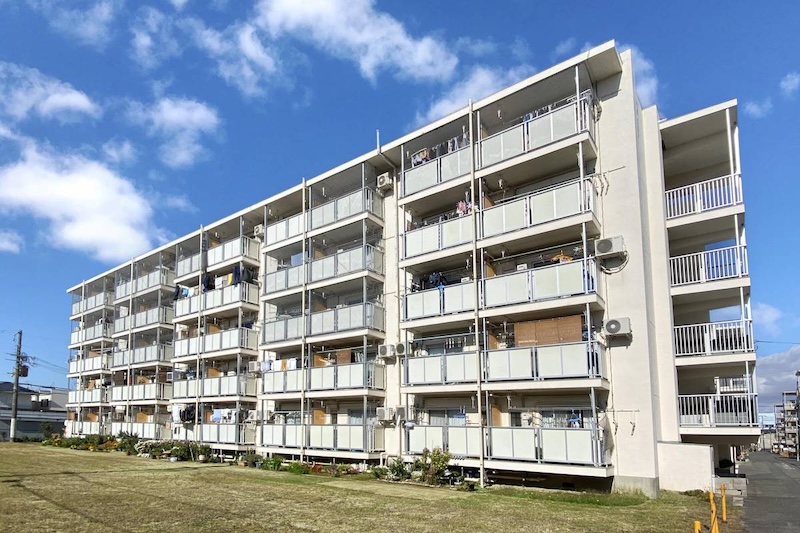
On Jan. 15, two people were stabbed in front of a rental apartment in Tokyo’s Suginami Ward allegedly by the man who lived in the apartment. The two victims were part of a ten-person group who visited the apartment after a civil court decided to evict the man after the apartment’s owner requested the court to have him forcibly removed. The 41-year-old suspect, whose name is Hiroshi Yamamoto, had been unemployed for a considerable length of time after he quit working for an IT company. Though he started collecting government assistance, the payments were stopped when local officials learned he was working part time as a delivery person. He had lived in the apartment since the fall of 2022, and eventually fell behind on his ¥55,000/month rent to the tune of almost ¥1 million. In Japan, it is difficult to evict a tenant who doesn’t want to leave, so the landlord has to file a suit and claim a “justifiable reason” for the eviction. The court in this case found in the landlord’s favor.
The ten-person group that showed up at Yamamoto’s door on the morning of the 15th included court appointed officials and representatives of a moving company that would remove Yamamoto’s belongings after he had been served with the eviction notice by a court bailiff. Somehow, Yamamoto knew they were coming and met them with what the weekly magazine Shincho described as a “black cardboard box with smoke coming out of it.” He then chased the group while wielding a kitchen knife and stabbed two of the men, one being the bailiff and the other a representative of the rental guarator company that had a contract with the tenant. It was the representative who died. After the stabbing, Yamamoto returned to the apartment and tried to set it on fire.
According to the Shincho article, in principle, the bailiff and the representative of the moving company are the only people required to carry out a court-ordered eviction. The former serves the eviction notice while the latter needs to talk to the tenant to arrange for the removal of the tenant’s belongings in order to “return the property to its original state.” However, sometimes a representative of the guarantor company comes along “to make the process smoother.”
Nevertheless, as one man who has participated in such procedures for 20 years told Shincho, there’s usually “some kind of problem” when carrying out an eviction. He himself has been threatened by a tenant with a knife. “Sometimes they’re drug addicts and other times they’re people with big debts,” said the man. “They can become quite violent.” Usually, the landlord will send multiple notices to the tenant after non-payment of rent. If no payment is made after more than 3 months, the landlord will start a civil action requesting that the tenant be evicted. A judge will usually decide the case in 6 months to a year and if the decision is in the landlord’s favor another notice is then sent to the tenant telling them when the eviction will be carried out, so the tenant knows when the bailiff will show up. If the tenant does become violent, the bailiff can call the police.
Evictions have always been something landlords had to address, but in recent years they’ve become more of a serious problem, and Shincho implies that the greater involvement of guarantor companies may have something to do with it. That’s because guarantor companies pay the rent when tenants do not, and so they do whatever they can to get the tenants to pay them. Guarantor companies have become vital to landlords as renters have become older and more atomized. There are more single-person households and more elderly tenants. Traditionally, landlords who demanded guarantors said that only family members of the tenants qualify with the idea that relatives would be more likely to cover the tenants’ delinquencies. However, that is no longer the case. Elderly people, especially those without children, are less likely to have relatives to fall back on; and even younger people may not be on good terms with their parents and siblings. By the same token, family members may not want to be guarantors for various reasons.
Consequently, an increasing number of landlords require that potential tenants sign on with a guarantor company, which, in many cases, acts on the landlord’s behalf for all transactions with real and potential tenants. The tenant pays the company a fee when they sign the rental agreement, which in many cases is drawn up by the guarantor company. The fee is a kind of insurance—the guarantor company collects money from many tenants, only a small portion of whom will ever fall behind in paying their rent. But according to Shincho, almost all guarantor companies try to get the delinquent tenants to pay them back or get them to leave without a court order, using whatever means are at their disposal. Some of these means are illegal, such as using middle men called “oidashiya,” or “forced evictors.” These people are essentially thugs who show up and threaten the tenant to pay up or move or else. Shincho says the use of oidashiya has increased in line with the increase in the use of guarantor companies. In late 2022, the Supreme Court explicitly banned the use of oidashiya by guarantor companies.
An industry organization called the Rental Credit Guarantor Association has a list of rules for member companies. The primary rule is that it is forbidden for a guarantor to enter the room of a contracted tenant without permission from the tenant in order to collect delinquent rent and/or remove the tenant’s belongings. According to an article published by the Yomiuri Shimbun in 2023, since 2009 7 guarantor companies were cited by the association for “removing tenants’ possessions without the tenants’ permission.” These companies were later sued by the association.
One guarantor company called Four Seas took their legal battle with the association all the way to the Supreme Court. The association objected to two conditions in the company’s rental agreement contracts: if rent remains unpaid for three months, the landlord can cancel the rental agreement without informing the tenant; and if rent remains unpaid for two months and the tenant cannot be contacted, the agreement is deemed to be void and the tenant can be evicted. The Osaka High Court decided in favor of Four Seas, but the Supreme Court said the two conditions violated the letter of the Consumer Contract Law, which forbids terms that “unilaterally harm the consumer.” Subsequently, Four Seas removed the two conditions.
But as Shincho points out, there are hundreds of guarantor companies operating in Japan, and as of the middle of 2025 only 92 were members of the Rental Credit Guarantor Association. Perhaps because of this lack of industry oversight, the government revised the Housing Safety Net Law in Oct. 2023 stipulating that landlords could collect an amount of money equivalent to any delinquent rental payments from the contracted guarantor company and then tenants could remain in the rented property. In line with this revision, guarantor companies need to be certified by the appropriate government authority. The revision also covered matters such as “life support” for rental housing for the elderly, and who is reponsible for a rental agreement when a tenant dies. In addition, guarantors that are certified by the government can apply for insurance issued by the government housing authority.
These matters are still being worked out by landlords, tenants, and guarantor companies, as the unfortunate incident on Jan. 15 may indicate. According to the real estate website Homes, 80 percent of commercial rentals now require tenants contract with guarantor companies, thus making it more difficult for vulnerable individuals to rent apartments. None of the legal protections that are in force for renters can help them get into a rental property, and the killing in Suginami will likely make that process even more difficult.
 Cat Foreheads & Rabbit Hutches