Alone again, naturally
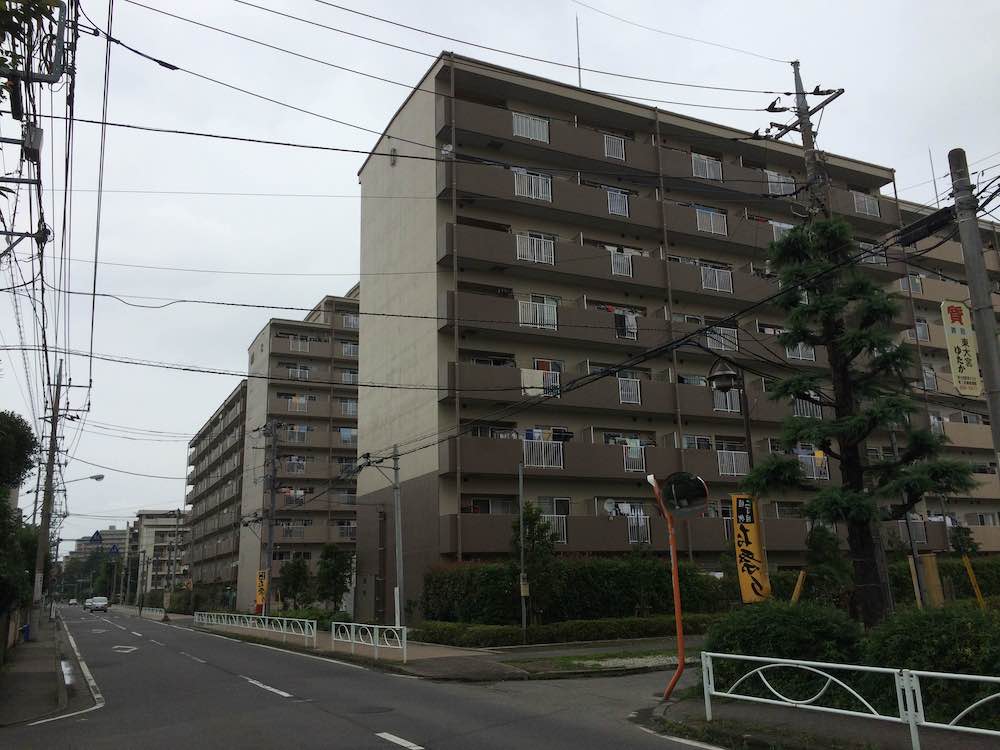
Public housing complex run by Saitama Prefecture
Low income public housing is available in Japan through different levels of local government, either prefectural or municipal, though some larger cities also have public housing run by wards (ku). In almost every situation, however, the applicant, traditionally, has to have a guarantor, ostensibly as a backup in case the tenant is unable to pay their rent. Obviously, because public housing is only available for people of limited or no income, coming up with a guarantor could pose a problem, since it’s entirely likely that the applicant does not have anyone, meaning relatives, they can lean on for such support. In Japan, welfare authorities do not extend public assistance to applicants without first making sure that the applicant cannot tap a close relative for such assistance. It’s one of the uses of the koseki (family registration) system. Once it is understood that the applicant has no relation they can turn to, then welfare officials grant assistance. Of course, this isn’t a universal requirement—as with most bureaucratic processes, it’s up to the individual official—but it’s enough of a protocol to make applying for assistance difficult for many, and when it comes to housing, guarantors are thus required. Usually, officials insist on relatives, since they are more likely to honor the contract.
Now, apparently, some local governments are facing up to reality. An article in the Jan. 20 Asahi Shimbun reports that an increasing number of local governments are eliminating the guarantor requirement for public housing. Asahi Shimbun apparently carried out its own survey and found that 13 major cities in eight prefectures have waived the requirement, and the newspaper predicts that many more will follow.
According to the land ministry, in 2018 1,674 local governments provided public housing, and of these 366 reported cases where applicants were rejected because they could not provide guarantors. This problem is becoming more acute with the aging society, since single elderly people without means are less likely to have living relatives who can vouch for them. Consequently, the land ministry itself some years ago started sending out notifications to local governments to remove guarantor requirements. In the end, of course, it is the local government’s decision, but since the central government subsidizes welfare assistance, many local governments have taken the notification as a kind of directive. Read More