All down

The land ministry released its most recent statistics for land prices nationwide yesterday and it was all down. Average value for commercial properties dropped 5.9 percent from last year and for residential land the drop was 4 percent. It was the second year in a row commercial property dipped and the 18th year in a row for residential properties.

However, the main news was the drop in land values in the three metropolitan areas of Tokyo, Nagoya, and Osaka. In those three areas, business land prices declined 8.2 percent and commercial prices 5.6 percent, the first drop in four years. Property investment in the big cities has enjoyed a “mini-bubble” lately thanks to foreign companies buying up land and buildings, but since the “Lehman shock” last year most of this foreign money has retreated. In Tokyo, the decline in land values was 8.9 percent.

Some economists believe prices have bottomed out while more pessimistic parties believe they will go lower. Evidence to support the former view is that the vacancy rate in Tokyo has stopped going down and condo sales are improving slightly. Contract closing for new condos has stayed at about 70 percent since the spring.

Of course, outside the cities, things are just getting worse simply because nothing can stop the exodus from rural areas to urban areas.
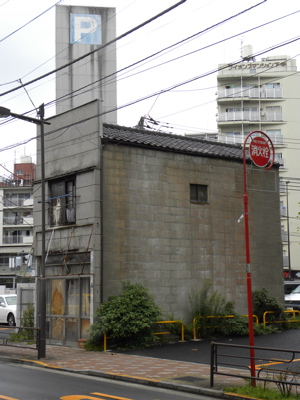
Check that house

oldhouseFor reasons that should be talked about by someone with more knowledge about this sort of thing, the government’s latest figures for sales of previously lived in homes are from 2003. In that year, 13 percent of home sales were for previously lived in residences, compared to 78 percent in the US, 89 percent in the UK, and 66 percent in France.

It would nice to have more recent figures, especially since the land ministry started a 10-year plan in 2006 to increase the remodeling rate for older homes (both condos and single family houses) from 2.4 percent to 5 percent for the purpose of boosting the used housing market to 23 percent. Read More

The landlords respond

On Aug. 27, the Osaka High Court reversed a ruling by the Kyoto District Court that found in favor of the defendant in a civil case brought by a tenant who thought the renewal fee stipulated in his rental agreement was unfair. It was the second verdict in a month in the Kansai region regarding renewal fees that found in favor of tenants. Not long after, a group calling itself The Association to Consider the Issue of Rental Condominium Contract Renewal Fees posted a message on its blog stating its position in the case and that it would appeal the High Court ruling.

In this particular case, the renter had to pay a contract renewal fee every year that amounted to twice his monthly rent. The judge basically said that if the fee is considered rent, then it should be incorporated into the monthly rent, otherwise it becomes an indefensible burden on the renter.

After the jump, the main points of the association’s post. Read More

Goodbye work

A “white paper” recently released by the Health, Labor and Welfare Ministry reported that, according to a survey of Hello Work outlets (i.e., government-run employment offices), since last October approximately 229,000 non-regular workers lost their jobs. The ministry looked at about 125,000 of these cases more closely and found that 3,400 of them also lost their housing as a direct result of their sudden unemployment, which probably indicates that these unfortunate people were kicked out of their residences because those residences was provided by their employers. The report went on to say that these people did not have any money saved, thus further indicating that they are most likely homeless at the moment, unless they had family or friends who will put them up. The longer-term problem of no savings is that without the money for the deposits and key money required to move into a rental property, these people are stuck in a Catch-22 situation. They can’t ask for welfare or apply for unemployment insurance without an address, and they can’t get an address without a job.

Nervous on the block

A survey by the Real Estate Auction Distribution Association has found that the number of homes deisgnated for the auction block by courts throughout Japan has almost doubled in the past year. Housing loan defaults are on the increase, and since it takes up to year from the time a bank begins foreclosure to the time the court allows for bidding on a property, the number of homes on auction will likely continue to increase, perhaps hitting its peak next spring, when loan defaults caused by cancelled or drastically reduced bonuses this past summer will come home to roost, so to speak. Read More

Blacklist blues: update

The blacklist for rental scofflaws that was planned by a number of rental guarantee companies and reported below has apparently been scrapped–for the time being. According to a front page article in today’s Asahi Shimbun, the group of 15 that came up with the blacklist have decided not to go through with it after “thinking more seriously about it.” Also, other guarantee companies who aren’t in the group apparently complained and the land ministry expressed its “concern.” But the main problem seems internal–some of the companies actually want the blacklist to be more draconian while others are caving to outside pressure to just chuck the whole thing. Anyway, the group will continue its discussion of the matter in the fall. In a way, that makes sense. The rental market isn’t very good right now, and such tactics, which are meant to appeal to landlords, seem self-defeating in what is essentially a buyers market.

Living on the edge

condoAn article in Shukan Gendai states that according to the real estate industry about one-fifth of all condominiums throughout Japan “probably” violate current local building codes. The vast majority of these violations are time specific, meaning that they didn’t violate codes when they were built. Laws were changed after they were constructed, and while there is no requirement that the condos have to be rebuilt to adhere to the new codes, the situation is still bothersome for those who live in them. Basically, it makes it even more difficult for the current owners to ever sell them. Read More

Blacklist blues

According to a front page story in today’s Asahi Shimbun, a group of 15 nationwide “yachin hosho kaisha” (rental guarantee companies) have gotten together and at the end of the month will start compiling a blacklist of rent scofflaws. Read More

Where the spike is

The one area of housing that has seen some improvement over the last year or so is apartment for senior citizens. As Japan’s population’s median age continues to increase, there is greater demand for nursing homes. It’s a demand that isn’t being met by the public sector. Private sector nursing homes are very expensive and thus only the well-to-do can afford them. However, housing developers have stepped in and built affordable housing specially designed for older residents.

In fact, the number of apartment units for seniors has actually doubled from a year ago. A registry for this kind of specialized housing started in 2005. By Mar. 2007 the number of units was about 10,000, and increased to 18,800 by Mar. 2008. It now stands at about 36,000 units. According to a Kyodo report, a private research firm says it will likely increase to 73,000 units by Mar. 2014.

Though designed for seniors, there are no regulations restricting their use to seniors. Rent tends to range from ¥100,000 to ¥200,000 a month, which is much lower than monthly charges at private nursing homes.

The way it is

The Asahi Shimbun just published statistics from the Ministry of Internal Affairs and Communications regarding Japanese housing. The ministry surveys the housing situation every five years and found that as of October last year there was a total of 57.59 million residences in Japan, 7.56 million–or 13.1 percent–of which were vacant. Read More