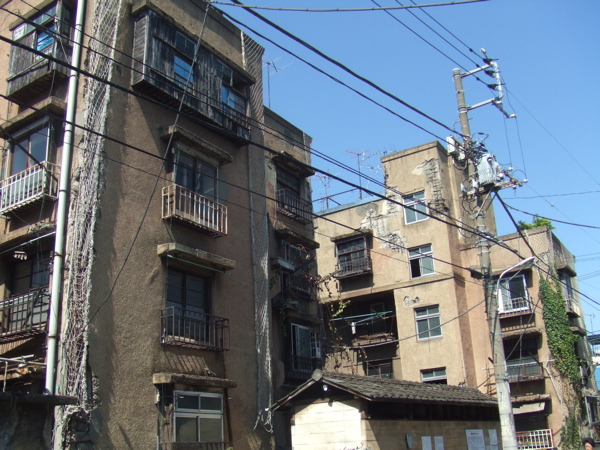
Unsolid ground

One of the lesser known customs related to housing in Japan is the idea of owning a house on rented land. It’s less common today than it used to be but nevertheless common enough. Traditionally, leases on lots are about 50 years. A person can build a house on this land and have title to the structure, but the land is still owned by somebody else and the homeowner has to pay rent on it. Read More

You call that a meltdown?

Finance minister Shizuka Kamei has stopped giving lip service to the idea of a moratorium for housing loan defaulters. Could it have anything to do with the fact that back in the early 90s, when the housing policy that led to all the current foreclosures, he was in the Miyazawa cabinet and was instrumental in bringing it about? Probably not. Kamei sort of prides himself on the way he shoots from the hip. Read More

High times for some

Tokyo’s five big real estate companies released their midterm accounting figures last week. Mitsui, Sumitomo, Tokyu, and Nomura all reported increased sales for the past fiscal half-year, while Mitsubishi Jissho showed a decline. However, only three of the five predict that they will show a profit for the next half-year ending in March. The profits for the four all came from sales of high-end condos. Sales of lower-priced condos and office buildings remain very sluggish, like the economy itself. Read More

And then there was one

minowa2The Minowa Apartments, located in the shitamachi or old residential area of Tokyo, are currently being demolished. Built in 1928, the Minowa complex was one of 16 Dojunkai public apartment buildings constructed throughout Tokyo following the Great Kanto Earthquake of 1923. These structures were the first concrete-and-steel-bar collective housing buildings in Japan, and some historians consider them valuable cultural assets. The Minowa Apartments, for instance, survived the US firebombing of Tokyo in 1945 (though they were definitely damaged), and architects have often said they represent the best in terms of Japanese design ideas that were developed before the war. Read More
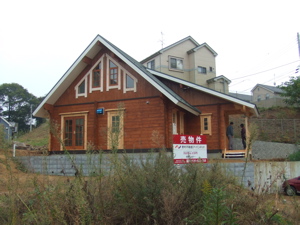
Logged in

loghousecatDesigner homes are a luxury anywhere in the world, but in Japan they are even more so given the price of land and the cost of construction. And until not too long ago homes that were considered “distinctive,” meaning that they were obviously designed and built to the specifications of their original owners, were considered risky by bank lenders, who believed their distinction would make them difficult to resell, regardless of their quality. Read More

Putting on heirs

The Nihon Keizai newspaper reports that the land ministry is seriously “studying” yet another housing-related tax reform that will effectively increase the tax exemption for inheritances from parents to children if the inheritance is used to buy/build a home or reform an existing home. Currently, up to ¥6.1 million of an inheritance is exempt from tax if it is used for housing. The ministry wants to increase it to ¥20 million. Read More

Comparative payoffs

The Oct. 10 issue of the weekly financial magazine Toyo Keizai lists the price earnings ratios (PER) of used properties in accordance with their closest railway stations in the Tokyo Metropolitan, Kinki, and Chubu regions. PER is more commonly used to determine the value of stocks. Toyo Keizai uses it to compare housing as an investment, specifically when a property is bought to generate income in the form of rent. PER = condo price / (monthly rent X 12). PER is an important indicator since more and more people are investing in rental housing. A lower PER means a better return on investment. In order to make the statistics meaningful, all the PERs are for 70 square meter apartments. Some representative numbers from the list are included after the jump. Read More

The blacklist is back

More than a month ago Yen For Living reported on a plan by a group of rental guarantee companies to develop a blacklist of rental scofflaws. The plan was temporarily shelved after rental guarantee companies that didn’t belong to the association complained, saying that business was bad enough right now without alienating potential renters, and NPOs protested, saying that such a blacklist would only create more homeless.

Well, according to the Asahi Shimbun, the association has turned around again. They are now dead set on making sure the blacklist becomes a reality, though now they insist it should be called a database, since it will not only list people who have repeatedly been delinquent in rent payments, but will also list people who have been consistent in their payments. Read More

What the poor are for

A company called FIS is currently being investigated by the government for welfare fraud. Usually, welfare fraud is carried out by individuals who receive welfare, but in this case a company allegedly got homeless people to apply for welfare benefits in exchange for housing and then scammed the money they received.

FIS leases apartment buildings from landlords and lets the rooms to homeless men. In order to receive welfare, you have to have an address, and the people (almost all men) that FIS solicit apply for benefits with their new addresses. The company then reportedly deducted rent from the welfare benefits and kept this money to go to the rent, but it was found that the money being paid to the landlord was half the amount that they had collected from the tenants. The rest they appeared to be pocketing. In other words, the tenants were paying twice what they would pay had they rented their rooms directly from the landlord. Read More

High-rise haters

The famous Senso Temple, located in one of Tokyo’s oldest residential neighborhoods, Asakusa, and five residents of the area are suing the Tokyo Metropolitan Government in Tokyo District Court in regards to a 37-story condominium being built about 400 meters west of the temple.

Except for a hotel closer to the station, there are no high rises in Asakusa, and the plaintiffs are claiming that the condo will destroy the neighborhood’s unique atmosphere, not to mention the special character of its skyline. The reason they are suing the government rather than the developer is that Tokyo eased regulations in the Construction Law that allows a builder to make a structure higher than that normally allowed if the builder maintains a certain amount of empty land on the property where the building is located. Basically, Senso Temple is saying that the law is such that it can be manipulated so that any sort of building can be constructed. Height restrictions are meaningless.

It’s not the first time a community group has brought a suit against a building that takes advantage of loopholes in the building laws–the infamous “capacity rate” exceptions are usually the culprit–but once a building is started it’s very difficult to get is stopped, and construction of the Asakusa condo commenced earlier this month.