No country for old tenants
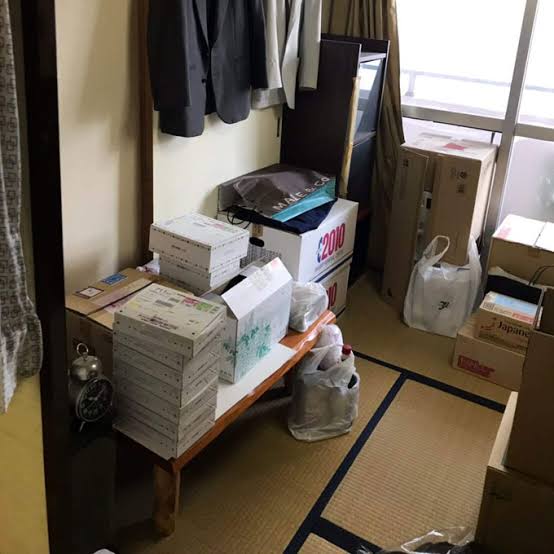
The problem of rental properties for the elderly has been widespread for many years, but as the predicted aging of Japanese society has progressed apace, the problem has become a full-blown crisis. Thirty percent of the population is now 65 or older, and nothing has really been done to guarantee that people in this cohort can rent apartments if they need to.

That’s because landlords don’t want tenants who they think are more likely to die on them. Besides the possibility of losing a paying tenant, there is the more serious problem of tenants who die alone without anyone to handle their remains or possessions. A demographic that has been studied excessively by the media lately is single-person households, many of which are occupied by elderly people with no close ties to any family. 

The problem was revisited by NHK recently on its in-depth news report Closeup Gendai. The renter that NHK interviews is 65. He currently lives by himself in a building that has no elevator or air conditioning. Having developed a bad knee, he finds it increasingly difficult to go up and down the stairs, and is concerned about the hotter summers in Japan, so he’s looking for a new apartment. He still works, but on a contract basis for an IT company, meaning it isn’t guaranteed employment. He has no problem covering his rent, but there are no relatives on whom he can rely in the event of an emergency. He says that almost all the ads he’s seen online say right up front that they don’t rent to older people, and those who do insist that a relative be his guarantor, so for the time being, at least, he has to stay where he is.

NHK then talks to a landlord, who tells the reporter frankly that he is “afraid” to rent to older people “unless there is a strong guarantee.” Elderly applicants must have a financially solvent relative as their guarantor—no friends or even employers. The reason is obvious. In addition to being there if the resident falls behind on their rent, the relative will automatically have a legal responsibility to remove the resident’s remains and possessions if they die while in the rental unit. 

The landlord talks about a 70-year-old female tenant of his who died in July of 2025. She lived alone and her body was not discovered for an entire month. Someone she knew tried to get in touch with her and couldn’t, and so the landlord called the fire department, which forced the door open. They found the woman’s body, which had already started to decay and had leaked bodily fluids all over the floor. The corpse of her dog was also in the apartment. “It was the first time this happened to me,” the landlord said.

The regular cleaning fee for removing and disposing of the woman’s things cost ¥248,000. Then there was a special cleaning fee to get rid of the stains and odors that cost another ¥250,000. Because of the stains and other damage, the apartment had to be renovated, and that cost ¥1 million. On top of that, he couldn’t rent out the apartment for almost a year and so lost more than ¥400,000 in rent. Since the woman had no relative, the landlord had to shoulder all these expenses himself. “That’s why I am imposing more conditions on future tenants,” he said, and that includes younger applicants. 

NHK then talked to a major realtor who manages 8,000 rental units in the Tokyo metropolitan area. Over the last 3 years, 135 tenants have died while occupying their apartments: 21 people in their 80s, 37 in their 70s, 43 in their 60s, and 25 in their 50s. One out of four of the deceased was of working age. 

The realtor offers a specialized “check-in” system to all its tenants as an option. The system monitors the electricity use within the apartment and contacts a designated person when an irregularity in electrical usage is recorded. The contact then gets in touch with the tenant immediately. The company is thinking of making the system mandatory for tenants above a certain age. 

An expert tells NHK that despite the long lead time that the authorities have had to prepare for an aging society, they are not ready for the huge number of elderly living alone in rental properties. The housing policy as its set up is designed for the traditional life trajectory: live with parents until a certain age, move out on one’s own and get a job, marry and have a family, buy a house, retire and live with/be taken care of by children/family. Too many people no longer follow that pattern. 

Read More
Deliverance

Modern life prioritizes convenience to the point where we take progress in terms of service for granted and forget to realize that convenience often comes at a price—to someone else. 

Take parking. According to an article in the Asahi Shimbun that appeared September 10, vacant spaces in parking facilities in existing collective housing complexes are on the rise. A private survey found that between 2023 and 2025, more dedicated parking lots for apartment and condo residents were becoming empty. The reason, Asahi assumes, is that more and more residents of these buildings are turning away from car ownership due to cost and turning toward car sharing and other alternatives for their private transportation needs. 

The market’s reaction has been counter-intuitive. Asahi only cites one condo complex, Harumi Flag on the Tokyo waterfront, when mentioning the cost of parking. Harumi Flag charges between ¥30,000 and ¥35,000 a month for a parking space to residents, which, given its location, isn’t bad; but when we did a cursury internet survey of parking rates for residential buildings, meaning buildings with their own parking lots or garages, we found that the monthly charge rarely went below ¥25,000, regardless of where in Tokyo the building was located. When we lived in Tokyo and had a car, we paid about ¥25,000 for a spot in our building’s garage in Arakawa Ward, and that was 20 years ago, so even if car ownership is declining in Tokyo, parking rates are not. 

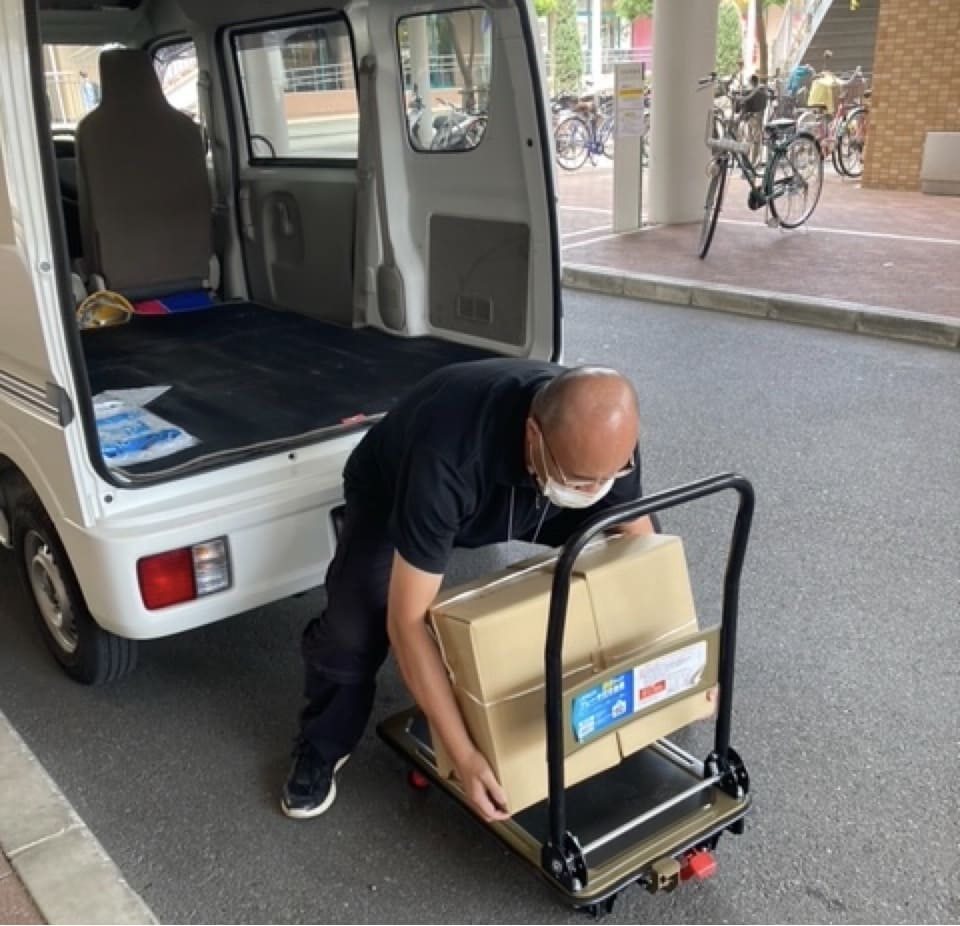
This trend, however, is being welcomed by one sector: distribution. As everyone knows, Japan is suffering from a serious shortage of drivers as more and more people patronize online retail services, which require delivery personnel. In cities like Tokyo there is a huge problem for delivery people who cannot find suitable places to park their vehicles when making deliveries. As a result, in March 2025, the land ministry revised its regulations regarding parking spaces. Previously, only department stores and some types of office buildings had to assure a certain amount of parking space for delivery vehicles, but now the ministry says that new residential buildings also must provide adequate off-street parking for delivery trucks and cars. According to the revised regulation, new condominiums of between 50 and 100 units must reserve at least one space for a delivery truck, and any buildings that are larger must add an additional space for every additional 100 units.

The Tokyo Metropolitan Government recently passed its own rules, mainly in response to delivery companies complaining about how the proliferation of tower condominiums has made their work more difficult. In Tokyo, a condo of less than 300 units must provide at least one space for a two-ton truck. If the condo has more than 300 units, then it must have two spaces. 

But what about existing condos, especially those where existing parking facilities have unused spaces? According to Asahi, Tokyo is now working on rules that may compel building management organizations to convert unused residential parking to parking for delivery vehicles and storage facilities for disaster equipment and supplies. Apparently, Kawasaki and Sendai have already implemented similar rules, and Osaka is in the process of doing so. However, at the moment, no definite timeline for such changes has been announced, which is a problem because delivery services are already at their breaking point. 

Read More

Point of interest

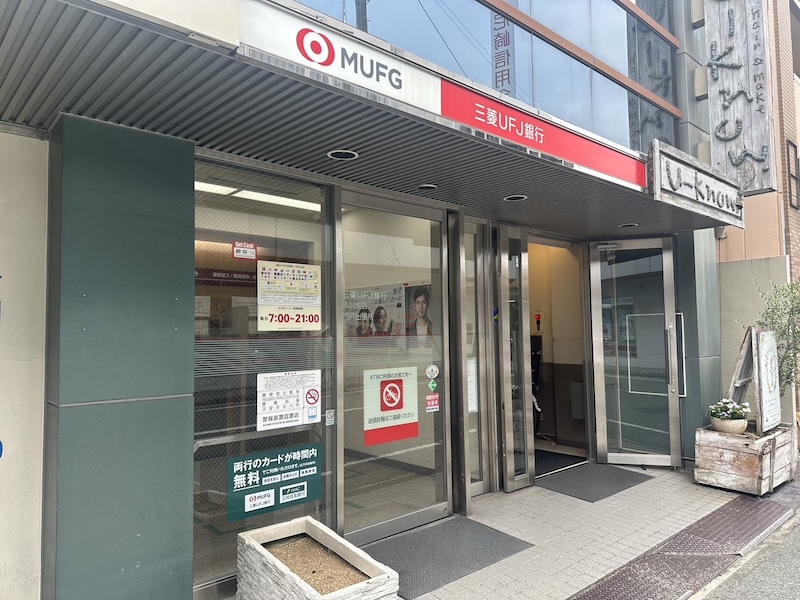
MUFG Bank

On September 5, Sankei Shimbun ran a story that’s gotten a lot of attention. Sankei reports that the homeowning rate among Japanese people in their 20s is the highest it has ever been. The reason is the skyrocketing price of real estate in major urban regions, in particular the Tokyo metropolitan area, and an increase in interest rates for housing loans that may go even higher in the future. The idea is to buy now before properties and loans become too expensive, and now that some banks are offering 50-year loans it becomes a bit easier, at least theoretically.

The communications ministry says that the home ownership rate in 2025 among households where the head-of-household is in their 20s was 40.7 percent, the highest on record. Sankei reports that experts tend to recommend you not buy a home whose price is more than 6 times your annual income, but according to the job search magazine Recruit, in the Tokyo metropolitan area prices for new condominiums are going for 8 times the average annual income, regardless of age. 

Since a good number of households with married couples in their 20s have double incomes, these couples are choosing so-called pair loans, where both spouses shoulder the debt. A 50-year loan spreads out the payments more, rendering each monthly payment lower than if the couple took out a standard 35-year loan, so if a couple takes out the loan at 25, they would finish paying it off at 75. Though this makes the montly pressure less, it also reduces the couple’s ability to save for old age, especially since the longer the payment period, the higher the interest rate. 

The day before the Sankei article, Asahi Shimbun went into more detail about what these young people will have to contend with by buying property so soon. The central point of the Asahi article is that the Bank of Japan, by raising its prime rate for the first time in 31 years last June, is also causing interest rates on housing loans to rise. The two megabanks, MUFG and Mitsui-Sumitomo, increased their variable interest rates for housing loans this month by about 0.25 percentage points. Asahi calculates that this rise in interest will increase monthly payments for a 35-year loan on ¥50 million by ¥20,000. Mizuho and other major banks have not announced any increase in interest rates, but probably will at some point.

Potential home buyers also have to take into consideration that the BOJ is likely to raise rates even more in the future. So right now MUFG and M-S are charging 3.375 percent interest for a standard loan, though the rate can go as low as 1.195 percent for “preferential loans,” meaning borrowers whose ability to repay the loans is easier to guarantee. 

Eighty percent of borrowers choose variable interest rather than fixed interest because, initially, variable rates are lower; but, of course, they are subject to change every six months or so depending on economic circumstances, so they could easily go up. 

According to a housing loan research organization, if someone borrows ¥50 million for 35 years at the variable rate, they will pay on average about ¥20,000 more in monthly payments after the BOJ increase than they did before the increase. 

The organization also reports that almost all the people who choose a variable interest rate also choose to pay interest and principal at the same time and in the same monthly amounts, regardless of the current interest rate, but in doing so they tend to pay more interest in the long run. Those who choose to pay the interest first pay less interest in the long run. And those who pay both interest and principal at the same time with the interest changing based on the balance of the principal—meaning the monthly payment will not always be the same—will also pay off the interest more quickly. 

Read More