Alone again, naturally
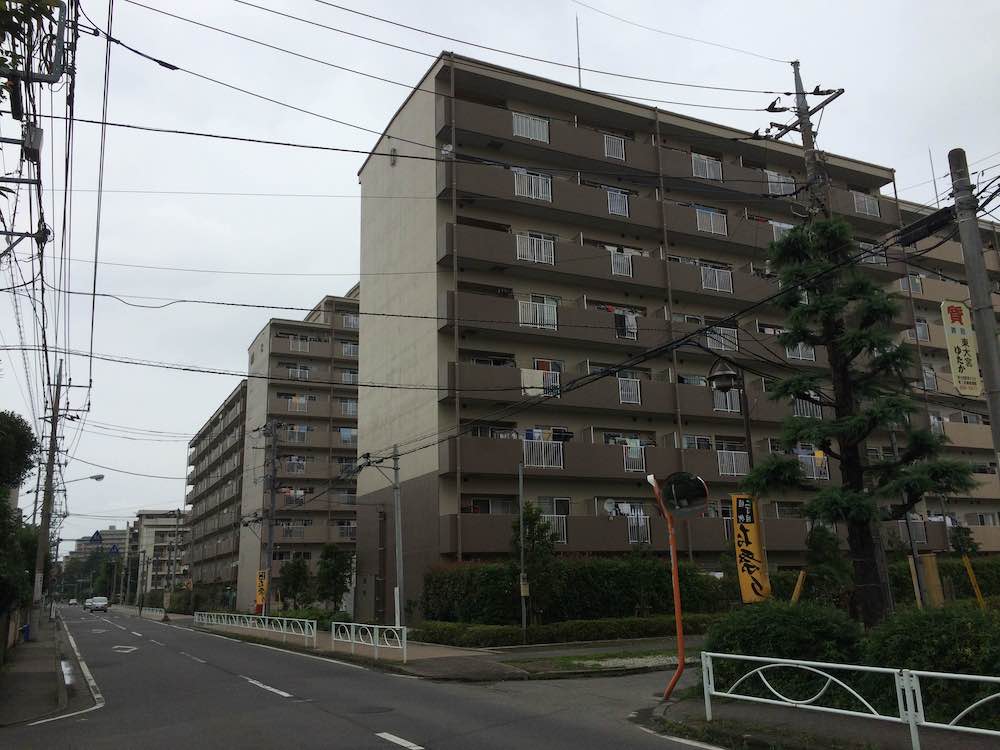
Public housing complex run by Saitama Prefecture

Low income public housing is available in Japan through different levels of local government, either prefectural or municipal, though some larger cities also have public housing run by wards (ku). In almost every situation, however, the applicant, traditionally, has to have a guarantor, ostensibly as a backup in case the tenant is unable to pay their rent. Obviously, because public housing is only available for people of limited or no income, coming up with a guarantor could pose a problem, since it’s entirely likely that the applicant does not have anyone, meaning relatives, they can lean on for such support. In Japan, welfare authorities do not extend public assistance to applicants without first making sure that the applicant cannot tap a close relative for such assistance. It’s one of the uses of the koseki (family registration) system. Once it is understood that the applicant has no relation they can turn to, then welfare officials grant assistance. Of course, this isn’t a universal requirement—as with most bureaucratic processes, it’s up to the individual official—but it’s enough of a protocol to make applying for assistance difficult for many, and when it comes to housing, guarantors are thus required. Usually, officials insist on relatives, since they are more likely to honor the contract.

Now, apparently, some local governments are facing up to reality. An article in the Jan. 20 Asahi Shimbun reports that an increasing number of local governments are eliminating the guarantor requirement for public housing. Asahi Shimbun apparently carried out its own survey and found that 13 major cities in eight prefectures have waived the requirement, and the newspaper predicts that many more will follow.

According to the land ministry, in 2018 1,674 local governments provided public housing, and of these 366 reported cases where applicants were rejected because they could not provide guarantors. This problem is becoming more acute with the aging society, since single elderly people without means are less likely to have living relatives who can vouch for them. Consequently, the land ministry itself some years ago started sending out notifications to local governments to remove guarantor requirements. In the end, of course, it is the local government’s decision, but since the central government subsidizes welfare assistance, many local governments have taken the notification as a kind of directive. Read More
Am I high?

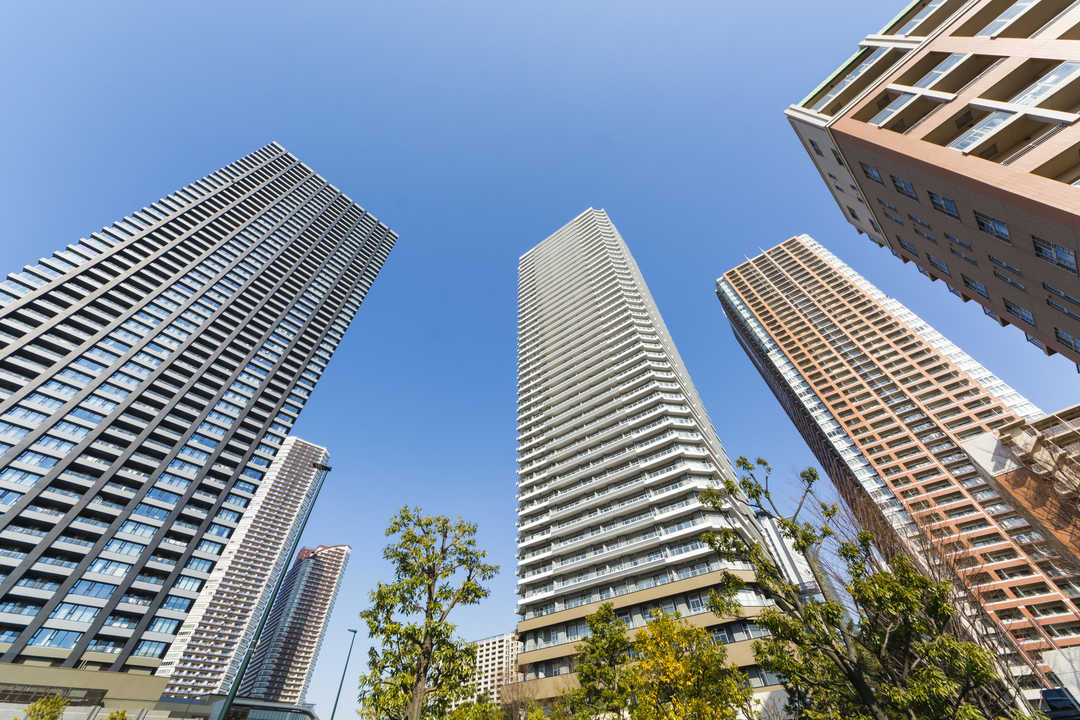
Tower condos in central Kobe

Local governments are starting to realize the disadvantages of tower condos and doing something about it. According to a Jan. 3 article in Tokyo Shimbun, last July the city of Kobe implemented regulations that would limit construction of new condominium complexes in the city center. As mentioned in a previous post, last fall’s kanto area typhoons brought home to the residents of at least one tower condo in Kanagawa Prefecture the truth that high-rises were especially vulnerable to storms in ways residents hadn’t counted on. Western Japan has had more immediate encounters with typhoons in recent years, and that seems to have been part of the reason for Kobe’s new regulations, though the main impetus may be purely economical.

The new law covers land to the south of Sannomiya Station. For the 22 hectares closest to the station, all new residential construction, including single-family houses, has been banned. Then, in the surrounding area, for any plots of land that are 1,000 square meters or more in size, the capacity rate for new residential construction is limited to 400 percent. That means, for instance, if a building with a footprint of 500 square meters is built on these plots, it can be no taller than 8 floors. Tower condos are defined in Japan as being at least 20 floors, and usually they contain at least 100 units. Currently, Kobe has 69 high-rise condos, 24 of which are located in Chuo Ward, which is where Sannomiya Station, the main transport hub, is situated.

One of the reasons for these restrictions is that the city can’t provide all the services required for tower condos. The trend at the moment is for younger people to move as close to city centers as possible so as to be nearer to their jobs. They are willing to pay for such proximity because they understand, having grown up in the suburbs watching their fathers commute two or three hours a day to and from work, what that commute does to their lives. And a lot of these young people have families, but Kobe can’t provide enough schools in the city center. At the moment, in fact, many existing schools in the area have had to provide prefabricated classrooms off-site, because there is no land left in the city center to expand schools or build new ones, and one of the reasons is that there are so many tower condo complexes taking up room. For the same reason, there aren’t enough stores or other commercial facilities and, most significantly, there is a paucity of employment, which means, ironically, that the city center has become a kind of bedroom community for surrounding areas, including Osaka. Read More

Help the rich

The Japanese government expects 40 million foreign tourists in 2020, which would be a new record. Obviously, many of these people will be coming for the Olympics, but the government seems to think this wave with money to spend is going to be a regular and permanent thing, and they want to be prepared for a future where such people feel welcome. Legalizing casinos is part of this vision, but that plan was mostly formulated before the current foreign tourist boom was confirmed, and, in a real sense, the so-called integrated resorts that are being planned as excuses to allow casino gambling may not be as necessary as they once seemed, but it’s too late to stop now.

You can’t have too much for rich people to do, so the latest plan, reportedly the brainchild of Chief Cabinet Secretary Yoshihide Suga, is to build 50 luxury hotels by the mid-2020s. Why luxury hotels and not just regular hotels? Why 50? So far, nobody has really clarified the reasoning behind this ambitious scheme, but in the end the biggest unasked question is: Why the government? Japan is a resolutely capitalist country, reverent to the invisible hand of the market. And while Japan has been jokingly called the most socialist liberal democracy in the world owing to its schemes to game the economy through elaborate spending plans (which invariably help political vested interests), the idea that they would blatantly come up with such a concept to lure rich foreigners seems almost funny.

Some media are saying the scheme was suggested by David Atkinson, a former Goldman Sachs analyst and advisor to the Japan National Tourism Organization who has been promoting inbound tourism for years as a solution to Japan’s fiscal woes. In the interviews Atkinson has given over the years, he doesn’t mention luxury hotels exclusively. He mainly says that Japan needs more rooms of a less traditional sort—fewer ryokan and onsen inns and more conventional Western style hotels where foreign guests can feel comfortable and make their own plans. The trouble with traditional Japanese accommodations is that they tend to take the guesswork out of everything. You eat what they serve you when they serve you and even tell you when to go to bed. Read More

Notes from underground

One of the older neighborhoods in Inzai without utility poles.

In recent weeks, we heard that the city where we live, Inzai in Chiba Prefecture, has become notorious for something. This has happened before; in fact, it’s happened several times. Though Inzai is about as nondescript as a Tokyo suburb can be, it occasionally pops up on the news for some reason or another. Earlier this year we were the butt of jokes because of a PR video produced by the city that had gone semi-viral because of its conflation of the name “Inzai” with the word “Indo,” which is the Japanese pronunciation of India. The video, fashioned after a low-budget Bollywood production, featured Indian tourists supposedly flocking to Inzai because they somehow mistook the city for their home country. Yeah, it deserved all the derision it attracted, and not just for the bad humor. More often, however, Inzai gets cited as one of the most “livable” cities in Japan for reasons we’ve talked about before and don’t need to get into again.

This latest blast of fame apparently originated on the prime time TBS information program “Newscaster,” which ran a mini-feature during its “7 Days” weekly review segment in September about all the homes on the Boso peninsula that had lost electric power during and following Typhoon Faxai. The main problem was that the strong winds blew over utility poles, many of which were in poor condition due to neglect. Because of all the work involved in getting utility lines back up, some sections of Chiba Prefecture didn’t have power for more than two weeks. In order to illustrate what could be done in the future to avoid such disasters, TBS visited Inzai, where a lot of new single-home construction is currently taking place. They went to one development near Inzai Makinohara Station on the Hokuso Line, the same station we use, because this neighborhood did not have utility poles. All the electrical cables are underground. Burying cables is the norm for most of the developed world, but Japan is way behind. In Tokyo only 8 percent of cables are buried; in Osaka only 6. In Hong Kong, London, and Paris all the cables are underground. Read More

Heirs? Apparently

This land is your land?: Property marker in the middle of a residential street

An ongoing headache for the government, in particular the land and justice ministries, is all the land in Japan whose titleholders are only vaguely determined. The reason this is a problem, of course, is that the central and local tax authorities don’t know to whom they should send property tax bills, but also when public works projects are being planned that involve the appropriation of land the relevant authorities don’t know whom to deal with. For a more detailed discussion of this problem see here, but suffice to say that the volume of property nationwide with undetermined owners amounts to a piece of land the size of Kyushu.

The reason for this confusion has to do with inheritance laws. When a title holder dies, if no formal transfer of the property has taken place, their property automatically passes to their heirs, meaning spouse first and then children. If those heirs never properly register the land in their names, then it then passes on to all their heirs when they die, and so on. According to a Nov. 18 article in the Nihon Keizai Shimbun, there is one piece of land—location undisclosed—that has up to 700 potential titleholders since the land has not been re-registered since the registered titleholder died many years ago. The amount of money and resuources needed to sort out these matters is beyond the ability of local governments. Of course, in most cases, the land is worth probably nothing to the family—maybe it’s on the top of a mountain or in a remote forest—and they simply don’t want to be taxed for it. However, a good portion is located in already developed areas. In any case, the local government or maybe a developer may want to exploit that land someday. The central government would like to have everything properly registered.

The Civil Code states that the titleholder must be consulted in order to dispose of the land or any portion of it, so if the government really wants to solve this problem it should amend the law, and that seems to be the plan. The Nikkei article says the government is now considering an amendment to the law that will allow the sale of plots of land or any portions of it if a certain number of heirs agree to the sale. At present, all titleholders must agree to such disposal. The land and law ministries plan to send this bill to the Diet in 2020, and are currently carrying out research that will better define vague property lines. As of 2017, about 16 percent of the land in 80,000 “locations” classifed as “urban,” meaning designated for residences and commercial businesses, does not have a definite titleholder in accordance with existing records. The portion of undetermined land is probably more, since the 16 percent mainly represents lots that are being disputed for some reason—either neighbors want to buy the land for expansion or local governments want to use it for parks and other public facilities or a developer wants to build a condominium on it. None of these entities have the money to negotiate with all the heirs, and according to most local laws any property line disputes have to be mediated through the consultation of surveyors and other experts, and those services have to be paid for by the parties involved.

On the surface, passing such a law should be easy. All the government has to do is specify the problem and how many of the identifiable heirs or titleholders must be located in order to dispose of the land. But because Japan has such a weak concept of eminent domain, it’s likely there will still be limitations to what the government can do unilaterally. And it’s apparent that people who have rights to a piece of land but are coy about being located have a reason for being coy. The main obstacle will be defining how much work should be involved in “notifying” all the interested parties. They must also determine if unpaid back taxes can be waived. One solution, according to Nikkei, would be a condition that the land in question must be sorted out within a certain timeframe due to health or safety concerns, and while that may sound like a limiting condition itself, the government has never been averse to bending such laws when it serves them.

The higher they are…

Tower condos in Musashi Kosugi

When Typhoon Hagibis roared through the Kanto Plain Oct. 12, three homeless individuals were turned away from an emergency evacuation center in Tokyo’s Taito Ward because they could not prove they were registered as residents in the ward. The incident gave rise to a lot of soul searching on the part of the authorities, but there were also quite a few people on social media who felt the staff of the evacuation center didn’t do anything wrong. To these people, the homeless really are on their own and shouldn’t expect any help from the rest of society.

As it turns out, there is a corollary to this attitude that applies to the rich. As everyone knows, the Tama River overflowed its banks during the typhoon, causing flooding in parts of Setagaya and Ota Wards. The waters didn’t inundate the other side of the river, which lines the city of Kawasaki. However, the rising waters did cause sewage lines to back up, thus resulting in what is called “internal flooding” that inundated train stations and the basements of some condominium and apartment buildings. This problem was totally unexpected by both the authorities and residents of the area. The neighborhood that was hit the worst was the one surrounding Musashi Kosugi station, which services several train lines and is thus extremely popular. There are at least ten tower condominiums surrounding the station, and as we reported in an earlier post, apartments in these buildings are quite expensive. It’s one of the few areas in the Tokyo metropolitan area where used residences are increasing in price because they are in such demand. New condos in the area go for about ¥70 million, so only the affluent can afford them. Read More

Yen for Living: Houses As (non-)Assets

For sale? Good luck.

The following article was submitted as the July entry in our Yen for Living column for the Japan Times. However, it was rejected by the editors.

One of the issues facing voters in this month’s Upper House election is the national pension system. The government received criticism after the Financial Services Agency announced that a couple would need at least ¥20 million in savings when they retire to supplement their pensions. Opposition parties are using this figure to point out flaws in the pension system, and the ruling Liberal Democratic Party is challenging the FSA, saying that current pension benefits are adequate to support people after they retire.

In a letter published in the Asahi Shimbun on July 1, a 63-year-old dentist wrote about the ¥20 million figure, saying that when he was 30 he started saving for his old age. As a self-employed person he knew a public pension would not be enough when he retired, and so he joined a cooperative that, in return for monthly premiums, guaranteed a one-time payment when he reached a certain age. Over the course of 30 years, he paid a total of ¥18 million into the fund in the belief that he would receive ¥40 million in the end. But he received only ¥20 million. He also paid into a private pension plan, convinced that when he turned 60 he would start receiving ¥280,000 a month for a limited time. As it turns out, he is only getting ¥120,000, because interest rates have plummetted since he was 30. When he’s 65, he will start receiving benefits from his national pension, but since he belongs to the kokumin nenkin system for the self-employed and others who weren’t employed by large companies, he will only receive ¥65,000 a month. So even though he basically “invested” in private plans and paid his obligatory national pension premiums, he is not going to have as much income in his retirement as he once thought he would receive. Read More

Make mine maglev (1)

In December, four of Japan’s biggest general contractors were accused of bid-rigging with regards to their involvement in the construction of Japan’s maglev shinkansen, vernacularly referred to as the “linear motor car.” Bid-rigging is a fairly common practice among Japanese general contractors, and so far two have owned up to the charges. They will be fined, executives will be shuffled around in a bid for self-reflection, and everyone will get back to work, because the ¥8 trillion project is too important to be sidelined by a mere money scandal.

In terms of media coverage, the scandal provided a kind of shade that was necessary so that the press couldn’t be accused of avoiding other, deeper, more problematic issues regarding the maglev project, which involves building a line between Tokyo and Nagoya by 2027. In fact, the scandal is probably the best news that JR Tokai, the arm of Japan Railways that is building the maglev, ostensibly with its own money, could have received since it diverts any media attention away from the deep-seated problems that are already plaguing the project. Since construction has already started, it’s too late to cancel the thing, but it seems likely that the company won’t make its deadline owing mainly to the fact that it still hasn’t purchased all the land it needs.

Because of the technology involved and Japan’s peculiar topgraphy, 246 kilometers, or 86 percent, of the initial route between Tokyo and Nagoya will be built underground, thus making it, basically, a very long subway line. Besides the obvious negative ramifications this aspect of the project could have on its appeal as a tourist attraction, the fact that the tracks have to be underground brings up significant logistical issues, and so the central government passed a special law that said space that is at least 60 meters below the surface is not owned by the title-holder of the land on the surface. The law thus allowed JR Tokai to avoid having to negotiate with landowners along the route planned for the tracks, as long as those tracks are located at least 60 meters below the surface.

However, the surface must still be taken into consideration. For instance, all new stations between Tokyo and Nagoya have to be built on the surface, and often surrounding tracts also have to be bought for ancillary purposes (parking lots, retail outlets, etc.). Also, according to the law, underground railways must provide egress to the surface every hundred meters or so in case of emergency, which means the land on the surface where the exits are built must be purchased.

But the most pressing need for land on the surface is for roads on which dump trucks will transport excavated soil and rock. These roads have not been built yet (for that matter, places to deposit the excavated rock and soil haven’t been designated yet, either), because the land has not been secured. According to Hideki Kashida, a journalist who seems to have made it his life’s work to report on the maglev, approximately 5,000 people own the various tracts of land that JR Tokai will need to buy for the construction of the maglev. The cost, they estimate, is about ¥342 billion. However, some of the land owners are not selling, a big problem in a country that doesn’t have eminent domain.

The reasons for not selling are numerous, and most are personal–basically farming families who are loath to give up their legacies. Some, however, are more practical minded. Environmental groups are protesting the transport roads because they will ruin national parks and the natural environment. The tunnels will destroy aquifers, upon which many rural residents rely for their water–several rivers may dry up as a result. Since the maglev uses up to four times the amount of electricity that a conventional shinkansen uses, residents along the route are afraid of electromagnetic fields.

Kashida says that so far several hundred people have filed lawsuits against JR Tokai to stop or restrict construction, and though courts have traditionally backed up large corporations in such suits, the trials could cause delays. They will also increase the cost of the project, but that doesn’t seem to be a big problem because the central government has already stated its interest in completing the maglev, not just to Nagoya by 2027, but to Osaka by 2045. It’s already guaranteed a ¥3 trillion loan to JR Tokai. With the government in the game, public opposition will become meaningless.

In any case, we don’t expect to see the maglev shinkansen completed–at least to Osaka–within our lifetimes, but we will continue to cover the story in this blog as it develops.

Kill Your (Vacation) Landlord

Judging from the amount of coverage it’s received from the domestic and foreign press, Airbnb’s decision to remove 80 percent of the properties from its Japanese listings is a big deal. That wouldn’t be surprising except that previously the Japanese press, at least, didn’t seem overly interested in the house-share service. What makes it news is mainly timing. On June 15, the new Minpaku Law, which regulates the short-time rental of private property, goes into effect, right before the vacation and tourist season starts. Apparently, Airbnb, nervous about a government crackdown, decided not to take any chances and dropped listings of properties that couldn’t prove they had already received permission to operate under the new law. That means people who had made reservations at these properties in the past are out of luck unless their owners can somehow get a license to operate by the time the visitor is scheduled to occupy the room or home. Some people are blaming Airbnb itself for, presumably, not being prepared for this sort of outcome, which has been apparent at least since the beginning of the year. Whether the visitors who made reservations have gotten the message isn’t clear, but it’s likely that, come next month when they show up in Japan after having spent money on air fare and other vacation-related expenses, they may find themselves locked out of the place they thought they would be staying at. One can imagine scores of foreigners wandering the streets of Tokyo and sleeping under bridges. Thank God it’s a safe country.

Seriously, though, the Minpaku Law, regardless of how poorly it was conceived and written, was inevitable, and its purport with regard to Airbnb is hardly limited to Japan. What makes it momentous, and, in the long run, perhaps prescient, is that it adds a layer of national intent to locally enacted rules that weren’t being enforced very strongly before. In other words, Airbnb didn’t take local regulations at face value until the central government said they supported them through the law. Ostensibly, the reason for the stricter definitions is public order–protecting communities where property owners rent out rooms to strangers. Less obviously, the Minpaku Law supports the powerful hotel and innkeepers industry, which has been calling for the banning of peer-to-peer short-term rentals. And even less apparently, but no less potently, the law favors another powerful lobby, the real estate industry, which can use the law to corner whatever market is left of short-term vacation rentals, since many of the rules call for oversight by corporate entities, or, at least, entities that act like corporations.

The Minpaku Law essentially covers two types of properties. The first type is a property that has applied for and received the proper permits, meaning they comply with the hotel law. From the outside, they may look like a regular private residence, but inside they adhere to fire regulations and there is someone who manages the property on site. Minshuku, capsule hotels, and guest houses fall into this category. The second type are properties that heretofore fell into the so-called gray zone, rooms that did not comply to the hotel law but weren’t really breaking any laws–until now. Though fire laws and other related safety regulations will presumably be more strictly enforced for these properties, the main difficulty will be stricter enforcement of zoning laws, which are locally enacted. The main blanket, national rule is the one that says minpaku can only rent out rooms for a maximum of 180 days out of the year. Also, if the property is in a condominium, the owners association must be apprised of the existence of a minpaku and approve of it in writing, which may end up being the most difficult condition to satisfy, even when localities don’t prohibit minpaku from residential zones. Read More