Not cool

According to news reports, the extreme heat we’ve had to put up with this summer is going to be a normal thing from now on. For a while it seemed as if Japan was going to be spared the worst of it, but that isn’t the case any more and forecasters are saying we’ll be sizzling until early October. The authorities warn people, especially the elderly, to use their air conditioners whenever necessary because heat stroke can creep up on you, even when you’re indoors and out of the sun. According to the land ministry, 89 percent of Japanese homes have air conditioners, but that portion drops along with income. Of households that earn less than ¥3 million a year, 84 percent have AC.
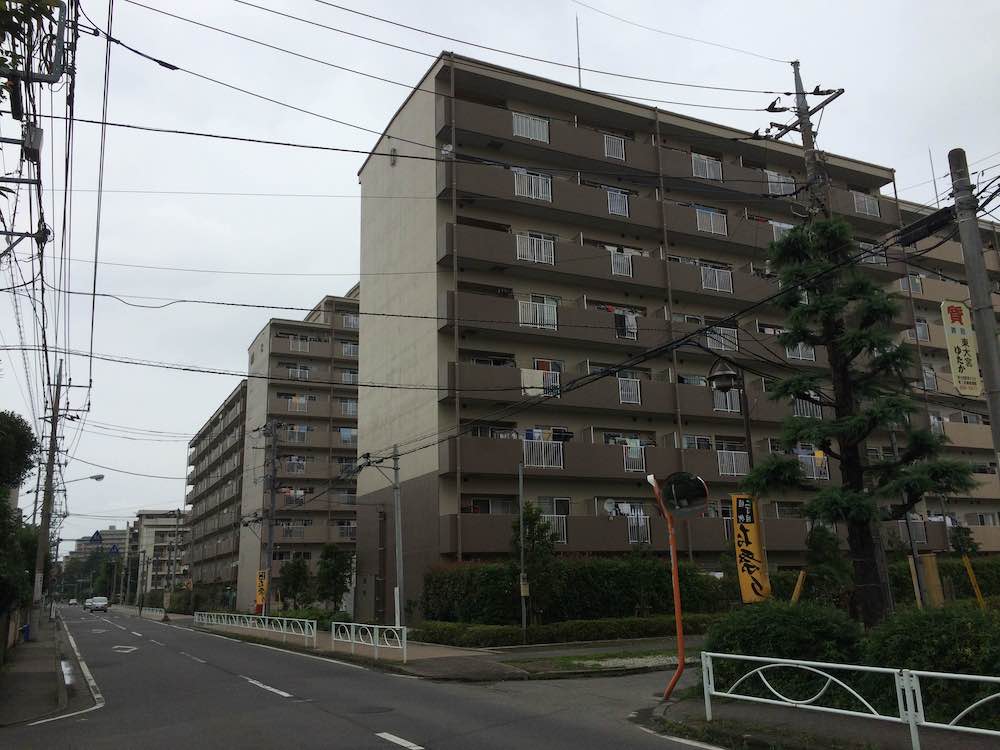
There’s one demographic, however, that lacks AC almost altogether, and mainly for systematic reasons: people who live in public housing. An August 1 report in the Asahi Shimbun told of a 43-year-old woman who lives with her three children in a 3DK apartment run by the Tokyo Metropolitan Government for low income families. The rent and management fees for the apartment come to about ¥30,000 a month, which is half what the woman paid for a private rental apartment before she moved into the prefectural building 3 years ago. At the time, the apartment did not have an air conditioner, so she bought one for ¥70,000, including installation, at a discount appliance shop. Her apartment is situated on the corner of the 6th floor and gets a lot of sun, so nights can still be intolerable due to poor air circulation. The woman and her 13-year-old daughter share a six-mat room, leaving her two sons, one 19 years old, the other 17 years old, with a room each to themselves, but in the summer they all sleep in the same room because that’s the only one with AC, which isn’t strong enough to cool the whole apartment. Consequently, the sleeping arrangements in the summer are close and uncomfortable. During the day, they place electric fans strategically throughout the hallways to distribute the cool air, but it doesn’t work very well. The woman would like to buy a second AC, but there’s no place to put it. Her room is next to the veranda, so the fan unit can be placed there, but there are no other places in the apartment where a second AC could be installed. The building, which is 40 years old, was not designed with AC in mind. The electrical current in each apartment is set at 20 amperes, though it can be increased to 30, which still would not be enough. If the AC is on, she has to be careful not to use too many other appliances, otherwise the circuit breaker will trip. And, of course, her electric bills are high. Public housing is notorious for having bad insulation, and her salary as a caregiver is only ¥220,000 a month. Besides, if and when she leaves the apartment, she is required to leave it as she found it, which means she will have to remove the AC and take it with her.
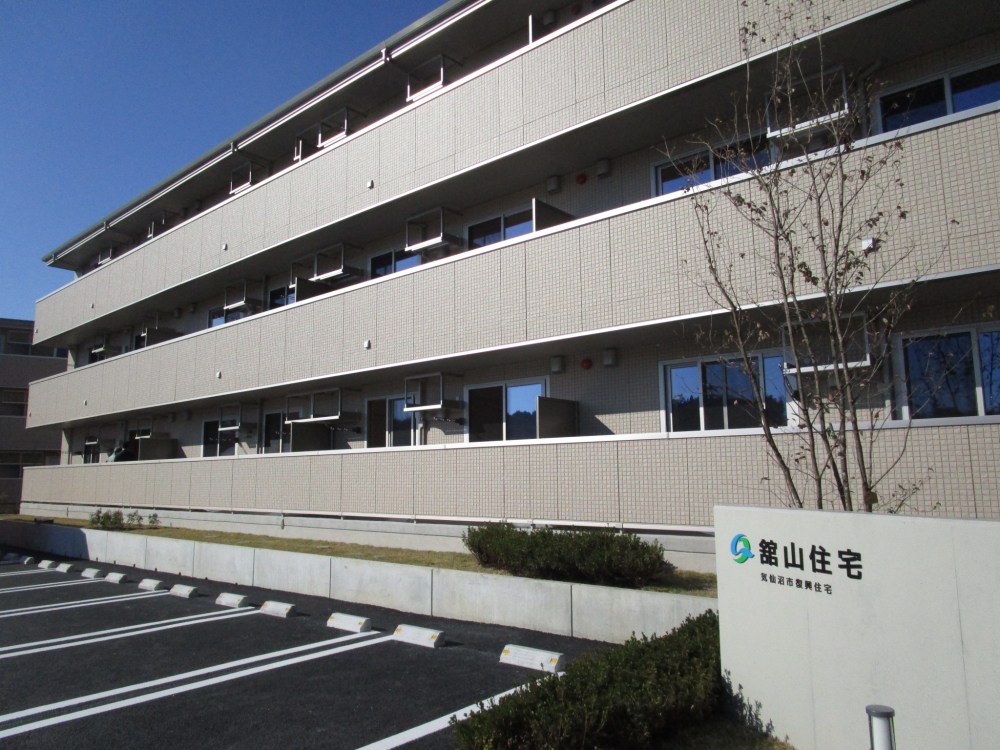
There are 2.16 million public housing units in Japan, all run by local governments. The central government requires that all have kitchens, flush toilets, wash rooms, and bath rooms. AC is not required. The land ministry says that 60 percent of public housing units are more than 30 years old and 60 percent contain a head-of-household over 60. The Tokyo Metro government only provides 260,000 units (individual wards may run their own low-income public housing), 79,000 of which were built before 1970. None of the public housing in Tokyo comes with AC, though newer buildings have features that make it possible to install AC units. When Asahi contacted the relevant prefectural authorities, they said that older buildings are regularly renovated but not in terms of improving insulation or making it possible to install AC units. One staff member said, “We formulate design policies in terms of cost effectiveness.”
A professor of environmental engineering told Asahi that all public housing in Japan is concrete-based and poorly insulated compared to wooden buildings. That means that temperatures don’t drop appreciably at night. Even if a unit in such a building has AC, it’s possible that the interiors will remain above 30 degrees. This is particularly worrisome for elderly tenants, who are more susceptible to heat stroke. Top floors are particularly dangerous since rooms sit right under the roof. According to medical statistics, about half the people who suffer from heat stroke and live on the first floor of a collective housing facility end up hospitalized while 90 percent of heat stroke patients from top floors are hospitalized.
Another professor who studies low income households says that even when they have AC installed, elderly people in public housing often don’t use it because of the electricity costs. He cited statistics showing that most of the people hospitalized in Tokyo for heat stroke were old people who simply did not turn on their AC, especially this summer after electrical utilities nationwide raised prices considerably. He has demanded for years that local governments not only improve insulation in public housing, but that they install air conditioners in all apartments, because the problem of heat stroke among lower income people is only going to get worse from now on.



 Cat Foreheads & Rabbit Hutches