Unsellable

usuidai

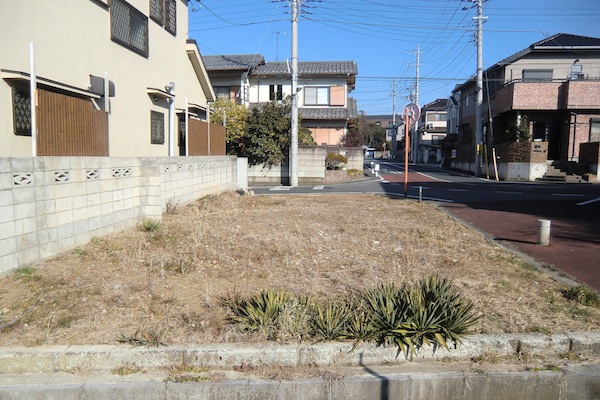
A room with a sorta view

Several months ago we looked at house in Sakura, Chiba Prefecture that was built in the early 90s. It was on the side of a fairly steep hill and commanded a view of Inba Marsh to the northeast; or, at least, that was what the info at various real estate portal sites implied. The place had already been on the market for almost six months, and when we noticed that the price had been cut for the second time we thought we might take a look at it. Originally, it was about ¥18 million and now it was ¥13 million.

The owners were still living there, but the agent said it would be no problem to look at it. Inspecting properties where people still live isn’t much fun and usually not very helpful. Though you can get some idea of the functionality of a place by seeing how people live in it, those people’s mode of living is always very different from our own, so there’s nothing to gain from it. We have to imagine ourselves in this place without all their stuff.

This particular house was even worse than we could imagine, since the photos on the web didn’t include interior shots. The residents didn’t even bother to clean up and we walked through bedrooms (they have two kids) with laundry thrown on the floor and a kitchen so cramped and cluttered there didn’t seem to be anywhere to stand. Even the “view” that the portal site had publicized turned out to be nothing. The only vista was from one of the bedrooms. It was impossible to tell how much work the place would need since it was difficult to see the floors and walls.

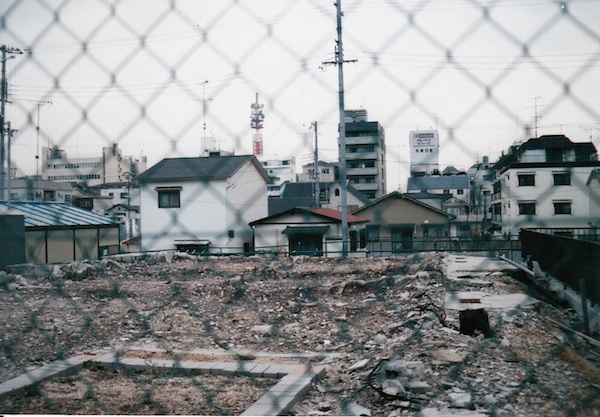
We promptly crossed it off our list and would have forgotten about it completely but it remained on the market and thus on all the portal sites we checked regularly. Last week we noticed that the owner had decreased the price again, this time to ¥8.9 million, which is quite a drop. That means the asking price is now about half what it was when it first went on sale. The agent let on that the family couldn’t move until they sold this house, but if that’s the case they are going to have to do something more than just keep cutting the price. Maybe the house is unsellable anyway, but in this market, which is filling up with older homes all the time, a low price isn’t enough. This particular house isn’t that close to the station. Would a better “presentation” help? It couldn’t hurt, but in any case it’s hard to imagine that there is a buyer out there who would want to buy such a place.

Move on up

CIMG2287Of the three prefectures adjoining Tokyo, Chiba is by far the cheapest in terms of real estate. It tends to rate on the dowdy end of the desirability index. Kanagawa remains the hippest because of places like Kamakura, Shonan, Yokohama; while Saitama, though often derided in popular culture as a suburban backwater (“Dasaitama”), was developed rather quickly owing to its size and convenient proximity to the capital. In fact, property values in northern Chiba along the Noda and Joban lines are comparable to Saitama’s. It’s when you get farther out on the Keisei and Sotobo/Uchibo lines that the suburbs become sparser and less expensive. Chiba is viewed as the sticks, which is just as well for us because it offers more affordable places within striking distance of where we live now.

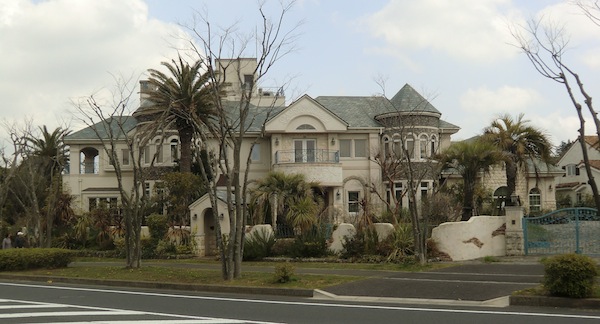
Interestingly, one of the most expensive housing developments in Japan is in a relatively remote corner of Chiba. The Azumigaoka New Town is part of Chiba City’s Midori Ward, but the nearest train station is Toke on JR’s Sotobo Line, which means it’s practically in Ichihara. The exclusivity of portions of the new town development, coupled with the unusually large plots of land contained therein, have earned at least two subdivisions in the area–Prestige and One Hundred Hills–the nickname Chibaley Hills, a takeoff on Beverley Hills. We’ve never seen this neighborhood with our own eyes since, as with the real Beverley Hills, the residents discourage tourists and gawkers by restricting access. When it first opened the development got a lot of media attention, which in turn attracted motorcycle gangs, so now they have a patrol that politely keeps out pedestrians who have no business there. Nevertheless, you can find properties in the area on sale at almost any real estate portal site, and they remain pretty expensive, though certainly not as high as they were when they were first built during the bubble era. What’s considered a super luxury in Japan would be more or less upper middle class in the U.S., essentially backyards big enough to provide privacy, two or more bathrooms, and lots of windows and open floor plans. We even saw one property at a realtor’s site with a swimming pool. Read More

Stand-up routine

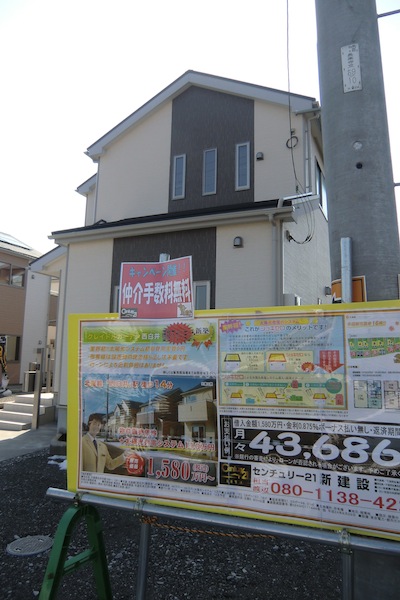
showerLast week we were looking at a new house that had recently been completed. The owner allowed the builder to show the property to the public as a model prior to his moving in. The builder represents a new trend in housing that is quickly catching on, and for good reason. They offer a number of standard designs that can be constructed cheaply using kits and materials bought in bulk, and the purchaser can customize the designs in various ways with options and slight floor plan changes. The basic structures range from a mere ¥9 million to about ¥13 million, not including land, of course. The builder also deals in land sales, but only insofar as a means of selling new homes. They look for stray plots for people like us who are looking to build their own home but haven’t found land yet. It’s the reverse of the usual process. Since the house is the main sales point, the company doesn’t charge a fee when brokering a land deal.

For us, however, the visit was purely for research purposes. The house was well-made but the basic design and overall aesthetic was dully conventional: boxy rooms, white walls, nondescript fixtures. Of course, the buyer could pay more and make the improvements he liked, which is the whole point, but given what there was to begin with we weren’t inspired. Moreover, the company seemed to limit its land selection to cramped housing developments, specifically orphan lots that hadn’t been sold after a particular development had been opened for sale.

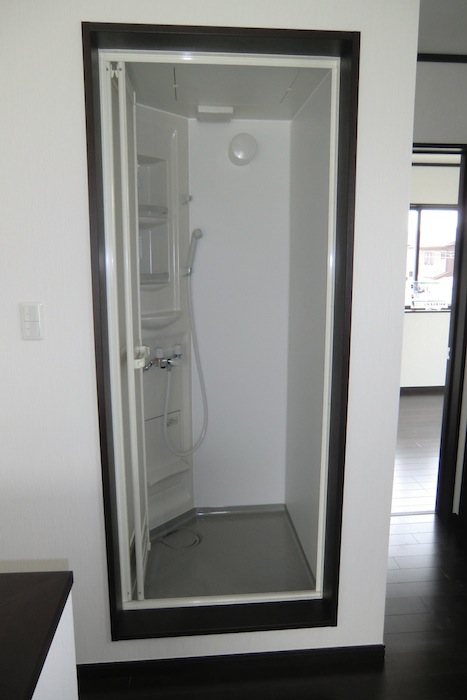
In fact, the visit wouldn’t be worth mentioning if not for one feature that stood out so prominently it seemed to define the house. The owner, whom the agent told us was a “foreigner,” had exercised his design option by installing a separate shower stall on the second floor, in addition to the usual unit bath on the first floor. Stand-alone showers aren’t very common in Japan, certainly not as common as they are in the U.S. or Europe, but you do occasionally see them. What made this one odd was that it was built off the second floor hallway. It was designed almost like a closet: there was a folding door, beyond which was a capsule-style unit shower. There was no space for changing clothes, you just stepped directly from the hallway into the shower. There was also a toilet on the second floor, but as is the Japanese custom it had its own separate room, and was down the hall from the shower. The second floor also had two bedrooms. Japanese houses usually don’t provide a distinctive “master bedroom” in the sense of a room with its own attached bathroom, but the larger bedroom in this house had a huge walk-in closet that was positioned adjacent to the shower stall but didn’t connect to it.

We asked the agent why the owner didn’t put the shower stall in the bedroom or made an entrance to the shower from the walk-in closet. She said that they had another customer who did just that, but such a design change was very expensive and didn’t fit within the overall budget of the person who ordered this house; which is a reasonable explanation but all we could imagine is family members and weekend guests dripping water everywhere as they walked naked around the house (there was a third bedroom on the first floor) after taking a shower. The agent, noting our bemusement, remarked, “Yes, it is strange, isn’t it?”

Highrises revisited

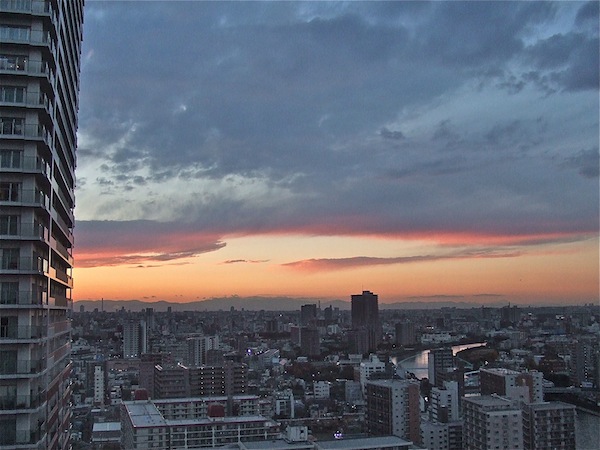
DSCF1857Though we miss living in Tokyo, especially shitamachi, we don’t really miss the highrise kodan where we spent eleven years. Until the earthquake our main complaint was the mostly insular nature of highrise life, the feeling that it was always difficult to get in and out, but during those weeks after the temblor it became a nerve-wracking experience, even as we became convinced that the structure was safe. We wrote a number of posts here about that experience and even one related column for the Japan Times (though it seems to have been taken off the JT site). For a while the media and the market seemed to concur with us that highrises may not be a wise option for a city that could be hit with its own big earthquake at any time, but eventually fears subsided and highrise condos started selling again; quite well, in fact, so we assumed our fears were just our own and didn’t extend to the general population. Even Tsutomu Yamashita, a housing journalist who is unusually frank about these sorts of matters, has come around and said that investing in a highrise Tokyo condo is a good idea since they’ve become even safer since the quake.

A recent article in Aera, however, has confirmed our initial sentiments. Opening with a frightening “what-if” scenario describing a 7.3 magnitude quake happening under the capital, the feature makes the case that even though these highrises will not collapse, life will essentially be impossible in them indefinitely. The most immediate concern, and the one that made the biggest impression on us in the aftermath of the 311 quake, whose epicenter was hundreds of kilometers away, was the loss of elevators, which shut down automatically when a building shakes. According to law, they can only be turned on by a certified technician, which means even when the shaking stops residents will have to wait for that technician to show up, and he may be inspecting other highrises. This problem multiplies with the intensity of the jolt. And if the quake is strong enough to knock out electricity, then the elevator problem is exacerbated. Under such circumstances, the residents on higher floors become like “people stranded on the top of a mountain in bad weather.” The idea of walking down and then up emergency stairways to run errands or whatever is just impractical, and virtually impossible for the elderly, the handicapped, and pregnant women. Most highrises have emergency generators, but these are for contingencies and thus only have enough power for maybe two hours. So if the elevators are out due to loss of power, that means the stairways are also dark. And even if the building structure is sound, some elements, such as doorframes, could be compromised, making it difficult to get out of an apartment. All highrises have emrgency ladders connecting verandas for use during fires, but it will be very difficult to use them to get all the way to the ground. The Tokyo metropolitan government has said that in the event of a major quake their estimate is that it will take at least a week to recover electrical power. Also, highrise residents will likely be lower down on the list of people receiving attention during rescue operations because of the difficulty for crews to access higher floors. Emergency services will first attend to victims they can reach more easily. Read More

Cheaper than dirt

shiroi4A few weeks ago we learned that a house we had been interested in was sold. We had first seen the house last fall and wrote about it here, and then did some research because the realtor who showed it to us couldn’t answer our questions about the structure and the land. Obviously, other people looking to buy were less apprehensive about the property. Another reason we hesitated for so long was the price. When we first inspected the house we thought ¥15 million was reasonable considering the size, the layout, and the unobstructed view to the south, but then we noticed that in the same general vicinity a developer was selling brand new houses of a comparable size for only ¥16 million, and some were even closer to the train station. Looking at these houses on the web we realized that the reason they were so cheap was because the developer had bought a tract of land in an undeveloped corner of town and just filled it with as many structures as it could. These were not houses ordered by people who first chose a plot and then a model from a list of designs to build on the plot. The developer divided up the tract and went ahead and constructed identical houses on all of the plots, with perhaps minor differences determined by light exposure or shape of the land. By doing it in a mass way, the developer could save money. Though we could tell by just looking at the photos on the web they were not for us, we also thought it would appeal to a lot of potential buyers simply because the houses were brand new, and thus it would be much more difficult for the realtor selling the house we’d been interested in to unload it, but we were wrong.

The existence of such new homes made ¥15 million seem like a lot for the house we had been interested in, so we did a search and found several developments in northern Chiba where brand new homes were being sold at prices below what we had come to think was the average for used homes. Two were in Shiroi on the Hokuso Line, each about 15-20 minutes from the nearest station. In one development they were going for as low as ¥13.7 million and the other as low as ¥14.8 million, which is dirt cheap considering that new homes in the same area with the same floor space and land area, and probably less in terms of fixtures and amenities, were likely going for ¥30-40 in the early 1990s. Of course, comparing anything real estate-wise to the late 80s/early 90s in Japan is a chump’s game, but it does provide a perspective that’s instructive when it comes to making priorities. Read More

Time’s up

Kobe 1997

Kobe 1997

While victims of the 2011 earthquake and tsunami continue to struggle with housing issues almost two years into their ordeal, a group of refugees from an earlier natural disaster has been given notice that they will soon be on their own. Ever since the 18th anniversary on Jan. 17 of the Great Hanshin Earthquake, various media have reported on the notifications distributed by local governments to residents of 6,600 rental units saying that they have two years to vacate their apartments. These people were living in public housing for low-income residents when the earthquake struck in 1995, and most of their dwellings were destroyed, so the governments of Hyogo Prefecture and six cities made contracts with private landlords. The residents paid as much rent as they could in accordance with their incomes and the local governments made up the rest. The deal was limited to 20 years, which means that between 2015 and 2017, depending on when they moved in, the tenants will have to move out of their current apartments, either to public housing or somewhere else. Most of these people are elderly, and the public housing (shiei jutaku) that has been built in the meantime tends to be located far from where they presently live. They are reluctant to move at their age, having formed bonds with their neighborhoods and their neighbors, which are extremely important in terms of mental and physical well-being.

The authorities say they have given the tenants ample notice. According to an article in the Tokyo Shimbun, announcements were first distributed in 2010, and the contracts the residents signed when they first moved is stipulated the 20-year limit, though supporters of the tenants point out that this term is vaguely stated and buried in small print. Most of the apartment buildings were hastily constructed by developers right after the earthquake in anticipation of just such a need for low-income housing. With local governments guaranteeing the rents of tenants, it was a virtual goldmine for landlords, which include semi-public housing juggernaut UR, and one can easily imagine that the landlords are fully supportive of the residents who are protesting the pending evictions since they themselves will lose revenue as a result–the rental housing market is not in good shape. The mayor of Nishinomiya recently received a petition with 3,251 signatures.

The local governments have said there’s nothing they can do about the situation since the 20-year limit is built into the civil code and Public Housing Law, even though the law itself was revised right after the earthquake to allow commercial properties to be used for public housing (kariage fukko jutaku). Some media, including the Japan Communist Party organ Akahata, mention that the controversy has ramifications for the current situation in Tohoku. As in Hyogo, private developers have been invited to build rental housing for people who lost homes to the tsunami or nuclear disaster, and apparently the authorities learned their lessons in Kobe because they are explaining to tenants that there is a 20-year limit. Of course, in Tohoku there are considerations that people in Kobe didn’t have to worry about, so at the moment a 20-year lease may be the least of their problems.

Damn shed

For sale? No thanks

For sale? No thanks

As we’ve looked at properties over the years we’ve invariably absorbed certain truths that don’t require statistics to verify. One of these is that Japanese single family homes are very large in proportion to the amount of land they occupy. I’m sure someone has done a study using ratios of land to floor area, and I’m also sure that Japan is probably high on the list of countries where the rate is the smallest. This situation, of course, explains the cramping not only in suburbs but in rural neighborhoods that undergo residential development. Another certain truth that may be more difficult to prove is that Japanese have more stuff in relation to the amount of storage space available. The clutter of residential subdivisions is mirrored by the clutter inside individual homes, but more to the point it is characterized by one particular item that almost every property features: the tool shed.

In Japanese they’re called monooki, which literally means a place to put things. Sheds are hardly unique to Japan, but because of the aforementioned cramped conditions they are unavoidable, ubiquitous eyesores. Most are grey and metallic, which is bad enough, but because land is such a premium and people who build houses naturally want at much interior space as they can get, sheds take up a great deal of whatever exterior space is left over. We have seen so many properties that looked OK, and then we looked out a window and–BAM!–there’s a shed blocking whatever vista that window might look out upon. And it doesn’t always belong to the property we’re checking. Once we were inspecting a house in Nishi Shiroi in a very well-tended residential neighborhood. The kitchen had a nice corner window that looked out on the leafy walkway that separated the rows of houses, but the scene was totally destroyed because the neighbor had erected a shed on the edge of his property that interfered with the view. Obviously, anyone who bought this house would have to contend with that big, grey box and we mentioned this to the realtor, and he pointed out, quite naturally, that there was nothing anyone could do about it since the shed was on someone else’s property. This seemed strange to us, because there are lots of local property laws that regulate what sort of windows you must install to protect privacy and how much sunlight you have a right to and where the driveway should be positioned so as not to bother neighbors, but there seems to be no law regulating the placement of monooki.

So we’ve concluded that it’s us, not everyone else, because sheds are so common it must mean people actually like them. (They need them to store tools? Most people don’t have gardens big enough to justify that many tools) Last week, we rode past a relatively new housing development with near-identical houses lined up in neat rows, and every one had an identical grey shed positioned in the exact same spot on the property, as if it were a standard fixture they were proud of. There is a house not far from where we live with what should be a pleasant southern exposure except that there is not one but two large sheds situated in front of what we assume is the living room sliding doors. The only reason we can think of for this unbelievably bad choice is that there is a public road to the south of the house and the occupants don’t want passers-by to look in their living room window. We understand their desire for greater privacy, but that’s why curtains were invented.

Back to the land

CIMG1953During the New Years break our house-hunting ambitions flagged a bit, and we started reassessing our priorities: What would happen if we went back to zero? In other words, we thought carefully about building our own house. The last time we did that, almost 20 years ago, we got burned, more because of our own ignorance than due to any concerted effort on the part of the real estate and construction industries. But we know more now and feel that we should at least explore the idea. For instance, we like the small houses built by A1 and they’re pretty cheap, so we could talk to them about our needs and what they can do to satisfy them. But first we would need to find a piece of land.

Though land prices have fallen since the bubble period, it’s still pretty expensive anywhere within, say, two hours of Tokyo. We’re not commuters so we don’t need to be on a main train line, but we do need to be on some train line. We started our search at the bottom, in two areas not that far from where we live and which we’ve come to know through our house-hunting inspections in the past year-and-a-half: northern Chiba along the Narita line, and south of where we live now, along the Keisei Hon-sen through Sakura. As it turned out there were more than a few very cheap properties that were still large enough for our purposes. By cheap, we’re talking ¥5 million or less, and for that price you definitely have to give up something. In some cases, the plot isn’t properly developed, meaning it may not have sewage or gas lines extended into the property itself. Also, cheap plots tend to be holdouts in sub-divisions that are already mostly filled, meaning no one wants them but the developer is desperate. The lot might be stuck in a dark corner of the neighborhood or have problems with access, which isn’t a concern for us because we don’t have a car, but sunlight is one of our priorities. Then there’s the state of the lot itself. Some appear to require a great deal of “preparation” before they could have a house constructed on them, and we have no idea how much that would cost. Read More

Something to think about (2)

Sakura city office

Sakura city office

In the weeks since we visited the house in Usui we have, indeed, thought a lot about it, and our interest has blown hot and cold. Though we like the layout and the unblocked view to the south, we’re still not sold on the location. Keisei Usui Station is 20-25 minutes away on foot, and the train takes about an hour and fifteen minutes to get to central Tokyo. It’s considerably cheaper than the Hokuso Line, which we use now, and there are more trains per hour, but the Hokuso Line gets directly to the heart of Tokyo in about an hour and is never very crowded, even during rush hour. And it only takes us about 7 minutes to get from our front door to the platform. Of course, the train isn’t a monumental consideration since neither of us goes into Tokyo more than twice a week. Then there’s Usui itself, which as a bedroom town is older than Inzai and experienced the kind of suburban sprawl that plagued most Tokyo bedroom towns developed in the 60s and 70s, while Inzai was better planned and has more parks and open spaces. That said, Inzai is also somewhat antiseptic and lacks the kind of character older Japanese communities offer. Usui was incorporated into the larger city of Sakura some years ago and Sakura is one of the great castle towns of the Kanto region. Parts of it are quite beautiful and well-preserved, it’s just that those parts are not in Usui.

Read More

Comeback

housestocks13Last week Tokyo Shimbun published a brief piece about possible good stock picks for next year, and it seems most analysts in Japan are saying that anything related to housing is a good bet. “It’s one of the few industrial sectors with promise,” said one. The main reason, as we’ve already mentioned in our other blog, is the consumption tax hike. It’s assumed that many people who are considering buying a home will want to beat the rise in the rate, which means they will have to sign a contract for the home sometime in 2013 since the rate will go up from 5 to 8 percent on April 1, 2014, so the completed house or condo has to be “transferred” (hikiwatashi) to the buyer before that date if the buyer wants to avoid the higher tax. Consequently, a lot of people will be trying to buy a home at the last minute. (Land sales are exempt from the consumption tax)

According a construction research laboratory attached to the land ministry (obviously an amakudari outfit), the number of new homes that will be built in 2013 will exceed 921,000, the first time the 900,000 mark has been breached in five years, representing a 5.2 percent increase over this year. Consequently, two other economic research centers, Nissei’s and Daiichi Seimei’s, project investment growth in the housing sector to grow by 10.8 percent and 11.4 percent, respectively. Two-digit growth in any sector is considered really, really good in this economy, and should benefit everyone from house manufacturers and condominium developers to realtors, lighting equipment makers, and construction material suppliers. The big house manufacturers like Pana Home, Daiwa House, Sekisui Heim, and Asahi Kasei (Hebel Haus), will rake in the most because they can respond to mass orders more quickly and thus help those last-minute buyers get their place built before the tax deadline.

It should be noted that this only applies to new homes, since the consumption tax is only levied on companies that make more than a certain amount of money. For the most part used homes don’t apply since most of them are transactions between individuals with realtors simply acting as go-betweens–which means you pay the tax on their fee, but not on the price of the house or condo itself. So, again, there won’t be much stimulus for the used housing market.