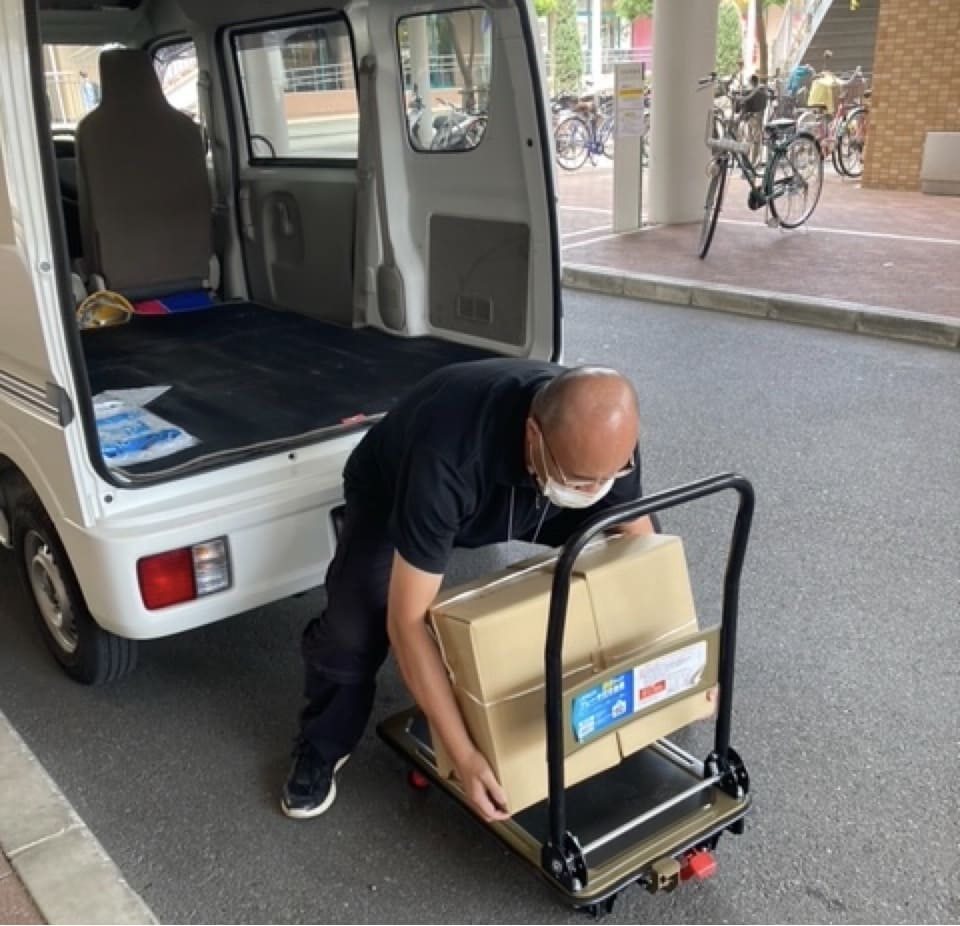
Modern life prioritizes convenience to the point where we take progress in terms of service for granted and forget to realize that convenience often comes at a price—to someone else.
Take parking. According to an article in the Asahi Shimbun that appeared September 10, vacant spaces in parking facilities in existing collective housing complexes are on the rise. A private survey found that between 2023 and 2025, more dedicated parking lots for apartment and condo residents were becoming empty. The reason, Asahi assumes, is that more and more residents of these buildings are turning away from car ownership due to cost and turning toward car sharing and other alternatives for their private transportation needs.
The market’s reaction has been counter-intuitive. Asahi only cites one condo complex, Harumi Flag on the Tokyo waterfront, when mentioning the cost of parking. Harumi Flag charges between ¥30,000 and ¥35,000 a month for a parking space to residents, which, given its location, isn’t bad; but when we did a cursury internet survey of parking rates for residential buildings, meaning buildings with their own parking lots or garages, we found that the monthly charge rarely went below ¥25,000, regardless of where in Tokyo the building was located. When we lived in Tokyo and had a car, we paid about ¥25,000 for a spot in our building’s garage in Arakawa Ward, and that was 20 years ago, so even if car ownership is declining in Tokyo, parking rates are not.
This trend, however, is being welcomed by one sector: distribution. As everyone knows, Japan is suffering from a serious shortage of drivers as more and more people patronize online retail services, which require delivery personnel. In cities like Tokyo there is a huge problem for delivery people who cannot find suitable places to park their vehicles when making deliveries. As a result, in March 2025, the land ministry revised its regulations regarding parking spaces. Previously, only department stores and some types of office buildings had to assure a certain amount of parking space for delivery vehicles, but now the ministry says that new residential buildings also must provide adequate off-street parking for delivery trucks and cars. According to the revised regulation, new condominiums of between 50 and 100 units must reserve at least one space for a delivery truck, and any buildings that are larger must add an additional space for every additional 100 units.
The Tokyo Metropolitan Government recently passed its own rules, mainly in response to delivery companies complaining about how the proliferation of tower condominiums has made their work more difficult. In Tokyo, a condo of less than 300 units must provide at least one space for a two-ton truck. If the condo has more than 300 units, then it must have two spaces.
But what about existing condos, especially those where existing parking facilities have unused spaces? According to Asahi, Tokyo is now working on rules that may compel building management organizations to convert unused residential parking to parking for delivery vehicles and storage facilities for disaster equipment and supplies. Apparently, Kawasaki and Sendai have already implemented similar rules, and Osaka is in the process of doing so. However, at the moment, no definite timeline for such changes has been announced, which is a problem because delivery services are already at their breaking point.
This matter was illustrated in another Asahi article that also appeared September 10, describing the situation of one 33-year-old driver who works for a company that handles deliveries for one particular online retailer. On the day in question, he was delivering packages to a 50-story condominium in Koto Ward, which supplies 20 extra parking spaces for guests of residents. Delivery vehicles can also access these spaces, but whether the user is a guest or a courier, they have to pay to use them. In any case, today there were no empty spaces, so the driver had to take his chances and park on the street.
He comes to this particular building almost every day. One time, he had 100 deliveries there, and after depositing certain specified packages in the takuhai (home delivery) boxes, he had to make deliveries requiring signatures, thus necessitating multiple return trips to his truck to replenish his cart. It took more than three hours. On that day, he was lucky. He could get a parking space, but it cost him more than ¥3,000, a fee for which his company won’t reimburse him.
He told Asahi that every building has different rules. Another high-rise down the street provides five free spaces for delivery trucks, but the parking time is limited to 15 minutes.
Parking fines for illegal street parking can go as high as ¥20,000, which is what many drivers make during a typical day, a combination of hourly wage (typically low) and commissions. Many companies do not pay for parking or gasoline. This driver’s company has made arrangements with local police to park on the street in certain locations for limited periods of time, but sometimes trucks from other companies or self-employed drivers steal these spaces without permission. There’s really nothing you can do about it since the drivers have to make their deliveries no matter what. Returning later just uses up valuable time for making other deliveries, thus cutting into their commissions.
“Our pay is badly affected by parking fees and fines,” says the driver. “That’s why so many drivers quit.”

