Unreal estate

“Property prices go up and down, but the main thing is not to pay them a blind bit of notice, unless and until you have a good reason to move. I learnt that a rising price will not rise forever; that when prices stop rising, it will be difficult to sell your flat, because the reason the price has stopped rising is because the climate has changed. The money you have in your house is not liquid money; it’s not money which can easily be converted into something else other than your house. It’s stupid to feel richer beause the value of your house has gone up, since the resulting rise almost always isn’t money you can use or spend. If you’re going to move, you still need somewhere to live, and the cost of that place too will have gone up, so there will be no net gain from the increase in your property’s value.”

In the above passage from his book about the credit crunch, I.O.U., John Lanchester is mainly talking about the United Kingdom, where he lives. However, his remark about needing somewhere to live and the notion that property value means little in the world where most people do live has stayed with me. Elsewhere in the book he tosses off the idea that the value of your house or apartment or land is only as much as the other guy is willing to pay you for it, in the end. Read More

On home ownership

Yesterday Dr. Christian Dimmer tweeted about a Bloomberg article that covered Japan’s housing market, specifically the boost to the Japanese economy that will be brought about by sales of new homes to “echo boomers” (or “junior boomers,” as some in the Japanese media refer to them), the children of the baby boom generation. It’s a good article in that it contains lots of helpful statistics in one place. However, one number stuck out for its incongruity, at least as far as we’re concerned. In the middle of the article, the reporters state that, according to a survey taken by the housing research company Zentakuren, “about 86 percent of Japanese own their own home.” First of all, the diction is imprecise: Does this mean that 86 percent of every single person in Japan owns a home? Of course not. So what does it mean? We assume it means that the home ownership “rate” is 86 percent, but in that regard one has to understand how such a figure is reached. Most likely it means: What percentage of homes are owned by the people who live in them? If that’s what the sentence is saying, it’s a shock to us. We have been working under the assumption that Japan’s home ownership rate has been in the low 60-percentile ranks for decades, and so we double checked. Japanese reports tend to cite the Ministry of Internal Affairs surveys and the most recent one we could find, for 2006, put Japan’s home ownership rate at 61 percent. This sounds about right. Toyama’s, the prefecture with the highest home ownership rate, is 79 percent, while Tokyo’s is about 44 percent. So we looked up Zentakuren’s survey (7,145 respondents) and found that it did not register home ownership but rather how many people “wanted” to own a home.

This is very different from what the Bloomberg article implied, and doesn’t make any sense anyway. If 86 percent of Japanese people owned their own homes, that would probably mean almost all the “echo boomers” already do, so one wouldn’t be able to expect any related economic boost. But in any case, it’s a small error on the part of the writers in relation to the whole article, whose tone is upbeat in that, since housing plays such a huge role in GDP, Japan’s economy will be better off, at least in the short run. What the article doesn’t touch on at all is the previously-owned housing market. As always in financial reports having to do with housing, “house starts” are the main indicator of fiscal health, because new housing spurs construction and sales of more products. Such a statistic is only hopeful in certain contexts, such as the United States, where the population continues to grow thanks to influx of new immigrants and the families they are raising. Japan’s population is shrinking, and every new house that’s built for an echo boomer is one less older house that gets sold, and thus one less opportunity for a current homeowner to capitalize on his or her investment. Unfortunately, these sorts of statistics never figure in most financial reporting about housing in Japan, mainly because no one really knows what sort of impact it will have in the long run, but as we’ve stated many times on this blog, there are millions of vacant homes in Japan that will never be sold, and the number is growing every day. The generation after the echo boomers is already famous as a “lost generation,” meaning a good portion of them have never secured the kind of long-term employment that sustains a country which was once the second biggest economy in the world. Ten years from now, when they come of home-buying age, they probably won’t be able to afford new homes. Maybe they’ll buy older homes, which will definitely be very cheap, in every sense of the word.

Field diary: Nikko

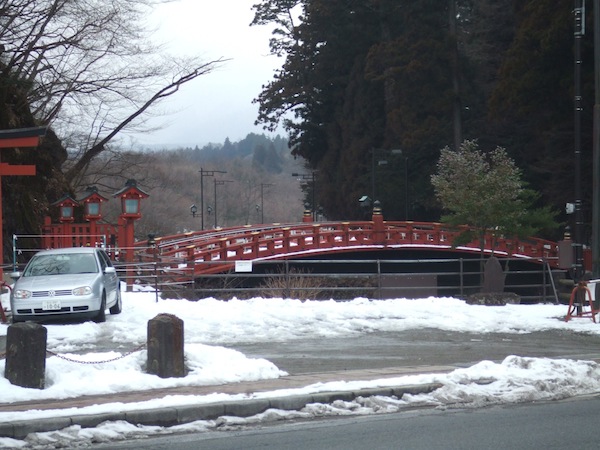
For a while now we have been looking at properties up near Nikko, though we couldn’t tell you exactly why the area appealed to us. Subconsciously, we may have thought of it as being the poor man’s Kamakura, which is where we would like to live but can’t really afford. Since the quake it’s also been more appealing since it’s obviously very far from the ocean and though it gets quakes itself it seems to be on relatively solid ground. But mainly because we always thought it was a nice town with good people and pleasant scenery. However, any time we’d been there to check out properties it was usually outside Nikko proper, and the houses were the usual suburban-style prefab junk.

This time we went to Nikko proper. In fact, the first place we looked at was a ten-minute walk from Nikko Station. The fact that is was only ¥5 million will give you an idea of the condition it was in, but from the photos on the realtor’s website it looked salvageable. Obviously, at that price we were essentially buying the land. The house was built in the early 70s, though the second floor was a later addition.

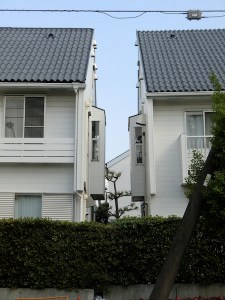
We met the agent about a block from the property. He had taken the train up from Tokyo and rented a car, since he would be showing us another property a little further out of town. The house was located next to a makeshift parking lot to the west. To the north there was plenty of space between the house and its neighbor and the garden was located to the east; beyond it was nothing. So on three sides there was a lot more room than you might expect from this part of town, which was residential in a pleasantly diverse way. Unfortunately, as with almost all Japanese buildings, the house “faced” south, and there was barely three meters between it and its neighbor. This is unfortunate because all the windows looked out on the wall of the house next door. Since the kitchen and bathroom are always located in the north portion of a Japanese house there were no windows on that side and for some reason there were no windows to the east either. The genkan was located on the west side. So that meant the only light would come from the south, and it didn’t look like much was going to make it into the house itself.

It was in even worse shape than we thought. The agent told us the owners had only left less than six months ago, but it was difficult to believe anyone could live in such a decrepit building: moldy tatami, peeling laminate floors and paneling, buckled cabinets in the kitchen. The second floor add-on consisted of two rooms that smelled as if someone had died in them. Any renovations would cost upwards of ten million, though the place really needed to be torn down. That would cost about a million, and then a new house would run another 15 probably. The location was good, but that was too much work. Read More

Community first

The inability to sell or rent out vacant houses and condominiums is not just a concern for the owners. In many places it’s something that the community as a whole worries about, especially now with all the talk about the erosion of “kizuna” (bonds) and the attendant loss of community-mindedness, which may have been over-stated in Japan, but in any case the atomization of urban life is definitely on the increase. A neighborhood in Chiba Prefecture is actually doing something about the problem in an unusually proactive way.

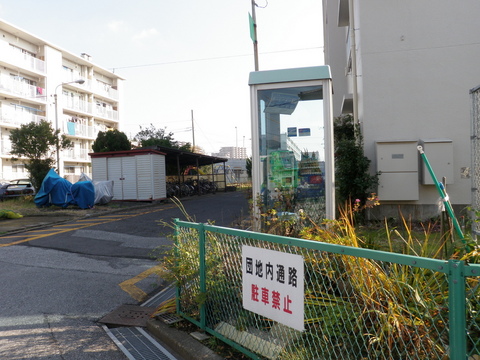
In a section of Chiba City’s Mihama Ward near Kaihin Makuhari Station, residents have put together a non-profit organization called Chiba Regional Renovation Research, whose job is to rent out vacant properties at less than their market value as a means of “reinforcing communication.” The idea is not simply to find tenants, but to make the neighborhood more viable as a community. A recent article in the Tokyo Shimbun explained that collective housing in the area in question was developed by the prefectural and municipal governments in the 1960s, and now the apartments are superannuated and mostly occupied by elderly people. After last year’s earthquake, even more people moved out of the area over fears of liquefaction, which affected many coastal areas Chiba along Tokyo Bay. The NPO is made up of 107 condominium associations in the area. Their research found that out of 800 units, about 300 were empty. (The vacancy rate for all of Chiba Prefecture is about 15 percent) In most cases, the owners of the units didn’t live there and/or were unable to rent them out, but in some cases, the owners of the units could not be identified or located. Of those empty units whose owners were interviewed–245 in all–30 percent said they wanted to rent or sell but couldn’t, and in the meantime they have to pay monthly management fees and repair fund contributions, not to mention property taxes. Since many are retired, this is a big burden for them.

The condo associations formed the NPO because their membership is so diluted it has become difficult to formulate disaster and anti-crime countermeasures. The purpose of the organization is to act as a bridge between owners and potential tenants. For instance, by offering units for less than market prices they hope to attract students. They also think that some units could be used by younger families as collective daycare centers or leisure facilities for seniors. At the same time, they will promote renovations in terms of both safety and comfort, working with prefectural authorities and the construction ministry.

That sinking feeling

Tilt: Park City Townhouses in May

It was recently reported that 32 households in the city of Urayasu, Chiba Prefecture, plan to sue Mitsui Fudosan, the company that developed their neighborhood. Urayasu, of course, suffered particularly bad liquefaction during last March’s big earthquake, since most of it is built on landfill. Some of the residents of Park City Townhouse, where homes originally went on sale in 1981, have accused Mitsui of neglect, since their homes were extensively damaged while surrounding neighborhoods, which were built by other developers, experienced much less damage. The plaintiffs are asking for ¥700 million.

Many people in Urayasu have already carried out repairs on their homes, including jacking up building that sunk during the quake. The local government gave up to ¥2 million to each household that suffered damage, but for some homes that isn’t nearly enough. Jacking up a house costs at least ¥10 million. The problem with a place like Park City Townhouse is that all 70 households are supposed to act as one when making a decision, and for months the community was split between repairing and rebuilding. In order to use the large-scale repair fund (shuzenhi), which all the homeowners contribute to on a monthly basis, three-fourths of the residents have to approve. And in order to rebuild the whole neighborhood–which would require a considerable investment from everyone–four-fifths of the residents have to say yes. So far, neither of those proposals have been addressed, but almost half have decided they will file a suit “in solidarity” against Mitsui. Those residents who are not taking part in the suit, according to the weekly magazine Aera, seem to doubt that they could possibly win against such a big company. In addition, some are averse to the publicity, which will do even greater damage to their property values than the quake itself has already done.

Park City Townhouse has always been something a model community. The homes, which originally cost about ¥30 million, retained their value better than most Japanese homes do, up until the quake, that is. Made up completely of two-story townhouses–a style that was popular until land values skyrocketed, thus making multi-story condos more feasible from a financial standpoint–Park City has been used as a backdrop for many movies and TV dramas when producers want to show modern lifestyles. However, the quake revealed what a shoddy job the developer did in preparing the land. Across the street, the predecessor of the semi-public housing corporation UR developed a three-story apartment complex on land that was prepared with a process called sand compaction. (Tokyo Disneyland, which isn’t far away, used the same process, which is why only the parking lot, which didn’t use it, was damaged in the quake) It suffered very little damage in the quake. In Park City, all 70 units were designated hankai (destroyed) to some extent by housing authorities. In addition, large cracks appeared in the ground from which deposits of old garbage such as discarded carpeting–i.e., landfill–come up to the surface. Geologists say that there is no real difference between Park City and the UR complex in terms of potential for ground liquefaction, so the plaintiffs are charging Mitsui with neglect when they prepared the land, and according to Aera’s research other Mitsui developments in other cities suffered liquefaction as well.

Mitsui has said it feels no obligation to pay for repairs or reconstruction, citing the now familiar reason that the earthquake was “beyond what anyone could have expected” (soteigai). Aera points out that the company is very powerful in Urayasu, having helped turn it into one of Tokyo’s most thriving suburbs, and therefore the local government is anxious about taking sides. There are similar suits pending in other neighborhoods throughout the affected areas targeting different developers, but Park City seems to be the one capturing the most attention.

Field diary: Matsudo-Mabashi

The house we inspected was in Matsudo, the nearest station Mabashi on the Joban Line, but the Joban line that connects with the Chiyoda subway line, not the one with the express stops that goes all the way to Tohoku. It was an eleven-minute walk from the station, and since Mabashi is 22 minutes from Nishi Nippori on the Yamanote Line, it makes it quite a convenient location with regards to Tokyo. This is significant since the house price is ¥12.8 million. That could be considered quite cheap; or expensive since it was built in 1975: 65 square meters of floor space comprising two floors on 75 square meters of land. There was another house on sale 15 minutes from the station, of approximately the same age, slightly smaller, but that one cost only ¥6.2 million. Read More

The influence of proximity

Yesterday we inspected a house built by A-1 near Monoi Station on the Sobu line in Chiba Prefecture. A-1 was the subject of one of the Japan Times’ entrepreneur columns a few weeks ago and the writeup was very intriguing in that here was basically a housing design company that tried to keep costs down by overseeing construction. Their home page proved to be even more intriguing in that the designs were simple and practical, the materials attractive (wood interiors, in particular), and the prices well within almost anyone’s budget. One of the ways they keep their prices down is eschewing expensive promotion. For instance, they don’t build model homes but rather pay people who are now living in A-1 homes a small fee to show prospective buyers around their dwellings. That’s what we did, in the company of an A-1 salesman. Read More

The landlord’s an idol

This week the tabloid press is obsessed with Tomoko Nakajima, half of the comedy duo Othello. According to the scandal weekly Flash, Nakajima hasn’t paid rent on two apartments in Shibuya–one her residence, the other an office–since last August and is now being sued by the owners of the two properties, which together cost ¥1.1 million a month to rent. Nakajima hasn’t worked since April when she took sick leave, but show biz reporters are saying that she came under the spell of a “fortune teller.” Nakajima allowed the woman to move in with her and she has been directing Nakajima’s life ever since, presumably squeezing her for cash. The comedian’s parents and management company say they have not been able to contact her for months, but also assume that once Nakajima runs out of money the woman will lose interest and move out.

The story wouldn’t have normally interested us until we heard that the apartment Nakajima rents as a residence at ¥650,000 a month is owned by Masahiro Motoki, who starred in the Oscar-winning film “Departures” (“Okuribito”). We dug a little deeper and learned that Motoki is not the person who is suing Nakajima for back rent. The suit is being carried out by the guarantee company that manages the apartment. This is a common investment scheme. Guarantee companies broker deals between apartment sellers and buyers, convincing the potential landlords to purchase the property and leave all management to the guarantee company, which looks for tenants, sets rent rates, and acts as guarantor in exchange for a sizable fee that is paid by the tenant. Nakajima’s unit is 122 square meters, which partially explains why her rent is so high. Other factors include the location, Shibuya, and the fact that the building houses a number of other celebrity-owned units that we presume are also managed by guarantee companies, thus setting up an interesting show biz pecking order. Motoki, a former Johnny’s idol who made a successful transition to legitimate acting, can invest in properties that are then rented out to other show biz people who are successful but not successful enough to buy their own luxury condos. (We’re not entirely sure if Motoki didn’t live in the apartment at some time in the past, but at any rate he did hire the guarantee company) In fact, we would think that one of the advantages a star like Motoki would derive from such a business arrangement would be keeping his name out of the press if a lawsuit erupted with a tenant. How does it look for a former idol to be suing a civilian, or even a current comedian for that matter? Maybe it means nothing. In our research we found a number of celebrities who have made similar investments, including another comedy duo, Kyain. Othello is popular, but not as popular as Kyain. Are they popular enough to afford ¥1.1 million a month in rent? At the moment, apparently not.

First-timers

In real estate parlance, there is a term for people who are buying a home for the first time: ichiji shutokusha. In fact, there are homes that are specially designated for these buyers. Almost all are condominiums, and to qualify for the ichiji shutokusha designation they have to have at least 60 square meters of floor area and cost less than ¥35 million. To put it succinctly, they are designed for families and are cheap.

According to the Asahi Shimbun, in 2010 80,204 brand new condominiums designated for ichiji shotuksha were put on sale in the Tokyo metropolitan area. That’s a little more than 18 percent of all the new condos that went on sale in the area that year and a little more than one percent less than the number put on sale in 2009. In fact, the share of new first-time condos among all new condos in Tokyo and its environs has been dropping since the turn of the millennium. In 2001, they accounted for 38 percent of all new condos, and for the next five years the share remained in the 30 percentile range. In 2007, the share dropped to about 25 percent and has been steadily dropping ever since.

The Asahi article doesn’t analyze why this is happening, though one could get a fairly good idea of why such condominiums would become less popular. The above-mentioned criteria would exclude the vast majority of new condos built within Tokyo proper, which is where most people in the region work. The majority of first-time condos are probably located in the far suburbs on inconvenient train lines, which means that their value depreciates even more quickly than condos in Tokyo or other major cities. They are also more difficult to sell, thus contradicting one of the salient features of a first home–it’s appeal as an investment, as a stepping stone to a larger house down the line. The standard middle class narrative says you buy a first house young and then trade up to something better and larger as your family grows. But if the value of your property shrinks over time, that sort of upward mobility is difficult to achieve, since you’re not going to get as much money as you paid for it; and the longer you hold on to the property, the less it’s worth and the less likely you can use the sale money to buy a “better” place. At least with a detached home, the land value may at least stay the same, but there is very little land value involved in condo sales. And since developers are always building new first-time condos that are more appealing than used ones, it becomes almost a self-fulfilling prophecy.

The farther Japan gets from the bubble period of the late 1980s–the last time when condo owners believed the value of their homes would increase–the more likely first-time condo buyers will opt for something that they think they can live in their whole lives, and that doesn’t necessarily include condos designated for ichiji shutokusha. Or, at least, that’s our analysis.

Last resorts: Izu division

CI Villa

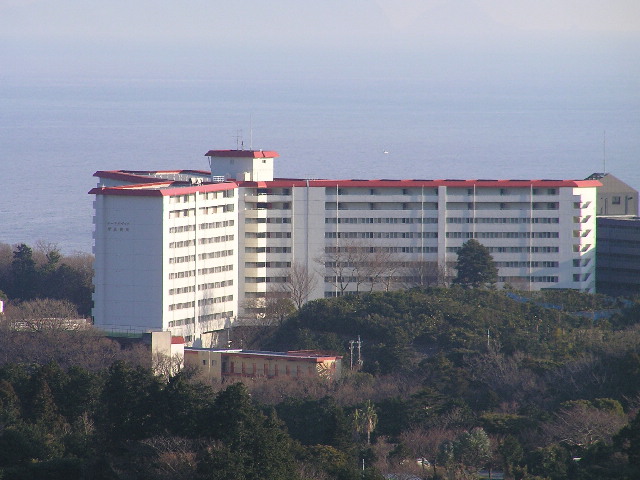
Last weekend TBS ran a long report on resort condos on the Izu Peninsula, focusing mainly on the Atsukawa Onsen region. The hook for the piece was an advertisement for a ¥20,000 condo. That may not sound like much of a bargain, but we’re talking sale here, not rent. The reporter visited the CI Villa condo, which is only 20 years old and commands a beautiful view of the Pacific. He wasn’t allowed to inspect the unit being advertised but he was able to visit another one of comparable size (43 square meters) and age. In any event, while the sale price turned out to be the real thing there were strings attached. The buyer would also have to pay more than ¥3 million in unpaid management and repair fees that have accumulated during the years since the unit was abandoned by its owner and seized by the authorities. And then, of course, the new owner would have to start paying these fees at a rate of ¥30,000 a month.

As the reporter pointed out after learning all this, the condo is still a bargain. Not only does it come with a view, but the management fees entitle the owner to use the building’s elaborate spa facilities, swimming pools, and other amenities. He thought the place was a steal, but as he started talking to local residents and public officials he came to understand why no one was snatching up these low-priced properties (there were quite a few, and not just in CI Villa). He remembered the TV drama series, “Zeni no Hana,” that aired many years ago and which was set in this particular town. It was a huge hit and sparked a travel boom to Atsukawa and in turn a building craze. About half the residences in the region were built after 1975, with construction peaking during the late 80s bubble period. The average price of a condo in CI Villa when it was new ranged between ¥40 and ¥50 million.

Of course, the end of the bubble also ended all that. One local merchant estimated that the number of tourists who come to the town is about “one-hundredth” of what it was during the peak times. And as more and more businesses who relied on these tourists left, the town fell into disrepair. Many people, it seems, do come down with an eye to buy property, most of which is in good condition, but once they see the boarded up shops and derelict infrastructure they get discouraged. The mayor said that the year-round population has aged even more quickly than the national average, and that welfare costs have increased six-fold since 1990. Because the tax base is so small, the town can’t keep up appearances. It’s a vicious cycle. One solution would be to exploit the region’s hot springs to produce and sell geothermal power. The temperature of the onsen approaches 100 degrees, and since local inns only need 50 degrees, the town thinks it could transform those wasted 50 degrees into revenues. The problem is that inn owners, who constitute the biggest block of business interests, are basically wary of geothermal, mainly because they think, wrongly, that it will sap the long-term onsen capabilities. One told the reporter that he had doubts about the local government’s belief that tourists would flock to the area out of curiosity and a desire to support such an environmentally effective project. Apparently, other onsen regions have had some success with such an endeavor.