Field diary: Matsudo-Mabashi

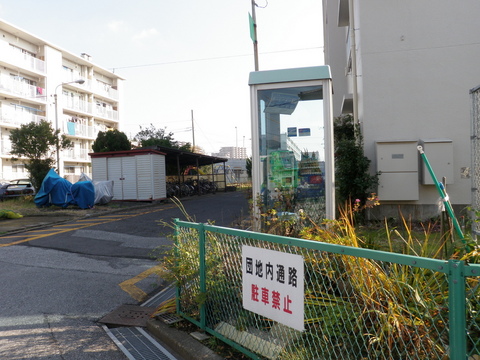
The house we inspected was in Matsudo, the nearest station Mabashi on the Joban Line, but the Joban line that connects with the Chiyoda subway line, not the one with the express stops that goes all the way to Tohoku. It was an eleven-minute walk from the station, and since Mabashi is 22 minutes from Nishi Nippori on the Yamanote Line, it makes it quite a convenient location with regards to Tokyo. This is significant since the house price is ¥12.8 million. That could be considered quite cheap; or expensive since it was built in 1975: 65 square meters of floor space comprising two floors on 75 square meters of land. There was another house on sale 15 minutes from the station, of approximately the same age, slightly smaller, but that one cost only ¥6.2 million. Read More

The influence of proximity

Yesterday we inspected a house built by A-1 near Monoi Station on the Sobu line in Chiba Prefecture. A-1 was the subject of one of the Japan Times’ entrepreneur columns a few weeks ago and the writeup was very intriguing in that here was basically a housing design company that tried to keep costs down by overseeing construction. Their home page proved to be even more intriguing in that the designs were simple and practical, the materials attractive (wood interiors, in particular), and the prices well within almost anyone’s budget. One of the ways they keep their prices down is eschewing expensive promotion. For instance, they don’t build model homes but rather pay people who are now living in A-1 homes a small fee to show prospective buyers around their dwellings. That’s what we did, in the company of an A-1 salesman. Read More

The landlord’s an idol

This week the tabloid press is obsessed with Tomoko Nakajima, half of the comedy duo Othello. According to the scandal weekly Flash, Nakajima hasn’t paid rent on two apartments in Shibuya–one her residence, the other an office–since last August and is now being sued by the owners of the two properties, which together cost ¥1.1 million a month to rent. Nakajima hasn’t worked since April when she took sick leave, but show biz reporters are saying that she came under the spell of a “fortune teller.” Nakajima allowed the woman to move in with her and she has been directing Nakajima’s life ever since, presumably squeezing her for cash. The comedian’s parents and management company say they have not been able to contact her for months, but also assume that once Nakajima runs out of money the woman will lose interest and move out.

The story wouldn’t have normally interested us until we heard that the apartment Nakajima rents as a residence at ¥650,000 a month is owned by Masahiro Motoki, who starred in the Oscar-winning film “Departures” (“Okuribito”). We dug a little deeper and learned that Motoki is not the person who is suing Nakajima for back rent. The suit is being carried out by the guarantee company that manages the apartment. This is a common investment scheme. Guarantee companies broker deals between apartment sellers and buyers, convincing the potential landlords to purchase the property and leave all management to the guarantee company, which looks for tenants, sets rent rates, and acts as guarantor in exchange for a sizable fee that is paid by the tenant. Nakajima’s unit is 122 square meters, which partially explains why her rent is so high. Other factors include the location, Shibuya, and the fact that the building houses a number of other celebrity-owned units that we presume are also managed by guarantee companies, thus setting up an interesting show biz pecking order. Motoki, a former Johnny’s idol who made a successful transition to legitimate acting, can invest in properties that are then rented out to other show biz people who are successful but not successful enough to buy their own luxury condos. (We’re not entirely sure if Motoki didn’t live in the apartment at some time in the past, but at any rate he did hire the guarantee company) In fact, we would think that one of the advantages a star like Motoki would derive from such a business arrangement would be keeping his name out of the press if a lawsuit erupted with a tenant. How does it look for a former idol to be suing a civilian, or even a current comedian for that matter? Maybe it means nothing. In our research we found a number of celebrities who have made similar investments, including another comedy duo, Kyain. Othello is popular, but not as popular as Kyain. Are they popular enough to afford ¥1.1 million a month in rent? At the moment, apparently not.

First-timers

In real estate parlance, there is a term for people who are buying a home for the first time: ichiji shutokusha. In fact, there are homes that are specially designated for these buyers. Almost all are condominiums, and to qualify for the ichiji shutokusha designation they have to have at least 60 square meters of floor area and cost less than ¥35 million. To put it succinctly, they are designed for families and are cheap.

According to the Asahi Shimbun, in 2010 80,204 brand new condominiums designated for ichiji shotuksha were put on sale in the Tokyo metropolitan area. That’s a little more than 18 percent of all the new condos that went on sale in the area that year and a little more than one percent less than the number put on sale in 2009. In fact, the share of new first-time condos among all new condos in Tokyo and its environs has been dropping since the turn of the millennium. In 2001, they accounted for 38 percent of all new condos, and for the next five years the share remained in the 30 percentile range. In 2007, the share dropped to about 25 percent and has been steadily dropping ever since.

The Asahi article doesn’t analyze why this is happening, though one could get a fairly good idea of why such condominiums would become less popular. The above-mentioned criteria would exclude the vast majority of new condos built within Tokyo proper, which is where most people in the region work. The majority of first-time condos are probably located in the far suburbs on inconvenient train lines, which means that their value depreciates even more quickly than condos in Tokyo or other major cities. They are also more difficult to sell, thus contradicting one of the salient features of a first home–it’s appeal as an investment, as a stepping stone to a larger house down the line. The standard middle class narrative says you buy a first house young and then trade up to something better and larger as your family grows. But if the value of your property shrinks over time, that sort of upward mobility is difficult to achieve, since you’re not going to get as much money as you paid for it; and the longer you hold on to the property, the less it’s worth and the less likely you can use the sale money to buy a “better” place. At least with a detached home, the land value may at least stay the same, but there is very little land value involved in condo sales. And since developers are always building new first-time condos that are more appealing than used ones, it becomes almost a self-fulfilling prophecy.

The farther Japan gets from the bubble period of the late 1980s–the last time when condo owners believed the value of their homes would increase–the more likely first-time condo buyers will opt for something that they think they can live in their whole lives, and that doesn’t necessarily include condos designated for ichiji shutokusha. Or, at least, that’s our analysis.

Last resorts: Izu division

CI Villa

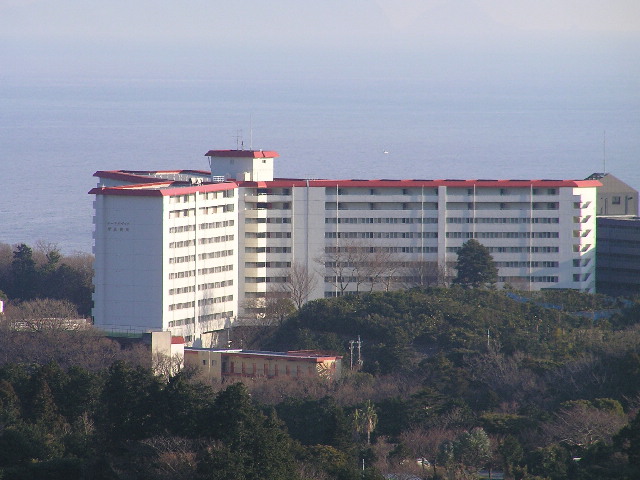
Last weekend TBS ran a long report on resort condos on the Izu Peninsula, focusing mainly on the Atsukawa Onsen region. The hook for the piece was an advertisement for a ¥20,000 condo. That may not sound like much of a bargain, but we’re talking sale here, not rent. The reporter visited the CI Villa condo, which is only 20 years old and commands a beautiful view of the Pacific. He wasn’t allowed to inspect the unit being advertised but he was able to visit another one of comparable size (43 square meters) and age. In any event, while the sale price turned out to be the real thing there were strings attached. The buyer would also have to pay more than ¥3 million in unpaid management and repair fees that have accumulated during the years since the unit was abandoned by its owner and seized by the authorities. And then, of course, the new owner would have to start paying these fees at a rate of ¥30,000 a month.

As the reporter pointed out after learning all this, the condo is still a bargain. Not only does it come with a view, but the management fees entitle the owner to use the building’s elaborate spa facilities, swimming pools, and other amenities. He thought the place was a steal, but as he started talking to local residents and public officials he came to understand why no one was snatching up these low-priced properties (there were quite a few, and not just in CI Villa). He remembered the TV drama series, “Zeni no Hana,” that aired many years ago and which was set in this particular town. It was a huge hit and sparked a travel boom to Atsukawa and in turn a building craze. About half the residences in the region were built after 1975, with construction peaking during the late 80s bubble period. The average price of a condo in CI Villa when it was new ranged between ¥40 and ¥50 million.

Of course, the end of the bubble also ended all that. One local merchant estimated that the number of tourists who come to the town is about “one-hundredth” of what it was during the peak times. And as more and more businesses who relied on these tourists left, the town fell into disrepair. Many people, it seems, do come down with an eye to buy property, most of which is in good condition, but once they see the boarded up shops and derelict infrastructure they get discouraged. The mayor said that the year-round population has aged even more quickly than the national average, and that welfare costs have increased six-fold since 1990. Because the tax base is so small, the town can’t keep up appearances. It’s a vicious cycle. One solution would be to exploit the region’s hot springs to produce and sell geothermal power. The temperature of the onsen approaches 100 degrees, and since local inns only need 50 degrees, the town thinks it could transform those wasted 50 degrees into revenues. The problem is that inn owners, who constitute the biggest block of business interests, are basically wary of geothermal, mainly because they think, wrongly, that it will sap the long-term onsen capabilities. One told the reporter that he had doubts about the local government’s belief that tourists would flock to the area out of curiosity and a desire to support such an environmentally effective project. Apparently, other onsen regions have had some success with such an endeavor.

Home Truths: property taxes

Our Home Truths column this month, which appears in the Japan Times today, is about property taxes, a fact of economic life that is taken for granted. As we imply in the article, most first-time home buyers don’t really take taxes into consideration when they embark on the biggest purchase of their lives, presumably because, like death and…well, taxes, it’s something you can’t avoid so there’s no reason to worry about it. And maybe it isn’t, depending on where you buy property. Outside of large cities and productive suburbs, property taxes can be minimal. What we found troubling, and the reason we decided to write about it, was the frequent looks of bewilderment we received from real estate agents when asked how much a particular property would run a buyer in terms of annual taxes. Some knew approximately, but some said they didn’t know at all and would check at the office (and then never called back because they sensed–rightly, in most cases–that we weren’t that interested in buying in the first place). This was odd in more ways than one. In the most significant way, property tax should be something a realtor knows by heart, since it has a direct bearing on the financial ability of the buyer to maintain whatever loan repayment schedule he or she will be responsible for. In a less signficant but more bizarre way, many real estate companies actually print the annual property tax levy in the ads for properties, so for their agents to profess ignorance is just downright laziness, and also indicates that none of them are ever asked such questions by potential buyers. In other words, the inevitability of property taxes has rendered them a moot concern; maybe people just prefer not knowing. Read More

Put out

We recently received a DVD screener of “Sayonara UR,” a video documentary by Yumiko Hayakawa. The doc chronicles the situation of a group of residents of Bldg. 73 of the Takahamadai apartment complex in Hino, Tokyo, which is run by the semi-public housing concern UR. The structure was built in 1971 and Bldg. 73 did not meet earthquake standards that were made mandatory in 1981. The company was going to carry out reinforcement work, but in 2007 it announced that the work would cost too much and everyone was asked to move out. The company would help residents relocate to other UR apartments if they needed it. They would also compensate them in part if they agreed to move out within two years of the announcement. Nevertheless, some residents refused to move, saying that they were simply being made victims of UR’s well-publicized move toward privatization. Bldg. 73 was not profitable and so UR planned to tear it down and sell the land to a developer. The quake-proofing story, according to these tenants, was merely an excuse, and not a particularly believable one since there was no inspection made by third parties, even though the tenants asked for it.

It was a classic eviction tale, and Hayakawa clearly sided with the tenants. As advocacy journalism goes, “Sayonara UR” has its good points. Throughout the doc, she refers to UR as representing “social housing,” something she believes is essential to the well-being of a well-ordered and responsible society. UR, as noted thoroughly in our blog, is semi-public, which means their obligations as a public housing provider are limited, and Hayakawa is careful about this point. She shows how UR still uses a lot of tax money in its operations, and interviews an outspoken professor who describes how UR is a money sink, more than ¥1 trillion in the red. The government has been trying to find ways of setting the company free. One of the main reasons they can’t, as evidenced by this documentary, is that people who rent UR apartments, especially those who have lived there a long time, don’t want the company to be made 100 percent private. There are many reasons for this, including the fact that UR does not follow the extortionary practices private landlords are known for, such as charging extra fees–gift money and contract renewal fees–that have no purpose. Hayakawa doesn’t address these reasons or the lack of laws that would protect tenants, but she does an excellent job of interviewing all sides of the story and giving equal weight to each. However, viewers not familiar with Japan’s housing situation may mistakenly equate social housing with low-income housing, which it is not. It’s a difference Hayakawa neglects to clarify, and because she doesn’t specify how much rent these people pay some will think they are poor, when actually they are quite middle class. In fact, given their economic status and the superannuated state of their abodes (most public apartments built in the 1970s for families are less than 60 square meters), many viewers may wonder why these holdouts aren’t jumping at the chance to move to newer, cleaner apartments that will cost proportionately about the same. She also doesn’t clarify that only ten of the 250 households asked to leave refused to do so by June of 2010, when the topic was covered by TBS. By April of the next year, the number was down to 7. Read More

Field Diary: Onjuku-Kamifuse

Type: One-story house; slate roof; wooden frame; siding exterior
Age: 14 years
Land: 165 square meters
Floor area: 76.6 square meters
Distance from nearest station (Onjuku on the Sotobo Line): 3.8 km
Price: ¥7.9 million

Unlike the previous property we inspected in the coastal town of Onjuku, Chiba Prefecture, this one was firmly embedded in a subdivision, albeit a sparsely occupied subdivision. Slammed up against a dense forest, the sad-looking little gray house had no southern exposure to speak of, and so was situated perpendicularly to the road, offering the vacant lots to the west and east its only views. The fact that the house is 14 years old and nobody has snatched up these lots in the meantime probably means they never will, what with other, more elaborate and better planned subdivisions going up elsewhere in the town–and closer to the station.

We couldn’t imagine anyone buying this house, which, aside from being dark, was mold-infested and falling apart. Given the low price, one might think it could be fixed up, but up close the structure, at least, seemed hopeless. The design was out of whack: The toilet on the west side? The agent was polite and helpful but obviously understood the property’s unsellability and didn’t even bother taking our data the way he’s supposed to. There would be no follow-up. We all agreed, however, that it was nice to see somebody install double-glazed windows.

Field diary: Onjuku-Jikkoku

Type: One-story house; slate roof; wooden frame; siding exterior
Age: 12 years
Land: 404 square meters
Floor area: 78.3 square meters
Distance from nearest station (Onjuku on the Sotobo Line): 3.9 km (6 min. by car)
Price: ¥10 million

Situated on the edge of a huge rice field, the land that comes with this property is probably its most attractive feature, providing a sizable front yard, which the previous residents tried to make into a combination vegetable/Japanese garden. Considering how overgrown and tacky it’s become–not to mention the fact that the original asking price was ¥11 million–no one has obviously lived there for a while. The agent told us that the house was originally connected to its almost identical neighbor to the west. At some point the corridor that bound them was torn down, leaving a mysterious windowless storeroom off the bathroom as its only evidence of prior existence.

The layout was reasonable: two Japanese rooms situated in staggered parallel, both looking south; an open living/dining area perpendicularly positioned to the kitchen, which is large and airy. Despite the efficient use of space the rooms are darker than we like, owning mainly to the low ceilings and small windows. Also, a small wooden deck was built outside of the double sliding doors on the east side of the living room, facing the farmhouse next door, which is uncomfortably close. The agent said that someone still lives there though we couldn’t see any signs of recent life. It was the model of a derelict fire trap and would make any venture out on to the deck for purposes of enjoying the sunrise or whatever depressing.

Verdict: House would need at least 3 million more to make is livable, and the land size alone, not to mention the distance from transportation, couldn’t justify the price.

Dying to get in

Who died here?

Further on the subject of the property values of places where people died, which was started in the comments section of the previous post, there was actually a book titled “Tokyo Laundering” published last year about a fictional occupation: people who are hired by landlords or realtors to live for one month in houses or apartments where people just died. By having somebody occupy the place legally, the owner can rent or sell the property at its listed value rather than the cut-rate price that most owners are compelled to advertise for such a property since, according to law, they have to tell prospective buyers/renters that a person died there. If someone lives there for a month, they’re no longer obliged to reveal that information. It’s such a clever subterfuge, we’re surprised no one has actually put it into practice.

As far as we know, the only outfit that openly advertises such properties is UR, which lists rental apartments where people have died for something like half the normal price for up to two years. Supposedly, within their system 300 units become vacant each year because someone died. We’ve also heard of realtors soliciting doctors, people in the funeral business, and foreigners for such properties since such people usually aren’t grossed out by the idea of someone having died in the place they just moved into. There’s also a website that lists properties where “incidents” occurred, and though they detail the incident that took place (with the help of inadvertently humorous illustrations) and even show you the location on a map, you’ll need to do a bit of detective work to find out about renting or buying, since all they give as contact is the name of the realtor or owner. It’s a great site, however, for those into ghoulish walking tours.

And lastly, some insurance companies offer coverage to landlords for apartment deaths. If a tenant dies in one of their properties, they can receive up to ¥1 million, which should cover the money lost as a result of an extended vacancy or decreased rent.