Kill Your (Vacation) Landlord

Judging from the amount of coverage it’s received from the domestic and foreign press, Airbnb’s decision to remove 80 percent of the properties from its Japanese listings is a big deal. That wouldn’t be surprising except that previously the Japanese press, at least, didn’t seem overly interested in the house-share service. What makes it news is mainly timing. On June 15, the new Minpaku Law, which regulates the short-time rental of private property, goes into effect, right before the vacation and tourist season starts. Apparently, Airbnb, nervous about a government crackdown, decided not to take any chances and dropped listings of properties that couldn’t prove they had already received permission to operate under the new law. That means people who had made reservations at these properties in the past are out of luck unless their owners can somehow get a license to operate by the time the visitor is scheduled to occupy the room or home. Some people are blaming Airbnb itself for, presumably, not being prepared for this sort of outcome, which has been apparent at least since the beginning of the year. Whether the visitors who made reservations have gotten the message isn’t clear, but it’s likely that, come next month when they show up in Japan after having spent money on air fare and other vacation-related expenses, they may find themselves locked out of the place they thought they would be staying at. One can imagine scores of foreigners wandering the streets of Tokyo and sleeping under bridges. Thank God it’s a safe country.

Seriously, though, the Minpaku Law, regardless of how poorly it was conceived and written, was inevitable, and its purport with regard to Airbnb is hardly limited to Japan. What makes it momentous, and, in the long run, perhaps prescient, is that it adds a layer of national intent to locally enacted rules that weren’t being enforced very strongly before. In other words, Airbnb didn’t take local regulations at face value until the central government said they supported them through the law. Ostensibly, the reason for the stricter definitions is public order–protecting communities where property owners rent out rooms to strangers. Less obviously, the Minpaku Law supports the powerful hotel and innkeepers industry, which has been calling for the banning of peer-to-peer short-term rentals. And even less apparently, but no less potently, the law favors another powerful lobby, the real estate industry, which can use the law to corner whatever market is left of short-term vacation rentals, since many of the rules call for oversight by corporate entities, or, at least, entities that act like corporations.

The Minpaku Law essentially covers two types of properties. The first type is a property that has applied for and received the proper permits, meaning they comply with the hotel law. From the outside, they may look like a regular private residence, but inside they adhere to fire regulations and there is someone who manages the property on site. Minshuku, capsule hotels, and guest houses fall into this category. The second type are properties that heretofore fell into the so-called gray zone, rooms that did not comply to the hotel law but weren’t really breaking any laws–until now. Though fire laws and other related safety regulations will presumably be more strictly enforced for these properties, the main difficulty will be stricter enforcement of zoning laws, which are locally enacted. The main blanket, national rule is the one that says minpaku can only rent out rooms for a maximum of 180 days out of the year. Also, if the property is in a condominium, the owners association must be apprised of the existence of a minpaku and approve of it in writing, which may end up being the most difficult condition to satisfy, even when localities don’t prohibit minpaku from residential zones. Read More

Sky’s No Limit

Last week the government released population figures for 2017 and to nobody’s surprise the Tokyo metropolitan area was the only region that saw any increases. Given that Japan’s overall population is dropping, it was notable that the three prefectures surrounding the capital saw increases, even if they were very slight.

It would be interesting to know how much of these increases were attributable to the construction boom in so-called tower mansions, or high-rise condos. Two weeks ago, NHK aired a look at the boom that attempted to weigh the merits of high-rise living with the demerits. Until recently, most of the tower condos, which the program defines as a building of at least 20 floors, or 60 meters, were being built on the Tokyo waterfront, but now they are popping up like spring bamboo in satellite cities like Kawasaki, Saitama, and Kashiwa, because local governments are encouraging developers to build them with subsidies. In 1999, the year before national building regulations were eased, there were only 150 tower condos nationwide, but by 2016 there were about 800.

The NHK show was particularly interesting to us, not only because we once lived in a high-rish in the shitamachi district of Tokyo (we rented, though), but also in the past resided in the two cities that were profiled in the report, Kawasaki and Saitama. In the case of the latter, when we lived there it was before the merger of Urawa and Omiya, and there were no tower condos near Omiya station, one of the biggest transporation hubs on the Kanto plain. Now, within walking distance of the station, there are 2,700 relatively new condo units in skyscrapers, and they’re very popular, it seems. A new building that recently opened has 776 units and they all sold out almost immediately. NHK visited one couple with two kids who bought their 3LDK, just four minutes from the station, for ¥50 million two years ago, which is about ¥10-20 million cheaper than such a place would cost in Tokyo. The wife works in Takadanobaba and the husband in northern Saitama prefecture, so their home is right in the middle. The say they are “100 percent” satisified with their purchase, and NHK attributed the popularity of tower condos to the kind of facilities they offer. This particular building included a gymnasium, a theater room, a music room, hotel rooms for guests, a dance studio, and lots of amenities. Read More

Disaster Danchi

New public housing apartments in the Tateyama area of Kesennuma

Further on from our April Home Truths column about temporary housing for evacuees in the Tohoku region, local governments in the area are also facing another related problem: an oversupply of permanent public housing built expressly for victims of the Great East Japan Earthquake. These are apartment buildings, not unlike public housing complexes erected in other parts of Japan, that accept people who were left homeless by the disaster and were either already living in public housing destroyed in the disaster or who were living in their own homes and, for whatever reason, do not plan to rebuild those homes due to financial limitations or age.

An article in the March 15 Asahi Shimbun describes three such buildings that are now completed in Kesennuma–two 6-story structures and one that’s 10 stories, altogether comprising 165 units. People started moving in in Jan. 2015, and at present more than half the residents are over 65. As the 51-year-old community leader of the complex told the newspaper, already ten residents have died in the past two years, among them three people who were living alone and whose bodies weren’t discovered for a few days. The leader is concerned because, while the vacancy rate for this particular complex is low right now, Kesennuma eventually will have 2,087 units of public disaster housing, to be completed this May, and it seems to be too much. Given that most of the victims who move in are elderly, the local government has now estimated that by 2025, 27 percent of the residents will have died or moved into nursing homes, and by 2035 51 percent will be gone. This is only to be expected, but there doesn’t seem to be anyone to replace them. The city has said that when vacancies arise it will solicit low income families to apply for units, but projections are that there won’t be many of those since so many young people moved away from the area after the disaster. As it stands, Kesennuma will have five times as many low-income public housing units as they had before the earthquake, but now they have much fewer residents overall and few prospects for any influx. The population now stands at about 64,000, or 13 percent less than a year ago. The trend is that after graduating high school, young people are leaving the city. Read More

Suburban blight, Japanese-style

img_20161223_114702In our latest housing column for the Japan Times we talk about a new book by Chie Nozawa that explains in simple, clear terms why more and more abandoned homes, both houses and condos, will litter the landscape in coming years. She gives a lot of good examples of the kind of city planning, or, more precisely, lack of city planning, that has given rise to over-production of housing even as the population in general is shrinking and homes are left vacant.

Last week, she published an article in Gendai Business that summarizes and elaborates on the book. (Gendai is published by Kodansha, which also published her book) Her main thesis is that housing is “no longer” a financial asset, though we would probably argue that it never really has been. She points out that by 2033 one out of every three homes in Japan will be vacant, and that if nothing is done–either through demolition or some program to make more effective use of existing housing–there will be 21.5 million vacant homes in Japan. She give two reasons based on the fact that the huge boomer generation will be dying out in large numbers: 1) the homes the boomers have inherited from their own parents will be empty; 2) the homes the boomers built themselves will be empty because their own children built their own homes and thus have no reason to take those homes over. It seems almost redundant for her to mention that these homes, unless they are located in major cities on desirable land, have no value whatsoever. The homes that boomers now live in are old, and so their heirs cannot possibly move in or sell or rent them without extensive renovations, which is not liely to happen given the nature of the housing market, which is all about new things, as we pointed out in our column.

img_20161223_114841Thus, these properties have “negative value,” meaning regardless of whether the heirs tear them down or improve them, they will have to spend money that they will never see again because it will become increasingly difficult to sell or otherwise liquidate these properties, most of which are in the suburbs. And the more there are, the worse this problem gets.

This vacant house problem brings about what Nozawa calls the “sponge phenomenon.” In English parlance we might refer to it as the Swiss cheese effect: The suburbs of major cities, and even the cities themselves, become pocked with holes of vacancies that further erode surrounding property values and scare off younger potential homeowners, who gravitate instead to the nearest brand new ultra-cheap, ultra-cramped subdivision. Nozawa gives examples of regional capitals where this effect is already in full swing: 20.8 percent of the homes in Kofu, Yamanashi Prefecture, are vacant.

img_20161223_114030Vacant housing comes in four types: rental housing that is presently uninhabited, vacant houses on sale, secondary housing (vacation homes, etc.) that is unoccupied almost all of the time, and abandoned housing, meaning not for rent or sale, merely empty. Nozawa provides statistics showing that of these four type, the last, abandoned housing, is increasing at the fastest rate. She also shows the direct relationship between the amount of new housing being built in a town or city, and that locality’s portion of vacant housing. In most cases the more building that’s happening, the higher the number of vacant homes. A few enterprising spirits are trying to address this problem. One local real estate company in Higashi Matsuyama, about 50 kilomters north of Tokyo, is actively buying up small lots in these sponge-like neighborhoods and combining adjacent ones to make larger lots that can accommodate larger houses, but in order to do that effectively the realtor has to locate the owners of land that in many cases has been abandoned for a long time, and often that means negotiating with more than one reluctant heir.

It’s not a problem that is going away any time soon, or even later.img_20161223_115303

Genesis

Original plan for the Ikeda Muromachi housing development

Original plan for the Ikeda Muromachi housing development

Because Japan as a country didn’t make housing starts an integral part of its economy until after World War II, we’ve tended to believe that housing developments didn’t exist before the war, but, of course, that isn’t true. Recently we came across a 2009 article by a professor named Ken Shibata who teaches at Kyushu University’s graduate school. In it he describes several prewar housing developments.

Shibata writes from the standpoint that “suburbs in Japan are in trouble,” meaning that they are increasingly filled with vacant properties and are losing value along with residents. He blames the policy–which we’ve mentioned many times in our own blog–of focusing on new developments rather than maintaining existing ones, and he cites three prewar housing developments that today have good value even though they are quite old.

One is Denenchofu in Ota Ward, Tokyo, which sounds like a ringer. Denenchofu is famously upscale, with large, extremely expensive properties. Celebrities and rich executives live there. Though it’s not exactly Beverly Hills, it is as close to a Japanese cognate as you’re going to get. Another, more down-to-earth housing development is Tokiwadai in Itabashi Ward, which was first developed more than 80 years ago. Both these neighborhoods are in Tokyo proper, and even though they were relatively rural areas at the time they were first built, right now they have high property values simply because of their location and not so much because of the quality of their housing stock. Read More

“Semi” isn’t in it

The construction company in Shiroi, Chiba Prefecture at the center of the Amari scandal

The construction company in Shiroi, Chiba Prefecture at the center of the Amari scandal

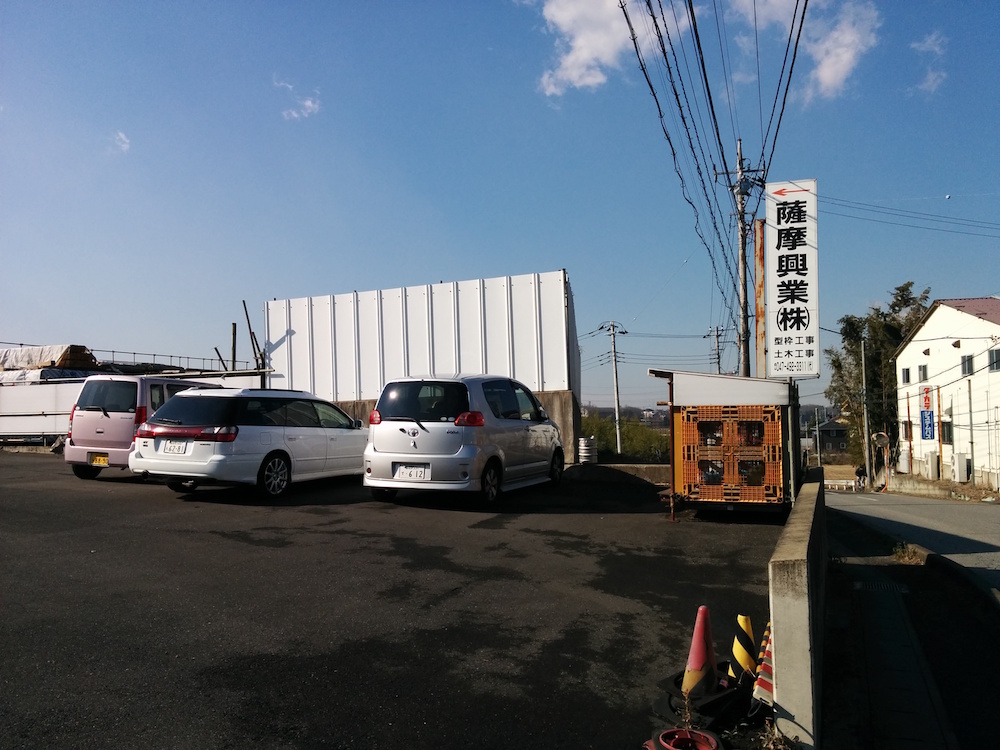
The Feb. 21 Media Mix column in the Japan Times, which we also write, is about the money scandal surrounding Liberal Democratic Party member Akira Amari that forced him to resign his cabinet position. The scandal involved a construction company in Shiroi, Chiba Prefecture, which wanted to shake down the Urban Renaissance Agency for a large amount of compensation, since part of the company’s “offices” had to move due to a road construction project that UR was carrying out with the Chiba Prefecture authorities. Takeshi Isshiki, ostensibly an official with the construction company, told various media how he had paid money to Amari and his secretaries so that they would use their influence to get as much money as possible out of UR. One of the themes of the column is that UR, which is called a “semi-private” or “semi-public” organization, depending on which angle you look at if from, is an entrenched bureacratic entity beholden to the government for its very existence. It started out as the Japan Housing Corporation, a clearly entrenched bureaucratic entity, which built lots of housing developments in the years after World War II with government money. Since the end of the bubble era, it hasn’t done much of that and has sunken deeper into debt. Without much purpose in life except collecting rent on UR apartments, UR is seen as a pointless enterprise now and several administrations have tried to privatize it, but UR has resisted because being in the government guarantees incomes. Thrown on the mercy of the market, most of its employees would lose their jobs, or make less money.

The information we used to make these points in the column was taken from an article in Gendai Business written by Yoichi Takahashi, a former finance ministry economist who knows a thing or two about how bureaucracies work and bureaucrats think. His point is that the scandal would never have happened if UR weren’t involved. Had the road construction project been carried out by a genuine private concern, or even by the Chiba Prefecture government by itself, it would have been more difficult for the construction company to extort money, and, in any case, Amari wouldn’t have had as much pull in any related negotiations. But because UR occupies a shaky position vis-a-vis the government, it easily bends to pressure from that government, especially a cabinet member. Read More