UR 2010

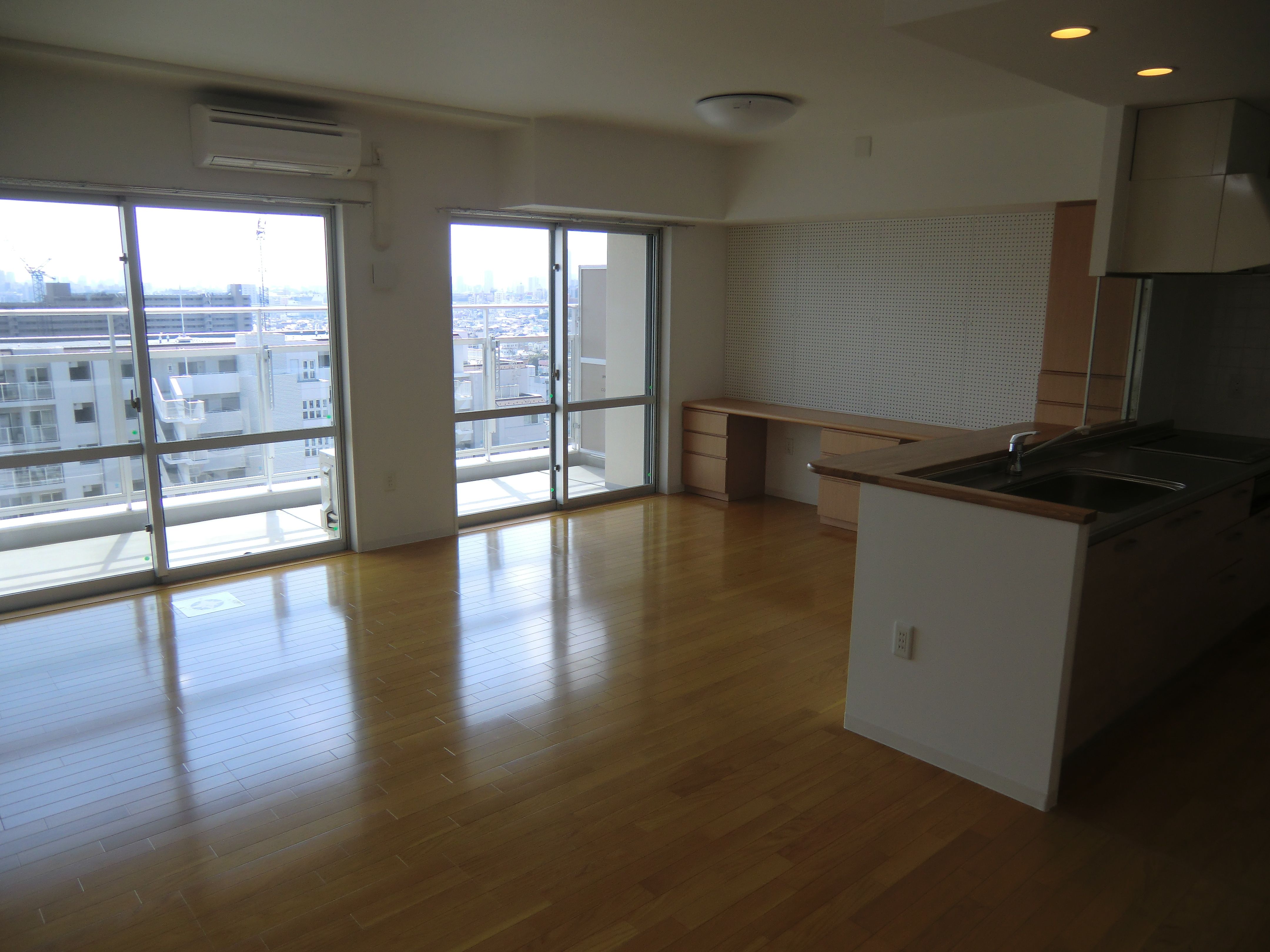
We took in the new Heart Island Shinden public housing complex a few weeks ago, which is scheduled to start accepting residents sometime in November. Heart Island Shinden is essentially a strip of land between the Arakawa and Sumida Rivers where they come the closest to each other, and though the closest stations are Oji on the Keihin Tohoku Line and Oji Shinya on the Namboku subway line, both of which are in Kita Ward, Heart Island Shinden is in Adachi Ward. It’s more than a 20-minute walk from either station, even if you move fast, so most people take a bus.

Even before the new complex was built, the area was already home to a number of apartment complexes, both private and public. In fact, it’s a veritable forest of mini-skyscrapers. The one we visited is operated by UR (Urban Renaissance), the main semi-public housing corporation in Japan. We live in a UR building that was completed in 2000, and in the decade since then we’ve often visited newer UR buildings to see what improvements they’ve made. What we’ve found is that which each new project ameninites get added but the basic problem with Japanese apartment living–namely, impractical layouts–remains, due to a habit of prioritizing 3-dimensional efficiency over baseic livability. In other words, floor plans are dictated by box-like patterns that allow developers to maximize space and fit as many units as possible given the land area and height of the building. The two wings of the HIS complex are 9 stories and 14 stories, which is about the same as the other buildings in the area, thus indicating that there is a height limit. (The building we live in is 38 stories) Read More

What’s that smell?

Though Japan remains a relative oasis for smokers, rules and regulations regarding demon tobacco continue to get more stringent, and some 50 percent of smokers have said in surveys they plan to quit when cigarette taxes are increased next month. The thing is, it’s getting more and more difficult to find a place where you can smoke in peace. It’s even getting difficult to light up at home.

This is especially true of smokers who live in apartment buildings or condos. A neologism that has popped up recently is “hotaru,” which means “firefly” and refers to men (it always seems to be men) who go out on their balconies to have a smoke. They are called “fireflies” because the glowing ash of their cigarettes give them away in the dark. Either these men are saving their families from their habit or the families have banished them to out-of-doors, but in any case their exile to the veranda often irks the neighbors, especially those who live upstairs. Newspapers are increasingly filled with letters to the editor complaining of the hotaru scourge, with writers claiming that the smoke from neighbors’ cigs aggravates their children’s asthma or discolors the window sashes or forces them keep the windows shut in hot weather.

In condominiums these hotaru-zoku (tribe of fireflies) cause all sorts of communal rifts, especially since verandas are considered “common space,” and in more and more coops smoking is banned in common spaces. Building managers have to enforce these rules, which is pretty difficult to do. After all, what kind of punishment do you impose? You can’t kick the guy out, he owns the apartment.

Yuzawa’s last resorts

Yuzawa-machi

In 1987, at the height of the so-called bubble era, when land and stock prices were on a bender, the Diet passed the Law for the Development of Comprehensive Resort Areas, whose idea was to make the development of leisure facilities a national project. Developers and local governments were given financial incentives, and property laws were relaxed so that more holiday-oriented projects could be carried out. One of the outcomes of the law was the invention of the “resort mansion,” condominium complexes that were built in outlying areas where city folk could spend their vacations. Read More

So far, so near

A survey by the real estate data company At Home conducted last November found that among commuters who worked in central Tokyo, the average time spent traveling one-way to their jobs was about one hour. The “ideal” amount of time that people cited for commuting was 34 minutes. The average response to the question, “At what point does commuting time become too much,” was 88 minutes.

Nothing surprising or, for that matter, particularly enlightening there, but things get more interesting when the stats are broken down into age groups. The average commute time for a person in his 50s who owns his own home is 68 minutes, while the average commute times for people in their 40s and 30s who owned their own homes were less than 60 minutes. We can assume that many of the people in their 50s bought their homes in the immediate post-bubble market of the early 90s, when housing was very expensive and thus people had to buy properties further from their jobs in order to afford them. In the years since then, housing prices have dropped, especially for used properties, so younger workers were able to buy houses closer to their places of work. However, the stats for renters is different. The average commute for people in their 50s who rent was 55 minutes, while that for people in their 40s who rent was 62 minutes. That would seem to indicate that older people who rent are able to live closer to town than do younger people, and that makes perfect sense.