The price you pay

The following is an article I wrote in 2004 for an occasional column that I and several other non-Japanese wrote for the Asahi Evening News about the “expat” experience in Japan. In a way it explains our skittishness about buying property today.
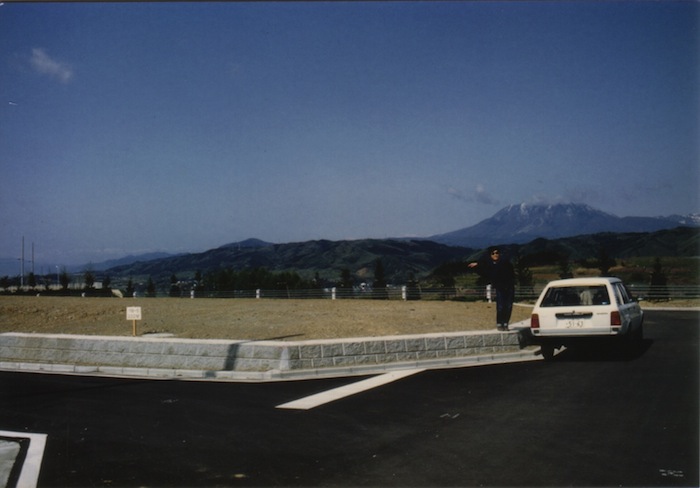
Naive days: The land when it was pure

In the early 90s, my partner and I discussed the possibility of buying a condominium or a house. Both of us had recently become self-employed and our financial situation wasn’t assured, so we talked about buying property as if it would occur sometime in the middle-distant future, meaning not soon enough that we needed to start looking right away.

Our friends knew of this vague plan, and once, while visiting a couple we knew in Nagano prefecture, they told us of a housing scheme being promoted by a nearby local government. The city was developing a large piece of land on the top of a hill and offering plots by lottery at below-market prices. The stated aim was to attract new people to the city, which had been losing population over the past decade.

We went to the lottery drawing not thinking that we would participate, but our friends talked my partner into picking a number out of the hamper just for fun. The odds against actually winning were almost ten-to-one. But she did.

Everything suddenly changed. The prospect of buying property had so far been theoretical, but now we had to face the decision head on because we had been given an opportunity.

We returned home and agonized over whether or not we should buy the land. On the plus side, it was very cheap and the lot we had “won” was located on a corner of the hill with an unblocked view of a green valley. On the minus side, we would have to move to Nagano and we would have to build a house, but as we talked these negatives slowly moved over into the positive column. Because of the nature of our work (mostly writing and translating) we didn’t need to live near Tokyo, and having to build our own house meant that we could build the house we wanted. Read More
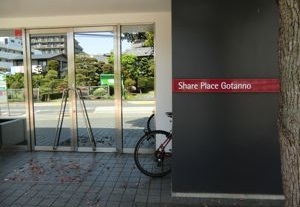
Let’s share

Considering how expensive housing is in Japan, foreigners just off the boat tend to be surprised that there isn’t more communal living going on. Usually the only shared residences outside of company and student dormitories are those occupied by foreigners just off the boat, those little oases of non-Japanese manners and mores known as “gaijin houses.” Of course, most Japanese apartments, even the larger ones, are not really adequate for communal living the way apartments in the West are, and in any case Japanese landlords tend to frown on renting out properties to multiple persons if those persons are not married or otherwise related. Consequently, there’s no vocabulary for shared dwellings, much less a market.

That is until now, and it appears to be a market-driven development. The explosion of vacant rental properties in the larger cities have prompted some real estate companies to take it upon themselves to offer what is being calle “share rooms,” meaning houses and apartment buildings with communal living rooms, kitchens and bathrooms. These companies rent out the bedrooms as they would apartments, and the practice has caught on so much so that the media is covering it as a fashionable trend. The internet is overflowing with share room bulletin boards. Read More

Give them services and they will come

On Mar. 18 the land ministry released its latest list of property values throughout Japan. For at least two years running land prices, both for residential areas and commercial areas, have been dropping nationwide. Of the approximately 27,000 localities checked only 7 recorded any increase in land values. Though the government says the economy continues to show signs of recovery, property values remain stagnant, which means the economy can never recover fully.

The average price decrease for residential areas was 4.2 percent. The drop in the same period a year ago was 3.2 percent. Similarly, the drop for commercial land was 6.1 percent compared to 4.7 percent a year earlier. The drop for commercial land was even steeper in the three metropolitan areas of Tokyo, Osaka, and Nagoya: about 7.1 percent. This greater drop was blamed on a mini-bubble for commercial property in some areas of Tokyo in 2006. Read More