Mama said knock it down

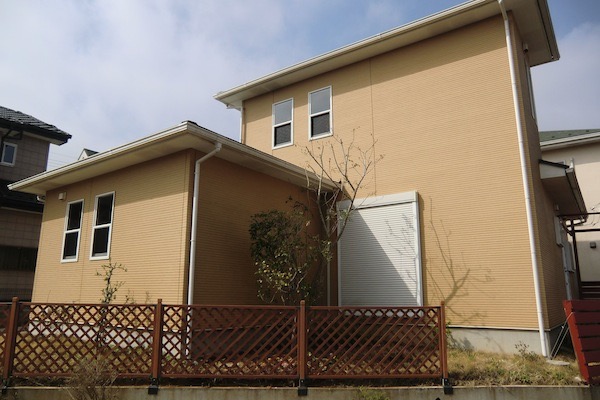
House built in Nikko in the early 1980s

Recent media reports say that housing starts are dropping in Japan, which is understandable but also worrying to those who gauge Japan’s economic health. Japan has long promoted new housing as a prime economic stimulus to the point of downplaying sales of used homes. It’s one of the reasons for the so-called akiya (vacant home) problem, and with the population also dropping, the government can no longer count on high volume sales of new home to fuel the economy, regardless of how attractive they make them. 

It’s also why the central government has done mostly nothing about the akiya problem. As long as new home sales grew, there was no problem, as far as they were concerned. But local governments have always had to contend with empty houses, which are dangerous eyesores that threaten property values. There’s also the problem of absent owners who disappear and stop paying property taxes. Consequently, it’s been local governments that have come up with measures to address the problem.

But now it seems, the central government is getting involved, albeit cautiously. On Oct. 2, Yomiuri Shimbun reported on a new national plan that would have the government subsidizing renovations of houses that may become vacant in order to make them appealing to young families. Next year, the land ministry will launch a model project that will target “homes in cities and surrounding areas” that can be renovated into homes for couples who are raising children. 

The specific type of homeowner for the project will be people who are thinking about moving out of their homes in the future and moving into care facilities. Such actions often lead to vacant properties because the owner does not have an heir or otherwise cannot sell the property. The ministry will interview such owners and, depending on the circumstances, offer the owner subsidies to have the property renovated into a home that would be more suitable for young families or facilities like daycare centers. The subsidy would likely not cover the complete cost of renovation, which the owners would have to carry out themselves. 

Obviously, there is a limited benefit to the plan. The target is only properties in cities and their close suburbs, though the most serious akiya problems are in rural areas and more distant suburbs. Moreover, the subsidy system addresses homes that are not yet vacant but could be, meaning that there is still a possibility that the owner, especially if they live in a major city, can sell their property easily if they try. Presumably, the ministry is thinking of homes that would sell more easily if renovated properly, but, in our own experience, we’ve found that buyers of older properties tend to want to renovate according to their own tastes. When owners or realtors renovate for an assumed general taste it doesn’t necessarily make the property easier to sell. 

The Yomiuri article also leaves out a lot of details that are needed to judge the viability of the project: At what age would the ministry contact homeowners, and what criteria is used to assess their eligibility? How would the ministry persuade the owners to carry out renovations themselves? If the purpose of the project is to check the number of vacant homes in cities and provide properties that will be easier for young families to buy as urban real estate prices go up, it would probably be more effective for the government to just buy real estate itself and rebuild to desired specifications, but that would contradict the tenets of laissez faire capitalism. 

According to a ministry survey, the number of homes in Tokyo and the three surrounding prefectures where the owner is 85 or older is about 340,000. The number is projected to increase to 940,000 by 2033. The increase is similar in the Kinki region: from 210,000 now to 580,000 by 2033. A good portion of these homes were built between the mid-1950s and 1980, meaning they predate quake-proofing technology that is now required. They are beyond renovation. They need to be torn down.

As do many houses that were built after 1981, when quake-proofing standards were first implemented for residential housing. The cost of renovating some structures built even before 2000 may be prohibitive for many of their owners, especially if they are living on fixed incomes. The proposed subsidies, though not finalized yet, will not cover the total cost. 

Read More

Time bombs

For years we have been writing about the future of Japan’s condominiums, which is dire. Though condos continue to sell relatively well in Japan, especially in Tokyo where prices for new ones continue to break records, evidence is ever mounting that the life spans of the buildings themselves are more limited than most people previously thought, if, in fact, they thought of it at all. And while much of this problem is demographic in nature—Japan’s declining population is certainly a factor—the real culprit is everyday economics. The cost of maintaining the buildings so that they will be attractive to future buyers is usually too much for the people who do buy them, and so they aren’t kept up.

Now the Japanese media is finally coming around to this realization in a concerted way, as exemplified by the Japan Times, for which we once wrote a monthly housing column, running a feature about the difficulties being faced by condo owners as their properties slowly fall apart. Soon, they will be abandoned in increasing numbers, just like millions of single-family houses throughout Japan. However, the best coverage of this phenomenon we’ve seen so far was a multi-part series in the Asahi Shimbun about “shukatsu mansion,” with “mansion” being the foreign loan word used for condominiums as promoted by the real estate industry, and “shukatsu” an in-vogue word at the moment representing the increasingly valid idea of the importance of end-of-life planning. In other words, owners of older condominiums are facing the fact that they will be the last owners of their units, because not only will no one want to buy them, but they may not even be inhabitable. 

The Asahi refers to these condos as “time bombs,” and while most are forty years old, a few are newer. One article focuses on a 19-unit, 30-year-old building in Kawasaki that’s a 15-minute walk from a station on the Odakyu Line. The design is terrace-style, which was popular in the 1990s and costs more to maintain and repair than conventional apartment buildings. The original buyers carried out large-scale repair work using funds from their saved shuzenhi (repair fee) contributions in the past, and the present owners say they need to do it again. One member of the homeowners association (HOA) told Asahi that they are thinking of “rebuilding” the whole thing, meaning they would tear down the present building and then construct a new one, hopefully with extra units whose sale can offset some of the rebuilding cost for present owners. However, when they hired a consultant to estimate how much such a rebuilding would cost each owner, they were shocked with the answer: ¥47.4 million. The average age of the present owners is somewhere in the 60s, meaning many are living on fixed incomes, which would make it not only impractical to spend that kind of money but impossible. The main problem is the capacity rate, meaning the amount of condo floor area that can be built in relation to the amount of land the building occupies. When the condo was originally built, it took up the maximum capacity allowed, and the local government has not changed regulations since then (many other local governments have done so in recent years in order to attract more developers). So they can’t add new units to a new building unless they reduce the floor area of all the new units.

Another problem is the 15-minute walk to the station, which in today’s market is considered far. It will become increasingly difficult to sell any of the units to someone who still needs to commute to Tokyo, unless they price the units much lower than what it would cost to build them. Consequently, it will be difficult to get a developer involved in the rebuilding, since there wouldn’t be much profit in it for them. 

Read More

Starting to get it

In an article we wrote for the Number 1 Shimbun last year we talked about a new government scheme called Sozoku Tochi Kokko Kizoku Seido, a “system for returning inherited land to the state,” which makes it possible someone who has inherited land they don’t want to transfer title to the central government. We expressed doubt as to whether the scheme would at all be effective in resolving the huge unmanaged land issue in Japan because the conditions for the government accepting the land in question seemed onerous. In order for the land to pass approval for acquisition, the nominal owners would be subject to a screening process that most would not be able to pass. 

It’s been more than a year since the plan went into effect, and according to a YouTube interview with the real estate lawyer Tatsuya Arai, who specializes in abandoned properties, the system seems to be working better than expected, even if the number of cases accepted by the government is still pretty small. Arai says that the prognosis for the government scheme “is unexpectedly good,” according to lawyers and notaries he talked to. 

The Ministry of Justice (MOJ) released statistics related to the 1,905 applications it had received for the ssystem as of April of 2024. Land registered for agricultural use accounted for the largest number of applications, 721. After that, 698 applications were for residential land, 280 for “forested” land in mountainous areas, and 206 for “others.” The reason residential land and forested land were not represented more, Arai believes, is because the conditions for application made it difficult. Applications must be accompanied by photographs of the property in question showing border markers (kui), which in the case of forested land in remote mountainous areas is difficult—most owners of such land don’t even live close to it and, in some cases, may not even know exactly where it is. In the case of residential land, the property must be completely cleared, meaning any structures that were built on it must be torn down and the land “cleared.” Moreover, many residential lots developed just after the war were not surveyed properly and/or the lots were built in cities where laws were later passed designating road widths and other infrastructure regulations, so the border markers may not be legal. But farmland is relatively easy because it usually contains no structures and the borders are usually easy to discern because owners needed to distinguish their land from their neighbors’. 

Of the 1,905 applications received, 248 (107 residential, 57 farm, 6 mountain, 78 others) were approved, which may not sound like a lot, but one has to take into consideration that it requires at least 8 months to screen the applications, according to the MOJ. Then, after the screening, there is another process that must be carried out before the government decides to acquire the land. For Arai, the important aspect is not how many applications have so far been approved, but how many have not been approved, and that number is only 18. That means the approval rate for the applications initially submitted is 93 percent, which is much higher than Arai and his colleagues in the legal professsion thought it would be.

Of course, the main obstacle is, as already mentioned, the set of conditions for the application, and Arai is positive that there are many more than 1,905 people—he estimates the number is in the millions—who want to get rid of the land they have inherited or will inherit. In that regard, he thinks more people should make the effort to apply. In addition, the ministry has not promoted the new scheme very much, so many people who could take advantage of it may not even know about it. But that aspect could also be hiding a less convenient truth, which is that the central government is not really enthusiastic about acquiring land it cannot use easily. He has the feeling that once the number of approvals reaches a certain level, the ministry may tack on new conditions that will make it more difficult for approval. Also, it costs money: ¥14,000 for the application itself and then, once the application is approved and the government decides to acquire the land, a much larger fee to actually execute the transfer of title. He mentions that 212 applications were actually withdrawn during the screening process, which could indicate several things: the applicant found a buyer for the land, or the applicant realized how much it would cost them if the application was approved. But even factoring in these withdrawals, the approval rate is still quite good.

Arai recommends that anyone who wishes to take advantage of the system call the Ministry of Justice and explain their situation. The MOJ will tell them outright if their application even has a chance because they don’t want to waste time either. He says that the ministry received more than 10,000 inquiry calls as of April 2024, so since only 1,905 applications were made, it indicates many of the callers had already been discouraged from applying. That said, if the MOJ thinks you have a case for an application, the chances are good it will be successful. He also adds that the MOJ is “the strictest of all the government ministries,” so make sure the applications are properly filled out. Even an incorrectly written kanji might mean a rejection.

Read More

Noto earthquake as harbinger

(Mainichi Shimbun)

Just before Christmas, the Asahi Shimbun ran a story in preparation for the first anniversary of the Noto Peninsula earthquake, whose effects still weigh heavily on residents of the area. Demolition work on structures damaged in the quake continues because many of the houses in the areas most affected were already abandoned and thus local authorities couldn’t contact owners easily. The article first focuses on the city of Suzu in Ichikawa Prefecture. The coastal residential zone was badly damaged, and since houses were densely packed and the streets only wide enough for one car to pass through at a time, cleaning up the area has been very difficult. 

According to Asahi’s investigation, many of the houses in this area were not only already vacant when the quake hit, some were in such bad condition that they were uninhabitable, mainly because the houses had no value whatsoever. A survey conducted in 2022 found that 1,365 houses in Suzu were abandoned, of which 60 had insurmountable structural problems. The quake caused more than 3,000 houses to collapse, but this number only covers houses that were occupied, and the city has yet to carry out a more extensive survey to comprehend the full story with regard to vacant houses that collapsed or were fully damaged. 

The problem for the city is that tearing down a house requires consent from the owner, and if local authorities cannot contact the owner they usually do nothing; but even if they do find the owner, it doesn’t mean that person can be compelled to either renovate the house or demolish it, both of which cost a lot of money.

The situation is even worse in nearby Wajima, where 30 percent of the houses in the “urban” part of the municipality are vacant. Local leaders told Asahi that some of the owners of these houses do occasionally stop by to visit their properties when they come to pay their respect at family graves in the vicinity, which makes these leaders reluctant to tell these owners they have to do something with their properties. “It might be difficult for them to part with the house,” said one official. 

Asahi extrapolated these issues to talk about fears regarding the long predicted Nankai Trough or Tokyo earthquakes, which would affect a huge area from the capital all the way to the western edge of the Kansai region. If a quake with the intensity of at least minus 6 on the Japanese scale struck this area, it could be a bigger mess than anticipated, since about 1.45 million houses in the region are vacant wooden structures, a number that increases every year. Asahi’s own research found that about 750,000 of these houses are abandoned, meaning the owners of more than half do not even visit or keep up the property. Even in Tokyo’s 23 wards, where real estate values are the most expensive in Japan, there are 55,000 abandoned wooden houses, the most being in Setagaya Ward (7,500). One Setagaya official said the problem will only get worse because the boomer cohort will soon die out, leaving their children with properties those children likely don’t want to take over.

Read More

Tomorrow never knows

There’s a certain information lag that comes with media reporting on larger social phenomena. The whole akiya/vacant housing issue has become big news in Japan over the last decade, but it was a fact of Japanese life well before that. This blog, in fact, which began in 2009, was initially conceived as a means of explaining our belief that Japan would eventually have to face a surplus of housing due to its policy of building and selling new homes without any regard for existing and future housing stock. Akiya had been on the increase well before the media started paying attention, and just now the press is beginning to report on other effects of oversupply, but in the context of the demographic crisis, meaning depopulation. 

A recent story in Gendai Business covered a bestseller by Masashi Kawai called Mirai no Nenpyo (Chronology of the Future), which puts into perspective how depopulation will affect the economy with respect to four fields: housing, medical care, local government, and public safety. In terms of housing, Kawai says the main immediate effect will be that houses will become difficult to sell, a situation that is already quite apparent in certain rural suburban areas of Japan. However, Kawai is not just talking about existing or used housing, which has been difficult to sell for a while now, but also new housing. That’s because the prime demographic for new house sales, people in their 30s with families, is shrinking in size so significantly. Statistics can be misleading. Overall, land value has increased in Japan, as well as the demand for new housing, but these two circumstances have been spurred by seniors with money to burn. They buy expensive condominiums in city centers as a means of reducing the inheritance tax burden for their heirs; or these high-end properties are being bought as investments because the buyers believe that real estate is the most stable place to park their money. Consequently, the market as a whole seems primed for growth, but it’s lopsided. 

Tomorrow will bring what could be termed the 30-30-30 problem: In 30 years the number of people in their 30s—the prime demographic for new house sales—will have shrunk 30 percent compared to right now. This cohort is already marrying later in life than their parents did, which means if they do buy a home it might not be until they are in their 40s or even later. Right now, the common time frame for housing loans is 30 years, but as the home-buying layer of the population ages, the terms for most mortgages may shorten to 20-25 years, which means the people seeking these loans will likely be faced with higher interest rates and thus be looking for less expensive housing.

Read More

Counter intuitive

Is it or isn’t it?

Last week the Ministry of Internal Affairs and Communications (MIC) finally released its latest survey of the Japanese housing situation. We say “finally” because the survey is conducted every five years and the last one came out in 2018, so we’d been waiting for it since last fall. The big news is that the number of vacant houses, or akiya, has grown to more than 9 million, or 13 percent of all homes in Japan, a statistic that’s earned headlines all over the world, though the last time the survey was published the number was already way over 8 million, so it’s not as if it’s a surprise. Still, given the global housing situation vis-a-vis inflation and other economic pressures, it’s a mighty powerful indicator of something that few people have explained satisfactorily. We think we know the reason, and we’ve discussed it for years on this blog, but that’s not our concern today. What we want to talk about is the real mystery surrounding the survey, which is how it’s conducted.

For the most part, nobody questions the MIC’s methodology, but given the sheer scale of the akiya situation, one would naturally wonder how the field staff who carry out the survey could possibly count every single vacant home. And, of course, they can’t, so they use the common statistical technique known as extrapolation, which means inferring the unknown based on the known. Specifically, it means taking a scientifically derived sample of a population and then using those results to draw a conclusion about the larger picture. So the real question is: How do they choose a sample?

In 2016, the real estate investment website, Rakumachi, published an article about how the akiya survey was conducted based on questions it had submitted to the MIC. The first point was how the ministry defined a vacant home, and, as it turns out, it has five categories, which are:

1. “Second homes,” meaning vacation properties that are used only on weekends and/or holidays; no year-round occupancy.

2. “Other” second homes, such as residences that are used only for work purposes and occasional overnight stays.

3. Vacant properties that are for rent, regardless of age.

4. Vacant properties that are listed for sale, new or used.

5. “All others,” including homes owned by people who are not occupying them at the time due to work transfers or extended hospital stays, homes that are being “prepared for demolition or rebuilding,” and homes that are vacant but to which none of the above criteria apply.

We assume that “abandoned homes” (hochi akiya) are included in category 5, and in the latest survey they total 4 million, which is quite substantial. Nevertheless, it also means that most of the residences described in the survey are still in use to some extent, so the term “vacant” needs to be qualified.

When Rakumachi asks how the akiya statistic is estimated, the MIC gives a fairly detailed answer. A vacant home is defined as a residence that is not occupied “on a daily basis,” and an evaluation is reached without necessarily interacting with the owners of the residences in question. The field surveyors “make an effort” to talk to the owner/titleholder of a property several times. But mainly they inspect the exterior of the property and question neighbors or, if the property is collective housing, like an apartment building or a condominium, they try to talk to the manager. They collect all this information for a sample of a given area and, using other information specific to the locality, extrapolate. The MIC stresses that collective housing is more difficult for different reasons, the most obvious one being that field surveyors usually cannot enter the building to interact with residents. 

So already there is guesswork involved in compiling the information that will form the basis for the akiya statistic. In January 2021, Nikkei Business ran a story that questioned this methodology with the headline, “Is the 10 percent vacancy rate in Tokyo true?” Nikkei ran off the most recent vacancy statistics: 8.49 million akiya out of a total of 62.4 million residential units in Japan; more than 800,000 vacant properties in Tokyo out of a housing stock of 7.67 million. The reporter, Takeshi So, wondered about these statistics because he rarely sees what he would describe as an akiya, be it a single-family house or an apartment, in Tokyo. (For what it’s worth, we’ve seen quite a few, but we are sensitive to that sort of thing.) And when So looked carefully at the MIC’s methodology he was struck by one thing, namely the discrepancies between the MIC’s numbers and those reported by local governments. 

Read More

Occupy Kyoto

(Kyoto Shimbun)

Last week, the Kyoto city assembly passed a regulation to introduce a special tax on unoccupied properties or underutlized second homes for the purpose of opening up the used housing market. Kyoto is experiencing an acute housing shortage that is pushing up prices and, as a result, making the city unaffordable for young families, who are moving out to the surburbs. Before the regulation goes into effect it has to be approved by the internal affairs ministry, and when it does it will be the first such local tax system that targets vacant properties, or akiya, as they’ve come to be called.

The regulation, which wouldn’t be implemented until 2026, targets three categories of empty properties according to appraised value: properties that are less than ¥7 million, those between ¥7 million and ¥9 million, and those that are more than ¥9 million. Each category would entail a different rate of taxation, and if the appraised value is actually less than ¥1 million, no extra tax is imposed for the first five years after the new regulation goes into effect. There are probably very few, if any, properties worth less than ¥1 million in Kyoto, since the appraised value would be for both the structure and the land together. Unoccupied properties includes non-rental condominiums and apartments that are empty. Excluded from the new tax are “historically significant structures,” such as Kyoto’s famous machiya row houses; as well as properties used exclusively for business purposes, rental properties, and empty houses and apartments that the owner plans to put on sale. 

According to the Nippon Keizai Shimbun, during the press conference to announce the new tax, the mayor said that the purpose is not to raise revenue, but rather to “improve civic life and stimulate urban renewal.” Apparently, the idea for the tax originated in a proposal for a kind of vacation home property tax, but experts who studied the proposal told the city that it would be better if Kyoto’s large number of unoccupied properties, including vacation homes that seemingly no one was using, were either made available for others to occupy or torn down and replaced by new homes. 

In effect, the tax would be levied on any property deemed to be unoccupied or vacant. The special tax would increase the property tax on such a property by about 50 percent, the idea being that owners who didn’t live there or rent them out would be thus encouraged to either sell them or destroy them and build something new or sell the land. Empty land, it should be noted, is taxed at an even higher rate, as much as six times as land which contains a structure, whether vacant or not. It should also be noted that properties that are categorized as residences but which are being used only for storage are not exempt from the tax; as well as properties that are only occupied a few times a year—though exactly how few isn’t clear from media reports so far.

Read More

Dead houses

In the last year, we’ve seen a lot of headlines on social media about how you can buy a house in Japan for a song. The usual figure quoted is about $500 US, which makes us think that all these articles spring from one source that’s likely American. We haven’t bothered tracing the articles to one source, though we read a few of them and they all say basically the same thing: local governments throughout Japan are promoting the acquisition of abandoned houses in order to get people to move into their regions and lift the tax base. In some cases, they are even giving houses away, but in any situation these structures will need a lot of work before they are at all habitable. We’ve written extensively about the problem of akiya and since you get what you pay for it follows that the lower the price the more work that will need to be done. The worst akiya, it must be said, are not even on the market, meaning they were literally abandoned by the owner for any number of reasons—either because they moved out and couldn’t be bothered to try and sell it, or they did try to sell it with no success, or they simply disappeared in order to avoid having to pay property taxes, which, in all probability, were very low to begin with. Or they died—with or without an heir. There are a lot of akiya whose owners are dead, meaning they never transferred the title to anyone, and though heirs are still legally responsible in Japan they can be difficult to contact if they don’t want to be found. Those houses are probably unihabitable since they’ve been left to rot, and the local government doesn’t want to spend the money to have them demolished.

There are more than 8 million akiya and, not counting dedicated rental units, many are not livable and fewer are even sellable due to other factors such as location. So when you read an article about somebody who bought a house for nothing and fixed it up into a nice place it’s not just an exception to the rule, but almost an anomaly. Anytime a foreign person buys an old farmhouse or kominka and turns it into a monument to traditional Japanese craftsmanship they’re bound to get it featured in the news, but, again, it’s exceedingly rare. Most people prefer new homes, and because government policy has always privileged new house construction, potential buyers can always find something they can afford that’s new; and in many cases it will even be cheaper than an older house that requires extensive renovation, which describes a substantial number of old houses that are on sale. 

The reason these articles about cheap houses have proliferated in the past year is mainly the pandemic, which, for a while, cut into new home construction. People are moving out of the cities because they can now work from home, so used houses starting selling well, but, again, a lot still aren’t selling. We know of several houses in our general vicinity that are in good condition but they’ve been on the market for months, some even years. There are just too many cheap old houses that people want to sell and not enough buyers. Of course, much of it has to do with Japan’s decreasing population, but mainly it has to do with oversupply. When construction resumes apace, those old houses will become even more difficult to sell. 

More to the point, people who do sell their homes almost never make back what they paid for them. The exception is certain areas of big cities, but even in those cases it isn’t guaranteed, and then the seller will be even less likely to see a profit, especially when you factor in the interest they paid on their loan. (You’re more likely to make a small profit if you bought an old condo in a popular area of Tokyo and resell it later.) At this point, we think most Japanese people know this, despite all the talk about “maintaining property values” at all cost. We certainly know it. Almost as soon as we moved into our new house in 2014 the assessed value dropped by almost two-thirds—and that’s for property tax purposes, which tends to be higher than market assessed value. (Assessed value for land is a different matter) So we know we will never be able to make money on this house, which is one of the reasons why we had it built the way we wanted—meaning few other people would probably want it. But the problem as we get older is: What can we do with it when we reach the age where we can no longer live here? There’s a very good chance we won’t even be able to sell it. Since we don’t have children, there’s no one to inherit it. We’ve already brought up the possibility with some younger relatives that any of them can have it for free, and while they sound interested, we’re not sure if the idea of taking on a property is something they have the wherewithal to carry out. We’ve even thought of donating it to some organization, but that might run into problems with neighbors who find out about it beforehand. 

Read More

Empty nest syndrome

Occupied house undergoing a Sumitomo makeover

A Kyodo news report carried by the March 18 issue of the Tokyo Shimbun clarified an important point in the discussion of abandoned or otherwise empty homes in Japan, vernacularly referred to as “akiya.” According to a survey of 700,000 properties throughout Japan conducted by the Ministry of Internal Affairs and Communications, 46.4 percent of akiya are at least 50 years old. Moreover, among the reasons given by present owners for not having unloaded the properties or demolishing them, 52 percent said they had inherited them or received them as gifts and, essentially, didn’t know what to do with them. As years passed, neglect took its toll, and in many cases if not most, the homes, especially if they are single-family houses, have become uninhabitable.

Five years ago the central government enacted a special housing law that would compel local governments to manage vacant properties more proactively. According to Kyodo, the government is now going to “check the effectiveness of the law” in order to see whether it should be revised or supplemented. As of October 2018, the last time the land ministry released findings from its national housing and land survey, which it conducts every five years, the number of vacant homes stood at 8.489 million. That includes apartments and condos that have not been occupied for at least one year. According to the government, there are 12 percent more akiya than there were when the survey was conducted in 2008. In addition, 14 percent of all homes in Japan right now qualify as akiya, and the ministry estimates that 40 percent are “abandoned,” meaning they are permanently unoccupied. Last year, Nomura Research Institute projected that by 2033, the number of akiya would increase to 19.55 million, or 30 percent of all homes in Japan.

In a related story, Nikkei Business Daily’s March 15 edition explained Sumitomo Realty and Development’s new project to exploit vacant single-family houses. The project accepts orders for renovations of derelict houses in order to turn them into share houses (i.e., homes with multiple residents who share common spaces), minpaku (guest houses or airbnb properties), or social welfare facilities. Sumitomo has a lot of experience in the home renovation business through its Shinchiku Sokkuri-san brand home “reform” service. “Shinchiku sokkuri-san” roughly translates as “making an old house look just like a newly built one.” Since the service started in 1996, Sumitomo has renovated about 130,000 houses, and is now working on expanding the business to include renovations that turn old single-family houses into share houses or guest houses.

Sumitomo’s target with regard to akiya are wooden houses, which number about 2.39 million. The land ministry says that about 480,000 akiya in Japan that are judged to be easily renovatable are also located within one kilometer of the nearest train station, making them easily sellable after going through the reform process. Last year, the government relaxed the building standards law so that usage of a structure could be changed more easily, for instance from residential usage to commercial usage. Consequently, Sumitomo wants to turn some of these old family houses into airbnbs or share houses or even restaurants/cafes. Sumitomo, in fact, projects that its revenues for reform business will amount to ¥123 billion in fiscal 2020, a 6 percent increase over fiscal 2019. So there may be some life in those old empty houses after all.

Suburban blight, Japanese-style

img_20161223_114702In our latest housing column for the Japan Times we talk about a new book by Chie Nozawa that explains in simple, clear terms why more and more abandoned homes, both houses and condos, will litter the landscape in coming years. She gives a lot of good examples of the kind of city planning, or, more precisely, lack of city planning, that has given rise to over-production of housing even as the population in general is shrinking and homes are left vacant.

Last week, she published an article in Gendai Business that summarizes and elaborates on the book. (Gendai is published by Kodansha, which also published her book) Her main thesis is that housing is “no longer” a financial asset, though we would probably argue that it never really has been. She points out that by 2033 one out of every three homes in Japan will be vacant, and that if nothing is done–either through demolition or some program to make more effective use of existing housing–there will be 21.5 million vacant homes in Japan. She give two reasons based on the fact that the huge boomer generation will be dying out in large numbers: 1) the homes the boomers have inherited from their own parents will be empty; 2) the homes the boomers built themselves will be empty because their own children built their own homes and thus have no reason to take those homes over. It seems almost redundant for her to mention that these homes, unless they are located in major cities on desirable land, have no value whatsoever. The homes that boomers now live in are old, and so their heirs cannot possibly move in or sell or rent them without extensive renovations, which is not liely to happen given the nature of the housing market, which is all about new things, as we pointed out in our column.

img_20161223_114841Thus, these properties have “negative value,” meaning regardless of whether the heirs tear them down or improve them, they will have to spend money that they will never see again because it will become increasingly difficult to sell or otherwise liquidate these properties, most of which are in the suburbs. And the more there are, the worse this problem gets.

This vacant house problem brings about what Nozawa calls the “sponge phenomenon.” In English parlance we might refer to it as the Swiss cheese effect: The suburbs of major cities, and even the cities themselves, become pocked with holes of vacancies that further erode surrounding property values and scare off younger potential homeowners, who gravitate instead to the nearest brand new ultra-cheap, ultra-cramped subdivision. Nozawa gives examples of regional capitals where this effect is already in full swing: 20.8 percent of the homes in Kofu, Yamanashi Prefecture, are vacant.

img_20161223_114030Vacant housing comes in four types: rental housing that is presently uninhabited, vacant houses on sale, secondary housing (vacation homes, etc.) that is unoccupied almost all of the time, and abandoned housing, meaning not for rent or sale, merely empty. Nozawa provides statistics showing that of these four type, the last, abandoned housing, is increasing at the fastest rate. She also shows the direct relationship between the amount of new housing being built in a town or city, and that locality’s portion of vacant housing. In most cases the more building that’s happening, the higher the number of vacant homes. A few enterprising spirits are trying to address this problem. One local real estate company in Higashi Matsuyama, about 50 kilomters north of Tokyo, is actively buying up small lots in these sponge-like neighborhoods and combining adjacent ones to make larger lots that can accommodate larger houses, but in order to do that effectively the realtor has to locate the owners of land that in many cases has been abandoned for a long time, and often that means negotiating with more than one reluctant heir.

It’s not a problem that is going away any time soon, or even later.img_20161223_115303