Does ownership = entitlement?

Damages: Worse for some

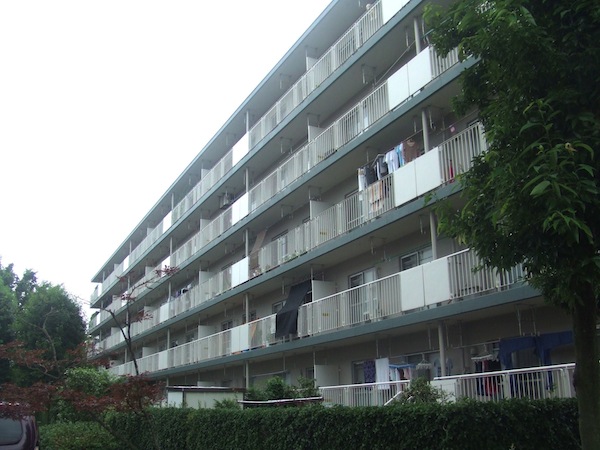
There was a very interesting letter in today’s Tokyo Shimbun. A 51-year-old company executive from Kodaira, Tokyo, wrote that he recently visited his sales department in Sendai, and one of the employees told him that the residents of the condominium where he lived until the earthquake of Mar. 11 all received “charity donations,” presumably from the Red Cross, totaling ¥450 million, or ¥3 million for each of 150 households. Since the building was declared “zenkai,” or uninhabitable due to the extent of the damage, all the condo owners have had to move. Obviously, thought the executive, ¥3 million is not enough money to replace their apartments.

But what really bothered the letter writer was that he soon learned that other, presumably less deserving victims of the disaster also received donated funds. Another “acquaintance” was given ¥2.5 million. His apartment was also condemned, but it was a rental. The executive said that the person hardly needed that much money, because all he required was “maybe ¥200-300,000 to move to a new rental apartment.” Even more outrageous was the intelligence that someone who lived in a public apartment (koei, meaning that the amount of rent is pegged to the tenant’s income) also received “a lot of money” from the fund. The executive couldn’t understand why, since all that person had to do was “move to another public apartment.” In the end, the letter writer said, “I have doubts that this donated money was spent meaningfully on victims who really needed it, and a lot of people I know in Sendai feel the same way.”

Most of those people are probably home owners themselves, and the letter brings up a matter that has simmered under the surface of disaster coverage for months now: Do home owners deserve more help than other people? Obviously, they think so, but one of the basic tenets of “ownership” is that the thing owned is the owner’s responsibility. He has dominion over that thing and no one can take that away from him. This belief forms the sacred core of capitalism and free enterprise: You can do anything you want with your property, and the unavoidable corollary is that you and only you are responsible for what happens to it.

But ever since the disaster home owners in the affected areas have demanded that the authorities (including TEPCO) help them rebuild, and not just with loans, but with direct payments. In response to the Great Hanshin Earthquake, the government passed the Disaster Relief Act, which provided funds for people affected by natural disasters. Owners of homes assessed to be zenkai can receive up to ¥3 million toward rebuilding. Many homeowners say this is not enough, and there is even a plan for the government to buy up private land along the coast that has become uninhabitable due to changes in the shoreline.

The magnitude of the disaster has, however, obscured an important point. Japan is a capitalist democracy, so why should the government give any free money to home owners? By using tax money to help them, even people who don’t own homes pay to help replace lost private property. This concept violates the spirit of “ownership” and certainly constitutes what libertarians would call a moral hazard.

We don’t necessarily support this view. The lives of people in the stricken areas have been destroyed, and we believe it is a social obligation for all of us to help them get back on their feet, whether through the agency of the government or through charitable concerns like the Red Cross. However, the man who wrote the letter to the Tokyo Shimbun has his priorities twisted. Why is a home owner–who tacitly accepts the risk attendant to ownership–eligible for greater charitable assistance (on top of the money he/she will receive from the government) than is someone who rents? Because he has “lost more”? Perhaps, but loss is an unavoidable component of ownership, so why should a renter be penalized for risking less? It’s a class distinction; no more, no less.

Shift that burden

Professor Yosuke Hirayama of Kobe University, probably Japan’s foremost scholar on the subject of housing and social policy, was the subject of a fairly long interview in the Asahi Shimbun recently, and though everything he said has been discussed at length in this blog, his explanation of what’s wrong with Japan’s official housing policy deserves to be summarized, especially in light of the current worldwide movement to close the income gap. For sure, Hirayama’s belief that government must shift its policy away from home ownership may raise the hackles of free market advocates and libertarians since it basically takes for granted the idea that housing is such a basic need for all members of society that the authorities need to be involved. What’s notable is that his ideas are based on classic, some might say prosaic economic principles; but in any case it was government that created the problem in the first place.

In a nutshell, Hirayama says that Japan’s long-time housing policy, which is based on promoting home ownership, has hit a wall, and that the government should shift this policy to promoting rentals. He begins by citing the disaster in the Tohoku region, where home ownership is even higher than the national average and where a good portion of these homeowners are elderly people who live alone. They are already in debt, and to encourage them to build new houses is simply to push them further into debt. Instead, the government should promote the construction of more rental housing and offer subsidies to renters. He mentions that he himself lived through the Great Hanshin Earthquake of 1995, and at the time was renting. Compared to homeowners, he survived the situation without as much emotional or financial trouble, because all he had to do was move. Of course, earthquakes are unpredictable, and by themselves can not be used to argue against home ownership (though he also points out that seismologists predict a better than even chance of a major earthquake hitting a large populated area in Kanto or Tokai in the next 30 years). The point is that renting has its advantages, a notion that has no traction in Japan. Read More

Reform or die

Change is gonna come: Old kitchen with new (cheap) cabinets

As we’ve pointed out ad nauseum on this blog, it’s becoming more and more difficult to sell older homes and apartments. Obviously, owners who want to unload their properties have to do something to make them more attractive than the next seller’s, which is one of the reasons for the “reform boom.” Though remodeling and home improvement has always been an important factor in the housing market, it’s no longer a matter of added value. It’s considered almost a necessity, given how bad most of the product is and how competitive the market has become.

During our inspections of older properties we’ve seen many that had undergone “reform” for the sake of boosting the sale potential. In most cases, the work done was purely cosmetic–new wallpaper, maybe new cabinets in the kitchen. (New tatami and fusuma are standard in all housing transactions and don’t really count as reform) Some go a little farther by replacing the flooring and putting in a new bathtub, but in almost all the instances where we inspected a reformed property the changes didn’t really amount to anything that made us want that property any more. Though the physical condition of the place is certainly important, the location, layout, environment, and general “image” of the house are, taken together, probably more important. More significantly, a house that has been remodeled just for the sake of improving its chances of being sold is, by definition, discouraging. As a potential owner, we would want to make those changes ourselves, so buying a home that’s already been remodeled in a half-hearted way based on generic tastes seems like a waste, especially if the price has been jacked up to absorb the difference.

As an example, we inspected a twenty-year-old kodan several months ago with an asking price of ¥11.6 million. It was large and sunny, and the layout was sensible. Though the apartment had not been remodeled, the asking price included “reform” that involved new walls and new floors and which would be carried out after the contract was signed. We told the salesperson that we would prefer to do the remodeling ourselves, in which case how much cheaper would the price be? She called us back that night and told us: ¥11 million. That means, theoretically, they were going to spend ¥600,000 on new walls and new floors. Based on what we’ve learned about reform, replacing walls and floors in an apartment that size would have probably cost much more, so it’s likely the remodeling would have been perfunctory at best.

In 2010, the land ministry surveyed people who had sold or were trying to sell their homes. Of those who sold their homes and had carried out home improvements in order to increase the value or simply make them more desirable, 73 percent said they sold their properties for more money than they originally asked for prior to the reform. However, the average boost in price these improvements provided was ¥1.66 million, though the average amount of money spent on said reform was ¥3.13 million. So in actuality, these homeowners lost money, since they paid more for the improvements than they received in added value. Of course, a more pertinent question is: Did the reform actually make it easier for them to sell the house? Our feeling is that they probably would have been able to sell the house anyway without the reform, but that the real estate company talked them into carrying out improvements to make it easier to do so, and then brokered a deal with a remodeling company. (We’ve seen homes that were remodeled for sale only five years after they were built!) It’s a common practice, and one that doesn’t always work. There’s one real estate company called Mount that has hundreds of properties on its website, many of which have been reformed. We know, because we’ve visited a number of them. Most were undesirable because of location and general design; the reform, which was half-assed to begin with, made no difference. And many of those houses still remain vacant after a year on the market.

Land with a catch

Thanks. A lot.

A few weeks ago we talked to the prefabricated home manufacturer Tama Home about their wares. We did so in the guise of a couple who is looking to build a house, which isn’t completely a lie because we have entertained that possibility for a number of years; but unless the salesman is really good, we never thought of buying a prefab home, which seems to be the preferred route for most Japanese people who start from scratch. Usually, these companies work with realtors and land development companies and sell homes through subdivisions, just the way they do it in the U.S. and other countries. The idea of prefab homes, meaning manufactured houses that are planned down to the last fixture, is that they’re cheaper, but once you factor in these companies’ adminstrative costs, overhead, and promotional expenses (Tama Homes uses SMAP’s Takuya Kimura in its ads) they can get pretty pricey.

In any event, once we toured a couple of models and listened to the safety spiel (Tama does have a pretty convincing countermeasure for land that is “soft” or subject to liquefaction) we had to get down to brass tacks, which is the matter of land. Obviously, there wasn’t going to be a sale of a house until there was a sale of a plot, and we admitted that we were “still looking.” No problem, because the salesman introduced us to a realtor who just happened to be in the office. He heard our story and our ridiculously low budget and then pulled out a book of land diagrams in the vicinity that might fit our financial terms. In the back of our minds, of course, there was no way we would be able to accommodate both the land and the house in our budget, and of course these two guys knew that (and knew that we knew that), but they kept making their pitches, which were soon veering off into the matter of loans, which we hadn’t talked about yet. The strategy was obvious, though: They would show us how easy it was to borrow money so that we wouldn’t have to worry about the tightness of our budget.

But there was another matter that came to our attention when looking at the lots being proposed. They were all joken lots, meaning they came with “conditions,” the main one being that if we bought them we would be obliged to build a Tama Home on them. Some of them happened to be in already developed subdivisions, but a few were on land that had yet to be properly prepared (meaning sewage, water, etc.). And we wondered later: If you actually bought the land and afterwards decided to use another housing company or builder, would it be illegal? A friend of ours who is an architect told us he didn’t think it would be, since once you had the title to the land you should be able to do anything with it that you want to do. We’re not sure, but considering how many vacant lots-for-sale have “joken” attached to them, it’s worth finding out.

Home Truths #3

Here’s this month’s Home Truths column in the Japan Times, about UR housing. The article is mainly a how-to piece and doesn’t really get into the details of what the buildings and apartments themselves are like. We’ve written about UR a lot in this blog, as well as in our sister blog Yen for Living, since we’ve been living in UR units since 2000. Below are links to some of these posts that provide more specific information.

Security deposits / Tour of Nouvelle Akabanedai / Amenities / Tour of UR Ogikubo / Matsudo public housing / Japanese needed? / Low-income housing / Tour of Heart Island Shinden / ‘kudokushi’ savings / Tour of East Core Hikifune

The awful truth

We often go out in the field to do research, but it’s always a two-pronged activity. On the one hand we study the housing situation and the market in an up close and personal manner. On the other hand, we’re still thinking about buying property ourselves someday, and though after more than fifteen years of searching off-and-on we haven’t bought anything, it doesn’t mean we never will. Still, the longer this goes on and the more we learn, the more frustrated we become, especially as our income situation remains precarious owing to the ongoing recession. Having a permanent abode that we can’t be kicked out of, regardless of our job circumstances, is a vital consideration, but looking at what we can afford we invariably fall into a funk wondering why we have to settle for such places. Inevitably, you prevaricate: This may be livable.

Our latest subject is old danchi/kodan for sale, which have become semi-popular due to media coverage of “danchi moe,” or fans of old public housing. We’ve written before about enterprising people who’ve bought old apartments in buildings constructed during the 50s-70s and remodeled them as attractive modern spaces, which they often sell for a profit. Because they only cost a few million yen to buy and a few million yen to fix up, they can be had quite cheap in the end, but most of the units that have been covered on TV and in magazines are small; fine for a single person but still a bit cramped for a couple and certainly not big enough for a family, though in all likelihood they were occupied by a family when they were new.

When you get out of the main cities, these danchi and kodan get bigger and even cheaper. And in most cases they’re also newer, which means more amenities. However, they still look like danchi, meaning they’re usually contained in dull concrete buildings of three to five stories without elevators. The fact that they are designed with these parameters in mind means that the apartment layouts tend to be more sensible than those in newer buildings. The classic kodan design has a staircase and apartment entrances on each side of the landings, which means you usually enter at ninety degrees to the length of the apartment. That allows for windows on both ends of the apartment, which means there is not only more sunlight, but cross-ventilation, an important consideration until the 1980s, when air conditioning started to become a fixture of apartment life. It also means the rooms are more practically positioned, unlike modern apartments where the entrances open up to a common outside hallway or light well, which means all the light and air comes from only one direction. In order to maximize space for commercial purposes, the rooms are basically carved out of a boxy shape, thus creating what is often referred to as “kamaboko” living spaces. Kamaboko are those rectangular fish paste loaves that you divide into smaller rectangular pieces.

So discounting the unappetizing exteriors, older danchi, especially when they’ve been fixed up, can be quite desirable, and in this spirit we called a few real estate agents and had them show us some in northern Chiba. Read More

The rest of the story

What you see is not what you get

We’ve received two letters in response to our Aug. 2 Home Truths column about renewal fees, both from landlords who obviously want to relate, as Paul Harvey used to put it, the rest of the story. Both letters were sent to the Japan Times, one for the Readers in Council page and the other indirectly to us with a directive that it not be published. Moreover, the RIC letter was published anonymously, so while both of these persons hold strong opinions as to their own situations as property owners neither seems to feel that strong that they might risk exposing themselves to whatever sort of negative reaction landlords can normally expect. This is probably unavoidable. The landlord-tenant relationship is almost by definition an adversarial one; the dynamic fraught with defensiveness. Both landlords basically wanted to show the difficulties of maintaining properties for rental purposes in Japan, and in the process defended the collection of supplemental fees such as reikin (gift money), shikikin (deposits), and koshinryo (rental agreement renewal fees) as essential to their businesses. Read More

Higher ground

Aobayama Park, overlooking Sendai

The land ministry has decided to monitor real estate transactions in the disaster-affected areas of the Tohoku region. As evacuees start moving out of temporary shelters and rebuilding their lives, many will likely seek new properties on higher ground, thus causing steep appreciation in land prices on elevations considered out of the reach of future tsunami. The ministry, along with the prefectural governments of Iwate, Miyage, and Fukushima, is afraid that real estate companies will try to corner the market on these tracts of land.

The ministry has already asked local governments to gather information about land transactions. The idea is for the local authorities to designate certain choice areas for monitoring purposes based on the Land-use Planning Law, which regulates the buying and selling of properties. Any transactions that take place within the monitored areas will have to be approved by the pertinent prefectural governor before any contracts are concluded in order to preempt deals deemed “improper” by the law. If the governor does not approve the transaction he can have it voided or ask that the terms be changed.

It’s obviously a necessary policy, but it may be difficult to carry out. Local governments are still hashing out whether or not to allow people who own certain low-lying properties to rebuild on the same land. Until they decide, those families are in limbo. Meanwhile, families who have already decided to move to higher ground may be in the process of looking for land and will thus get a jump on everyone else. The competition could end up being fierce, so it will be difficult to judge what constitutes an “improper” deal in some cases if the buyer and the agent come to an agreement. Also, if the local government decides that certain plots of land on lower elevations should be left clear, they will probably have to compensate the owners, something that could take time. And until those families receive their compensation they won’t be able to move. This will be particularly difficult for fishermen and other people in the seafood business, who want to live as close to the sea as possible.

According to the Tokyo Shimbun smaller, more isolated coastal communities aren’t waiting for the government. Some have already started rebuilding. Since tsunamis have been a fact of life in those villages for many centuries, a kind of lore has developed that instructs the villagers where it is safe to build and where it isn’t. After a tsunami, everybody moves to higher ground, and then over the course of decades they slowly work their way closer to the sea, since they’re all fishermen, until the next tsunami hits. It’s an inevitable, tragic cycle.

Home Truths #2

Caveat emptor

Our latest column in the Japan Times was published today. You can read it here. It’s about the recent Supreme Court decision regarding koshinryo (renewal fees). One small clarification: The photo caption mentions that cheaper rents may mean higher renewal fees and “gift” money. In many cases if the landlord has set the rent lower for the purpose of attracting potential tenants, he/she may also not charge gift money for the same reason. Renewal fees, however, are more hidden because they are usually only mentioned in the fine print, meaning they kick in later, when the tenant has to renew the contract a year or two after moving in. Also, some landlords, especially corporate ones, are making their rental agreements longer, say five years, and then setting the renewal fee a bit higher than average. Another theory associated with renewal fees that we neglected to mention is that some landlords use it to generate higher turnover. Since supplemental fees allow the property owner to make a bit more money in a slumping market, logic says that you make more money if the turnover is higher because more new tenants mean more supplemental fees. This is the same economic logic behind the shaken (regular vehicle inspection), which all car owners have to pay for every two years (or every year, depending on the age of your automobile). When the shaken, which is expensive, comes due, many car owners simply trade their vehicle in for a new one. The first shaken for a new car is three years. The same concept is supposedly used for renewal fees: People will move to a new place because they don’t feel like paying it. The reason we didn’t mention this theory is because we’re not really sure it’s credible. People’s attachment to the place where they live is different from their attachment to their car. If people move because they don’t want to pay the koshinryo it probably means they don’t like the dwelling in the first place.

Make mine menshin

The Asahi Shimbun reports that more and more companies are interested in fortifying their buildings with so-called menshin technology. Menshin involves placing shock absorbers in the foundations to mitigate the vibration accompanying earthquakes. Quite a bit of media attention was directed at the 18-story Sendai MT Building, which not only survived the March 11 earthquake in the largest city of the affected area, but made it through with minimal shaking, according to people who were in the building at the time. Sendaki MT Building is a commercial building run by Mori Trust, and it acted as a kind of makeshift refugee center for office workers who couldn’t get home the night of March 11. Though there were aftershocks all through the night, most people in the building said they didn’t feel them as much as they did in their own office buildings. After the quake, the building’s occupancy rate increased 20 percent and is now almost completely filled.

And it wasn’t just high-rises. The two-story distribution center for Suzuden Logistics in Matsudo is menshin-equipped. None of the goods stored in the building were damaged at all. Another menshin building is the Aizu Central Hospital in Aizu Wakamatsu, Fukushima Prefecture. Though it also underwent 5-plus shaking, the building suffered no damage and regular treatment continued normally. No in-patients had to be moved out or transferred.

The Asahi reports that, while menshin features add between 10 to 20 percent to the cost of construction, major contractors have seen inquiries into the system triple since March 11, and just as many are for factories and warehouses as they are for office buildings.